Let us start by noting that there are three distinct meanings of literal in the context of midrashim.
1) A given Rabbinic statement is the peshat/literal interpretation of a verse.
2) The midrash uses midrashic exegetical methods but the Rabbi who stated it believed it to be historical reality. That is, the midrash was intended to be taken literally rather than allegorically.
3) The midrash is actually what happened on the ground and represents historic reality.
Conflating these definitions leads to confusion and error.
What is the opposite of each of these definitions?
1) A given Rabbinic statement is a midrashic interpretation of the verse, and thus uses midrashic exegetical methods rather than methods of peshat.
2) The midrash was not intended by its Rabbinic author as a literal account of event, but it is meant figuratively or allegorically.
3) The midrash does not depict what actually happened on the ground.
Various folks on the internet have conflated these definitions, and Avi Goldstein does so as well in this article. Thus, for example, DovBear in his ranking system of midrashim writes:
Blue: I've established to my own satisfaction myself that this midrash should be taken literally. ("That happened!")But that is not what is under discussion. What is under discussion is: Did Chazal, who wrote the midrash, believe it to have happened or not. Even if DovBear does not think a midrash happened, that does not mean that the midrash should be taken figuratively. We might disagree with the midrash. And many pashtanim do. But "didn't happen" does not = "figurative."
White: This probably didn't happen, but maybe it did. ("Shrug")
Black: I've established to my own satisfaction myself that this midrash should be taken figurativly. ("Didn't happen!")
Conflating the two leads one to claim that midrashim were not intended literally, and to seek and propose a figurative interpretation where one just might not exist. Thus we move away from a proper understanding of a midrash and propose an explanation that is false.
This is the conflation of definition (2) with definition (3). Besides this error, the article by Avi Goldstein also conflates (1) and (2). Thus, he writes that because Rashi admitted he would have liked to have written a more peshat-based interpretation, had he the time, Rashi would consider midrashim to be figurative. This is quite a simplification. It is quite likely that Rashi believed that many of the midrashim he quoted represented historical reality, but were derived via midrashic methods (after all, Rashi was citing midrashim). He wanted to focus on the historical realities revealed on the peshat level, as he understood the concept of ain mikra yotzei midei peshuto. But that did not necessarily entail rejection of midrashic narrative as historical untruth.
Now, certain midrashim are meant to be taken allegorically. And even those that are intended literally pick up on themes in the text or can teach us uplifting lessons. But we must be intellectually honest and evaluate each midrash.
This evaluation must be done inside, not citing it off the cuff. We must learn through a midrash with the same intensity and rigor that we use when learning a piece of gemara. Furthermore, not everyone has the right type of mind or has developed the right type of mind for learning midrash. It takes a feel for the theme of a text, linguistic awareness, and a propensity for pun in order to understand and appreciate the situational and textual ambiguities that lead to a midrash.
With this lengthy introduction out of the way, let us treat the article.
The title of his article is "Midrashim and the Literal Truth." This already sets off red flags for me, since he, like Rabbi Rosenthal, is equating "truth" -- that is, what we believe is the historical reality -- with "literal," which is intent of the author of the midrash as historical vs. allegorical/figurative.
He writes:
There is a series of Torah tapes to which we have put my youngest son to bed this past year. The series is wonderful, bringing each parashah to life for my son. When an adult friend of mine was stumped by a question at the motzaei Shabbos father–son learning program we attend, my six year-old had the answer!His article is a bit better than the previous in that he summarizes the idea as being that Midrashim often are not to be taken literally. The word "often is key." He recognizes that there are some midrashim that are to be taken literally.
Yet these tapes concern me, because they are largely based on the Midrash, and they retell Midrashim as if they are literal truth. I worry that my son’s Torah education will be distorted, as the wrong balance is struck between historical reality and the lessons that Midrashim attempt to teach.
In this light, I was thrilled to read “The Dangers of Midrashim” (Five Towns Jewish Times, May 19, p. 64) by Rabbi Pinchas Rosenthal, the dean of the Torah Academy of Long Island. Rabbi Rosenthal’s thesis—that Midrashim often are not to be taken literally—is on the mark. Unfortunately, many rebbeim do not take the time to differentiate allegorical Midrashim from historical truth. The error is compounded by the fact that teachers thereby fail to teach the meaning behind the Midrashim. The actual lesson is lost, while its façade is taken as Torah miSinai, and our talmidim learn how to miss the point. Simultaneously, students are taught to believe that if one questions the literal truth of Midrashim, he is a heretic.
Le’havdil, the story of Alice in Wonderland is written on two levels. It is a children’s fable, but it is also a political satire. In like manner, the Torah can be understood at many levels, and many Midrashim are also styled in this fashion. Thus, one can teach the Midrash that Moshe Rabbeinu was 20 feet tall at a simple level. For a six-year-old, this may suffice. For a 20-year old, it is unacceptable! At some stage, one must seek the lesson behind the Midrash. And even a six-year-old should be exposed to such Midrashim only in moderation, lest he or she lose sight of the reality within which our ancestors lived.
However, worrying that his son's Torah education is being distorted, when in fact this is a Torah position (among others, of course), is off the mark. I don't know what school he went to, but in the school I went to, students were not taught that if they did not believe in the literal truth of midrashim, they are heretics. Did the author? Perhaps. Yet he came out of it still disbelieving in the historical truth of midrashim. How did this happen?
Now, we leave in a pluralistic society, and there are many different flavors of Orthodox Judaism today. This is a good thing. Variety is the spice of life. If some chareidim or right-wing modern Orthodox, or left-wing modern Orthodox believe the midrashim actually happened, kol hakavod! If they do not, kol hakavod as well! There are many legitimate approaches to midrashim that have been held by sophisticated greats throughout Jewish history. We have Rashi and Ibn Ezra. We have Malbim and Shadal. We have Targum Pseudo-Yonatan and Targum Onkelos. We have aggadists and we have Rabbi Zera who was opposed to certain types of aggada.
Also different levels of understanding of Torah and midrashim are appropriate for different physical and intellectual ages. People mature throughout their lifetimes and different understanding of sources hopefully comes with that (as he mentioned). But I would not categorize a literal reading of midrash as only fit for 6 year olds. First, he thus insults many people who are his (and my) betters (in terms of Torah knowledge and understanding) who believe(d) in the truth of these midrashim, calling them children. Second, perhaps a sophisticated analysis will yield a different perspective than he assumes is the correct one. I will not address the Moshe Rabbenu vs. Og midrash here. I would need a lot of time to study it inside.
However, the question is not whether Avi Goldstein believes this midrash to be true on a literal level. The question is whether Chazal who formulated the midrash believed it to be true on a literal level. And while we may be skeptical of Moshe having such a tall stature, there is some evidence that some members of Chazal may have thought this could be true on a literal, historical level. Two midrashim immediately spring to mind. The first is in Bava Batra 73b-74a:
Rabbah b. Bar Hana related: We were once travelling in a desert and there joined us an Arab merchant who, [by] taking up sand and smelling it [could] tell which was the way to one place and which was the way to another. We said unto him: 'How far are we from water?' He replied: 'Give me [some] sand.' We gave him, and he said unto us: 'Eight parasangs.' When we gave him again [later], he told us that we were three parasangs off. I changed it; but was unable [to nonplus] him.I would read his attempt to take the corner of the tallit as parallel to David's taking of Shaul's tallit - evidence of his presence and thus evidence of the historicity of his statement. But the Sages recommend that he should have counted the threads and joints in order to determine halacha. Would we determine halacha based on allegory? Perhaps one can find a way out of this one.
He said unto me: 'Come and I will show you the Dead of the Wilderness.' I went [with him] and saw them; and they looked as if in a state of exhilaration.
They slept on their backs; and the knee of one of them was raised, and the Arab merchant passed under the knee, riding on a camel with spear erect, and did not touch it. I cut off one corner of the purple-blue shawl of one of them; and we could not move away. He said unto me: '[If] you have, peradventure, taken something from them, return it; for we have a tradition that he who takes anything from them cannot move away.' I went and returned it; and then we were able to move away. When I came before the Rabbis they said unto me: Every Abba is an ass and every Bar Bar Hana is a fool. For what purpose did you do that? Was it in order to ascertain whether [the Law] is in accordance with the [decision of] Beth Shammai or Beth Hillel? You should have counted the threads and counted the joints
There is another midrash in Midrash Rabba and in Niddah 24b:
It was taught: Abba Saul (or, as some say, R. Johanan stated): I was once a grave-digger. On one occasion, when pursuing a deer, I entered the thigh-bone of a corpse, and pursued it for three parasangs but did neither reach the deer nor the end of the thigh-bone. When I returned I was told that it was the thigh-bone of Og, King of Bashan.
It was taught: Abba Saul stated, I was once a grave-digger and on one occasion there was opened a cave under me and I stood in the eye-ball of a corpse up to my nose. When I returned I was told that it was the eye of Absalom. And should you suggest that Abba Saul was a dwarf [it may be mentioned that] Abba Saul was the tallest man in his generation, and R. Tarfon reached to his shoulder and that R. Tarfon was the tallest man in his generation and R. Meir reached to his shoulder. R. Meir was the tallest man in his generation and Rabbi reached to his shoulder. Rabbi was the tallest man in his generation and R. Hiyya reached to his shoulder, and R. Hiyya was the tallest in his generation and Rab reached to his shoulder. Rab was the tallest man in his generation and Rab Judah reached to his shoulder, and Rab Judah was the tallest man in his generation and his waiter Adda reached to his shoulder.
Clearly the Midrash and gemara are trying to show that on a literal, historical level, a Biblical character can be this big. Otherwise why the proof that generations of people shrunk in order to justify his having fallen into Avshalom's eye-socket. So Chazal may have thought this to be true, and literal.
This might not be the case for the Moshe as 10 cubits high midrash (some elements might lend themselves to allegory), but we should not consider it figurative just because we would not believe it. The focus must be on whether Chazal could have believed this to be historical. Otherwise, we are just making stuff up and attributing it to Chazal because we are unconfortable disagreeing with Chazal.
Avi Goldstein continues:
I believe that two elements have led to this regrettable misunderstanding of Midrashim. The first element is the intrinsically enticing quality of Midrashim. To illustrate, let us take the Midrash that when Yaakov Avinu lay down to sleep at Beit E-l, he put rocks around his head (Bereishis 28:11). Each rock desired to be the one upon which Yaakov actually lay his head, so G-d fused them into one rock. It is undeniably more exciting to teach the Midrash kiphshuto, in its literal form. How enthralling it must be for a child to read about this miracle. If we take the Midrash as allegorical, we are forced to seek its intended message. What do the Sages mean to imply about the greatness of Yaakov? The easy, fun way out is to teach the Midrash literally and stop there.So, what does it tell us about the greatness of Yaakov? That he was a great guy? I think we got that even if we take the midrash literally.
Note that there are midrashim on this that have more overt allegorical reasons for this - that there were 12 stones becoming one, showing (in a maaseh avot siman labanim way) that he alone of the forefathers would have the 12 tribes. Or that there were three stones, showing some connection with the other two forefathers, as one. Or that there were two stones (because the minimum plural is two) and the binding together showed that unlike the other forefathers, there would not be chaff among his children. This works well with the general theme in the peshat of the pesukim of the dream telling him his destiny. Yet while this allegorical interpretation is obvious, this does not mean that Chazal did not simultaneously think that it was historically true. One should often not stop there regardless of whether the midrash is literal or allegorical.
I am not sure what greater message than 'Yaakov was a great guy and the stones wanted to honor him' one will get out of Rabbi Yitzchak's formulation in Chullin, though. And if you can tell me an allegorical interpretation, make sure it is convincing. Because I can come up with a rationalization for anything, but that does not make it true. A false rationalization is a perversion of original intent and an insult to Chazal.
For example: We see the greatness of Yaakov in that even the stones wished to support his head - thus, his greatness is intellectual. We see the greatness of Yaakov in that even the stones of Israel wished to be under his head, thus showing how he deserved to inherit the land. We see the greatness of Yaakov that these stones which were destines to become an altar wished to support this mortal's head, thus showing how a righteous man can elevate himself to the extent that these lofty stones would still consider it an honor.
I could come up with hundreds of such rationalizations. This is a gift I have - but the true gift is being able to distinguish between rationalizations and true explanations. By being able to generate rationalizations, I can recognize when others are trying to present poppycock. And indeed, some of Avi Goldsteins "explanations" in this article are indeed nonsense.
Furthermore, what exactly is he saying about Rashi -- that he took the fun and easy way out?
Truth be told, my sense from reading Rashi extensively is that he himself believed the midrashim to have been intended literally and to have been literally true. But more on that later.
He continues:
The second element is our bias toward Rashi’s exposition of the Torah. Rashi’s importance cannot be emphasized enough. However, he does sometimes resort to Midrashim, especiallywhen he feels that they conform to his stated intent of focusing upon the simple understanding of the text.Oh my goodness! Rashi sometimes resorts to Midrashim?! I would say that upwards of 80% of Rashi is midrashim. Here is a link to a perek in Bereishit - the one just discussed. That presentation of Rashi from Judaica Press is helpful because it sources most of Rashi's statements. Count how many of Rashi's statements are citations of midrashim, and how many are not. Sometimes resorts to midrashim? Ha!
"Especially when the conform to his stated intent of focusing on the simple meaning of the text."Oy! This is a reference to Rashi's famous statement that he is only coming to teach the peshuto shel mikra uleaggadah hameyashevet divrei hamikra davar davur al ofnav.
There is in fact a major dispute among Rashi scholars about how to understand this statement. Because Rashi presents so much midrash, some scholars actually say that Rashi only means this about the pesukim on which he actually said the statement.
And it is not clear what aggada hameyashevet divrei hamikra davar davur al ofnav means either. It is subject to dispute. However, it seems to mean that if a midrash bolsters or explains some peshat concern, Rashi will cite it. This can mean that he will bring a midrash if it fits with the rest of the text when the rest of the text is understood on a peshat level, and if it also answers some peshat based difficulty.
Let me now turn to Avi Goldstein and ask him: Why would Rashi cite a midrash to answer a peshat-based difficulty if he did not think that the midrash was meant literally?! If it was only intended to teach some homiletic message, why should Rashi think he could make use of it to arrive at peshat.
I will ask further. Avi Goldstein just presented the midrash from Chullin of the rocks merging together. Rashi cites it. Presumably, he does so because it is aggada hameyashevet divrei hamikra davar davur al ofnav - that is, it answers some peshat concern. How can it do this if it was not intended literally, and if Rashi did not intend it literally?
He continues:
(At the beginning of Parashas Vayeishev, Rashi’s grandson, the Rashbam, writes that he took Rashi to task for not writing his commentary in a simpler way. The Rashbam records that his grandfather conceded the point.)Argh! In a simpler way?! What Rashbam actually says is that because midrash is primary, people have come to focus on derash and neglect the school of peshat. But ain mikra yotzei midei peshuto, the verse still maintains its peshat interpretation, and this is what he focuses on. And then he concludes:
Apparently Avi Goldstein is reading הפשטות as hapashtut, the simpler way, rather than hapeshatot, the novel peshat interpretations, which is the correct translation of the phrase.
Rashbam is saying that he had arguments with and before Rashi. Rashbam is much more of a die-hard pashtan than Rashi, and perhaps he even had different conceptions of the relationship between peshat and derash. But in the course of the argument, Rashi conceded that had he enough time, he would write other interpretations according to the novel peshat interpretations they were coming up with every day.
Rashi and his beit midrash revolutionized study of mikra in focusing on peshat interpretations, and Rashi's commentary was a major first step, but still, a large portion of his commentary is midrash. And Rashi concedes this, not that he could have written it in a simpler way.
This is an important conclusion for those who cite the statement by Rashi that he comes only to teach the peshuto shel mikra uleaggadah hameyashevet divrei hamikra davar davur al ofnav, and deduce that every statement by Rashi is peshat. Rashi concedes that a large portion of his statements are derash, as one call tell be simply examining Rashi's sources.
Now, a peshat interpretation is certainly intended literally, and so one can no longer say that since every Rashi is peshat, it must be intended literally and have been historical.
However, just because something is derash {or aggadah hameyashevet divrei hamikra davar davur al ofnav} does not mean that it was not intended as literally (rather than allegorically) true and historical.
We must take care not to conflate method of interpretation with intent. Peshat vs. derash involves the methodology used to determine the interpretation - as Rashbam writes, methodology such as the 31 middot of derash interpretation. Such a derash interpretation might still have been intended by its author as literally true and historical, and Rashbam and/or Rashi might still consider them literally true and historical. See my points above regarding why Rashi brings derash to answer peshat issues.
He continues:
When our children begin to study Chumash with Rashi, rebbeim expose them to the Midrashim that Rashi brings, without bothering to note that many Midrashim are to be taken figuratively.Again, how does he know? Perhaps some are, but I am not sure that Rashi regarded them as anything other than literal (as opposed to figurative) or that Chazal intended them as such. To his credit, at least he uses the word "many" rather than "all."a
He continues:
A prime example is Rashi’s comment on the word “vachamushim” in Parashas Beshalach (Sh’mos 13:18). Rashi’s first explanation is the literal one: that the Israelites were armed with weapons and supplies when they left Egypt. Rashi then proceeds to record one of several Midrashim on “vachamushim.” Extracting its root, which is ch-m-sh, or “five,” he states that only one of every five Israelites actually left Egypt, with the remaining four-fifths perishing during the Plague of Darkness, out of sight of the Egyptians.If you examine Rashi's source (Mechilta), you will see that his midrash also starts out with the definition "armed" before introducing other explanations. So the midrash itself concedes this basic interpretation.
Inevitably my children have come home from yeshiva with Rashi’s Midrashic comment as the true meaning of “vachamushim.”The solution to this is to have the rebbe teach the Rashi better, stressing that Rashi says both. Does Rashi mean one literally and the other figuratively? Or is he recording different opinions on the matter? Or, does he maintain that both are simultaneously true?
Looking at Siftei Chachamim, you will see that he asks about this double explanation and concludes that ain mikra yotzei midei peshuto, and thus holds that both are interpretations of the verse. It seems to me that Siftei Chachamim at least considers the chamushim as 1/5 to be literally true. I guess he is writing this when he is a 6 year old.
Here is the midrash as cited in Tanchuma:
אחד מחמשה, ויש אומרים אחד מחמשים, ויש אומרים אחד מחמש מאות, רבי נהוראי אומר העבודה לא אחד מחמשת אלפים, ואימתי מתו? בימי האפלה שהיו קוברין ישראל מתיהן ומצרים יושבין בחשך, ישראל הודו ושבחו על שלא ראו שונאיהם ושמחו בפורענותן.
In Mechilta, after the explanation of 1/5 (and subsequently those who say 1/50 and 1/500), Rabbi Nehorai says 1/500, but the Gra emends to 1/5000. Rabbi Nehorai in mechilta actually cites other pesukim from Nach to bolster his argument (revava ketzemach hasadeh, and uvnei yisrael paru veyishretzu.) A straigtforward reading of the Mechilta strongly suggests that the dying in the 3 days of darkness is Rabbi Nehorai as well, but Rashi takes this to explain the 1/5. So perhaps in the initial Midrash, those who said 1/5 left thought that the others assimilated and wished to stay in Egypt. Look at the Mechilta yourself. Rashi, who combines it, apparently accepts that 4/5 died.
He continues:
And yet, if this were meant to be understood literally, several questions should arise. First, it would mean that the Plague of Darkness was actually much more a plague for the Israelites than it was for the Egyptians. Second, it would require us to believe that the Egyptians did not notice how 80 percent of the Israelite population suddenly vanished! Third, it would be inconceivable that just a few weeks later, a decimated Israelite population would go withsuch joy into the wilderness. How, in the face of this massive loss of life, could they heartily celebrate the Exodus?This is a reason for disagreeing with Rabbi Nehorai's explanation that they died in the 3 days of darkness. It is a reason for disagreement, but is not proof that Rabbi Nehorai did not mean it literally (/historically)! Perhaps Rabbi Nehorai would have answers, or perhaps Rabbi Nehorai would concede. But yes, he would say that it was more a plague for the Israelites. But 1) that these people were going to die anyway to it was to Hashem's credit that he did this when the Egyptians could not see. 2) Perhaps the Egyptians were aware that they vanished but did not get to witness the actual dying and burial of the Israelites and have a chance to rejoice, or perhaps they were so busy with their own plagues -- namely, darkness followed shortly by the killing of the firstborn; or else, because the Israelites lived in Goshen, away from the Egyptians, and 3) perhaps these were not righteous Israelites, which is why they were not to leave Egypt, and were concentrated in families which were not friendly to the Israelites who left; or perhaps even with this massive loss of life, finally getting their freedom made them happy.
As you can see, answers are possible. I don't know that Rabbi Nehorai (or Rashi) would put forth these specific answers, but they might maintain that this is intended literally and give some answers. Just because Avi Goldstein does not agree with the mechilta does not mean that the mechilta is figurative as opposed to literal.
He continues:
Finally, the Midrash records other opinions that have a much smaller number of Israelites escaping the Plague of Darkness. One opinion is that only one out of 50 left Egypt. Another opinion is that one in 500 survived.He apparently did not see the Gra's emendation to 1 in 5000. He continues:
And the Talmud, in Maseches Sanhedrin (111a), writes that only 2 out of every 600,000 left Egypt! For one thing, only one of these can be literal. Moreover, if we take the calculation in Sanhedrin literally, it would require us to believe that 180 billion Israelites lived in Egypt.Firstly, this is not the meaning of this midrash. In fact, the midrash in Sanhedrin is more conservative than even 1/5, as I will demonstrate shortly. But first, two points.
1) "For one thing, only one of these can be literal."
Buzz! No. Only one of them at most can be historical. The midrash states:
אחד מחמשה, ויש אומרים אחד מחמשים, ויש אומרים אחד מחמש מאות
The words veyesh omrim means that there is a dispute. Many people can dispute what the literal interpretation of a verse is. At max, only one of them can be right. But that does not mean that the other interpretations were intended or must be taken figuratively.
As an illustration, let us take three pashtans. (pashtan in the sense of using peshat rather than midrash methods of interpretation.) Let us take Ibn Ezra, Shadal, and Rashbam. I am sure that you can find a verse in which each pashtan offers a different interpretation than the other two. Would Avi Goldstein say that "only one of these can be literal?"
2) "Moreover, if we take the calculation in Sanhedrin literally, it would require us to believe that 180 billion Israelites lived in Egypt."
No. If we interpret the midrash this way (which I will attempt to disprove next), then it would require us to believe that Rabbi Simai believed that 180 billion Israelites lived in Egypt.
My emendation in bold. Look, Avi Goldstein does not believe 180 billion Israelites lived in Egypt because of modern sensibilities and conceptions of demographics. Perhaps Rabbi Simai disagreed, and felt his explanation was indeed historical. Perhaps 180 billion, while astronomical, did not seem so impossible to Sages back then. Or perhaps it was astronomical but Chazal assumed a miraculous existence, as is clear from many other midrashim.
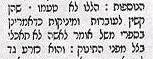
Anyhow, on to the gemara. My selection includes Rashi, which is higher up in the page. Look for Tanya: Rabbi Simai...

Rabbi Simai learns a hekesh between their exodus from Egypt and their entering the land of Israel. "Just as when they entered the land, only 2 from 600,000 entered, so too their exodus from Egypt, there were 2 out of 600,000."
Who were the 2 out of 600,000 who entered the land? Calev and Yehoshua, as Rashi explains. That is, out of 600,000 people in the generation of the wilderness, only 2 actually entered the land. Of course, not only 2 entered the land. There was a new generation who were raised in the wilderness who numbered 600,000 as well.
Similarly, there were 2 out of 600,000 who exited Egypt. Many read this as a ratio. That is, for each 2 who left Egypt, 599,998 did not leave. This is how one would come up with 180 billion.
But is this what Rabbi Simai means? There is a hekesh, connection, here, between the exodus and entry in the land. We know 600,000 entered the land. Do we say that that means that for every 2 who entered the land, 599,998 were left in the desert? There were not 180 billion in the desert. Pesukim tell us about 600,000!
The simplest connection to make is to assume the same situation for both, rather than a ratio. Thus, out of 600,000 people in Egypt in a certain generation, only 2 left. Of course, they were accompanied by an additional 600,000 who were born to the next generation.
Who are these 2? Let us say Moshe and Aharon, who were 80+ at the time. (Perhaps also Korach, though he must be under 50 to be fit for service in the mishkan.) All the rest of their generation died in Egypt of natural causes (such as old age), and it was 600,000 of the generation of Calev and Yehoshua who left Egypt. And that generation of Calev and Yehoshua died in the wilderness to be replaced by another 600,000. And, as Rava adds, the same for the days of Mashiach.
Without looking at Rashi, and just looking at the gemara, this seems the simplest peshat in the gemara.
This is then a more conservative number than even 1/5. It is 1/2. And it is not people who died suddenlt in the 3 days of darkness, but over the course of the long servitude in Egypt. One can readily understand this as intended as literal/historical, and perhaps even accept it as historical reality oneself.
Now, Avi Goldtein is to be excused. After all, 180 billion is what Rashi says, and what Artscroll says as well. But our concern is with what Rabbi Simai meant, not how Rashi understands it.
However, even Rashi may something similar to what I propose. Read Rashi again, this time without the words enclosed in brackets, and translate the first mikol as "from all the 600,000," rather than "for each."
{Please note: I do not need Rashi for support in this, since at issue is what Rabbi Simai means, rather than what Rashi means - but it would be nice to have such support.}
Rashi also suggests they died in the 3 days of darkness. The gemara does not state this. This is grabbed from Rabbi Nehorai in mechilta, and Rashi carries it over.
As I always say, it pays to look at sources inside and to read those sources critically. I do not think Avi Goldstein or Rabbi Rosenthal are used to doing this, and so instead they put forth nonsensical figurative/allegorical explanations. (This is not to say that certain figurative and allegorical explanations do not in fact make sense.)
He continues:
Truly the Rambam is correct in writing that the literal approach to Midrashim is a foolish one. (And yet, many years ago I heard a rabbi in our community say that this Midrash in Sanhedrin is literally true!)Does Rambam say this about all midrashim, or only ones such as those that imply that God is corporeal?
I do not believe that Avi Goldstein understands midrashim, and the relationship of peshat and derash, well enough to write credible articles on the subject.
But stop for a moment. If the rabbi in the community could believe the midrash in Sanhedrin is literally true, is it not possible that Rabbi Simai believed it as well?
Anyhow, he continues:
Meanwhile, the lesson of these Midrashim is missed. How about the following interpretation for the 1-in-50 version? We are taught that the Israelites were mired in 49 levels of impurity, out of a possible 50 levels. The Midrash hints at this low spiritual level by stating that one in 50 Israelites left Egypt—that only 2 percent of Israel’s spirituality had been preserved during the Exile.Wow. This seems to me to be an instance of rationalization rather than explanation, as I explained above. Wow! Looking through Rabbinic literature, we find another number 50, so we can connect the two and explain one in terms of the other! Color me unimpressed.
Rabbi Nehorai did not just leave it as just a derasha on chamushim. He bolsters it with other pesukim to show a large Israelite birthrate. Why do this if the whole thing is allegorical? He also tries to explain when they disappeared - in the 3 days of darkness. Why would Rabbi Nehorai try to do this if he did not think it actually happened? Rabbi Nehorai makes great efforts to fit the derasha in with the narrative, which is not what we would expect if it was intended as allegorical/figurative.
Also, will he be able to find a similar parallel for 5? For 500? For 5000? One of the numbers luckily matched up to another rabbinic statement, and so he thinks he has intuited the figurative interpretation.
He continues:
The result of literal teaching of Midrashim is mind-boggling. Our children grow up believing that the ancients lived a fairy-tale existence.And some members of Chazal believed this as well. Feel free to disagree.
He continues:
On the aforementioned tape series, the narrator, a highly respected rebbi (and former teacher of mine), says that during the Plague of Wild Animals, all the world’s animals descended upon Egypt, bringing along their local climates. Thus, where the polar bears were it was icy cold, while where the lions were it was hot. This is taught as literal truth, in total disregard of the much more likely alternative: that wild animals native to Egypt served as G-d’s instrument of punishment, without a bizarre change in climate. In order to counter the teaching method to which children are exposed, I have sought, from when my kids were young, to explain that Midrashim are not necessarily literal. I have pointed out that the Talmud itself states: “The rabbis spoke in exaggerated terms” (Chullin 90b). I hope that other parents are doing the same.Again, kudos for "not necessarily literal." I would have to see that midrash inside, and see what details are deduced from what, but a less miraculous alternative is just that - a less miraculous alternative. As rationalists, we like to dismiss miraculous accounts. But we are talking already about a miracle - we have here a more muted version of the miracle. So whoever wrote this midrash might not have agreed that a less miraculous miracle is more likely, and therefore is historical truth.
Indeed, the Talmud does state that the rabbis spoke in exaggerated terms, such that some fantastic details are guzmas. But we must take care how we apply this dictum. If a detail is an explicit derivation from a verse, it is no longer a manner of speaking but rather the very substance of the derasha. We should not take statements out of context and apply them across the board to where Chazal never intended them.
I have no doubt that Rabbi Rosenthal’s brave piece (and this article as well) will encounter fierce opposition. It is too bad that in some quarters, in-depth Torah study has been forced to yield to shallowness.Oooh! Great way to end an article. Paint yourself as a courageous martyr, and paint any opponents as shallow, closed-minded frummies.
I believe that my opposition to Rabbi Rosenthal's piece, and to this article as well, is based on the fact that their approach is shallow, ill-informed, and dumb.