Thursday, June 15, 2006

parshat Behaalotecha: Why the manna could not taste like X

Bemidbar 11:5:
ה זָכַרְנוּ, אֶת-הַדָּגָה, אֲשֶׁר-נֹאכַל בְּמִצְרַיִם, חִנָּם; אֵת הַקִּשֻּׁאִים, וְאֵת הָאֲבַטִּחִים, וְאֶת-הֶחָצִיר וְאֶת-הַבְּצָלִים, וְאֶת-הַשּׁוּמִים. 5 We remember the fish, which we were wont to eat in Egypt for nought; the cucumbers, and the melons, and the leeks, and the onions, and the garlic;

So, I was looking for parsha posts for my parsha roundup and I came across ADDeRabbi's post, in which he cites Rashi that cites the Sifrei citing Rabbi Shimon that theit did not turn to these tastes because it was bad for nursing mothers. He asks:
Needless to say, at first glance Rashi’s answer has some pretty gaping holes. To wit, the manna didn’t become whatever one wanted it to become; it merely tasted like it. So even if nursing mothers shouldn’t eat watermelon, what’s the big deal if something tastes like watermelon? Furthermore, the examples of onion and garlic are familiar, but fish? Cucumbers? Melons? And finally, why shouldn’t men or non-nursing mothers not taste a bit of eggplant? Why should we all suffer on their count?
He gives a somewhat homiletic answer about the development of klal yisrael as the development of an infant. Interesting. However, I believe it is ultimately incorrect (and some of his questions are incorrect), and would like to present my own solution, which will drastically change the way everyone reads this Rashi. Indeed, ADDeRabbi's post presents a great foil. In this post, I may seem to be unduly harsh to him, but no insult is intended.

First, let us see the Rashi inside (in English, courtesy of Chabad and Judaica Press):
the cucumbers R. Simeon says: Why did the manna change into everything except these? Because they are harmful for nursing mothers. We tell a [nursing] woman, “Do not eat any garlic or onion, for the baby’s sake. This can be compared to a king [who gave his son over to a teacher. He sat down and ordered him and said to him, ”See that he does not eat any harmful food and does not drink any harmful drink. Because of this, the son complained about his father, saying,“Not because he loves me, but because he does not want me to eat,”] as it is written in the Sifrei (Beha’alothecha 1:42:5).
But it is not enough to look at Rashi. We must look at Rashi's source - namely, the Sifrei, and see what Rashi changed, deliberately or accidentally.

The first obvious change is that while Rashi says chutz meiElu, Sifrei has chutz mieChameshet haMinim halalu. This was just done to shorten, but we see that Rabbi Shimon is only speaking of 5 things. Fish are not included, so when ADDeRabbi asks:
Furthermore, the examples of onion and garlic are familiar, but fish? Cucumbers? Melons?
Fish is no question because this is not part of Rabbi Shimon's statement. (He could probably say that the manna could taste like fish, but this did not come free, as in free from the precepts - see the previous Rashi, which is based in fact on the Sifrei which leads up immediately to Rabbi Shimon.)

Another major change is that nursing mothers are not mentioned in the midrash at all. In fact, it goes directly from the question to the mashal. In fact, I would perhaps even disagree with Judaica Press's parsing. They write:
the cucumbers R. Simeon says: Why did the manna change into everything except these? Because they are harmful for nursing mothers. We tell a [nursing] woman, “Do not eat any garlic or onion, for the baby’s sake. This can be compared to a king [who gave his son over to a teacher. He sat down and ordered him and said to him, ”See that he does not eat any harmful food and does not drink any harmful drink. Because of this, the son complained about his father, saying,“Not because he loves me, but because he does not want me to eat,”] as it is written in the Sifrei (Beha’alothecha 1:42:5).
The bolded portion is Rashi's insertion. I would parse it instead: Because they are harsh to nursing mothers, we tell a woman "Do not eat any garlic or onion for the baby's sake."

That is, the bolded portion shows that all these five are harsh, and evidence of this is that we tell nursing women not to eat them. And garlic and onion are just examples. We would also tell a nursing mother not to eat the other three items in the pasuk.

Thus, ADDeRabbi's question:
Furthermore, the examples of onion and garlic are familiar, but fish? Cucumbers? Melons?
has been answered. Fish we would not tell her. Cucumbers and melons we would tell her not to eat. Leeks, which ADDeRabbi did not mention, we would tell her not to eat. {I would add that is assuming "melon" is the correct translation here, according to Rabbi Shimon. Perhaps he had a harsher vegetable in mind.}

Of course, the problem with these is that they are harsh {kashim}. While pregnant women and more specifically their infants are most susceptible, it still takes a minor toll on those who are not infants - people who are perfectly healthy, it still weakens their constitution. Thus,
This can be compared to a king [who gave his son over to a teacher. He sat down and ordered him and said to him, ”See that he does not eat any harmful food and does not drink any harmful drink. Because of this, the son complained about his father, saying,“Not because he loves me, but because he does not want me to eat,”] as it is written in the Sifrei (Beha’alothecha 1:42:5).
-- thus, Hashem had in mind to be gentle to all the Israelites.

This also answers ADDeRabbi's other question:
And finally, why shouldn’t men or non-nursing mothers not taste a bit of eggplant? Why should we all suffer on their count?
Since nursing mothers were never the focus, and that is why they are not even mentioned in the Sifrei.

(In terms of the taste and not the substance, it seems that this is not a question that would bother Rabbi Shimon. Either he held it did take some aspect of the actual substance or else he felt that it was the harsh taste itself that was injurious.)

Rashi meant to elaborate upon the Sifrei to make it clearer to us, and instead confused us. This is why it is important to see sources inside.

As you might imagine, I do not subscribe to ADDeRabbi's homily based on this reading of Rashi.

One might, however, read this Sifrei allegorically. This is not to say that it was not intended literally (or for that matter that it was), but rather that there is perhaps something we can learn from this midrash.

This Rashi continues from the previous, and in fact both are citations of the same Sifrei.
which we ate in Egypt free of charge If you say that the Egyptians gave them fish free of charge, does it not already say, “Straw shall not be given to you” (Exod. 5:18)? Now if straw was not given free of charge, was fish given to them free of charge? So what does “free of charge” mean? Free from [the burden of] precepts. — [Sifrei Beha’alothecha 1:42:5]

the cucumbers R. Simeon says: Why did the manna change into everything except these? Because they are harmful for nursing mothers. We tell a [nursing] woman, “Do not eat any garlic or onion, for the baby’s sake. This can be compared to a king [who gave his son over to a teacher. He sat down and ordered him and said to him, ”See that he does not eat any harmful food and does not drink any harmful drink. Because of this, the son complained about his father, saying,“Not because he loves me, but because he does not want me to eat,”] as it is written in the Sifrei (Beha’alothecha 1:42:5).
The beginning of the Sifrei interprets free to mean "free of the precepts," rather than free of cost. This dual definition of "free" manifests itself today in terms of free software - do you mean free (like beer) or free (like speech)?

Thus, one aspect of the Israelite's complaint was that they got their fish but did not have to be bound by the commandments.

The continuation in the Sifrei may be read in this light. They are complaining that they cannot eat any of this harsh food in the manna. The reason for this is that they are in fact somewhat injurious to the constitution of anyone who eats it. Thus, the restriction is there for their own good. Similarly, the negative commandments are there for their own good. Indeed, looking at the midrash again, this allegorical interpretation almost jumps off the page. We can read this allegorical interpretation while assuming that the manna actually did turn to these items (or their taste), or we can see this allegorical interpretation while maintaining a literal reading of the midrash.

Update: From another post, setting the record straight:

In a previous post on parshat Behaalotecha, I argued against ADDeRabbi's interpretation (and the standard interpretation) of a Rashi, arguing based on comparison with Rashi's source, the Sifrei, the intent was not that the manna did not taste like the five items at the end of the pasuk in Bemidbar 11:5:
ה זָכַרְנוּ, אֶת-הַדָּגָה, אֲשֶׁר-נֹאכַל בְּמִצְרַיִם, חִנָּם; אֵת הַקִּשֻּׁאִים, וְאֵת הָאֲבַטִּחִים, וְאֶת-הֶחָצִיר וְאֶת-הַבְּצָלִים, וְאֶת-הַשּׁוּמִים. 5 We remember the fish, which we were wont to eat in Egypt for nought; the cucumbers, and the melons, and the leeks, and the onions, and the garlic;
because it was bad for infants and nursing mothers, but rather because it was harsh for everyone. I pointed out that the text regarding nursing mothers and infants was absent in the Sifrei, and suggested that it was added by way of illustration do demonstrate that these 5 species are harsh to those who consume it.

However, over Shabbat I saw a source that led me to reevaluate this. Namely, there is a Rashi on Yoma 75a. The gemara discusses why the manna could not become these 5 species. Rashi explains:
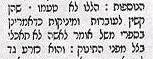

Thus, it is evident that this mention of nursing mothers and infants was no insertion by Rashi, but was present in Rashi's version of the Sifrei. Apparently, we have a different version of the Sifrei.

If so, Rashi, in citing the Sifrei, may well think that it is on account of nursing mothers and infants as opposed to on account of its deleterious effects on every Israelite. (Maharsha also maintains this nursing mother connection.)

I still can maintain that the difference in girsa was the result of someone inserting this illustration, likely on the margin, and then copied into the actual body of the manuscript, in which case Rabbi Shimon would still say what I claim he says. The alternative is that for some reason the passage about nursing mothers was accidentally deleted by a copyist, yielding our girsa.

While looking at this gemara, I saw an answer to another of ADDeRabbi's questions. Namely, why were these 5 species problematic if it was just the taste of them? I suggested that the harsh taste itself would be sufficient to cause whatever harm to the constitution.

In fact, this is a talking point in the gemara on Yoma 75a. The gemara records a dispute between Rabbi Ami and Rabbi Assi. One holds that the manna could assume the taste of anything save these 5 species, while the other holds that the manna could assume both the taste and substance {taamo umamasho} of anything save these 5 species, and for these 5 species it could assume the taste {taam} but not substance {mamash}.

This dispute seems designed to directly address this concern.

Wednesday, June 14, 2006

Dangers of Midrashim Followup - II

So there are two letters to the editor in the Jewish Press about R Pinchas Rosenthal's article about the Dangers of Midrashim (see here), as well as a response by Rabbi Rosenthal. One person asks the question about miracles in the Torah, and another has a more extensive critique (in which he also points out the dispute regarding amata meaning arm or handmaiden, and suggests responses to the college professor). My points, and perspective differ somewhat, but an interesting read.

Rabbi Rosenthal responds to the first that the actual text of the Torah was intended as peshat, but does not consider that certain midrashim may also have been intended as literal, as I showed in an earlier post. Nor does he consider that to a college professor of Anthropology, both miracles seem equally implausible, and so it is difficult to make Jewish belief hinge upon anthropology professors. To the second letter, he does not answer the point about amata and takes the main thrust of the letter as an encouragement not to ask questions (which in part it is).

My main problems with Rabbi Rosenthal's approach remain 1) that he seems to consider it the only legitimate approach; 2) that it is silly nonsense and is not based upon critical analysis of the texts; 3) because he does not believe a miracle described in a midrash, he assumes that it must be intended figuratively rather than acknowledging that he might just disagree with one statement among many in Chazal; and finally, 4) there is some evidence that Chazal indeed intended some midrashim literally.

An interesting read nonetheless.

For those of you awaiting my response to Avi Goldstein (in a subsequent 5 Towns Jewish Times), it is in the work. For now, it will be sufficient to say that he conflates belief in historicity with intent of literalness, and that he misunderstands the midrash which he claims has 180 billion in Egypt (in fact, the midrash is more conservative that the ones based on chamushim).

It should be coming along some time this week or early next.

Sunday, June 11, 2006

Posts so far for parshat Behaalotecha

2004
  1. Chovav As A Witness, or Guide?
  2. Who Was Chovav? Who Was Yisro? And Who Was Moshe's Father-In-Law?
  3. Related to the Above: Another Interesting Cognate from "Hebrew Cognates In Amharic"
  4. No More, No End, Not Gathered
  5. BeKetuvim (Eldad and Medad)
  6. Would You Go Back To Slavery In Egypt For This?
  7. The Manna, On the Other Hand
  8. cross-listed from parshat Chukas: For What Sin Was Moshe Punished?
2005
  1. Parsing Moshe's Prayer
  2. Who Is The Naar?
  3. "Na" Only Connotes Please
to be continued...

Another Interface Between Halacha and the Supernatural

Following up on my previous, more extensive post (Miracles In Halacha), I found yet another instance in which the belief in the existence of the supernatural interfaces with operational halacha.

In general, one should not pass by food on the floor, but should pick it up. Rabbi Yochanan, citing Rabbi Shimon ben Yochai, says that this was true from previous generations, but now that witchcraft is rampant amongst Jewish women, we do pass by it. What follows is a discussion of exactly what type of bread is used for witchcraft.

See Eruvin 64b:

אמר מר ואין מעבירין על האוכלין אמר רבי יוחנן משום רבי שמעון בן יוחאי לא שנו אלא בדורות הראשונים שאין בנות ישראל פרוצות בכשפים אבל בדורות האחרונים שבנות ישראל פרוצות בכשפים מעבירין תנא שלימין מעבירין פתיתין אין מעבירין אמר ליה רב אסי לרב אשי ואפתיתין לא עבדן והכתיב (יחזקאל יג) ותחללנה אותי אל עמי בשעלי שעורים ובפתותי לחם דשקלי באגרייהו

On Talmud Criticism

Re this post on Hirhurim:

I think that the talmid who wrote the article for TorahWeb misunderstood Rav Schachter, R' Gil Student misunderstood the talmid, the commenters misunderstood R' Gil, and I misunderstood the commenters. But don't get me wrong - I'm Orthodox!

;)

Also, lamedzayin has a good comment.

As if my agreement/approval means anything, while I differ somewhat with Rav Schachter in this regard, Rav Schachter's is certainly a legitimate opinion with good basis.

Update: I should add - I was in Rav Schachter's shiur for 5 years and in Dr. Steinfeld's class for about 3.

Friday, June 09, 2006

Bible Quiz - I

I saw this on another blog, and thought the idea was nice.

We'll start out with a single easy question and one difficult question. I posted this in response to an earlier quiz, but it got taken down, so:

Q1: Name 6 in Tanach who did not die.

Q2: Which pashtan disliked Ibn Ezra?

Answers next week.

parsha roundup: Naso

Updated.

2006:

If you have a post you would like included in the roundup, add a comment or send me an email.

Category: Homiletics
Torah Thoughts by Rafi G. seems to like citing Rashis and expanding on the homiletical aspects of these Rashis. In "Shock to the System" he cites the Rashi that the laws of Nazir follow those of Sotah since one reacts to seeing the Sotah, which was caused by wine, by vowing off wine. He considers the contrast of taking part in the world with reaction against overindulgence. In "Positive Way of Thinking" he notes that Rashi notes that the positive aspect of the Sotah's oath (that she did not sleep with the man) and deduces that "we are to look for optimism and merit all the time." In "It'll come from One Pocket or the Other" he cites a Rashi that the proximity to the parsha about priestly gifts shows that either one gives the gifts due a kohen or will have to give the kohen the korban of the Sotah for his wife. He deduces that the money is not ours but God's, and if one does not do what he should do with the money, God will take it from the other pocket."

Rabbi Gurkow at Inner Stream has a short post "Who Is the Misfit Anyway?" which has a cute neo-drasha. “raise the head of the tribal family Gershon,” benei gershon. He takes Gershon from גרש, and interprets to mean that those who are normally exiled and banished from society should instead have their heads raised. "Let us teach them, nurture them and uplift their spirits so as to enable them to “fit in.”" In "Transforming the Desert," he notes how the Temple Service was held in a barren locale, and understands the mission to be making the barrenness bloom. Sur MeiRa = avoiding the barrenness and Asei Tov = making it bloom. He once again interprets Gershon to mean banish, thus to banish the evil, and Kehat coming from yikhat, thus to gather together and make bloom.

AlanLaz muses on the theme of the nazir's reaction to the Sotah, building on Rashi.

Category: Analysis

ADDeRabbi suggests a non-miraculous, rationalist approach to the halacha of Sotah, and why this parsha need not show that halacha interfaces with miracle.

Category: Structure
Jameel at the Muqata notes that we will lose synchronicity with Eretz Yisrael this week.

Yoma Daf Yomi starts today

(see e-daf) though doing Rif Yomi, I find myself 72 pages ahead. This because Rif begins in the eighth perek, focusing on halacha lemaaseh. I'll post the first page of Rif on Yoma soon on the alfasi blog, but then there will be about a two month hiatus.

Wall Street Journal on Diaspora Conversions in Israel; + Ki MiBavel Teitzei Torah, Udvar Hashem MiNehar Pekod

So the Wall Street Journal has a writeup of the conversion controversy today on the Taste page: Snubbed by Zion.

One interesting point that I don't think many of their readers will get. The article states:
Others feel that, by seeking to represent not just Israel but the Jewish people, the Israeli rabbinate is attempting to overturn a millennia-old de facto pluralism born of the diaspora. Jewish peoplehood, they note, was never threatened by the fact that the Jews of Warsaw, for instance, adopted very different standards of Jewish law from the standards of the Jewish community in Baghdad.

The Israeli rabbinate, turning away from this model, cites Isaiah's prophecy as the justification: "For the Torah will go forth from Zion, and the word of the Lord from Jerusalem." American rabbis now fear that their Israeli counterparts believe that the return to Zion entails a return to a monolithic Judaism. One American rabbi told the Israeli newspaper Ha'aretz that the new edict gave the impression "that Rabbi Amar is trying to become a sort of Jewish Pope."

Presumably they are not trying to make a new derasha from scratch, darshening pesukim in Yeshaya.

Those in the know will spot the reference to the earlier controversy, mentioned in the gemara, over who would establish the calendar. Chanania the nephew of Rabbi Yehoshua tried to establish the month outside the land of Israel, and their was a dispute over who should have primacy to set standards. And the pasuk in Yeshaya in cited in a very cute way:

This Yerushalmi occurs in various forms in Yerushalmi Sanhedrin 5b-6a and Yerushalmi Nedarim 23a.

ביכולין לעבר בארץ ישראל אבל בשאינן יכולין לעבר בארץ ישראל שמעברין אותה בחוצה לארץ. ירמיה עיבר בחוצה לארץ. יחזקאל עיבר בחוצה לארץ. ברוך בן נריה עיבר בחוצה לארץ. חנניה בן אחי רבי יהושע עיבר בחוצה לארץ שלח ליה רבי שלשה איגרין גבי ר' יצחק ורבי נתן. בחדא כתב לקדושת חנניה ובחדא כתב גדיים שהינחת נעשו תיישם ובחדא כתב אם אין את מקבל עליך צא לך למדבר האטד ותהי שוחט
ונחוניין זורק. קרא קדמייתא ואוקדון תנייתא ואוקרון תליתא בעי מבסרתהון. אמרין ליה לית את יכיל דכבר אוקרתנין. קם ר' יצחק וקרא באורייתא אלה מועדי חנניה בן אחי ר' יהושע אמר אלה הם מועדי ה' אמר לון גבן. קם רבי נתן ואשלים כי מבבל תצא תורה ודבר ה' מנהר פקוד. אמרין ליה כי מציון תצא תורה ודבר ה' מירושלם. אמר לון גבן אזל קבל עליהן קמי רבי יהודה בן בתירה לנציבין. א"ל אחריהם אחריהם. א"ל לי נא ידע מה תמן. מה מודע לי דאינון חכמין מחשבה דכוותי. מכיון דלא ידעי מחשבה דכוותיה ישמעון ליה ומכיון דאינון חכמין מחשבה דכוותיה ישמע לון.

They went to Chutz LaAretz, and got up and read "Eleh Moadei חנניה בן אחי ר' יהושע," counting on the tzibur to correct them. They read "Ki MiBavel Teitzei Torah, Udvar Hashem MiNehar Pekod," counting on the tzibbur to correct them. An excellent and funny way to make a political/halachic point!

Bt the way, from Yedid Nefesh's translation:

קם ר' יצחק וקרא באורייתא קרא בתורה אלה מועדי חנניה בן אחי ר' יהושע! אמר תיקן אותו ואמר אלה הם מועדי ה'! כתוב מועדי ה' ומדוע קראת מועדי חנניה? אמר לון, גבן אמר לו, אכן אצלנו כתוב מועדי ה' אבל כאן כשחנניה מעבר את השנים בחו"ל נעשה כמי שהמועדים שלו! קם רבי נתן ואשלים והשלים את התוכחה וקרא כי מבבל תצא תורה ודבר ה' מנהר פקוד. אמרין ליה אמרו לו הרי כתוב כי מציון תצא תורה ודבר ה' מירושלם! אמר לון, גבן אכן אצלנו כתוב כך, אבל חנניה לקח גדולה לעצמו, גדולה שאינה שלו. אזל קבל עליהן קמי הלך חנניה והתלונן עליהם לפני רבי יהודה בן בתירה לנציבין.

Thursday, June 08, 2006

Did the Perushim Believe in Gilgul?

Shadal (Shmuel David Luzzatto) says no, in his vikuach al chochmat hakabbalah (my Shavuot reading). He says that this is an adoption of a silly idea by the later kabbalists from others such as the Gnostics.

Yet in a recent comment on this thread, someone points out a curious statement of Josephus which implies the Pharisees believed in gilgul, and cites the Zohar to back this up.

From Josephus:
They say that all souls are incorruptible, but that the souls of good men only are removed into other bodies, - but that the souls of bad men are subject to eternal punishment.
This thread at the department of Greek and Latin at Ohio State University tries to investigate this.

I am no expert on Greek, but I do not believe that gilgul is intended.

Rather, what is meant is merely techiyat hameitim, resurrection of the dead. A person passes away and the body turns to dust, and the soul is removed away, and eventually placed in a new physical body. Not to animate a different individual, but the same individual. Thus, they are eventually moved into other physical bodies. See that the contrast is to souls of bad men who are punished in Gehinnom.

Even if it meant gilgul, the gilgul we are familiar with encompasses that of "bad men" as well, so it would not be the same thing. But it does not mean gilgul.

Further proof of this is that Josephus in this paragraph intends to contrast the Pharisees with the Sadducees. We can see what he writes of the Sadducees in contrast.

14. But then as to the two other orders at first mentioned, the
Pharisees are those who are esteemed most skillful in the exact
explication of their laws, and introduce the first sect. These
ascribe all to fate [or providence], and to God, and yet allow,
that to act what is right, or the contrary, is principally in the
power of men, although fate does co-operate in every action. They
say that all souls are incorruptible, but that the souls of good
men only are removed into other bodies, - but that the souls of
bad men are subject to eternal punishment. But the Sadducees are
those that compose the second order, and take away fate entirely,
and suppose that God is not concerned in our doing or not doing
what is evil; and they say, that to act what is good, or what is
evil, is at men's own choice, and that the one or the other
belongs so to every one, that they may act as they please. They
also take away the belief of the immortal duration of the soul,
and the punishments and rewards in Hades. Moreover, the Pharisees
are friendly to one another, and are for the exercise of concord,
and regard for the public; but the behavior of the Sadducees one
towards another is in some degree wild, and their conversation
with those that are of their own party is as barbarous as if they
were strangers to them. And this is what I had to say concerning
the philosophic sects among the Jews.
Thus we may deduce that the Pharisees, in contrast, believe in the immortal duration of the soul, and an afterlife with punishments for evildoers and rewards for the righteous. We see Josephus mentioned the eternal punishment for evildoers. We might surmise that he mentioned the rewards in the afterlife when he spoke of them being removed into other bodies - that is, techiyat hameitim.

And indeed, that is more or less the sense one gets from reading various gemaras.

Wednesday, June 07, 2006

Miracles in Halacha

Do miracles interface with halacha? I believe the answer is Yes. A recent post on Hirhurim by the same title gives an answer of No. Rather than respond directly to the points in the article, I will develop some points here. (A directed response may or may not be forthcoming - I am placing it on a priority queue.)

Part of the problem of deciding whether miracles interface with halacha is deciding what is considered a miracle or something outside of the natural order. What of demons? Amulets? Witchcraft? Astrology? Dream interpretation? Incantations? To my mind, some of these (at least demons and dream interpretation) were considered science by Chazal rather than superstition, magic or religious beliefs.

As I see it, there are two ways miracles and events out of the natural order can interface with halacha. They can interface derivationally or operationally.

A derivational interface is one in which halacha is decided based on the premise of a miraculous event.

An operational interface is one in which halacha must govern miraculous events.

Since miraculous events are not mundane and commonly occuring, we would not expect frequent mention of them, and in certain cases accounting for the possibility of a miraculous event should not be done because it is not shechiach, common, and thus should not be anticipated. Yet, we have several instances of both operational and derivational interface with halacha.

Here are a few operational interfaces with halacha:

1) In general, kishuf, magic, is forbidden (Biblically). The gemara allows for (or exempts) sleight-of-hand but forbids "real" magic. The gemara discusses the specific death penalty meted out. See Sanhedrin daf 67. This is halacha governing the supernatural.

Though if demonology is not "supernatural" but scientific, see that the gemara there discusses someone who does witchcraft by means of demons (by using the same vessel each time).

The gemara also states that doing like Rabbi Chanina and Rabbi Oshaya, who created a calf using sefer yetzira every erev Shabbat and ate it -- is permissible and does not fall under kishuf.

Thus, the gemara considers various eventualities and considers them from an halachic point of view.

2) May one wear an amulet on Shabbat, or is there a prohibition of hotza`ah? Only if it is not an amulet from an expert, which/who has been tested. This is Shabbat 61a, and is cited by the Rif lehalacha on Rif Shabbat 27b to 28a:
"NOR WITH TEFILLIN, NOR WITH AN AMULET, {IF IT IS NOT FROM AN EXPERT}":
Rav Papa said: Do not think that both the man [issuing it] and the amulet must be approved; but as long as the man is approved, even if the amulet is not approved.
This too may be proved from the wording of the Mishna, for it states, NOR WITH AN AMULET WHEN IT IS NOT FROM {min} AN EXPERT, and does not say "WHEN IT IS NOT EXPERT {=approved. In fact, the girsa in the printed text of our Mishna in the Rif lacks the word min, while the girsa in the printed text of the Mishna in our gemara has the word min.}
We indeed do deduce this.

The Sages learnt {in a brayta}: What is an approved amulet? One that has healed [once], a second time and a third time.

whether it is an amulet in writing or an amulet of roots, whether it is for a sick person whose life is endangered or for a sick person whose life is not endangered. [It is permitted] not [only] for a person who has [already] had an epileptic fit, but even [merely] to ward it off. And one may tie and untie it even in the street, providing that he does not secure it

{Shabbat 61b}
with a ring or a bracelet and go out therewith into the street, for appearances sake. {marit ayin}
But we learnt {in a brayta}: What is an approved amulet? One that has healed three men simultaneously?
There is no difficulty: the one is to approve the man; the other is to approve the amulet.

Rav Papa said: It is obvious to me that if three amulets {all written/prepared by the same man} [are successful for] three people, each [being efficacious] three times, both the practitioner and the amulets are [henceforth] approved.
If three amulets [are successful for] three people, each [being efficacious] once, the practitioner is [henceforth] approved, but not the amulets.
If one amulet [is efficacious] for three men, the amulet is approved but not the practitioner.
Rav Papa asked: What if three amulets [are efficacious] for one person?
The amulets are certainly not rendered approved: but does the practitioner become approved or not? Do we say: Surely, he has healed him! Or perhaps, it is this man's fate to be susceptible to writings {but it would not necessarily work for another individual}?
The question stands. {teiku}
We thus consider the efficacy of amulets, and fate of individuals in terms of working of amulets.

The gemara proceeds to discuss whether amulets may be saved from a fire on Shabbat due to the pesukim therein, but this has nothing to do with whether they work or not.

Earlier on Shabbat 57b, we see Abaye asking on the assumption that a confirmed amulet may be brought out on Shabbat (cited here in the Rif):
"[SHE MAY] NOT [GO OUT] WITH FRONTLETS [TOTEFETH]":
What is TOTEFETH?
Rav Yosef said: {chomarta dekatifta} A charm containing balsam.
{Rashi: to ward off the evil eye}

By way of explanation, chomarta dekatifta is a known charm that they hang around the neck because of the evil eye.

Abaye said to him: Let it be [regarded] as an approved {=confirmed} amulet, and hence permitted?

Rather, Rav Yehuda cited Abaye: It is an {apzayni} ornament of beads {Jastrow: obsidian beads}.
3) Another example of operation interface of the supernatural with halacha is in Sanhedrin 101a (cited here lehalacha by the Rif Shabbat 62b):
We learn in Sanhedrin, in perek Chelek {perek 11, Sanhedrin 101a}:
The Sages learnt {in a brayta}: One may oil and massage the bowels [of a sick person] on Shabbat, and snakes and scorpions may be charmed [to render them tame and harmless] on Shabbat, and an article may be placed over the eye on Shabbat [to protect it]. Rabban Shimon ben Gamliel said: This applies only to articles which may be handled; but those which may not be handled are forbidden.

The Sages learnt {in a brayta}: Demons may not be consulted on Shabbat. Rabbi Yossi said: This is forbidden even on week-days.

Rav Huna said: The halacha is [not] {Vilna Gaon deletes not} like Rabbi Yossi. And even Rabbi Yossi only said this at time of {=because of} danger.
Thus, there is discussion of whether one may consult demons on Shabbat or during the week, and considerations of pikuach nefesh. Snake-charming on Shabbat is also under discussion.

4) In general it is forbidden to fast on Shabbat, but for a bad dream, one is permitted to fast. See Berachot 31a. The Rif brings this down lehalacha on Rif Shabbat 5a.
And the Sages have explained this as referring to only the fast for a dream, but for another fast, is it forbidden to fast on Shabbat.
and earlier:
And Rabba bar Mechasia cited Rav Chama bar Guria who cited Rav: Fasting is as potent against a dream as fire against flax.
And Rav Chisda said: and {assuming one fasted} on that very day.
And Rav Yosef said: and even on Shabbat.
This even as some Sages see dreams as without portent.

5) There is a discussion (here) of one whom an evil spirit took him outside the techum, but this is understood as a fit of insanity.

The Mishna in Shabbat (here) discusses:
IF ONE EXTINGUISHES THE LAMP BECAUSE HE IS AFRAID OF GENTILES, ROBBERS, OR AN EVIL SPIRIT, OR FOR THE SAKE OF AN INVALID {=sick person}, THAT HE SHOULD SLEEP, HE IS NOT CULPABLE
6) In terms of some hand-washing, we see reference to spirits. Thus, in Yoma 77a:
Why that (to wash the hands to feed a child)?

Abaye said: Because of Shibta (an evil spirit who affects people who eat with dirty hands: germs...)
but of course they do not say germs as in the parenthetical comment, as this was before the germ theory of disease.

Another example, from Chullin 105:
Abaye: At first I though the reason you cannot pour mayim achronim on the ground was because of the zuhamah, but Mar told me it was because of the evil spirit.
Though this an example of derivational/operational interface.

7) The entire institution of not drinking pairs of drinks is because of demons. Thus for example, in Pesachim 109:
"And they should not give him less than 4 cups of wine, even from the charity plate":
How could the Sages establish a decree which brings to danger? But they learnt {in a brayta}: One should not eat in pairs nor drink in pairs.
Rav Nachman bar Yitzchak {our gemara: just R Nachman} said: Scriptures stated {Shemot 12:42}:
מב לֵיל שִׁמֻּרִים הוּא לַה', לְהוֹצִיאָם מֵאֶרֶץ מִצְרָיִם: הוּא-הַלַּיְלָה הַזֶּה לַה', שִׁמֻּרִים לְכָל-בְּנֵי יִשְׂרָאֵל לְדֹרֹתָם. {פ} 42 It was a night of watching unto the LORD for bringing them out from the land of Egypt; this same night is a night of watching unto the LORD for all the children of Israel throughout their generations. {P} It is a night that is guarded for all time from harmful spirits.

Rava said: The cup of blessing {of birkat haMazon} combines for good but not for bad.

So much for operational interface to halacha. There are other examples, I am sure, but this should suffice.

What of derivational interface to halacha? I can come up with a few examples off the top of my head.

1) The first was the one I cited in my first post about "the dangers of midrashim." I cited an example of a midrash being brought as an halachic support in Chullin 5a - that Eliyahu ate from the meat brought by the ravens, which was brought from the butchers working for Achav.

Thus, a miraculous event is brought for halachic support - though of course it is the non-miraculous aspect of it - the source of the meat - which is being used, and perhaps the gemara's response that perhaps al pi hadibbur is different might be taken to rule out exceptional miraculous events as a basis for halacha. (though I think the point is that Hashem said He would send meat by ravens, so God explicitly told him that eating this meat was allowed).

2) Does techum Shabbat extend past 10 handbreadths off the ground? We have a gemara
in Eruvin, daf 43a, which discusses it:
"These seven rulings were said on the morning of Shabbat before Rav Chisda in the city of Sura and were repeated in the afternoon of Shabbat before Rava in Pumpedisa. Who said them? Was it not Eliyahu {who could travel this distance in so short a time, which was more than the techum, and was flying and thus travelling over 10 tefachim from the ground}? Therefore derive that there are no techumin over 10 tefachim! No! Perhaps it was Yosef the demon who said it."

Thus, a miraculous event happening via a religious Jew (Eliyahu) is the basis for saying that techum does not extend that far. For how could Eliyahu have violated Shabbat? (Since techum also applies to Yom Tov, this is sufficient proof that Eliyahu does not visit all sedarim on Pesach night, in that the gemara did not offer this as a rebuttal.) The existence of Yosef the shed, demon, at the disposal of some of Chazal, is an effective rejection.

3) Again whether one may or may not drink pairs, statements by Yosef the demon is the source for both Rav Yosef and Rav Pappa. This is in a halachic context.

4) One final example of derivational interface is in a statement by Resh Lakish in a Yerushalmi (R' Gil also cited a different statement by Resh Lakish in a Yerushalmi)
Yerushalmi Eruvin 8:8:
"R Leizar asked R Yochanan, those cities surrounded by mountains, may one throw from it to reshus harabbim (public domain), or from reshus harabbim into it? He said to him, by your reasoning, there would never be any reshus harabim in the world!"

"Resh Lakish said, 'Indeed there is no reshus harabim until it is mefulash (open on both ends - this means, for example, open-ended on North and South, or alternatively, on East and West) from one end of the world until its (other) end."

"This seems the reverse of the opinion of Resh Lakish, who said 'There is no reshus harabim in this world, but there will be in the future to come, as it it said, (Yeshayahu 40:4), "kol gey yinasei," "every valley will be lifted up."
Thus, Resh Lakish relies on the fact of a miraculous event happening in the future" as a basis for derivation of a halacha.

Tuesday, June 06, 2006

Vikuach Al Chochmat HaKabbalah is online

Much thanks to thanbo for bringing this to my attention.
Shadal's vikuach al chochmat hakkabalah, which I learned over Shavuot, is actually available online in the unsorted section of seforim online. Scroll down and look for the file named ויכוח על חכמת הקבלה.pdf.

It is a slightly different version than mine. It is the version which has just the one sefer in it, and is written in Rashi script rather than block print -- basically, the one my father has. The one I mentioned in the comment thread of a previous post contains two seforim from Shadal in it, is in block print, and has some nice footnotes in it.

Shadal wrote this while unmarried, before he married at the age of 28 - based on a comment he makes in the beginning of the second day (/chapter).

There are a couple of interesting points from Shadal I want to make, including the nature of peshat and the phenomenon of "philosophical drash" which skews original intent of pesukim and statements of Chazal, and perhaps I will use this pdf rather than scanning in from my copy.

Sunday, June 04, 2006

The Dangers of Taking Midrashim Figuratively -- Esther's Green Skin

In my previous post, I took Rabbi Rosenthal to task for presenting a rather simplistic view that all midrashim are non-true as far as actual reality/history goes and should be understood as metaphorical.

While searching the internet, I discovered an earlier essay that Rabbi Rosenthal had written for the Jewish Times, also instructing people not to take midrashim literally. One of his two examples in this article is:
Esther, whom the Megilla describes as beautiful, the midrash portrays as actually having a bizarre green color. (Megilla 13a).
Later on, among the questions one should ask about this midrash, are the following:
Imagine that we could watch a video of the king’s “beauty pageant” the way we watch the Academy Awards. What do you think Esther looked like? Do you think that she was the most beautiful girl in Shushan? Do you think she was green?
and
Do you think Achashverosh would have been attracted to a “green” girl?
The impossibility of this situation and the general attitude of taking midrashim figuratively leads him to some conclusion in which Esther's wisdom factors in, as well as of Divine hashgacha. As he writes:
Esther, as the midrash points out, though good looking, was by no means a perfect “ten”. She had some distinct drawbacks as a beauty queen that normally should have disqualified her from the interest of a superficial person such as Achashverosh. In reality she had no more chance of winning the pageant than if she had been green.
Thus, of course the midrash did not mean that she was literally green. It is rather a schocking device to draw out a deeper lesson that it was not her beauty that saved the day.

I would note that the idea of Divine hashgacha is not off the mark -- in fact, the actual text of the midrash says this almost overtly, if he had bothered to cite it -- but that that does not necessarily mean that the midrash was not to be taken literally. Alas, I believe that Rabbi Rosenthal mistranslated the midrash, and proceeded from there. And his general attitude of taking midrashim figuratively led him astray and prevented him from delving deeper.

First, the mistranslation. The gemara actually says:
"Rabbi Yehoshua ben Korcha amar: Esther yerakroket hayeta, veChut shel chesed mashuch aleha."
The context is an analysis of the name hadassa, which Esther is given in the megilla. Many other explanations of hadassa are given, and then this one is given. hadassa, from hadas, meaning "myrtle." Thus, she was yerakroket, presumably like the myrtle. Indeed, Ktav Yad Oxford, which Jastrow cites, inserts kehadas, that she was yerakroket like a myrtle.

Now, since a myrtle is green, the natural inclination is to assume yerakroket means exactly the same deep green shade, and thus Esther is an alien or a lizard! yerakroket actually encompasses a wide range of colors, including yellow, blue, and green.

So what is yerakroket? The American Heritage Dictionary (cited at dictionary.com) perhaps comes to the rescue, in its definition of the word "sallow":

1)
sal·low
n.
A broad-leaved European willow (Salix caprea) having large catkins that appear before the leaves and tough wood used as a source of charcoal.

2)
sal·low

Of a sickly yellowish hue or complexion.

Looking at M-W.com

Main Entry: 2sallow
Function: adjective
Etymology: Middle English salowe, from Old English salu; akin to Old High German salo murky, Russian solovyi yellowish gray : of a grayish greenish yellow color

This is for the willow, not for the myrtle, but we see comparisons of plant color to complexion.

Background on the Daf meanwhile notes that it could mean green or yellow, and here translates as "a pale complexion" (taking it to mean "yellow").

(Indeed, Prooftexts 22 #3 has an article which translates yerakroket as "sallow." See here.)

Thus, one need not leap immediately to the conclusion that Esther was green. Perhaps she was pale, or better, she had a sallow - that is, a sickly greenish-yellow complexion. The fact that such a word exists means that it is not uncommon to occur. Such people look sickly and are typically not the paragon of beauty. But at the same time, they do not look like space aliens, as Rabbi Rosenthal appears to read the midrash! She is not a bizzare green color!

Next, he contrasts the midrash which states that she was green, with the Megillah, which describes Esther as beautiful. To cite once again:
Esther, whom the Megilla describes as beautiful, the midrash portrays as actually having a bizarre green color. (Megilla 13a).
The derasha, however, is explicitly on the word hadassa, in Esther 2:7:
ז וַיְהִי אֹמֵן אֶת-הֲדַסָּה, הִיא אֶסְתֵּר בַּת-דֹּדוֹ--כִּי אֵין לָהּ, אָב וָאֵם; וְהַנַּעֲרָה יְפַת-תֹּאַר, וְטוֹבַת מַרְאֶה, וּבְמוֹת אָבִיהָ וְאִמָּהּ, לְקָחָהּ מָרְדֳּכַי לוֹ לְבַת. 7 And he brought up Hadassah, that is, Esther, his uncle's daughter; for she had neither father nor mother, and the maiden was of beautiful form and fair to look on; and when her father and mother were dead, Mordecai took her for his own daughter.
and that pasuk both states her name is hadassa and states that וְהַנַּעֲרָה יְפַת-תֹּאַר וְטוֹבַת מַרְאֶה. Rabbi Yehoshua ben Korcha certainly knew what the pasuk stated, yet he still stated his midrash.

A few pages later, in the gemara, the most beautiful women are listed, and Esther is among them, and the gemara states that according to the opinion that Esther was yerakroket, we need to take Esther out of the list and replace her with someone else.

Yet what happens to this verse? Does the midrash contradict the verse?

No, because that is not all Rabbi Yehoshua ben Korcha said. He said: Esther yerakroket hayeta, veChut shel chesed mashuch aleha.

Presumably, this is how explains the continuation of the same pasuk that states that she was "fair to look on" - that Hashem extended her "a strand of loving-kindness" which granted her a chein such that she was יְפַת-תֹּאַר וְטוֹבַת מַרְאֶה.

Rabbi Rosenthal no longer needs to look deeper for the hidden meaning of Divine Providence. Rabbi Yehoshua ben Korcha says it overtly.

But that does not mean that he did not also think that she actually had a sallow complexion.

Finally, Rabbi Rosenthal presented the idea that the midrash intended to shock us - the was not a perfect ten, but was not bizarre looking either. Yet that is not what Rabbi Yehoshua ben Korcha seems to be trying to say. He is saying that she was not pretty, but it was this chut shel chesed that did the trick. And indeed, if he is saying that she was middle of the road -- a beinonit, then compare with the midrashic interpretation which immediately precedes:
Ben Azzai omer -- Esther lo arucha hayeta velo ketzara hayeta ela beinonit hayeta hehadassa.
Ben Azzai and Rabbi Yehoshua ben Korcha are contemporary. One could say that this shows that indeed Rabbi Yehoshua ben Korcha also meant a beinonit. But I would ask - why then would Rabbi Yehoshua ben Korcha give an alternate explanation which does not present her as a beinonit? I believe this argues against this specific figurative explanation.

In sum, it is dangerous to assume that every midrash is meant figuratively, even if we ourselves do not choose to believe it. If we wish to reject this midrash, there are plenty others to choose from besides this "lucky" midrash (to borrow S.'s term), and these midrashim are on the very same amud in the gemara. But if we find a midrash implausible, we firstly might not be correctly understanding the midrash, and even if we are, perhaps the one who said it did find it plausible. Finally, any kind of explanation should ideally be based on a careful examination of thew Biblical and midrashic text, which can help us arrive closer to the truth, and perhaps in a less circuitous route.

Thursday, June 01, 2006

What I Plan To Learn Shavuot Night

It is a kabbalistic custom, mentioned in the Zohar, to stay up all Shavuot night learning.

I have other obligations, such as making sure the baby is put to sleep and taken care of the next day, so I do not know that I will spend the entire night doing so - I will probably turn in about 4 PM at the latest - but here is what I intend on learning:

I think the most appropriate thing to stay up all Shavuot night learning would be Shadal (Shmuel Dovid Luzzatto)'s Vikuach Al Chochmat HaKabbalah, in which he attacks kabbalah, the authenticity of the Zohar, and the kabbalistic practice of staying up learning all night on Hoshana Rabba, among other things as a violation of vesamachta beChagecha.

I've included the first two pages of the sefer, which contains this first attack. Note he writes as if in a conversation with someone attacking kabbalah and casts himself as the defender, but that is just a rhetorical device. Click on each of these two and zoom to full screen to see. I am not going to scan the rest of the sefer right now because I have more important things to do - get your own copy :)


and


Update: The fact that the benei yisrael slept Shavuot night at matan Torah, though, is found in Pirkei deRabbi Eliezer perek 40:
ר' חנינא אומ' בחדש השלישי היום כפול בלילה וישנו ישראל עד שתי שעות ביום ששינת יום העצרת עריבה והלילה קצרה ויצא משה ובא למחנה ישראל והיה מעורר ישראל משינתם ואמ' להם עימדו משינתכם שהרי אלהיכם מבקש ליתן לכם את הא"רץ התורה כבר החתן מבקש להביא את הכלה להכניס לחופה כדי ליתן לכם את התורה
That this was a bad thing, and that we need to "fix" it, I don't see here. That seems to be the kabbalistic twist on this.

Wednesday, May 31, 2006

Parsha, meaning topic

A while ago on parshat Yitro I claimed that parsha could mean things other that just the Torah portion that we read in a week. I suggested that in terms of Yitro who added a single parsha in the Torah, this meant the specific few pesukim about appointing judges, rather than the entire Torah laining. Of course it could mean the first perek which has petuchot/setumot around it {under a traditional and meaning of parasha}, but posited that because the specific pasuk was named, what was meant was just the few pesukim involving that topic.

What follows are three examples where parsha appears (to me, at least) to have this meaning of topic rather than something surrounded by petuchot/setumot. I would further posit that the reason for the petuchot/setumot is to show in the text one such topic.

My most recent encounter is in Rif on Rosh HaShana 4a {not yet posted on the Rif blog}. There:
There is an explanation from the Gaon. And their question was regarding this that
they taught in the academy of Rabbi Yishmael that he passes by {the sin} the first time, and this is the Attribute. Rava said: And the sin itself is not erased.
That this of Rabbi Yishmael is established regarding one who fears Heaven, and is always involves in performing mitzvot, and keeps the strict prohibitions and at times violates the minor prohibitions, the Attribute of Hashem is that He passes by the first ones and forgives him, and he is is the category of the righteous; and the sin itself is not erased, but rather it stand suspended until the time of death. At that time, they calculate - if his merits outweigh these specific sins, these sins are passed by rishon rishon, and they are not reckoned against him, and it is as if he never did them. But if these are overpowering, and his deeds are found to be, when they are all combined and weighed against each other, that he has mostly demerits, then each one is reckoned against him; and this is the Attribute listed in the ways of Hashem. And this is the explanation of the 6th Attribute in the parsha of vaya'avor.
And vaya'avor does not seem to be surrounded be petuchot and setumot. Here it is in Shemot 34:6.

Another instance occurs in Rosh Hashana 17a:
And Bet Hillel say: And the Abundant is Mercy {rav chesed} tilts it {of the intermediate people} towards mercy, and upon them David said {Tehillim 116}:
א אָהַבְתִּי, כִּי-יִשְׁמַע ה-- אֶת-קוֹלִי, תַּחֲנוּנָי. 1 I love that the LORD should hear my voice and my supplications.
and upon them is said {our Gemara: David said} the entire parasha {section} - דַּלֹּתִי, וְלִי יְהוֹשִׁיעַ.
I discussed the basis of this derasha in the preceding post. Yet it is clear that this does not extend for the entire perek in terms of the meaning but just until daloti. The rest of the perek has absolutely nothing to do with the topic at hand, and the gemara itself gives an endpoint. Check out Tehillim 116.

One final example is in Pesachim 116a {cited in the Rif here}, where we are told in the Mishna that he darshens Arami Oved Avi until he finishes the entire parsha:

According the comprehension of the son the father teaches.
And he expounds from {Devarim 26:5}
ה וְעָנִיתָ וְאָמַרְתָּ לִפְנֵי ה אֱלֹקֶיךָ, אֲרַמִּי אֹבֵד אָבִי, וַיֵּרֶד מִצְרַיְמָה, וַיָּגָר שָׁם בִּמְתֵי מְעָט; וַיְהִי-שָׁם, לְגוֹי גָּדוֹל עָצוּם וָרָב. 5 And thou shalt speak and say before the LORD thy God: 'A wandering Aramean was my father, and he went down into Egypt, and sojourned there, few in number; and he became there a nation, great, mighty, and populous.
until he finishes the entirety of the passage {parsha - either at pasuk 8, as we do it, or pasuk 9}.
What is meant by the entire parsha? If we mean until the setuma, see where it ends. We do not darshen any of these three pesukim.
ט וַיְבִאֵנוּ, אֶל-הַמָּקוֹם הַזֶּה; וַיִּתֶּן-לָנוּ אֶת-הָאָרֶץ הַזֹּאת, אֶרֶץ זָבַת חָלָב וּדְבָשׁ. 9 And He hath brought us into this place, and hath given us this land, a land flowing with milk and honey.
י וְעַתָּה, הִנֵּה הֵבֵאתִי אֶת-רֵאשִׁית פְּרִי הָאֲדָמָה, אֲשֶׁר-נָתַתָּה לִּי, יְהוָה; וְהִנַּחְתּוֹ, לִפְנֵי יְהוָה אֱלֹהֶיךָ, וְהִשְׁתַּחֲוִיתָ, לִפְנֵי יְהוָה אֱלֹהֶיךָ. 10 And now, behold, I have brought the first of the fruit of the land, which Thou, O LORD, hast given me.' And thou shalt set it down before the LORD thy God, and worship before the LORD thy God.
יא וְשָׂמַחְתָּ בְכָל-הַטּוֹב, אֲשֶׁר נָתַן-לְךָ יְהוָה אֱלֹהֶיךָ--וּלְבֵיתֶךָ: אַתָּה, וְהַלֵּוִי, וְהַגֵּר, אֲשֶׁר בְּקִרְבֶּךָ. {ס} 11 And thou shalt rejoice in all the good which the LORD thy God hath given unto thee, and unto thy house, thou, and the Levite, and the stranger that is in the midst of thee. {S}
Perhaps this means we are delivering the haggada incorrectly, but more likely it means that there is an alternate definition of parsha here, which is "topic."

More examples as I come across them.

Comments?

Tuesday, May 30, 2006

Tilting the Scales In Our Favor

I was just learning through a bit of Rosh HaShana (working on Rif Yomi for that segment, for the future) and I came across an interesting derasha. There is a dispute between Bet Shammai and Bet Hillel about what happens to intermediate people, who are neither whooly righteous nor wholly sinful, such that the scale is balanced. Bet Shammai brings Scriptural evidence that such people go to Gehinnom, where they cry out and are lifted up. Bet Hillel claims ... well, see for yourself. From Rosh Hashana 17a:
And Bet Hillel say: And the Abundant is Mercy {rav chesed} tilts it {of the intermediate people} towards mercy, and upon them David said {Tehillim 116}:
א אָהַבְתִּי, כִּי-יִשְׁמַע ה-- אֶת-קוֹלִי, תַּחֲנוּנָי. 1 I love that the LORD should hear my voice and my supplications.
and upon them is said {our Gemara: David said} the entire parasha {section}.
etc.
Tosafot and Maharsha give their explanations (see them inside), based on the continuation of the gemara: daloti veli yehoshia. I present my own interpretation:

א אָהַבְתִּי, כִּי-יִשְׁמַע יְהוָה-- אֶת-קוֹלִי, תַּחֲנוּנָי. 1 I love that the LORD should hear my voice and my supplications.
ב כִּי-הִטָּה אָזְנוֹ לִי; וּבְיָמַי אֶקְרָא. 2 Because He hath inclined His ear unto me, therefore will I call upon Him all my days.
ג אֲפָפוּנִי, חֶבְלֵי-מָוֶת--וּמְצָרֵי שְׁאוֹל מְצָאוּנִי; צָרָה וְיָגוֹן אֶמְצָא. 3 The cords of death compassed me, and the straits of the nether-world got hold upon me; I found trouble and sorrow.
ד וּבְשֵׁם-יְהוָה אֶקְרָא: אָנָּה יְהוָה, מַלְּטָה נַפְשִׁי. 4 But I called upon the name of the LORD: 'I beseech thee, O LORD, deliver my soul.'
Pasuk 3 and 4 are like bet shammai. {Update: Or rather, even like Bet Hillel but specifically for posh'ei yisrael begufan - read on in the gemara.} But I believe that the derasha for Bet Hillel is from pasuk 2.
כִּי-הִטָּה אָזְנוֹ לִי - Bet Shammai interprets אָזְנוֹ to be maaznayim - his scales. and הִטָּה to mean tilt. Thus God tilts his scales for me. This interpretation is obvious once it is pointed out.

Random Thoughts And Things

So Amy, a friend of my wife, visited for Shabbat. She teaches 1st grade, and was talking to Meir (who is about a year and a half) in Hebrew for about 5 minutes, and he gives her this look and says, "What Amy talking about?"

I went to CUNY today to get approval for classes for next semester. I signed up for a seminar class in AI and Robotics, and a Readings class in Computational Linguistics and Speech processing. Hopefully this will help me along my way toward a thesis. It was annoying though since it was 2 1/2 hours travel time and 5 minutes actually registering.

I read a bit of midrash Rabba on the train there, which is always an invitation for random Jewish people to come and strike up conversations. This time it was a non-affiliated fellow who liked midrash, particularly midrash tanchuma, and told me all about his life and philosophy of buying seforim. Quite interesting guy.

In terms of the recent "controversy" with Google not changing their logo for Memorial Day, I say give them a break. They posted a response explaining how generally their sendups of the google logo are somewhat funny, and it is hard to achieve the desired effect and not offend. I think that just because they change their logo for a few events throughout the year does not mean that they must do it for every one. They did Independence Day. I would not see anything to take offense at here.

Monday, May 29, 2006

posts so far for parshat Naso

Year 1
Year 2
Healed at Sinai (Naso/Shavuot)

to be continued...

"The Original Red Bendel Bracelet"

is now one of the sidebar ads. Better than some of the earlier ones, but still quite silly. Besides the grammatical error in the ad ("Don't be fooled by Imitation's"), you have to wonder whether the Original Red Bendel Bracelets all included sterling silver. Thye claim that "The Red Bendel Bracelet brings good luck to those who wear it and wards off evil wishers. String imported from ISRAEL and authentic." Wow! An authentic string! The "testimonials" on the site read mostly like positive feedback from ebay: "Can't say enough. Beautiful bracelet, Great Communication, Fast
Shipping. Bought one for myself and then another for each person in my family including my husband who loved it too. I got the gold one and they each got the sterling silver. Both great looking bracelets.""


This is dumb, and a lowering of an already questionable tradition (dating back to the Tosefta which calls it Chukat Emori).

In related news, this morning while shopping for some whole milk for Meir, I saw the Kabbalah energy drink. Billed as a "Source of Power." Check it out. Somewhat funny, but somewhat more likely to be interpreted the wrong way than another item some people were yelling about a while back.

Kabbalah Energy Drink is a delicious citrus fusion which contains essential vitamins and amino acids that pick you up and keep you going. Kabbalah Energy Drink is a refreshing source of positive energy for your busy lifestyle...so whether you need to take your dog for a walk, study for finals, bar-hop with friends or just need a second wind at the office, reach for Kabbalah Energy Drink. Also available in a low-carb Sugar Free variety!

Explaining the Sumerian King List

In the preceding post, I attempted to explain how a shifting definition of the term shana may have yielded these impossibly long "years" in the antedeluvian genealogies.

However, a problem exists in that similar long years occur by the Sumerian King List, with even longer years. Perhaps then, both lists reflect the tendency at the time to ascribe ridiculous ages and length of years.

We may solve the problem as follows. Recall that I suggested that shana meant "repetition" and in the initial list was the unit corresponding to 2 months.

In the Babylonian counting system, 2 months is even more significant. It corresponds to 60 days. The Babylonian system was a base 60 system, which is how the impossible numbers in the Sumerian King List are calculated.

But, if we treat sets of 60 days in Genesis, then perhaps they delineated each of these 60 days as a set of 60 in the Sumerian list. Then, the large numbers correspond to days, not sets of 60 days. (Though of course they will not give a specific reign to the day. This is just their way of writing years - by giving the day = set of 60, count.) We should divide by 60 to get the actual count of two-month years. And another 6 to get the number of years. That is, we should divide by 360.

The numbers will then begin to make sense. And this is good, because the numbers towards the end of the list are quite plausible, just as the numbers in Genesis become more plausible as the counting goes on, reflecting a shift to a definition of shana as a period of 12 months rather than 2 months.

The Sumerian king list (pre-flood) begins:
After the kingship descended from heaven, the kingship was in Eridug. In Eridug, Alulim became king; he ruled for 28800 years. Alaljar ruled for 36000 years. 2 kings; they ruled for 64800 years. Then Eridug fell and the kingship was taken to Bad-tibira. In Bad-tibira, En-men-lu-ana ruled for 43200 years. En-men-gal-ana ruled for 28800 years. Dumuzid, the shepherd, ruled for 36000 years. 3 kings; they ruled for 108000 years. Then Bad-tibira fell (?) and the kingship was taken to Larag. In Larag, En-sipad-zid-ana ruled for 28800 years. 1 king; he ruled for 28800 years. Then Larag fell (?) and the kingship was taken to Zimbir. In Zimbir, En-men-dur-ana became king; he ruled for 21000 years. 1 king; he ruled for 21000 years. Then Zimbir fell (?) and the kingship was taken to Curuppag. In Curuppag, Ubara-Tutu became king; he ruled for 18600 years. 1 king; he ruled for 18600 years. In 5 cities 8 kings; they ruled for 241200 years. Then the flood swept over.

So we have:
Alulim: 28800 years.
28800 / 360 = 80

Alaljar ruled for 36000 years
36000 / 360 = 100

2 kings; they ruled for 64800 years
64800 / 360 = 180
so each for about 90 years

En-men-lu-ana ruled for 43200 years.
43200 / 360 = 120

Dumuzid, the shepherd, ruled for 36000 years
36000 / 360 = 100

3 kings; they ruled for 108000 years
108000 / 360 = 300
which means each king reigned for 100 years

En-sipad-zid-ana ruled for 28800 years
28800 / 360 = 80

1 king; he ruled for 28800 years
28800 / 360 = 80

Ubara-Tutu became king; he ruled for 18600 years
18600 / 360 = 51.66

1 king; he ruled for 18600 years
18600 / 360 = 51.66

In 5 cities 8 kings; they ruled for 241200 years
241200 / 360 = 670
/8 = 83.75

Obviously, I am not using the correct calculation for these last three.
The first bunch, however, seem correct. What are the odds that by reading the numbers as days rather than years, we would get such significant spans of time - that is, in the base 10 system, 100, 90, and 80 years each. And this even by groups of kings such that after division it becomes these significant numbers.

I believe this is evidence that what is being counted is days, and furthermore, that it is evidence that a similar redefinition of shana was in use in Genesis.

To continue with the Sumerian king list, we now must consider the kings after the flood. The list continues:
After the flood had swept over, and the kingship had descended from heaven, the kingship was in Kic. In Kic, Jucur became king; he ruled for 1200 years. Kullassina-bel ruled for 960 (ms. P2+L2 has instead: 900) years. Nanjiclicma ruled for (ms. P2+L2 has:) 670 (?) years. En-tarah-ana ruled for (ms. P2+L2 has:) 420 years ......, 3 months, and 3 1/2 days. Babum ...... ruled for (ms. P2+L2 has:) 300 years. Puannum ruled for 840 (ms. P2+L2 has instead: 240) years. Kalibum ruled for 960 (ms. P2+L2 has instead: 900) years. Kalumum ruled for 840 (mss. P3+BT14, Su1 have instead: 900) years. Zuqaqip ruled for 900 (ms. Su1 has instead: 600) years. (In mss. P2+L2, P3+BT14, P5, the 10th and 11th rulers of the dynasty precede the 8th and 9th.) Atab (mss. P2+L2, P3+BT14, P5 have instead: Aba) ruled for 600 years. Macda, the son of Atab, ruled for 840 (ms. Su1 has instead: 720) years. Arwium, the son of Macda, ruled for 720 years. Etana, the shepherd, who ascended to heaven and consolidated all the foreign countries, became king; he ruled for 1500 (ms. P2+L2 has instead: 635) years. Balih, the son of Etana, ruled for 400 (mss. P2+L2, Su1 have instead: 410) years. En-me-nuna ruled for 660 (ms. P2+L2 has instead: 621) years. Melem-Kic, the son of En-me-nuna, ruled for 900 years. (ms. P3+BT14 adds:) 1560 are the years of the dynasty of En-me-nuna . Barsal-nuna, the son of En-me-nuna, (mss. P5, P3+BT14 have instead: Barsal-nuna) ruled for 1200 years. Zamug, the son of Barsal-nuna, ruled for 140 years. Tizqar, the son of Zamug, ruled for 305 years. (ms. P3+BT14 adds:) 1620 + X ....... Ilku ruled for 900 years. Iltasadum ruled for 1200 years. En-men-barage-si, who made the land of Elam submit, became king; he ruled for 900 years. Aga, the son of En-men-barage-si, ruled for 625 years. (ms. P3+BT14 adds:) 1525 are the years of the dynasty of En-men-barage-si. 23 kings; they ruled for 24510 years, 3 months, and 3 1/2 days. Then Kic was defeated and the kingship was taken to E-ana.
These numbers are significantly lower. If these are meant to be magically long lifespans, why suddenly are they all magically lower together?

Well, last time 100 was significant. The first king here reigns 1200 years. Let us assume that what is being counted now are months -- that is, sets of 30 days, and so we will divide each figure by 1200. Watch what we get:

Jucur became king; he ruled for 1200 years
1200 / 12 = 100

Kullassina-bel ruled for 960 (ms. P2+L2 has instead: 900) years
960 / 12 = 80
900 / 12 = 75

Nanjiclicma ruled for (ms. P2+L2 has:) 670 (?) years
670 / 12 = 55.833
but there is a confusion about the date here

En-tarah-ana ruled for (ms. P2+L2 has:) 420 years ......, 3 months, and 3 1/2 days.
Who rules for half a day?
The months and days cause problems for the theory here, but
420 / 12 = 35

I would guess that these numbers, together with the fractions, were calculated based on some other unit, and thus the awkwardness of the fractions all around.

But whatever the calculations for these two, the other calculations make sense
Babum ...... ruled for (ms. P2+L2 has:) 300 years.
300 / 12 = 25

Should we dividing by 6, like we did in the beginning of Genesis, as we were considering two-month periods to be a shana over there? If so, we would just double the numbers, and have gotten 70 and 50 for the preceding two figures - and so for the next.

Puannum ruled for 840 (ms. P2+L2 has instead: 240) years.
840 / 12 = 70
(240 / 12 = 20) (or 40 if dividing by 6)

Kalibum ruled for 960 (ms. P2+L2 has instead: 900) years.
960 / 12 = 80

Kalumum ruled for 840 (mss. P3+BT14, Su1 have instead: 900) years.
840 / 12 = 70
900 / 12 = 75

Zuqaqip
ruled for 900 (ms. Su1 has instead: 600) years.
900 / 12 = 75
600 / 12 = 50

Atab (mss. P2+L2, P3+BT14, P5 have instead: Aba) ruled for 600 years.
600 / 12 = 50

Macda, the son of Atab, ruled for 840 (ms. Su1 has instead: 720) years.
840 / 12 = 70
720 / 12 = 60

Arwium, the son of Macda, ruled for 720 years.
720 / 12 = 60

Etana
, the shepherd, who ascended to heaven and consolidated all the foreign countries, became king; he ruled for 1500 (ms. P2+L2 has instead: 635) years.
1500 / 12 = 125
but 635 / 12 = 52.91

Balih, the son of Etana, ruled for 400 (mss. P2+L2, Su1 have instead: 410) years.
400 / 12 = 33.33

En-me-nuna ruled for 660 (ms. P2+L2 has instead: 621) years.
660 / 12 = 55

Melem-Kic, the son of En-me-nuna, ruled for 900 years.
900 / 12 = 75

(ms. P3+BT14 adds:) 1560 are the years of the dynasty of En-me-nuna .
This is just the sum of the previous two kings, which confirms the count of 660 rather than 621 above.

Barsal-nuna, the son of En-me-nuna, (mss. P5, P3+BT14 have instead: Barsal-nuna) ruled for 1200 years.
1200 / 12 = 100

Zamug, the son of Barsal-nuna, ruled for 140 years.
This does not divide evenly into 12. = 11.66
The same for the next.
Though this might be taken as 12 * 12 = 144

Tizqar, the son of Zamug, ruled for 305 years.

(ms. P3+BT14 adds:) 1620 + X .......
1620 / 12 = 135

Ilku ruled for 900 years.
900 / 12 = 75

Iltasadum ruled for 1200 years.
1200 / 12 = 100

En-men-barage-si
, who made the land of Elam submit, became king; he ruled for 900 years.
900 / 12 = 75

Aga, the son of En-men-barage-si, ruled for 625 years.
This does not divide evenly into 12 months. 625 / 12 = 52.083

(ms. P3+BT14 adds:) 1525 are the years of the dynasty of En-men-barage-si.
This is just the sum of the previous two numbers

23 kings; they ruled for 24510 years, 3 months, and 3 1/2 days.
I would guess that these numbers, together with the fractions, were calculated based on some other unit, and thus the awkwardness of the fractions all around.
But 24510 / 23 = 1065.65
1065.65 / 12 = 88.88

Then Kic was defeated and the kingship was taken to E-ana.

It continues:
In E-ana, Mec-ki-aj-gacer, the son of Utu, became lord and king; he ruled for 324 (ms. P2+L2 has instead: 325) years. Mec-ki-aj-gacer entered the sea and disappeared. Enmerkar, the son of Mec-ki-aj-gacer, the king of Unug, who built Unug (mss. L1+N1, P2+L2 have instead: under whom Unug was built), became king; he ruled for 420 (ms. TL has instead: 900 + X) years. (ms. P3+BT14 adds:) 745 are the years of the dynasty of Mec-ki-aj-gacer. (ms TL adds instead: ......; he ruled for 5 + X years.) Lugalbanda, the shepherd, ruled for 1200 years. Dumuzid, the fisherman, whose city was Kuara, ruled for 100 (ms. TL has instead: 110) years. (ms. P3+BT14 adds:) He captured En-me-barage-si single-handed. Gilgamec, whose father was a phantom (?), the lord of Kulaba, ruled for 126 years. Ur-Nungal, the son of Gilgamec, ruled for 30 years. Udul-kalama, the son of Ur-Nungal (ms. Su1 has instead: Ur-lugal), ruled for 15 years. La-ba'cum ruled for 9 years. En-nun-tarah-ana ruled for 8 years. Mec-he, the smith, ruled for 36 years. Melem-ana (ms. Su2 has instead: Til-kug (?) ......) ruled for 6 (ms. Su2 has instead: 900) years. Lugal-kitun (?) ruled for 36 (ms. Su2 has instead: 420) years. 12 kings; they ruled for 2310 (ms. Su2 has instead: 3588) years. Then Unug was defeated and the kingship was taken to Urim.
Mec-ki-aj-gacer, the son of Utu, became lord and king; he ruled for 324 (ms. P2+L2 has instead: 325) years

324 is the more awkward number.
Yet 324 / 12 = 27

Enmerkar, the son of Mec-ki-aj-gacer, the king of Unug, who built Unug (mss. L1+N1, P2+L2 have instead: under whom Unug was built), became king; he ruled for 420 (ms. TL has instead: 900 + X) years
420 / 12 = 35
900 / 12 = 75


(Again, perhaps we should just divide by 6 as in Genesis)

Lugalbanda, the shepherd, ruled for 1200 years.
1200 / 12 = 100

Dumuzid
, the fisherman, whose city was Kuara, ruled for 100 (ms. TL has instead: 110) years. (ms. P3+BT14 adds:) He captured En-me-barage-si single-handed.
Perhaps this is meant as a year figure?

Gilgamec
, whose father was a phantom (?), the lord of Kulaba, ruled for 126 years.
/ 12 = 10.5 years

Now the following figures are absolutely regular, so perhsps they are year figures.

Ur-Nungal, the son of Gilgamec, ruled for 30 years.

Udul-kalama
, the son of Ur-Nungal (ms. Su1 has instead: Ur-lugal), ruled for 15 years.

La-ba'cum ruled for 9 years. En-nun-tarah-ana ruled for 8 years.

Mec-he
, the smith, ruled for 36 years.

Melem-ana
(ms. Su2 has instead: Til-kug (?) ......) ruled for 6 (ms. Su2 has instead: 900) years.
900 / 12 = 75

Lugal-kitun (?) ruled for 36 (ms. Su2 has instead: 420) years.
This one is particularly interesting, for 420 / 12 = 35/ So different manuscripts might have different ways of recording the same spans.

12 kings; they ruled for 2310 (ms. Su2 has instead: 3588) years.
2310 / 12 kings / 12 months brings it to a normal span of about 16 and change, but that is not the correct starting number.
We should expect to divide the number by the 12 kings and find a normal number for each king, whereas 2310 / 12 gives us 192.5, not the best number.

However, 3588 / 12 kings = 299. They wanted an even number in each case, so they used 299. Let us now read this 299 as 300, and so 300 / 12 months = 25.

Then Unug was defeated and the kingship was taken to Urim.

Then, the years become regular years once again:
In Urim, Mec-Ane-pada became king; he ruled for 80 years. Mec-ki-aj-Nanna (ms. P2+L2 has instead: Mec-ki-aj-nuna), the son of Mec-Ane-pada, became king; he ruled for 36 (ms. P2+L2 has instead: 30) years. Elulu ruled for (mss. L1+N1, P2+L2, P3+BT14 have:) 25 years. Balulu ruled for (mss. L1+N1, P2+L2, P3+BT14 have:) 36 years. (mss. L1+N1, P2+L2 have:) 4 kings; they ruled for (mss. L1+N1, P2+L2, P3+BT14 have:) 171 years. Then Urim was defeated and the kingship was taken to Awan.

In Awan, ...... became king; he ruled for ...... years. ...... ruled for ...... years. ...... ruled for 36 years. 3 kings; they ruled for 356 years. Then Awan was defeated and the kingship was taken to Kic.
so there is no need to explain.

The same pattern continues throughout, but the king list is extremely long, and so I will leave it at this.

Thus, the Sumerian King list might also use differing calendar systems at different times, and there is no reason to assume that insane timespans are mixed with completely dull and normal timespans. And so we do not see a tendency to make up legendary dates. And the same applies to Genesis, as I discussed in the previous post.

LinkWithin

Blog Widget by LinkWithin