
I have a short dvar from last year on this week's parsha, over here, the very second post.
This means that I've been parshablogging for a year!
Friday, July 16, 2004

Awesome
Tehillim 104:24-25:
I just read on Wired about a new discovery. Phyloplankton, tiny creatures (between 1 and 100 micrometers) that live in water can protect themselves from UV radiation by causing a cloud to form over them:
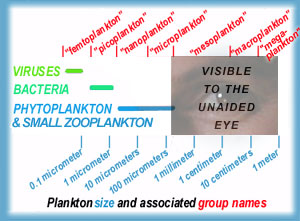
size of phytoplankton
This reminded me of a gemara in yershalmi succah.
סוכה דף ה,ב פרק א הלכה ה גמרא ר' יוחנן דו אמר עננים מלמעלה היו דו יליף לה מאספך. רשב"ל אמר עננים מלמטן היו דו יליף לה מעננים. א"ר אבין דין כדעתיה ודין כדעתיה ר' יוחן דו מדמי לה כמשלח לחבירו חבית וקנקנה. רשב"ל דו מדמי לה כהן דאמר לחבריה שלח קופתך וסב לך חיטין
Rabbi Yochanan and Resh Lakish have a dispute whether to derive the rules for kosher Schach for a Succah from the Clouds of Glory that covered the Jews when in the Desert. A perspective on the dispute is that the kosher Succah covering must "grow" from the ground. One holds clouds "grow" from the ground and the other holds they do not. (Growing means that there is some source from below for them.) There is a verse in the beginning of Berishit about a cloud/mist arising from the ground to water the Garden of Eden. In the above cited gemara, R Avin says: R Yochanan who thinks a cloud is entirely from above compares it to one who sends a barrel of wine together with its container. Resh Lakish who thinks there is some input from below compares it to one who says to his friend send me your basket and take for yourself in it wheat.
The specific meaning of these opinions in the gemara aside, it is interesting that there is here some input from below, with the plankton able to create a cloud for protection above themselves on demand.
מָה-רַבּוּ מַעֲשֶׂיךָ השם!
כֻּלָּם, בְּחָכְמָה עָשִׂיתָ
מָלְאָה הָאָרֶץ, קִנְיָנֶךָ.
זֶה, הַיָּם גָּדוֹל-- וּרְחַב יָדָיִם:
שָׁם-רֶמֶשׂ, וְאֵין מִסְפָּר; חַיּוֹת קְטַנּוֹת, עִם-גְּדֹלוֹת.
"How manifold are Thy works, O LORD! In wisdom hast Thou made them all;
the earth is full of Thy creatures.
Yonder sea, great and wide,
therein are creeping things innumerable, living creatures, both small and great."
I just read on Wired about a new discovery. Phyloplankton, tiny creatures (between 1 and 100 micrometers) that live in water can protect themselves from UV radiation by causing a cloud to form over them:
Phytoplankton may be small, but that doesn't mean they can't do big things -- like change the weather to suit their needs.
A recent study funded by NASA's Earth Science Department shows that the tiny sea plants release high quantities of cloud-forming compounds on days when the sun's harmful ultraviolet rays are especially strong. The compounds evaporate into the air through a series of chemical processes that result in especially reflective clouds. This, in turn, blocks the radiation from bothering the phytoplankton.

size of phytoplankton

This reminded me of a gemara in yershalmi succah.
סוכה דף ה,ב פרק א הלכה ה גמרא ר' יוחנן דו אמר עננים מלמעלה היו דו יליף לה מאספך. רשב"ל אמר עננים מלמטן היו דו יליף לה מעננים. א"ר אבין דין כדעתיה ודין כדעתיה ר' יוחן דו מדמי לה כמשלח לחבירו חבית וקנקנה. רשב"ל דו מדמי לה כהן דאמר לחבריה שלח קופתך וסב לך חיטין
Rabbi Yochanan and Resh Lakish have a dispute whether to derive the rules for kosher Schach for a Succah from the Clouds of Glory that covered the Jews when in the Desert. A perspective on the dispute is that the kosher Succah covering must "grow" from the ground. One holds clouds "grow" from the ground and the other holds they do not. (Growing means that there is some source from below for them.) There is a verse in the beginning of Berishit about a cloud/mist arising from the ground to water the Garden of Eden. In the above cited gemara, R Avin says: R Yochanan who thinks a cloud is entirely from above compares it to one who sends a barrel of wine together with its container. Resh Lakish who thinks there is some input from below compares it to one who says to his friend send me your basket and take for yourself in it wheat.
The specific meaning of these opinions in the gemara aside, it is interesting that there is here some input from below, with the plankton able to create a cloud for protection above themselves on demand.
Sunday, July 11, 2004
+2 prakim = chagiga. +1 perek of moed katan.
הדרן עלך אין דורשין!
הדרן עלך חומר בקדש!
(2nd, 3rd perek yerushalmi chagiga)
וסליקא לה מסכת חגיגה!
הדרן עלך משקין בית השלחין!
(1st perek yerushlami moed katan)
הדרן עלך חומר בקדש!
(2nd, 3rd perek yerushalmi chagiga)
וסליקא לה מסכת חגיגה!
הדרן עלך משקין בית השלחין!
(1st perek yerushlami moed katan)
ערוך השלחן, יורה דעה א, סימן פ"ד
The following is in Aruch Hashulchan, Yoreh Deah Aleph, Siman 84.
Written by Rav Yechiel Michel Epstein, born 1829, passed away 1888.
לו: יש מי שכתב בשם חכמי הטבע דהמסתכל בזכוכית המגדלת שקורין ספאקטיוו"א יראה בחומץ מלא תולעים והנה בחומץ אין חשש כמו שנתבאר דהתולעים המתהוים בתלוש התירה התורה. אמנם שמעתי שבכל מיני מים וביחוד במי גשמים מלא ברואים דקים שאין העין יכולה לראותם. ובילדותי שמעתי מפי אחד שהיה במרחקים וראה דרך זכוכית המגדלת עד מאד כרבבות פעמים במים כל המיני ברואים, ולפי זה איך אנו שותים מים, שהרי אלו הברואים נתהוו במקורם, אמנם האמת הוא דלא אסרה תורה במה שאין העין שולטת בו, דלא ניתנה תורה למלאכים, דאם לא כן, הרי כמה מהחוקרים כתבו שגם כל האויר הוא מלא ברואים דקים מן הדקים, וכשהאדם פותח פיו בולע כמה מהם, אלא וודאי דהבל יפצה פיהם, ואף אם כן הוא כיון שאין העין שולט בהם, לאו כלום הוא. אמנם, במה שהעין יכול לראות, אפילו נגד השמש, ואפילו דק מן הדק, הוא שרץ גמור
לז: ולכן, יש ליזהר מאד בקיץ באותם ששותים מן הנהרות ומן האגמים ומעינות שאינם עמוקים דעל ידי החמימות נתהוו שם כמו זבובים קטנים ותולעים קטנים, ויש ליזהר לסנן המים במסננת דקה מן הדקה, או על ידי בגד, בדרך שאנו מסננים המים בפסח מפני חשש תערובת חמץ, אבל בבארות ומעיינות עמוקים אין הרחש מצוי בהם
36: There is one who writes, citing naturalists, that if one looks with a magnifying glass that they call spectiva he will see in the vinegar, full of of worms. And behold, in vinegar there is no concern, as was explained, that worm which come into being detached {J: presumably not attached to the ground} the Torah permits. However, I have heard that in all types of water, and specifically in rainwater, is filled with tiny creatures that the eye is not able to see them. {J: That is, they are not visible to the naked eye.} And in my youth I heard from one who was abroad and saw via a magnifying glass, many, like a myriad/10,000 instances, in water, all types of creatures. And, according to this, how can we drink water? For these creatures come into existence in their source!? However, the truth is that the Torah did not prohibit that which the eye does not rule over {J: that which is not visible to the naked eye}, for the Torah was not given to angels. For if not so, behold many of the investigators have written that also all of the air is full of finer than fine creatures, and when a man opens his mouth he swallows many of them. Rather, certainly they speak nonsense. And even if it is so, since the eye does not rule over them, they considers as if nothing. However, in that which the eye does rule over {J: what is visible to the naked eye}, even if only with direct sunlight, even finer than fine, is considered absolutely a Sheretz.
37: And therefore, there is to be very careful in the summer, for those who drink from rivers and from swamps and springs that are not deep, since via the heat there will cause to be there like small flies and small worms. And there is to be careful to filter the water with a filter, finer than fine, in the manner that we filter the water on Pesach because of the concern of a mixture of Chametz. But in the deep wells and springs the creeping creatures are not found in them.
To be continued...
Written by Rav Yechiel Michel Epstein, born 1829, passed away 1888.
לו: יש מי שכתב בשם חכמי הטבע דהמסתכל בזכוכית המגדלת שקורין ספאקטיוו"א יראה בחומץ מלא תולעים והנה בחומץ אין חשש כמו שנתבאר דהתולעים המתהוים בתלוש התירה התורה. אמנם שמעתי שבכל מיני מים וביחוד במי גשמים מלא ברואים דקים שאין העין יכולה לראותם. ובילדותי שמעתי מפי אחד שהיה במרחקים וראה דרך זכוכית המגדלת עד מאד כרבבות פעמים במים כל המיני ברואים, ולפי זה איך אנו שותים מים, שהרי אלו הברואים נתהוו במקורם, אמנם האמת הוא דלא אסרה תורה במה שאין העין שולטת בו, דלא ניתנה תורה למלאכים, דאם לא כן, הרי כמה מהחוקרים כתבו שגם כל האויר הוא מלא ברואים דקים מן הדקים, וכשהאדם פותח פיו בולע כמה מהם, אלא וודאי דהבל יפצה פיהם, ואף אם כן הוא כיון שאין העין שולט בהם, לאו כלום הוא. אמנם, במה שהעין יכול לראות, אפילו נגד השמש, ואפילו דק מן הדק, הוא שרץ גמור
לז: ולכן, יש ליזהר מאד בקיץ באותם ששותים מן הנהרות ומן האגמים ומעינות שאינם עמוקים דעל ידי החמימות נתהוו שם כמו זבובים קטנים ותולעים קטנים, ויש ליזהר לסנן המים במסננת דקה מן הדקה, או על ידי בגד, בדרך שאנו מסננים המים בפסח מפני חשש תערובת חמץ, אבל בבארות ומעיינות עמוקים אין הרחש מצוי בהם
36: There is one who writes, citing naturalists, that if one looks with a magnifying glass that they call spectiva he will see in the vinegar, full of of worms. And behold, in vinegar there is no concern, as was explained, that worm which come into being detached {J: presumably not attached to the ground} the Torah permits. However, I have heard that in all types of water, and specifically in rainwater, is filled with tiny creatures that the eye is not able to see them. {J: That is, they are not visible to the naked eye.} And in my youth I heard from one who was abroad and saw via a magnifying glass, many, like a myriad/10,000 instances, in water, all types of creatures. And, according to this, how can we drink water? For these creatures come into existence in their source!? However, the truth is that the Torah did not prohibit that which the eye does not rule over {J: that which is not visible to the naked eye}, for the Torah was not given to angels. For if not so, behold many of the investigators have written that also all of the air is full of finer than fine creatures, and when a man opens his mouth he swallows many of them. Rather, certainly they speak nonsense. And even if it is so, since the eye does not rule over them, they considers as if nothing. However, in that which the eye does rule over {J: what is visible to the naked eye}, even if only with direct sunlight, even finer than fine, is considered absolutely a Sheretz.
37: And therefore, there is to be very careful in the summer, for those who drink from rivers and from swamps and springs that are not deep, since via the heat there will cause to be there like small flies and small worms. And there is to be careful to filter the water with a filter, finer than fine, in the manner that we filter the water on Pesach because of the concern of a mixture of Chametz. But in the deep wells and springs the creeping creatures are not found in them.
To be continued...
Friday, July 09, 2004
+3 prakim = masechet megilla; +2 bava kamma; +1 chagiga
הדרן עלך הקורא!
הדרן עלך בני העיר!
הדרן עלך הקורא!
(2nd, 3rd, 4th perek yerushalmi megilla)
וסליקא לה מסכת מגילה!
הדרן עלך כיצד!
הדרן עלך המניח!
(2nd, 3rd perek yerushalmi bava kama)
הדרן עלך הכל חייבין!
(1st perek yerushalmi chagiga)
הדרן עלך בני העיר!
הדרן עלך הקורא!
(2nd, 3rd, 4th perek yerushalmi megilla)
וסליקא לה מסכת מגילה!
הדרן עלך כיצד!
הדרן עלך המניח!
(2nd, 3rd perek yerushalmi bava kama)
הדרן עלך הכל חייבין!
(1st perek yerushalmi chagiga)
Thursday, July 08, 2004
preparation for midrash class - subject: shidduchim
work in progress... nothing to do with parshat Pinchas, but everything to do with the midrash class I'm giving...
1) Ezer Kinegdo
Bereishit 2:18-24
2) Creation ex nihilo (yesh meAyin)
Bereishit 1:1
3) Yitzchak's riches
Bereishit 24:10
and pasuk 22
and when speaking to her family, verse 34-35:
and then, when the family agrees, verse 53:
4) Yaakov's poverty on the way to Charan:
Praying to Hashem, upon his return home from Charan, in Bereishit 32:11
Explanations: From Midrash Says, Bereishit, pg 273:
Bereishit 27:41
also:
Tehillim 121:1-8
Yalkut Shimoni, Tehillim Siman 874 (Parallel in Yalkut Shimoni on Bereishit 28, Siman 117):
Nedarim 66a:
Mishna:
[If one vows,] 'konam if i marry that ugly woman, whereas she is beautiful; that dark[-skinned] woman, whereas she is fair; 'that short woman, who in fact is tall, he is permitted to marry her, not because she was ugly, and became beautiful, or dark and turned fair, short and grew tall, but because the vow was made in error. And thus it happened with one who vowed not to benefit from his sister's daughter, and she was taken into r. Ishmael's house and made beautiful. My son, exclaimed r. Ishmael to him, 'did you vow not to benefit from this one!' 'no,' he replied, where upon r. Ishmael permitted her [to him]. In that hour r. Ishmael wept and said, 'the daughters of israel are beautiful, but poverty disfigures them.' and when r. Ishmael died, the daughters of israel raised a lament, saying, ye daughters of israel weep for r. Ishmael. And thus it is said too of saul, ye daughters of israel, weep over Saul (2 Sam 1:24)
A Tanna taught: She had a false tooth, and R. Ishmael made her a gold tooth at his own cost. 'When R. Ishmael died, a professional mourner commenced [the funeral eulogy] thus: Ye daughters of Israel, weep over R. Ishmael, who clothed you etc.
Nedarim 66b:
A man once said to his wife, 'Konam that you benefit not from me, until you make R. Judah and R. Simeon taste of your cooking.' R. Judah tasted thereof, observing, 'It is but logical: If, in order to make peace between husband and wife, the Torah commanded, Let My Name, written to sanctity, be dissolved in "the cursed waters", though 'tis but doubtful, how much more so I!' R. Simeon did not taste thereof, exclaiming, 'Let all the widows' children perish, rather than that Simeon be moved from his standpoint, lest they fall into the habit of vowing.'
...
A man once said to his wife, 'Konam that you benefit not from me, until you shew aught beautiful in yourself to R. Ishmael son of R. Jose.'
Said he (R Yishmael) to them: 'Perhaps her head is beautiful?'
'It is round,' they replied.
'Perhaps her hair is beautiful?'
'It is like stalks of flax.'
'Perhaps her eyes are beautiful?'
'They are bleared.'
'Perhaps her nose is beautiful?'
'It is swollen.'
'Perhaps her lips are beautiful?'
'They are thick.'
'Perhaps her neck is beautiful?'
'It is squat.'
'Perhaps her abdomen is beautiful?'
'It protrudes.'
'Perhaps her feet are beautiful?'
'They are as broad as those of a duck.'
'Perhaps her name is beautiful?'
'It is lichluchith.'
Said he to them, 'She is fittingly called lichluchith, since she is repulsive through her defects'; and so he permitted her [to her husband].
Tosefta Moed Katan:
א,ו אין מקדשין נשים במועד רבי יהודה מתיר שמא יקדמנו אחר ברחמים ממאנין ומגרשין וחולצין ומייבמין במועד.
One should not betroth women during Chol HaMoed. Rabbi Yehusa permits, lest one precede him via Mercy...
Yerushalmi Betza 20b, 5:2
ולא מקדשין: רבי בא בר כהן אמר קומי ר' יוסה ר' אחא בשם ר' יעקב בר אידי אסור לארס אשה בע"ש הדא דאת אמר שלא לעשות סעודת אירוסין הא לארס יארס שמואל אמר אפילו בתשעה באב יארס שלא יקדמנו אחר מחלפא שיטתיה דשמואל תמן הוא אמר (תהילים סח) מושיב יחידים ביתה (תהילים סב) במאזנים לעלות המה מהבל יחד והכא הוא אמר הכין שלא יקדמנו אחר בתפילה אפילו כן לא
קיימה
And they do not betroth: Rabbi Ba bar Koehn said before R Yosa; R Acha cited R Yaakov bar Idi: It is forbidden to betroth a woman on Friday. This that you say, is not so make a feast of Betrothal. But, to betroth, he should betroth. Shmuel said, even during Tisha BeAv he should betroth, so that another should not precede him.
Shmuel's positions are inconsistent! There he said (Tehillim 68) "אֱלֹקִים, מוֹשִׁיב יְחִידִים בַּיְתָה-- מוֹצִיא אֲסִירִים, בַּכּוֹשָׁרוֹת;" - "God maketh the solitary to dwell in a house; He bringeth out the prisoners into prosperity"
and (Tehillim 62) "if they be laid in the balances, they are together lighter than vanity." And here he says this!! The answer: that one should not precede him with Prayer. Even so, it will not last.
Pirkei DeRabbi Eliezer chapter 16
ר' אבהו אמ' רצה הב"ה לגמול חסד ליצחק ושלח מלאך לפני אליעזר ונקפצה הדרך עליו ובג' שעות בא העבד לחרן והכל לפני הב"ה ובת מלכים שלא יצאה לשאוב מימים ימימה יצאה לשאוב מים באותה שעה והנערה שלא היתה יודעת מי הוא האיש קבלה עליה להזדוג ליצחק למה שהיתה ראויה ממעי אמה שנ' במאזנים לעלות המה מהבל יחד וענו לבן ובתואל הואיל והדבר יצא מפי הגבורה אין אנו יכולין לעכב שנ' ויען לבן ובתואל ויאמרו וכו' הנה רבקה לפניך קח ולך
R Abahu said: God desired to do loving-kindness to Yitzchak, and sent an angel before Eliezer, and the way was made short for him, and in 3 hours the servant came to Charan, (לְעֵת עֶרֶב) and all was before Hashem, and a princess who would not ordinarily go out to draw water went out to draw water. At that hour, the young girl who did not know who the man (Yitzchak) was accepted upon herself to be matched with Yitzchak. Why? Since she was fit from her mother's womb, as the verse states, במאזנים לעלות המה מהבל יחד. And Lavan and Bethuel answered, and said, Here is Rivka before you. Take her with you and go...
Tehillim 62:10
אַךְ, הֶבֶל בְּנֵי-אָדָם-- כָּזָב בְּנֵי-אִישׁ:
בְּמֹאזְנַיִם לַעֲלוֹת; הֵמָּה, מֵהֶבֶל יָחַד.
Men of low degree are vanity, and men of high degree are a lie; {N}
if they be laid in the balances, they are together lighter than vanity.
Moed Katan 18b
MISHNA: The following documents may be written on the middle days: contracts of betrothing, bills of divorce, and receipts in discharge of debts; also wills or codicils; deeds of gift; premonitions; and deeds of maintenance, certificates of Halitza, and certificates of refusal; arbitration bonds; decrees of the Beth Din; and powers of attorney.
אמר שמואל מותר לארס אשה בחולו של מועד שמא יקדמנו אחר לימא מסייע ליה ואלו כותבין במועד קדושי נשים מאי לאו שטרי קדושין ממש לא שטרי פסיקתא וכדרב גידל אמר רב דאמר רב גידל אמר רב כמה אתה נותן לבנך כך וכך כמה אתה נותן לבתך כך וכך עמדו וקדשו קנו הן הן הדברים הנקנין באמירה לימא מסייע ליה אין נושאין נשים במועד לא בתולות ולא אלמנות ולא מיבמין מפני ששמחה היא לו הא לארס שרי לא מיבעיא קאמר לא מיבעיא לארס דלא קעביד מצוה אלא אפילו לישא נמי דקא עביד מצוה אסור תא שמע דתנא דבי שמואל מארסין אבל לא כונסין ואין עושין סעודת אירוסין ולא מיבמין מפני ששמחה היא לו ש"מ ומי אמר שמואל שמא יקדמנו אחר והאמר רב יהודה אמר שמואל בכל יום ויום בת קול יוצאת ואומרת בת פלוני לפלוני שדה פלוני לפלוני אלא שמא יקדמנו אחר ברחמים כי הא דרבא שמעיה לההוא גברא דבעי רחמי ואמר תזדמן לי פלניתא א"ל לא תיבעי רחמי הכי אי חזיא לך לא אזלא מינך ואי לא כפרת בה' בתר הכי שמעיה דקאמר או איהו לימות מקמה או איהי תמות מקמיה א"ל לאו אמינא לך לא תיבעי עלה דמילתא הכי
GEMARA: Samuel said: "One is permitted to become betrothed to a woman on the middle days, for fear that he may be preceded by another one."
...
And does Shmuel indeed say "Let one precede him? But Rav Yehuda said in the name of Shmuel, on every single day, a bat kol goes out and says, 'the daughter of Ploni to Ploni. The field of Ploni to Ploni?!
Rather, lest someone precede him with Mercy. Like this instance, in which Rava heard a certain main pleading for Mercy and said "Plonita should marry me." Rava said to him, do not request Mercy in such a manner. If it is fitting to you, she will not leave you. And if not, you will have denied God. (Rashi: your faith will be weakened because your request will not be granted.) Afterwards he heard it said, either he will die before her, or she will die before him.
...
Rab said in the name of R. Reuben b. Atztrubli: It appears from the Torah, the Prophets, and the Writings that the union of a woman to her husband comes from God himself. The Law [Gen. xxiv. 50]: "Then Laban and Bethuel answered and said: The thing hath proceeded from the Lord," etc.; the Prophets [Judges, xiv. 4]: "But his father and his mother knew not that it was from the Lord"; the Hagiographa [Prov. xix. 14]: בַּיִת וָהוֹן, נַחֲלַת אָבוֹת; וּמֵה' אִשָּׁה מַשְׂכָּלֶת - "Houses and wealth are an inheritance from fathers; but from the Lord cometh an intelligent wife."
Shimshon: Judges 14:1-4: And Samson went down to Timnah, and saw a woman in Timnah of the daughters of the Philistines. And he came up, and told his father and his mother, and said: 'I have seen a woman in Timnah of the daughters of the Philistines; now therefore get her for me to wife.' Then his father and his mother said unto him: 'Is there never a woman among the daughters of thy brethren, or among all my people, that thou goest to take a wife of the uncircumcised Philistines?' And Samson said unto his father: 'Get her for me; for she pleaseth me well.' But his father and his mother knew not that it was of the LORD; for he sought an occasion against the Philistines. Now at that time the Philistines had rule over Israel.
Tos: wondered why did not say - here with the second match, here with the first match, as we learned in the 2nd perek of Sanhedrin (22a) and in the first perek of Sota (2a).
Sanhedrin 22a:
א"ר שמואל בר רב יצחק כי הוה פתח ריש לקיש בסוטה אמר הכי אין מזווגין לו לאדם אשה אלא לפי מעשיו שנא' כי לא ינוח שבט הרשע על גורל הצדיקים אמר רבה בר בר חנה אמר ר' יוחנן וקשין לזווגן כקריעת ים סוף שנאמר אלהים מושיב יחידים ביתה מוציא אסירים בכושרות איני והא אמר רב יהודה אמר רב ארבעים יום קודם יצירת הולד בת קול יוצאת ואומרת בת פלוני לפלוני בית פלוני לפלוני שדה פלוני לפלוני לא קשיא הא בזוג ראשון הא בזוג שני:
R Shmuel bar Rav Yitzchak said: when Resh Lakish began with Sota, he said as follows: A man is not matched with a wife except according to his deeds. As it states, "For the rod of wickedness shall not rest upon the lot of the righteous;" (Tehillim 125:3)
Rabba bar bar Chana said in the name of R Yochanan. And it is difficult to match them as the splitting of the Red Sea, as the verse states, מושיב יחידים ביתה מוציא אסירים בכושרות, "God maketh the solitary to dwell in a house; He bringeth out the prisoners into prosperity."
Is this truly so? But did not Rav Yehuda say citing Rav, 40 days before the formation of the child a Bat Kol goes out and says, 'The daughter of Ploni to Ploni. Such and such a house to Ploni. Such and such a field to Ploni. This is no question. Here for the first match, and here for the second match.
(Rashi: Zug rishon: based on his mazal. Zug sheni: based on his deeds. And it is difficult to match them because she is not his match (bat zugo).)
Yalkut Shimoni on Tehillim 68:
After above material from Sota: A matron asked R Yosi, In how many days did Hashem create the world? He replied, in six. And from that hour, with what does He involve Himself? He said to her, He sits and makes matches, a man to a woman and a woman to a man. She said, if this matter is difficult, I am able to match up 100 male slaves and 100 female slaves in one night.
She did so. They stood and hit one another, and injured one another. This one (male) said I take this one, and this one (female) said I take this one. On the morrow, she sent for him (R Yosi) and called him and told him all these matters. He said, if the matter is simple in your eyes it is difficult before God like the splitting of the Red Sea, as the verse states מושיב יחידים ביתה מוציא אסירים בכושרות.
(Another version is that Hashem spends time making ladders, to lift one up and take the other down. Wheel of Fortune. and cite verse.) {J: and note macro and micro scale of things. Scheduling problem in computer science.}
{Update Nov 15, 2004: I originally thought this might be like a scheduling problem, with numerous constraints, and that was why they hit each other - each wanted someone else. This is in fact possible from the phrasing ... But I saw a version of the story in midrash rabba on parashat vayeitzei today, where she specifically lined them up and said who would go with whom, and they came back the next day bruised. And it is followed with the statement מושיב יחידים ביתה מוציא אסירים בכושרות, that Hashem can do it for their good or bad, against their will - thus בכושרות as בכי = crying + שירות= songs.}
Rabbi Yudan said, even one Mamzer on one side of the world and one Mamzeret on the other side, Hashem brings them and matches one to the other. What's the reason: מושיב יחידים ביתה.
1) Ezer Kinegdo
Bereishit 2:18-24
וַיֹּאמֶר ה אֱלֹקִים, לֹא-טוֹב הֱיוֹת הָאָדָם לְבַדּוֹ; אֶעֱשֶׂה-לּוֹ עֵזֶר, כְּנֶגְדּוֹ.
וַיִּצֶר ה אֱלֹקִים מִן-הָאֲדָמָה, כָּל-חַיַּת הַשָּׂדֶה וְאֵת כָּל-עוֹף הַשָּׁמַיִם, וַיָּבֵא אֶל-הָאָדָם, לִרְאוֹת מַה-יִּקְרָא-לוֹ; וְכֹל אֲשֶׁר יִקְרָא-לוֹ הָאָדָם נֶפֶשׁ חַיָּה, הוּא שְׁמוֹ.
וַיִּקְרָא הָאָדָם שֵׁמוֹת, לְכָל-הַבְּהֵמָה וּלְעוֹף הַשָּׁמַיִם, וּלְכֹל, חַיַּת הַשָּׂדֶה; וּלְאָדָם, לֹא-מָצָא עֵזֶר כְּנֶגְדּוֹ.
וַיַּפֵּל ה אֱלֹקִים תַּרְדֵּמָה עַל-הָאָדָם, וַיִּישָׁן; וַיִּקַּח, אַחַת מִצַּלְעֹתָיו, וַיִּסְגֹּר בָּשָׂר, תַּחְתֶּנָּה.
וַיִּבֶן ה אֱלֹקִים אֶת-הַצֵּלָע אֲשֶׁר-לָקַח מִן-הָאָדָם, לְאִשָּׁה; וַיְבִאֶהָ, אֶל-הָאָדָם.
וַיֹּאמֶר, הָאָדָם, זֹאת הַפַּעַם עֶצֶם מֵעֲצָמַי, וּבָשָׂר מִבְּשָׂרִי; לְזֹאת יִקָּרֵא אִשָּׁה, כִּי מֵאִישׁ לֻקְחָה-זֹּאת.
עַל-כֵּן, יַעֲזָב-אִישׁ, אֶת-אָבִיו, וְאֶת-אִמּוֹ; וְדָבַק בְּאִשְׁתּוֹ, וְהָיוּ לְבָשָׂר אֶחָד.
"And the LORD God said: 'It is not good that the man should be alone; I will make him a help meet for him.'
And out of the ground the LORD God formed every beast of the field, and every fowl of the air; and brought them unto the man to see what he would call them; and whatsoever the man would call every living creature, that was to be the name thereof.
And the man gave names to all cattle, and to the fowl of the air, and to every beast of the field; but for Adam there was not found a help meet for him.
And the LORD God caused a deep sleep to fall upon the man, and he slept; and He took one of his ribs, and closed up the place with flesh instead thereof.
And the rib, which the LORD God had taken from the man, made He a woman, and brought her unto the man.
And the man said: 'This is now bone of my bones, and flesh of my flesh; she shall be called Woman, because she was taken out of Man.'
Therefore shall a man leave his father and his mother, and shall cleave unto his wife, and they shall be one flesh.
2) Creation ex nihilo (yesh meAyin)
Bereishit 1:1
בְּרֵאשִׁית, בָּרָא אֱלֹקִים, אֵת הַשָּׁמַיִם, וְאֵת הָאָרֶץ.
וְהָאָרֶץ, הָיְתָה תֹהוּ וָבֹהוּ, וְחֹשֶׁךְ, עַל-פְּנֵי תְהוֹם; וְרוּחַ אֱלֹקִים, מְרַחֶפֶת עַל-פְּנֵי הַמָּיִם.
וַיֹּאמֶר אֱלֹקִים, יְהִי אוֹר; וַיְהִי-אוֹר.
"In the beginning God created the heaven and the earth.
Now the earth was unformed and void, and darkness was upon the face of the deep; and the spirit of God hovered over the face of the waters.
And God said: 'Let there be light.' And there was light."
3) Yitzchak's riches
Bereishit 24:10
וַיִּקַּח הָעֶבֶד עֲשָׂרָה גְמַלִּים מִגְּמַלֵּי אֲדֹנָיו, וַיֵּלֶךְ, וְכָל-טוּב אֲדֹנָיו, בְּיָדוֹ; וַיָּקָם, וַיֵּלֶךְ אֶל-אֲרַם נַהֲרַיִם--אֶל-עִיר נָחוֹר.
"And the servant took ten camels, of the camels of his master, and departed; having all goodly things of his master's in his hand; and he arose, and went to Aram-naharaim, unto the city of Nahor."
and pasuk 22
וַיְהִי, כַּאֲשֶׁר כִּלּוּ הַגְּמַלִּים לִשְׁתּוֹת, וַיִּקַּח הָאִישׁ נֶזֶם זָהָב, בֶּקַע מִשְׁקָלוֹ--וּשְׁנֵי צְמִידִים עַל-יָדֶיהָ, עֲשָׂרָה זָהָב מִשְׁקָלָם.
"And it came to pass, as the camels had done drinking, that the man took a golden ring of half a shekel weight, and two bracelets for her hands of ten shekels weight of gold;"
and when speaking to her family, verse 34-35:
וַיֹּאמַר: עֶבֶד אַבְרָהָם, אָנֹכִי.
וַה בֵּרַךְ אֶת-אֲדֹנִי, מְאֹד--וַיִּגְדָּל; וַיִּתֶּן-לוֹ צֹאן וּבָקָר, וְכֶסֶף וְזָהָב, וַעֲבָדִם וּשְׁפָחֹת, וּגְמַלִּים וַחֲמֹרִים.
"And he said: 'I am Abraham's servant.
And the LORD hath blessed my master greatly; and he is become great; and He hath given him flocks and herds, and silver and gold, and men-servants and maid-servants, and camels and asses."
and then, when the family agrees, verse 53:
וַיּוֹצֵא הָעֶבֶד כְּלֵי-כֶסֶף וּכְלֵי זָהָב, וּבְגָדִים, וַיִּתֵּן, לְרִבְקָה; וּמִגְדָּנֹת--נָתַן לְאָחִיהָ, וּלְאִמָּהּ.
"And the servant brought forth jewels of silver, and jewels of gold, and raiment, and gave them to Rebekah; he gave also to her brother and to her mother precious things."
4) Yaakov's poverty on the way to Charan:
Praying to Hashem, upon his return home from Charan, in Bereishit 32:11
"קָטֹנְתִּי מִכֹּל הַחֲסָדִים, וּמִכָּל-הָאֱמֶת, אֲשֶׁר עָשִׂיתָ, אֶת-עַבְדֶּךָ: כִּי בְמַקְלִי, עָבַרְתִּי אֶת-הַיַּרְדֵּן הַזֶּה, וְעַתָּה הָיִיתִי, לִשְׁנֵי מַחֲנוֹת.
I am not worthy of all the mercies, and of all the truth, which Thou hast shown unto Thy servant; for with my staff I passed over this Jordan; and now I am become two camps."
Explanations: From Midrash Says, Bereishit, pg 273:
"According to Midrash Tanchuma, it was Esav himself who pursued Yaakov. He would have assasinated Yaakov if not for Hashem's performing obvious miracles for Yaakov. Esav rode ahead of Yaakov and lay in wait for him, but Yaakov took a different route from the one Esav expected. He crossed the Jordan, striking the river with his rod and splitting it so that he was able to cross on dry land. When Yaakov did not come Esav's way, Esav pursued him further, and finally spotted Yaakov near a cave that contained warm water springs. Yaakov thought, "Yitzchak did not give me any food along when I left; at least let me go and warm myself in the spring water!" He entered the cave to bathe while Esav and his men encircled the cave to trap him. Hashem, however, protected Yaakov, and he escaped unharmed.
Bereishit 27:41
וַיִּשְׂטֹם עֵשָׂו, אֶת-יַעֲקֹב, עַל-הַבְּרָכָה, אֲשֶׁר בֵּרְכוֹ אָבִיו; וַיֹּאמֶר עֵשָׂו בְּלִבּוֹ, יִקְרְבוּ יְמֵי אֵבֶל אָבִי, וְאַהַרְגָה, אֶת-יַעֲקֹב אָחִי.
"And Esau hated Jacob because of the blessing wherewith his father blessed him. And Esau said in his heart: 'Let the days of mourning for my father be at hand; then will I slay my brother Jacob.'"
also:
"Yaakov secretly left Beer Sheva to flee from his brother Esav, but Esav heard news of Yaakov's departure. He commanded his son Elifaz to pursue Yaakov and kill him for having stolen his blessing. (Midrash Agada 28:20).
Esav persuaded Elifaz, "My son, if you kill Yaakov, you will regain the first-bron right." Elifaz, however, was reluctant and asked his mother Adah for her opinion. "My son," she advised him, "do not attempt to kill Yaakov. He is stronger than you, and he will slay you. If your wicked father were not afraid that Yaakov would kill him, he himself would pursue him rather than delegate the errand to you." (Tosafot HaRosh parashat Vayishlach)
Yet Elifaz did not dare ignore his father's command altogether. He pursued Yaakov and overtook him, but he did not kill him, since Elifaz had grown up under his grandfather's tutelage and would therefore not lay hands upon Yaakov (Midrash Tanchuma 2, Vayera 28). Instead, he robbed him of whatever he possessed because a pauper is likened to a dead man. He even stripped Yaakov of his clothes, leaving him destitute and naked. (Sefer HaYashar)
Tehillim 121:1-8
שִׁיר, לַמַּעֲלוֹת: אֶשָּׂא עֵינַי, אֶל-הֶהָרִים-- מֵאַיִן יָבֹא עֶזְרִי
עֶזְרִי, מֵעִם ה-- עֹשֵׂה, שָׁמַיִם וָאָרֶץ.
אַל-יִתֵּן לַמּוֹט רַגְלֶךָ; אַל-יָנוּם, שֹׁמְרֶךָ.
הִנֵּה לֹא-יָנוּם, וְלֹא יִישָׁן-- שׁוֹמֵר, יִשְׂרָאֵל.
ה שֹׁמְרֶךָ; ה צִלְּךָ, עַל-יַד יְמִינֶךָ.
יוֹמָם, הַשֶּׁמֶשׁ לֹא-יַכֶּכָּה; וְיָרֵחַ בַּלָּיְלָה.
ה, יִשְׁמָרְךָ מִכָּל-רָע: יִשְׁמֹר, אֶת-נַפְשֶׁךָ
ה, יִשְׁמָר-צֵאתְךָ וּבוֹאֶךָ-- מֵעַתָּה, וְעַד-עוֹלָם.
"A Song of Ascents.
I will lift up mine eyes unto the mountains: from whence shall my help come?
My help cometh from the LORD, who made heaven and earth.
He will not suffer thy foot to be moved; He that keepeth thee will not slumber.
Behold, He that keepeth Israel doth neither slumber nor sleep.
The LORD is thy keeper; the LORD is thy shade upon thy right hand.
The sun shall not smite thee by day, nor the moon by night.
The LORD shall keep thee from all evil; He shall keep thy soul.
The LORD shall guard thy going out and thy coming in, from this time forth and for ever.
Yalkut Shimoni, Tehillim Siman 874 (Parallel in Yalkut Shimoni on Bereishit 28, Siman 117):
שִׁיר, לַמַּעֲלוֹת: אֶשָּׂא עֵינַי, אֶל-הֶהָרִים-- מֵאַיִן, יָבֹא עֶזְרִי
A Song of Ascents.
I will lift up mine eyes unto the mountains: from whence shall my help come?
Rabbi Shmuel bar Nachmeni said, אֶל-הֶהורִים = אֶל-הֶהָרִים, the teachers- to those who have taught and made me. מֵאַיִן יָבֹא עֶזְרִי? {From Nothing (Ayin), shall my Ezer Kinegdo = helpmeet come?}
The verse speaks of Yaakov. He said, at the time that Eliezer went to bring Rivka, what does it say by him? "And the servant took ten camels, of the camels of his master..." And I have not a single ring, nor a single bracelet. {see above verse 22}
R Chanina said, שלח אותו גדוד. R Yehoshua ben Levi said, he sent with him {wealth} but Esav stood against him and took it from him.
He {Yaakov} reversed himself and said, Why do I take my thoughts away from my Creator? Rather, עֶזְרִי, מֵעִם ה-- עֹשֵׂה, שָׁמַיִם וָאָרֶץ, My help{meet} will come from Hashem, creator of Heaven and Earth.
...
ה, יִשְׁמָרְךָ מִכָּל-רָע: יִשְׁמֹר, אֶת-נַפְשֶׁךָ
Hashem will protect you from Esav and from Lavan, and will protect your life from the Angel of Death.
ה, יִשְׁמָר-צֵאתְךָ וּבוֹאֶךָ
Hashem will guard your going and your coming..."And Yaakov left from Beer Sheva."
Nedarim 66a:
Mishna:
[If one vows,] 'konam if i marry that ugly woman, whereas she is beautiful; that dark[-skinned] woman, whereas she is fair; 'that short woman, who in fact is tall, he is permitted to marry her, not because she was ugly, and became beautiful, or dark and turned fair, short and grew tall, but because the vow was made in error. And thus it happened with one who vowed not to benefit from his sister's daughter, and she was taken into r. Ishmael's house and made beautiful. My son, exclaimed r. Ishmael to him, 'did you vow not to benefit from this one!' 'no,' he replied, where upon r. Ishmael permitted her [to him]. In that hour r. Ishmael wept and said, 'the daughters of israel are beautiful, but poverty disfigures them.' and when r. Ishmael died, the daughters of israel raised a lament, saying, ye daughters of israel weep for r. Ishmael. And thus it is said too of saul, ye daughters of israel, weep over Saul (2 Sam 1:24)
A Tanna taught: She had a false tooth, and R. Ishmael made her a gold tooth at his own cost. 'When R. Ishmael died, a professional mourner commenced [the funeral eulogy] thus: Ye daughters of Israel, weep over R. Ishmael, who clothed you etc.
Nedarim 66b:
A man once said to his wife, 'Konam that you benefit not from me, until you make R. Judah and R. Simeon taste of your cooking.' R. Judah tasted thereof, observing, 'It is but logical: If, in order to make peace between husband and wife, the Torah commanded, Let My Name, written to sanctity, be dissolved in "the cursed waters", though 'tis but doubtful, how much more so I!' R. Simeon did not taste thereof, exclaiming, 'Let all the widows' children perish, rather than that Simeon be moved from his standpoint, lest they fall into the habit of vowing.'
...
A man once said to his wife, 'Konam that you benefit not from me, until you shew aught beautiful in yourself to R. Ishmael son of R. Jose.'
Said he (R Yishmael) to them: 'Perhaps her head is beautiful?'
'It is round,' they replied.
'Perhaps her hair is beautiful?'
'It is like stalks of flax.'
'Perhaps her eyes are beautiful?'
'They are bleared.'
'Perhaps her nose is beautiful?'
'It is swollen.'
'Perhaps her lips are beautiful?'
'They are thick.'
'Perhaps her neck is beautiful?'
'It is squat.'
'Perhaps her abdomen is beautiful?'
'It protrudes.'
'Perhaps her feet are beautiful?'
'They are as broad as those of a duck.'
'Perhaps her name is beautiful?'
'It is lichluchith.'
Said he to them, 'She is fittingly called lichluchith, since she is repulsive through her defects'; and so he permitted her [to her husband].
Tosefta Moed Katan:
א,ו אין מקדשין נשים במועד רבי יהודה מתיר שמא יקדמנו אחר ברחמים ממאנין ומגרשין וחולצין ומייבמין במועד.
One should not betroth women during Chol HaMoed. Rabbi Yehusa permits, lest one precede him via Mercy...
Yerushalmi Betza 20b, 5:2
ולא מקדשין: רבי בא בר כהן אמר קומי ר' יוסה ר' אחא בשם ר' יעקב בר אידי אסור לארס אשה בע"ש הדא דאת אמר שלא לעשות סעודת אירוסין הא לארס יארס שמואל אמר אפילו בתשעה באב יארס שלא יקדמנו אחר מחלפא שיטתיה דשמואל תמן הוא אמר (תהילים סח) מושיב יחידים ביתה (תהילים סב) במאזנים לעלות המה מהבל יחד והכא הוא אמר הכין שלא יקדמנו אחר בתפילה אפילו כן לא
קיימה
And they do not betroth: Rabbi Ba bar Koehn said before R Yosa; R Acha cited R Yaakov bar Idi: It is forbidden to betroth a woman on Friday. This that you say, is not so make a feast of Betrothal. But, to betroth, he should betroth. Shmuel said, even during Tisha BeAv he should betroth, so that another should not precede him.
Shmuel's positions are inconsistent! There he said (Tehillim 68) "אֱלֹקִים, מוֹשִׁיב יְחִידִים בַּיְתָה-- מוֹצִיא אֲסִירִים, בַּכּוֹשָׁרוֹת;" - "God maketh the solitary to dwell in a house; He bringeth out the prisoners into prosperity"
and (Tehillim 62) "if they be laid in the balances, they are together lighter than vanity." And here he says this!! The answer: that one should not precede him with Prayer. Even so, it will not last.
Pirkei DeRabbi Eliezer chapter 16
ר' אבהו אמ' רצה הב"ה לגמול חסד ליצחק ושלח מלאך לפני אליעזר ונקפצה הדרך עליו ובג' שעות בא העבד לחרן והכל לפני הב"ה ובת מלכים שלא יצאה לשאוב מימים ימימה יצאה לשאוב מים באותה שעה והנערה שלא היתה יודעת מי הוא האיש קבלה עליה להזדוג ליצחק למה שהיתה ראויה ממעי אמה שנ' במאזנים לעלות המה מהבל יחד וענו לבן ובתואל הואיל והדבר יצא מפי הגבורה אין אנו יכולין לעכב שנ' ויען לבן ובתואל ויאמרו וכו' הנה רבקה לפניך קח ולך
R Abahu said: God desired to do loving-kindness to Yitzchak, and sent an angel before Eliezer, and the way was made short for him, and in 3 hours the servant came to Charan, (לְעֵת עֶרֶב) and all was before Hashem, and a princess who would not ordinarily go out to draw water went out to draw water. At that hour, the young girl who did not know who the man (Yitzchak) was accepted upon herself to be matched with Yitzchak. Why? Since she was fit from her mother's womb, as the verse states, במאזנים לעלות המה מהבל יחד. And Lavan and Bethuel answered, and said, Here is Rivka before you. Take her with you and go...
Tehillim 62:10
אַךְ, הֶבֶל בְּנֵי-אָדָם-- כָּזָב בְּנֵי-אִישׁ:
בְּמֹאזְנַיִם לַעֲלוֹת; הֵמָּה, מֵהֶבֶל יָחַד.
Men of low degree are vanity, and men of high degree are a lie; {N}
if they be laid in the balances, they are together lighter than vanity.
Moed Katan 18b
MISHNA: The following documents may be written on the middle days: contracts of betrothing, bills of divorce, and receipts in discharge of debts; also wills or codicils; deeds of gift; premonitions; and deeds of maintenance, certificates of Halitza, and certificates of refusal; arbitration bonds; decrees of the Beth Din; and powers of attorney.
אמר שמואל מותר לארס אשה בחולו של מועד שמא יקדמנו אחר לימא מסייע ליה ואלו כותבין במועד קדושי נשים מאי לאו שטרי קדושין ממש לא שטרי פסיקתא וכדרב גידל אמר רב דאמר רב גידל אמר רב כמה אתה נותן לבנך כך וכך כמה אתה נותן לבתך כך וכך עמדו וקדשו קנו הן הן הדברים הנקנין באמירה לימא מסייע ליה אין נושאין נשים במועד לא בתולות ולא אלמנות ולא מיבמין מפני ששמחה היא לו הא לארס שרי לא מיבעיא קאמר לא מיבעיא לארס דלא קעביד מצוה אלא אפילו לישא נמי דקא עביד מצוה אסור תא שמע דתנא דבי שמואל מארסין אבל לא כונסין ואין עושין סעודת אירוסין ולא מיבמין מפני ששמחה היא לו ש"מ ומי אמר שמואל שמא יקדמנו אחר והאמר רב יהודה אמר שמואל בכל יום ויום בת קול יוצאת ואומרת בת פלוני לפלוני שדה פלוני לפלוני אלא שמא יקדמנו אחר ברחמים כי הא דרבא שמעיה לההוא גברא דבעי רחמי ואמר תזדמן לי פלניתא א"ל לא תיבעי רחמי הכי אי חזיא לך לא אזלא מינך ואי לא כפרת בה' בתר הכי שמעיה דקאמר או איהו לימות מקמה או איהי תמות מקמיה א"ל לאו אמינא לך לא תיבעי עלה דמילתא הכי
GEMARA: Samuel said: "One is permitted to become betrothed to a woman on the middle days, for fear that he may be preceded by another one."
...
And does Shmuel indeed say "Let one precede him? But Rav Yehuda said in the name of Shmuel, on every single day, a bat kol goes out and says, 'the daughter of Ploni to Ploni. The field of Ploni to Ploni?!
Rather, lest someone precede him with Mercy. Like this instance, in which Rava heard a certain main pleading for Mercy and said "Plonita should marry me." Rava said to him, do not request Mercy in such a manner. If it is fitting to you, she will not leave you. And if not, you will have denied God. (Rashi: your faith will be weakened because your request will not be granted.) Afterwards he heard it said, either he will die before her, or she will die before him.
...
Rab said in the name of R. Reuben b. Atztrubli: It appears from the Torah, the Prophets, and the Writings that the union of a woman to her husband comes from God himself. The Law [Gen. xxiv. 50]: "Then Laban and Bethuel answered and said: The thing hath proceeded from the Lord," etc.; the Prophets [Judges, xiv. 4]: "But his father and his mother knew not that it was from the Lord"; the Hagiographa [Prov. xix. 14]: בַּיִת וָהוֹן, נַחֲלַת אָבוֹת; וּמֵה' אִשָּׁה מַשְׂכָּלֶת - "Houses and wealth are an inheritance from fathers; but from the Lord cometh an intelligent wife."
Shimshon: Judges 14:1-4: And Samson went down to Timnah, and saw a woman in Timnah of the daughters of the Philistines. And he came up, and told his father and his mother, and said: 'I have seen a woman in Timnah of the daughters of the Philistines; now therefore get her for me to wife.' Then his father and his mother said unto him: 'Is there never a woman among the daughters of thy brethren, or among all my people, that thou goest to take a wife of the uncircumcised Philistines?' And Samson said unto his father: 'Get her for me; for she pleaseth me well.' But his father and his mother knew not that it was of the LORD; for he sought an occasion against the Philistines. Now at that time the Philistines had rule over Israel.
Tos: wondered why did not say - here with the second match, here with the first match, as we learned in the 2nd perek of Sanhedrin (22a) and in the first perek of Sota (2a).
Sanhedrin 22a:
א"ר שמואל בר רב יצחק כי הוה פתח ריש לקיש בסוטה אמר הכי אין מזווגין לו לאדם אשה אלא לפי מעשיו שנא' כי לא ינוח שבט הרשע על גורל הצדיקים אמר רבה בר בר חנה אמר ר' יוחנן וקשין לזווגן כקריעת ים סוף שנאמר אלהים מושיב יחידים ביתה מוציא אסירים בכושרות איני והא אמר רב יהודה אמר רב ארבעים יום קודם יצירת הולד בת קול יוצאת ואומרת בת פלוני לפלוני בית פלוני לפלוני שדה פלוני לפלוני לא קשיא הא בזוג ראשון הא בזוג שני:
R Shmuel bar Rav Yitzchak said: when Resh Lakish began with Sota, he said as follows: A man is not matched with a wife except according to his deeds. As it states, "For the rod of wickedness shall not rest upon the lot of the righteous;" (Tehillim 125:3)
Rabba bar bar Chana said in the name of R Yochanan. And it is difficult to match them as the splitting of the Red Sea, as the verse states, מושיב יחידים ביתה מוציא אסירים בכושרות, "God maketh the solitary to dwell in a house; He bringeth out the prisoners into prosperity."
Is this truly so? But did not Rav Yehuda say citing Rav, 40 days before the formation of the child a Bat Kol goes out and says, 'The daughter of Ploni to Ploni. Such and such a house to Ploni. Such and such a field to Ploni. This is no question. Here for the first match, and here for the second match.
(Rashi: Zug rishon: based on his mazal. Zug sheni: based on his deeds. And it is difficult to match them because she is not his match (bat zugo).)
Yalkut Shimoni on Tehillim 68:
After above material from Sota: A matron asked R Yosi, In how many days did Hashem create the world? He replied, in six. And from that hour, with what does He involve Himself? He said to her, He sits and makes matches, a man to a woman and a woman to a man. She said, if this matter is difficult, I am able to match up 100 male slaves and 100 female slaves in one night.
She did so. They stood and hit one another, and injured one another. This one (male) said I take this one, and this one (female) said I take this one. On the morrow, she sent for him (R Yosi) and called him and told him all these matters. He said, if the matter is simple in your eyes it is difficult before God like the splitting of the Red Sea, as the verse states מושיב יחידים ביתה מוציא אסירים בכושרות.
(Another version is that Hashem spends time making ladders, to lift one up and take the other down. Wheel of Fortune. and cite verse.) {J: and note macro and micro scale of things. Scheduling problem in computer science.}
{Update Nov 15, 2004: I originally thought this might be like a scheduling problem, with numerous constraints, and that was why they hit each other - each wanted someone else. This is in fact possible from the phrasing ... But I saw a version of the story in midrash rabba on parashat vayeitzei today, where she specifically lined them up and said who would go with whom, and they came back the next day bruised. And it is followed with the statement מושיב יחידים ביתה מוציא אסירים בכושרות, that Hashem can do it for their good or bad, against their will - thus בכושרות as בכי = crying + שירות= songs.}
Rabbi Yudan said, even one Mamzer on one side of the world and one Mamzeret on the other side, Hashem brings them and matches one to the other. What's the reason: מושיב יחידים ביתה.
Wednesday, July 07, 2004
A History of Copepods
What's the deal with copepods? Did Chazal know about them? Did they drink their water not knowing of copepods, or did they know of them and drink their water anyway?
Or, did they not have copepods? Or, did they have copepods and therefore did not drink the water unless it was filtered?]
This post will be a work in progress for a while, since there is much to write.
Aristotle and copepods
The first to discuss copepods in scientific literature was Aristotle. In his book History of Animals, chapter 19 (about sea fish), Aristotle writes:
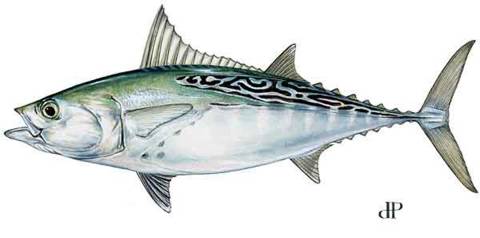
A picture of a little tunny

A picture of a swordfish
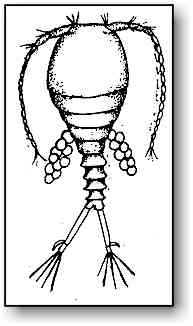
Image of cyclops copepod
From the website:
http://216.239.39.104/search?q=cache:9qLyrKtNwtoJ:www.epress.com/w3jbio/vol8/pahari/
pahari.doc+seasonal+copepod+water++new+york&hl=en
notes:
fairly large copepod parasites infesting frshwater and saltwater fish. most likely noticed by fisherman fairly early.
parasitic and non-parasitic (free-living) copepods.
freshwater Cyclops is non-parasitic.
Panella (parasitic copepod)
nearly every aqautic animal has copepod parasites.
Aristotle (384-322 BCE)
presumably fishermen brought them to his attention.
Pliny the Elder (23-79 CE)
basically restates what Aristotle wrote.
"The animal is small, looks like a scorpion, has the size of a spider. When the tuna and the swordfish are crowded together even more than dolphins, this is fastened at a points under the fins and inflicts so much dicomfort, that the often jump into the boats. They run as one fearing the whip, so fast that they jump shaking across the boat."

Image of Sirius, the dog star

Image of a scorpion
Update: Johan Christian Lange, in 1756, published a book, in which he "surveyed Copenhagen's drinking water. He published drawings of three "water-fleas" (a Cyclops species), one of which was carrying egg-sacs... As advice to his readers, Lange suggested that they use a bag of hat felt to filter the "fish" (all the small creatures) and plants from the water before drinking, or, if desired, they could "enjoy a soup of them if the water was boiled." (The Copepodologist's Cabinet, pg 35-36)
i need to arrange much of the above material.
there is a difference between parasitic and free-moving copepods, with the former being larger and thus discussed first (by Aristotle, Pliny, etc.)
to be continued in this post...
Or, did they not have copepods? Or, did they have copepods and therefore did not drink the water unless it was filtered?]
This post will be a work in progress for a while, since there is much to write.
Aristotle and copepods
The first to discuss copepods in scientific literature was Aristotle. In his book History of Animals, chapter 19 (about sea fish), Aristotle writes:
The tunny {J: = tuna} and the sword-fish are infested with a parasite about the rising of the Dog-star; that is to say, about this time both these fishes have a grub beside their fins that is nicknamed the 'gadfly'. It resembles the scorpion in shape, and is about the size of the spider. So acute is the pain it inflicts that the sword-fish will often leap as high out of the water as a dolphin; in fact, it sometimes leaps over the bulwarks of a vessel and falls back on the deck. The tunny delights more than any other fish in the heat of the sun. It will burrow for warmth in the sand in shallow waters near to shore, or will, because it is warm, disport itself on the surface of the sea.
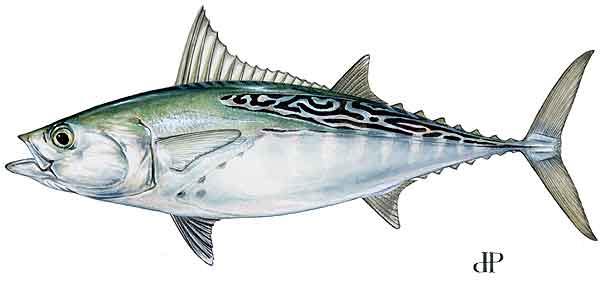
A picture of a little tunny

A picture of a swordfish


Image of cyclops copepod
From the website:
Cyclops are crustaceans and related to lobsters, crabs and shrimp. They are invertebrates with a hard outer shell. They swim freely about.
The cyclops has 5 pair of legs and a divided tail-like appendage called a furca. The Cyclops is very small about 2-3mm long with one black or red eye in the middle of its head. The cyclops is named after the one-eyed monster of Greek legend. It is greenish, straw yellow, or grayish in color. It goes jerking through the water usually in very large numbers. The females carry the eggs (shown in picture) in little side sacs and they multiply rapidly. The cyclops is often seen near water fleas or Daphnia. Many water animals feed upon the cyclops. It has a very important role in the food chain.
http://216.239.39.104/search?q=cache:9qLyrKtNwtoJ:www.epress.com/w3jbio/vol8/pahari/
pahari.doc+seasonal+copepod+water++new+york&hl=en
notes:
fairly large copepod parasites infesting frshwater and saltwater fish. most likely noticed by fisherman fairly early.
parasitic and non-parasitic (free-living) copepods.
freshwater Cyclops is non-parasitic.
Panella (parasitic copepod)
nearly every aqautic animal has copepod parasites.
Aristotle (384-322 BCE)
presumably fishermen brought them to his attention.
"It is a fact that this parasite copepod is found with a certain frequency on tuna and always near the fins, thus it would seem strange and could easily have excited the imagination of the first observers. It was only natural that Aristotle credited this animal with the form of a scorpion, maintaining the notion of discomfort to the host. Because of the parasite's varied extremities, caudal appendages, and egg sacs resembling feet, these could be thought of as sucking organs. It is admirable that Aristotle compared its size to that of a spider, and did not compare it to "insects" other than scorpions based on its external aspect. On the other hand, it had some characteristics of a worm, since Aristotle used the term "vermiculum." There were arguments much later that perhaps this parasite was an isopod, rather than a copepod, but the notation "worm," together with the other descriptive points, place it with the copepods. This uncertainly by Aristotle is hardly surprising, considering that even into the 1800s, zoologists were undecided about placing these organisms with insects, crustaceans, worms, or mollusks, or even into a separate group." (The Copepodologist's Cabinet)
Pliny the Elder (23-79 CE)
basically restates what Aristotle wrote.
"The animal is small, looks like a scorpion, has the size of a spider. When the tuna and the swordfish are crowded together even more than dolphins, this is fastened at a points under the fins and inflicts so much dicomfort, that the often jump into the boats. They run as one fearing the whip, so fast that they jump shaking across the boat."

Image of Sirius, the dog star

Image of a scorpion

Update: Johan Christian Lange, in 1756, published a book, in which he "surveyed Copenhagen's drinking water. He published drawings of three "water-fleas" (a Cyclops species), one of which was carrying egg-sacs... As advice to his readers, Lange suggested that they use a bag of hat felt to filter the "fish" (all the small creatures) and plants from the water before drinking, or, if desired, they could "enjoy a soup of them if the water was boiled." (The Copepodologist's Cabinet, pg 35-36)
i need to arrange much of the above material.
there is a difference between parasitic and free-moving copepods, with the former being larger and thus discussed first (by Aristotle, Pliny, etc.)
to be continued in this post...
Friday, July 02, 2004
Slika La Maseches Betza; Taanis; Rosh Hashona; Shabbos; Makos; + 1 perek in bava kama + 1 in megilla
;
הדרן עלך ביצה!
הדרן עלך יום טוב!
הדרן עלך אין צדין!
הדרן עלך המביא!
הדרן עלך משילין!
וסליקא לה מסכת ביצה!
(prakim 1-5 yerushalmi betza)
הדרן עלך מאימתי!
הדרן עלך סדר תעניות!
הדרן עלך סדר תעניות!
הדרן עלך בשלשה פרקים!
וסליקא לה מסכת תענית!
(prakim 1-4 yerushalmi taanis)
הדרן עלך ארבעה ראשי שנים!
הדרן עלך אם אינן מכירין!
הדרן עלך ראוהו בית דין!
הדרן עלך יום טוב!
וסליקא לה מסכת ראש השנה!
(prakim 1-4 yerushalmi rosh hashana)
הדרן עלך כיצד העדים!
הדרן עלך אילו הן הגולין!
הדרן עלך אילו הן הלוקין!
וסליקא לה מסכת מכות!
(prakim 1-3 yerushalmi makkos)
הדרן עלך מגילה נקראת!
(1st perek yerushalmi megilla)
הדרן עלך ארבעה אבות נזיקין!
(1st perek yerushalmi bava kama)
and I finally finished the 7th perek of shabbos, thus rounding out the masechta!
הדרן עלך כלל גדול!
וסליקא לה מסכת שבת!
הדרן עלך ביצה!
הדרן עלך יום טוב!
הדרן עלך אין צדין!
הדרן עלך המביא!
הדרן עלך משילין!
וסליקא לה מסכת ביצה!
(prakim 1-5 yerushalmi betza)
הדרן עלך מאימתי!
הדרן עלך סדר תעניות!
הדרן עלך סדר תעניות!
הדרן עלך בשלשה פרקים!
וסליקא לה מסכת תענית!
(prakim 1-4 yerushalmi taanis)
הדרן עלך ארבעה ראשי שנים!
הדרן עלך אם אינן מכירין!
הדרן עלך ראוהו בית דין!
הדרן עלך יום טוב!
וסליקא לה מסכת ראש השנה!
(prakim 1-4 yerushalmi rosh hashana)
הדרן עלך כיצד העדים!
הדרן עלך אילו הן הגולין!
הדרן עלך אילו הן הלוקין!
וסליקא לה מסכת מכות!
(prakim 1-3 yerushalmi makkos)
הדרן עלך מגילה נקראת!
(1st perek yerushalmi megilla)
הדרן עלך ארבעה אבות נזיקין!
(1st perek yerushalmi bava kama)
and I finally finished the 7th perek of shabbos, thus rounding out the masechta!
הדרן עלך כלל גדול!
וסליקא לה מסכת שבת!
Thursday, July 01, 2004
Parshat Balak: the land of the children of his people

A map of Israel from the time of King David
The above map, taken from this web site, should be useful in this dvar torah.
Sometimes things seem obvious to me but I haven't seen mentioned by anyone.
In the beginning of parshat Balak, we are told that Balak sends messengers to Bilam:
Bamidbar 22:5
וַיִּשְׁלַח מַלְאָכִים אֶל-בִּלְעָם בֶּן-בְּעֹר, פְּתוֹרָה אֲשֶׁר עַל-הַנָּהָר אֶרֶץ בְּנֵי-עַמּוֹ--לִקְרֹא-לוֹ: לֵאמֹר, הִנֵּה עַם יָצָא מִמִּצְרַיִם הִנֵּה כִסָּה אֶת-עֵין הָאָרֶץ, וְהוּא יֹשֵׁב, מִמֻּלִי.
"And he sent messengers unto Balaam the son of Beor, to Pethor, which is by the River, [to] the land of the children of his people, to call him, saying: 'Behold, there is a people come out from Egypt; behold, they cover the face of the earth, and they abide over against me."
What does this mean, "[to] the land of the children of his people." Some suggest that Balak was originally from that land (Aram?) and thus is sending home for help.
[to] is in brackets because is is added in the translation, and can be misleading.
I would suggest that there is a nun sofit missing or which is not needed. We are talking of things which are happening in Moab. Next to it is the land of Ammon. Look at the map above and see the various rivers in the vicinity. The Arnon river lies between the words (not necessarily the lands of?) Ammon and Moab. Yabbok river is by Rabat Benei Ammon, higher up. Even higher up is the Yarmuk river. And the Jordan river connects the sea of Kineret to the Dead Sea.
{Update July 2005: It would seem that the Arnon river formed the northern border of Moav, and the Yabbok river the southern border of Ammon, and between was the territory the Emorites had/had captured for themselves, now conquered by the Israelites.}
So the pasuk might be saying that this is Petor by the River in the land of Ammon. So Moav sent to their close neighbors for advice.
Why call is Eretz Benei Ammo?
If we look at the origin of these two nations, the two daughters of Lot bore to their father children. One boy was named Moav since he came "from father" and the other was called Ben-Ami, "son of my nation."
These gave rise to two nations, Moav, and Benei Ammon. (The Benei Ammon not to mean children of Ammon, but rather the plural of Ben Ami.)
{Update, July 2005: Meanwhile, consider Devarim 23:4-5:
perhaps to be continued.
}
A late dvar for parshat Chukas: For what sin was Moshe punished?
The most common assumption is that Moshe was punished for striking the rock, instead of speaking to it.
However, I do not think this is so clear from the psukim. After all, in the original command, Moshe was told to take his staff.
Bamidbar 20:8
Moshe takes the staff, speaks to the *people*, and hits the rock, twice.
Perhaps the way one "speaks" to a rock is by hitting it. And perhaps he was told to take the staff for the purpose of hitting the rock.
In the past, miracles were done with the staff, either by striking things or waving it over them.
Consider Shemot 7 for example.
and in 20:
וַיַּעֲשׂוּ-כֵן מֹשֶׁה וְאַהֲרֹן כַּאֲשֶׁר צִוָּה ה, וַיָּרֶם בַּמַּטֶּה וַיַּךְ אֶת-הַמַּיִם אֲשֶׁר בַּיְאֹר, לְעֵינֵי פַרְעֹה, וּלְעֵינֵי עֲבָדָיו; וַיֵּהָפְכוּ כָּל-הַמַּיִם אֲשֶׁר-בַּיְאֹר, לְדָם.
"And Moses and Aaron did so, as the LORD commanded; and he lifted up the rod, and smote the waters that were in the river, in the sight of Pharaoh, and in the sight of his servants; and all the waters that were in the river were turned to blood."
with the plague of frogs it seems he just let it hover over the water:
Shemot 8:
but this stretching out might also convey hitting. For the next plague, lice, we see:
Thus, hitting things with the staff to accomplish miracles is not farfetched, nor is it, of necessity, to be considered a lack of faith.
Yet, Moshe and Aharon (both of whom were told to gather and speak to the rock) are punished for a lack of faith of sorts:
Bamidbar 20:12-13
Meanwhile, elsewhere, Hashem seems to more explicitly tell Moshe to hit the rock.
Shemot 17:1-7
So, in another, parallel instance, he was told to hit the rock. Thus, while it is possible that hitting the rock was the sin (which demonstrated some lack of faith), it does not seem absolute.
Further, are we sure that the aforementioned instance is not the same as the one we just read. In both instances they need water for them and their cattle, Moshe does not know what to do, Hashem tells him what to do, he hits the rock, and water comes out. In BaMidbar these are called the waters of Meriva, and in Shemot the place is called Masa (testing) and Meriva.
I would suggest it is the same event.
But, Bamidbar has Moshe going to the Ohel Moed, which would be contructed after Matan Torah, since the Mishkan was contructed after Matan Torah. Meanwhile, in the Shemot story no reference to Ohel Moed is mentioned. Further, it is after the Song at the Sea and the beginning of the Manna. However, we could note that Ain Mukdam Umeuchar BaTorah, that the events described in the Torah are not necessarily organized in chronological order. After all, immediately following is Yisro, and some say that he came after hearing of the giving of the Torah, because Ain Mukdam Umeuchar BaTorah.
What then would be the sin for which Moshe and Aharon are punished. Perhaps for their words. They had opportunity to bring the Jews closer to Hashem - to say Hashem loves them, and will provide for them. Instead, they chastise them. (HeEmantem = cause others to believe).
Also, in their words they may be casting doubt that Hashem, or them will provide.
That is, what do you expect of us? To get water out of this rock? Instead of saying "Hashem said He will bring water from this rock."
Also, perhaps it is a failure in Moshe and Aharon's personal faith, not in hitting the rock or speaking to the people, but in the initial reaction to the people's complaint.
In Bamidbar 20:
As the Midrash notes, they went from before the congregation, that is, they ran from before them. Then they fall on their faces. Perhaps they displayed their own lack of confidence that Hashem could provide this.
Just to note, in parshat Behaalotecha, by the quail, Moshe displays some lack of confidence that Hashem could provide all this:
Hashem says he will provide meat for the people...
Bamidbar 11:19-20
Moshe then expresses doubts:
To which Hashem replies:
Thus we see elsewhere Moshe expressed doubts. Perhaps here as well Moshe was not confident that Hashem could provide sufficient water for all the people.
Update: Jon from Yeshiva blog suggests that the fault was that Moshe and Aharon took credit for the miracle, saying that *we* (rather than Hashem) will bring forth water from the rock.
There is actually a parallel to that in midrash, as regards the destruction of Sodom, where the angels were faulted for taking credit for destroying Sodom when it was really Hashem who would be doing the destroying.
Bereishit 19:13:
where we see later, in verses 24 and 25 that Hashem and not the angels destroyed it:
Still, you would need to account for the "have not beleived in me" (לֹא-הֶאֱמַנְתֶּם) part of the verse; perhaps the answer would be as I suggested above, that it is the causative - did not cause others to beleive in Me.
However, I do not think this is so clear from the psukim. After all, in the original command, Moshe was told to take his staff.
Bamidbar 20:8
קַח אֶת-הַמַּטֶּה, וְהַקְהֵל אֶת-הָעֵדָה אַתָּה וְאַהֲרֹן אָחִיךָ, וְדִבַּרְתֶּם אֶל-הַסֶּלַע לְעֵינֵיהֶם, וְנָתַן מֵימָיו; וְהוֹצֵאתָ לָהֶם מַיִם מִן-הַסֶּלַע, וְהִשְׁקִיתָ אֶת-הָעֵדָה וְאֶת-בְּעִירָם.
'Take the rod, and assemble the congregation, thou, and Aaron thy brother, and speak ye unto the rock before their eyes, that it give forth its water; and thou shalt bring forth to them water out of the rock; so thou shalt give the congregation and their cattle drink.'
Moshe takes the staff, speaks to the *people*, and hits the rock, twice.
וַיִּקַּח מֹשֶׁה אֶת-הַמַּטֶּה, מִלִּפְנֵי יְהוָה, כַּאֲשֶׁר, צִוָּהוּ.
And Moses took the rod from before the LORD, as He commanded him.
וַיַּקְהִלוּ מֹשֶׁה וְאַהֲרֹן, אֶת-הַקָּהָל--אֶל-פְּנֵי הַסָּלַע; וַיֹּאמֶר לָהֶם, שִׁמְעוּ-נָא הַמֹּרִים--הֲמִן-הַסֶּלַע הַזֶּה, נוֹצִיא לָכֶם מָיִם.
And Moses and Aaron gathered the assembly together before the rock, and he said unto them: 'Hear now, ye rebels; are we to bring you forth water out of this rock?'
וַיָּרֶם מֹשֶׁה אֶת-יָדוֹ, וַיַּךְ אֶת-הַסֶּלַע בְּמַטֵּהוּ--פַּעֲמָיִם; וַיֵּצְאוּ מַיִם רַבִּים, וַתֵּשְׁתְּ הָעֵדָה וּבְעִירָם.
And Moses lifted up his hand, and smote the rock with his rod twice; and water came forth abundantly, and the congregation drank, and their cattle.
Perhaps the way one "speaks" to a rock is by hitting it. And perhaps he was told to take the staff for the purpose of hitting the rock.
In the past, miracles were done with the staff, either by striking things or waving it over them.
Consider Shemot 7 for example.
17:
כֹּה, אָמַר ה, בְּזֹאת תֵּדַע, כִּי אֲנִי ה: הִנֵּה אָנֹכִי מַכֶּה בַּמַּטֶּה אֲשֶׁר-בְּיָדִי, עַל-הַמַּיִם אֲשֶׁר בַּיְאֹר--וְנֶהֶפְכוּ לְדָם.
thus saith the LORD: In this thou shalt know that I am the LORD--behold, I will smite with the rod that is in my hand upon the waters which are in the river, and they shall be turned to blood.
and in 20:
וַיַּעֲשׂוּ-כֵן מֹשֶׁה וְאַהֲרֹן כַּאֲשֶׁר צִוָּה ה, וַיָּרֶם בַּמַּטֶּה וַיַּךְ אֶת-הַמַּיִם אֲשֶׁר בַּיְאֹר, לְעֵינֵי פַרְעֹה, וּלְעֵינֵי עֲבָדָיו; וַיֵּהָפְכוּ כָּל-הַמַּיִם אֲשֶׁר-בַּיְאֹר, לְדָם.
"And Moses and Aaron did so, as the LORD commanded; and he lifted up the rod, and smote the waters that were in the river, in the sight of Pharaoh, and in the sight of his servants; and all the waters that were in the river were turned to blood."
with the plague of frogs it seems he just let it hover over the water:
Shemot 8:
וַיֹּאמֶר ה, אֶל-מֹשֶׁה, אֱמֹר אֶל-אַהֲרֹן נְטֵה אֶת-יָדְךָ בְּמַטֶּךָ, עַל-הַנְּהָרֹת עַל-הַיְאֹרִים וְעַל-הָאֲגַמִּים; וְהַעַל אֶת-הַצְפַרְדְּעִים, עַל-אֶרֶץ מִצְרָיִם.
"And the LORD said unto Moses: 'Say unto Aaron: Stretch forth thy hand with thy rod over the rivers, over the canals, and over the pools, and cause frogs to come up upon the land of Egypt.' "
but this stretching out might also convey hitting. For the next plague, lice, we see:
וַיֹּאמֶר ה, אֶל-מֹשֶׁה, אֱמֹר אֶל-אַהֲרֹן, נְטֵה אֶת-מַטְּךָ וְהַךְ אֶת-עֲפַר הָאָרֶץ; וְהָיָה לְכִנִּם, בְּכָל-אֶרֶץ מִצְרָיִם.
"And the LORD said unto Moses: 'Say unto Aaron: Stretch out thy rod, and smite the dust of the earth, that it may become gnats throughout all the land of Egypt.'"
Thus, hitting things with the staff to accomplish miracles is not farfetched, nor is it, of necessity, to be considered a lack of faith.
Yet, Moshe and Aharon (both of whom were told to gather and speak to the rock) are punished for a lack of faith of sorts:
Bamidbar 20:12-13
וַיֹּאמֶר ה, אֶל-מֹשֶׁה וְאֶל-אַהֲרֹן, יַעַן לֹא-הֶאֱמַנְתֶּם בִּי, לְהַקְדִּישֵׁנִי לְעֵינֵי בְּנֵי יִשְׂרָאֵל--לָכֵן, לֹא תָבִיאוּ אֶת-הַקָּהָל הַזֶּה, אֶל-הָאָרֶץ, אֲשֶׁר-נָתַתִּי לָהֶם.
הֵמָּה מֵי מְרִיבָה, אֲשֶׁר-רָבוּ בְנֵי-יִשְׂרָאֵל אֶת-ה; וַיִּקָּדֵשׁ, בָּם.
And the LORD said unto Moses and Aaron: 'Because ye believed not in Me, to sanctify Me in the eyes of the children of Israel, therefore ye shall not bring this assembly into the land which I have given them.'
These are the waters of Meribah, where the children of Israel strove with the LORD, and He was sanctified in them.
Meanwhile, elsewhere, Hashem seems to more explicitly tell Moshe to hit the rock.
Shemot 17:1-7
וַיִּסְעוּ כָּל-עֲדַת בְּנֵי-יִשְׂרָאֵל מִמִּדְבַּר-סִין, לְמַסְעֵיהֶם--עַל-פִּי ה; וַיַּחֲנוּ, בִּרְפִידִים, וְאֵין מַיִם, לִשְׁתֹּת הָעָם.
וַיָּרֶב הָעָם, עִם-מֹשֶׁה, וַיֹּאמְרוּ, תְּנוּ-לָנוּ מַיִם וְנִשְׁתֶּה; וַיֹּאמֶר לָהֶם, מֹשֶׁה, מַה-תְּרִיבוּן עִמָּדִי, מַה-תְּנַסּוּן אֶת-ה.
וַיִּצְמָא שָׁם הָעָם לַמַּיִם, וַיָּלֶן הָעָם עַל-מֹשֶׁה; וַיֹּאמֶר, לָמָּה זֶּה הֶעֱלִיתָנוּ מִמִּצְרַיִם, לְהָמִית אֹתִי וְאֶת-בָּנַי וְאֶת-מִקְנַי, בַּצָּמָא.
וַיִּצְעַק מֹשֶׁה אֶל-ה לֵאמֹר, מָה אֶעֱשֶׂה לָעָם הַזֶּה; עוֹד מְעַט, וּסְקָלֻנִי.
וַיֹּאמֶר ה אֶל-מֹשֶׁה, עֲבֹר לִפְנֵי הָעָם, וְקַח אִתְּךָ, מִזִּקְנֵי יִשְׂרָאֵל; וּמַטְּךָ, אֲשֶׁר הִכִּיתָ בּוֹ אֶת-הַיְאֹר--קַח בְּיָדְךָ, וְהָלָכְתָּ.
הִנְנִי עֹמֵד לְפָנֶיךָ שָּׁם עַל-הַצּוּר, בְּחֹרֵב, וְהִכִּיתָ בַצּוּר וְיָצְאוּ מִמֶּנּוּ מַיִם, וְשָׁתָה הָעָם; וַיַּעַשׂ כֵּן מֹשֶׁה, לְעֵינֵי זִקְנֵי יִשְׂרָאֵל.
וַיִּקְרָא שֵׁם הַמָּקוֹם, מַסָּה וּמְרִיבָה: עַל-רִיב בְּנֵי יִשְׂרָאֵל, וְעַל נַסֹּתָם אֶת-ה לֵאמֹר, הֲיֵשׁ ה בְּקִרְבֵּנוּ, אִם-אָיִן
And all the congregation of the children of Israel journeyed from the wilderness of Sin, by their stages, according to the commandment of the LORD, and encamped in Rephidim; and there was no water for the people to drink.
Wherefore the people strove with Moses, and said: 'Give us water that we may drink.' And Moses said unto them: 'Why strive ye with me? wherefore do ye try the LORD?'
And the people thirsted there for water; and the people murmured against Moses, and said: 'Wherefore hast thou brought us up out of Egypt, to kill us and our children and our cattle with thirst?'
And Moses cried unto the LORD, saying: 'What shall I do unto this people? they are almost ready to stone me.'
And the LORD said unto Moses: 'Pass on before the people, and take with thee of the elders of Israel; and thy rod, wherewith thou smotest the river, take in thy hand, and go.
Behold, I will stand before thee there upon the rock in Horeb; and thou shalt smite the rock, and there shall come water out of it, that the people may drink.' And Moses did so in the sight of the elders of Israel.
And the name of the place was called Massah, and Meribah, because of the striving of the children of Israel, and because they tried the LORD, saying: 'Is the LORD among us, or not?'
So, in another, parallel instance, he was told to hit the rock. Thus, while it is possible that hitting the rock was the sin (which demonstrated some lack of faith), it does not seem absolute.
Further, are we sure that the aforementioned instance is not the same as the one we just read. In both instances they need water for them and their cattle, Moshe does not know what to do, Hashem tells him what to do, he hits the rock, and water comes out. In BaMidbar these are called the waters of Meriva, and in Shemot the place is called Masa (testing) and Meriva.
I would suggest it is the same event.
But, Bamidbar has Moshe going to the Ohel Moed, which would be contructed after Matan Torah, since the Mishkan was contructed after Matan Torah. Meanwhile, in the Shemot story no reference to Ohel Moed is mentioned. Further, it is after the Song at the Sea and the beginning of the Manna. However, we could note that Ain Mukdam Umeuchar BaTorah, that the events described in the Torah are not necessarily organized in chronological order. After all, immediately following is Yisro, and some say that he came after hearing of the giving of the Torah, because Ain Mukdam Umeuchar BaTorah.
What then would be the sin for which Moshe and Aharon are punished. Perhaps for their words. They had opportunity to bring the Jews closer to Hashem - to say Hashem loves them, and will provide for them. Instead, they chastise them. (HeEmantem = cause others to believe).
Also, in their words they may be casting doubt that Hashem, or them will provide.
וַיַּקְהִלוּ מֹשֶׁה וְאַהֲרֹן, אֶת-הַקָּהָל--אֶל-פְּנֵי הַסָּלַע; וַיֹּאמֶר לָהֶם, שִׁמְעוּ-נָא הַמֹּרִים--הֲמִן-הַסֶּלַע הַזֶּה, נוֹצִיא לָכֶם מָיִם.
"And Moses and Aaron gathered the assembly together before the rock, and he said unto them: 'Hear now, ye rebels; are we to bring you forth water out of this rock?'"
That is, what do you expect of us? To get water out of this rock? Instead of saying "Hashem said He will bring water from this rock."
Also, perhaps it is a failure in Moshe and Aharon's personal faith, not in hitting the rock or speaking to the people, but in the initial reaction to the people's complaint.
In Bamidbar 20:
וַיָּבֹא מֹשֶׁה וְאַהֲרֹן מִפְּנֵי הַקָּהָל, אֶל-פֶּתַח אֹהֶל מוֹעֵד, וַיִּפְּלוּ, עַל-פְּנֵיהֶם; וַיֵּרָא כְבוֹד-ה, אֲלֵיהֶם
"And Moses and Aaron went from the presence of the assembly unto the door of the tent of meeting, and fell upon their faces; and the glory of the LORD appeared unto them."
As the Midrash notes, they went from before the congregation, that is, they ran from before them. Then they fall on their faces. Perhaps they displayed their own lack of confidence that Hashem could provide this.
Just to note, in parshat Behaalotecha, by the quail, Moshe displays some lack of confidence that Hashem could provide all this:
Hashem says he will provide meat for the people...
Bamidbar 11:19-20
לֹא יוֹם אֶחָד תֹּאכְלוּן, וְלֹא יוֹמָיִם; וְלֹא חֲמִשָּׁה יָמִים, וְלֹא עֲשָׂרָה יָמִים, וְלֹא, עֶשְׂרִים יוֹם.
עַד חֹדֶשׁ יָמִים, עַד אֲשֶׁר-יֵצֵא מֵאַפְּכֶם, וְהָיָה לָכֶם, לְזָרָא: יַעַן, כִּי-מְאַסְתֶּם אֶת-יְהוָה אֲשֶׁר בְּקִרְבְּכֶם, וַתִּבְכּוּ לְפָנָיו לֵאמֹר, לָמָּה זֶּה יָצָאנוּ מִמִּצְרָיִם.
"Ye shall not eat one day, nor two days, nor five days, neither ten days, nor twenty days;
but a whole month, until it come out at your nostrils, and it be loathsome unto you; because that ye have rejected the LORD who is among you, and have troubled Him with weeping, saying: Why, now, came we forth out of Egypt?'"
Moshe then expresses doubts:
וַיֹּאמֶר, מֹשֶׁה, שֵׁשׁ-מֵאוֹת אֶלֶף רַגְלִי, הָעָם אֲשֶׁר אָנֹכִי בְּקִרְבּוֹ; וְאַתָּה אָמַרְתָּ, בָּשָׂר אֶתֵּן לָהֶם, וְאָכְלוּ, חֹדֶשׁ יָמִים.
הֲצֹאן וּבָקָר יִשָּׁחֵט לָהֶם, וּמָצָא לָהֶם; אִם אֶת-כָּל-דְּגֵי הַיָּם יֵאָסֵף לָהֶם, וּמָצָא לָהֶם.
"And Moses said: 'The people, among whom I am, are six hundred thousand men on foot; and yet Thou hast said: I will give them flesh, that they may eat a whole month!
If flocks and herds be slain for them, will they suffice them? or if all the fish of the sea be gathered together for them, will they suffice them?'"
To which Hashem replies:
וַיֹּאמֶר יְהוָה אֶל-מֹשֶׁה, הֲיַד יְהוָה תִּקְצָר; עַתָּה תִרְאֶה הֲיִקְרְךָ דְבָרִי, אִם-לֹא.
"And the LORD said unto Moses: 'Is the LORD'S hand waxed short? now shalt thou see whether My word shall come to pass unto thee or not.'"
Thus we see elsewhere Moshe expressed doubts. Perhaps here as well Moshe was not confident that Hashem could provide sufficient water for all the people.
Update: Jon from Yeshiva blog suggests that the fault was that Moshe and Aharon took credit for the miracle, saying that *we* (rather than Hashem) will bring forth water from the rock.
There is actually a parallel to that in midrash, as regards the destruction of Sodom, where the angels were faulted for taking credit for destroying Sodom when it was really Hashem who would be doing the destroying.
Bereishit 19:13:
כִּי-מַשְׁחִתִים אֲנַחְנוּ, אֶת-הַמָּקוֹם הַזֶּה: כִּי-גָדְלָה צַעֲקָתָם אֶת-פְּנֵי ה, וַיְשַׁלְּחֵנוּ ה לְשַׁחֲתָהּ.
for we will destroy this place, because the cry of them is waxed great before the LORD; and the LORD hath sent us to destroy it.'
where we see later, in verses 24 and 25 that Hashem and not the angels destroyed it:
וַה, הִמְטִיר עַל-סְדֹם וְעַל-עֲמֹרָה--גָּפְרִית וָאֵשׁ: מֵאֵת ה, מִן-הַשָּׁמָיִם.
וַיַּהֲפֹךְ אֶת-הֶעָרִים הָאֵל, וְאֵת כָּל-הַכִּכָּר, וְאֵת כָּל-יֹשְׁבֵי הֶעָרִים, וְצֶמַח הָאֲדָמָה.
"Then the LORD caused to rain upon Sodom and upon Gomorrah brimstone and fire from the LORD out of heaven;
and He overthrow those cities, and all the Plain, and all the inhabitants of the cities, and that which grew upon the ground."
Still, you would need to account for the "have not beleived in me" (לֹא-הֶאֱמַנְתֶּם) part of the verse; perhaps the answer would be as I suggested above, that it is the causative - did not cause others to beleive in Me.
Friday, June 25, 2004
Friday, June 18, 2004
Updated: The Aberdeen Bestiary
is a manuscript, written and illuminated in England around 1200.
Here is a page from the Bestiary in which it discusses mice:
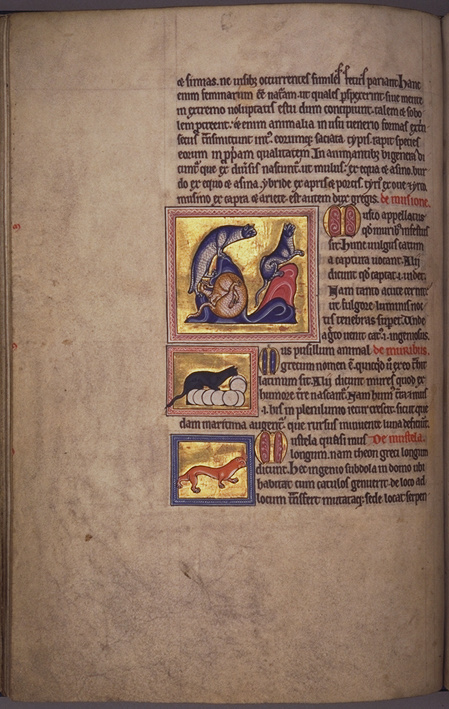
From the text:
The import of the above quoted (and bolded) text is that it is a description of spontaneous generation: mice produced from the damp soil. This was one belief about the spontaneous generation of mice. The other was that they were spontaneously generated from rotting wheat.
To that end, I should note that the middle picture on the page is that of the mouse, and the commentators on this Aberdeen Bestiary project note that the grey circles about the mouse are most probably meant to be wheat.
Why is this important? Because it is a 12th century manuscript. The Rambam lived in the 12th century, and so this can tell us a bit about the scientific beliefs of his time.
Why should we care what the contemporary scientific beliefs in the time of the Rambam were? Here comes the controversy...
Rabbi Avi Shafran penned an excellent article for Aish.com, in which he contrasted two attitudes of scientists. For years, reports of seeing giant quid (in the range of 60 feet) had been dismissed as legend. He quotes a French zoologist:
He contrasts this to the Rambam, who discusses a Mishna in his commentary on the Mishna.
The Mishna discusses the laws of impurity involved in a particular sheretz - a mouse, half of which is flesh and half of which is earth. If you touch the part of flesh you contact ritual impurity, and if you touch the part of earth you do not.
The Rambam writes:
That is, even though it is incomprehensible and defies scientific explanation, the Rambam is willing to believe eye-witness reports of the animal's existence. As Rabbi Shafran writes,
This is a nice point, and in fact accords with a scientific attitude. Even though you cannot explain some phenomenon, you do not dismiss is as impossible when you encounter it. You investigate the phenomenon, as well as your assumptions.
(Now, later some rabbi actually went to the Nile to investigate claims of such creatures, and spent several days trying to catch them, and came to the conclusion that they were just dirty mice.)
Unfortunately, Rabbi Shafran casts this in terms of spontaneous generation. That is, the Rambam had reason to doubt their existence because the Mishna was describing the spontaneous generation of mice from earth, and in those days they knew that mice were not spontaneously generated.
In fact, the proofs against spontaneous generation of fruit flies, and frogs (and questioning about mice) all happened in the late 17th century, while in the 12th century they still believes in all this. Evidence of this is the Aberdeen Bestiary above.
Rather, I would say the Rambam (and probably the Mishna as well) were discussing fantastic creatures of 1/2 earth and 1/2 flesh. Nowhere is any mention of spontaneous generation made, and the Rambam should have no reason to doubt the spontaneous generation of mice.
In the comments section on Protocols on this post, I write more about this.
Basically, Shmarya of FailedMessiah took Rabbi Shafran to task, complaining that since spontaneous generation had been scientifically disproved, the Rambam is not being a scientist in his attitude, but is rather defending the Talmud against modern science.
I pointed out that spontaneous generation had hardly been disproven in the Rambam's day, for Rambam was 12th century, and it was disproven in 17th century. (At the least, then, if the Rambam was defending it on spontaneous generation grounds, it would not be denying "proven scientific fact.") Thus, it is likely the Rambam was not dealing with spontaneous generation. Secondly, that this is indeed a scientific attitude - to believe countless eyewitness reports to accept that perhaps such a creature exists. And thirdly, that it is very hard to believe this of the Rambam, who often sides with contemporary science over the cures/scientific attitudes in the gemara.
Anyway, hopefully, that explains why I posted this link and picture. All right, I also posted it because I thought it looked nice... :)
Here is a page from the Bestiary in which it discusses mice:
From the text:
Of mice
The mouse is a puny animal; its name, mus, comes from the Greek, the Latin word deriving from it. Others say mures, mice, because they are produced ex humore, from the damp soil, of the earth; for humus means earth and from that comes mus, mouse. Their liver grows bigger at full moon, like the tides rise then fall with the waning of the moon.
The import of the above quoted (and bolded) text is that it is a description of spontaneous generation: mice produced from the damp soil. This was one belief about the spontaneous generation of mice. The other was that they were spontaneously generated from rotting wheat.
To that end, I should note that the middle picture on the page is that of the mouse, and the commentators on this Aberdeen Bestiary project note that the grey circles about the mouse are most probably meant to be wheat.
Why is this important? Because it is a 12th century manuscript. The Rambam lived in the 12th century, and so this can tell us a bit about the scientific beliefs of his time.
Why should we care what the contemporary scientific beliefs in the time of the Rambam were? Here comes the controversy...
Rabbi Avi Shafran penned an excellent article for Aish.com, in which he contrasted two attitudes of scientists. For years, reports of seeing giant quid (in the range of 60 feet) had been dismissed as legend. He quotes a French zoologist:
Just a few years before the monstrous tentacle was obtained and the giant squid passed from the realm of myth to reality, Arthur Mangin, a French zoologist, dismissed sailors' claims that they had seen the animal, urging that "the wise, and especially the man of science, not admit into the catalogue those stories which mention extraordinary creatures... the existence of which would be... a contradiction of the great laws of harmony and equilibrium which have sovereign rule over living nature."
He contrasts this to the Rambam, who discusses a Mishna in his commentary on the Mishna.
The Mishna discusses the laws of impurity involved in a particular sheretz - a mouse, half of which is flesh and half of which is earth. If you touch the part of flesh you contact ritual impurity, and if you touch the part of earth you do not.
The Rambam writes:
"...the existence of [such a creature] is something well-known; countless people have told me that they have seen it, even though the existence of such a living creature is incomprehensible and cannot be explained in any way." [Commentary to the Mishna, Chullin, chapter 9]"
That is, even though it is incomprehensible and defies scientific explanation, the Rambam is willing to believe eye-witness reports of the animal's existence. As Rabbi Shafran writes,
"Both are compelled to state that the reports before them defy scientific explanation. But whereas Mangin counsels a final rejection of the possibility that the report he received might have merit, Maimonides -- even as he notes the inadequacy of scientific knowledge to explain what he has heard - takes pains to allow for the incomprehensible."
This is a nice point, and in fact accords with a scientific attitude. Even though you cannot explain some phenomenon, you do not dismiss is as impossible when you encounter it. You investigate the phenomenon, as well as your assumptions.
(Now, later some rabbi actually went to the Nile to investigate claims of such creatures, and spent several days trying to catch them, and came to the conclusion that they were just dirty mice.)
Unfortunately, Rabbi Shafran casts this in terms of spontaneous generation. That is, the Rambam had reason to doubt their existence because the Mishna was describing the spontaneous generation of mice from earth, and in those days they knew that mice were not spontaneously generated.
In fact, the proofs against spontaneous generation of fruit flies, and frogs (and questioning about mice) all happened in the late 17th century, while in the 12th century they still believes in all this. Evidence of this is the Aberdeen Bestiary above.
Rather, I would say the Rambam (and probably the Mishna as well) were discussing fantastic creatures of 1/2 earth and 1/2 flesh. Nowhere is any mention of spontaneous generation made, and the Rambam should have no reason to doubt the spontaneous generation of mice.
In the comments section on Protocols on this post, I write more about this.
Basically, Shmarya of FailedMessiah took Rabbi Shafran to task, complaining that since spontaneous generation had been scientifically disproved, the Rambam is not being a scientist in his attitude, but is rather defending the Talmud against modern science.
I pointed out that spontaneous generation had hardly been disproven in the Rambam's day, for Rambam was 12th century, and it was disproven in 17th century. (At the least, then, if the Rambam was defending it on spontaneous generation grounds, it would not be denying "proven scientific fact.") Thus, it is likely the Rambam was not dealing with spontaneous generation. Secondly, that this is indeed a scientific attitude - to believe countless eyewitness reports to accept that perhaps such a creature exists. And thirdly, that it is very hard to believe this of the Rambam, who often sides with contemporary science over the cures/scientific attitudes in the gemara.
Anyway, hopefully, that explains why I posted this link and picture. All right, I also posted it because I thought it looked nice... :)
Thursday, June 17, 2004
Parshat Korach: Miracles and the natural order
It has been a tough week at work, leaving little time for parshablogging. I spent much of the week considering the issue of miracles and the natural order.
There is an assumption that miracles are outside of the natural order. That does not mean that, in Jewish tradition, there are no bounds. For example, Hashem lays out some guidelines as to how He interacts with the world, and sticks within those boundaries even while performing miracles.
Consider. The creation of Man, and Woman from the first Man, was miraculous. However, we see an interesting Midrash on Bereishit. Chava (Eve) had already eaten of the fruit of the Tree of Knowledge, and was trying to get Adam to eat of the fruit as well. Adam does eat of the fruit, and Hashem punishes him, saying, (Bereishit 3:17: כִּי-שָׁמַעְתָּ לְקוֹל אִשְׁתֶּךָ, "'Because thou hast hearkened unto the voice of thy wife."
The full pasuk is:
A Midrash I mention in the group of midrashic texts in the post below offers two competing explanations of what exactly Chava did to persaude Adam to eat the fruit.
The verse from Kohelet reads in full:
On a pshat level, it means that there is no real purpose in trying to innovate or gather wealth or really accomplish anything, because life and history are cyclical, and all that is done will be undone, and was done by others before you.
However, on a midrashic level, וְאֵין כָּל-חָדָשׁ, תַּחַת הַשָּׁמֶשׁ, "there is nothing new under the sun," or I would say the entire pasuk, is saying that all that will be made or will exist is that which has existed in the past, and is talking about Hashem's creation. That is, there was a period of Creation in which Hashem created the world and the various creatures.
This is what Chava's argument seems based upon. In terms of *Creation*, in this pasuk Hashem is promising that all Creatures that are to be miraculously created have been Created during the 6 days of Creation. Thus, Chava says, you cannot expect Hashem to create a new Chava for you out of another of your ribs.
(In terms of violating laws of physics Created in the Genesis, that is another matter, which this Midrash on this pasuk in Koheleth does not seem to directly address.)
This is an issue in parashat Korach as well. Moshe seems to call for a new creation to destroy Datan and Aviram.
Bamidbar 16:28-31ff
So, Moshe seems to be asking for Hashem to make a new Creation - a mouth for the Earth.
Let us see Midrash Rabba on Bamidbar, on parashat Korach.
Rava is deconstructing the pasuk. One can read it on a pshat level - if Hashem creates a new creation, then it will show something - namely, that Hashem sent Moshe. However, Midrashically, אם בריאה need not mean "If a creation," to be followed by a verb, but rather can be taken, in a grammatically accurate matter (working really locally) to mean "If it has been created." יברא ה still means "Hashem should create." But why should Hashem create if it has been created? Thus, the two phrases are separate. If it has been created, then nothing needs be done but bring it forth. If not, Hashem should create.
I have a feeling that this is really the extent of Rava's drash. The question and answer seems stamaitic in nature to me. It asks, on the second possibility, how Hashem could make a new Creation after the 6 days of Creation, and answers that a new Creation is not meant, but rather the miraculous phenomenon of the mouth coming closer. That is, the mouth to Gehinnom is usually in one spot, and here it was moved closer, to their actual location.
This question and answer is not present in Midrash Rabba in Devarim. Further, the first part of the Midrash that Rava says is in Hebrew while the question and answer is in Aramaic. Further, this problem of "nothing new under the sun" is *specifically* that problem of being created during the 6 days of Creation or not. That is the plain meaning/import behind Rava's drash. If it was Creation, no big deal. If not, even though in general You do not Create things anew, here please do so.
We see this reflected in Pirkei Avot:
"Twilight on the eve of the first Sabbath" means just as the last of the 6 days of Creation was going out, Hashem created it. Why? Because there was to be "nothing new under the sun," so anything that would in the future go out of the bounds was not really - Hashem already created it.
This goes according to אם בריאה - if it had already been created. The opposite opinion would naturally be that this mouth was created later, not that it had been created but Moshe was asking for it to be moved over.
Perhaps more later. It is 12:30 and I've had a long day...
There is an assumption that miracles are outside of the natural order. That does not mean that, in Jewish tradition, there are no bounds. For example, Hashem lays out some guidelines as to how He interacts with the world, and sticks within those boundaries even while performing miracles.
Consider. The creation of Man, and Woman from the first Man, was miraculous. However, we see an interesting Midrash on Bereishit. Chava (Eve) had already eaten of the fruit of the Tree of Knowledge, and was trying to get Adam to eat of the fruit as well. Adam does eat of the fruit, and Hashem punishes him, saying, (Bereishit 3:17: כִּי-שָׁמַעְתָּ לְקוֹל אִשְׁתֶּךָ, "'Because thou hast hearkened unto the voice of thy wife."
The full pasuk is:
וּלְאָדָם אָמַר, כִּי-שָׁמַעְתָּ לְקוֹל אִשְׁתֶּךָ, וַתֹּאכַל מִן-הָעֵץ, אֲשֶׁר צִוִּיתִיךָ לֵאמֹר לֹא תֹאכַל מִמֶּנּוּ--אֲרוּרָה הָאֲדָמָה, בַּעֲבוּרֶךָ, בְּעִצָּבוֹן תֹּאכְלֶנָּה, כֹּל יְמֵי חַיֶּיךָ.
And unto Adam He said: 'Because thou hast hearkened unto the voice of thy wife, and hast eaten of the tree, of which I commanded thee, saying: Thou shalt not eat of it; cursed is the ground for thy sake; in toil shalt thou eat of it all the days of thy life.
A Midrash I mention in the group of midrashic texts in the post below offers two competing explanations of what exactly Chava did to persaude Adam to eat the fruit.
וּלְאָדָם אָמַר, כִּי-שָׁמַעְתָּ לְקוֹל אִשְׁתֶּךָ רבי שמלאי אומר בישוב הדעת באת עליו א"ל מה את סבר שאני מתה וחוה אחרת נבראת לך (קהלת א) (וְ)אֵין כָּל-חָדָשׁ, תַּחַת הַשָּׁמֶשׁ מה את סבור שאני מתה ואתה יושב לך הטליס (ישעיה מה) לֹא-תֹהוּ בְרָאָהּ, לָשֶׁבֶת יְצָרָהּ רבנן אמרין התחילה מיללת עליו בקולה הה"ד ולאדם אמר כי שמעת לדברי אשתך אין כתיב כאן אלא לקול אשתך וגו
Rabbi Simlai says, with a thought-out argument she came upon him. She said to him, 'What do you think? That I will die and another Eve will be created for you? (Kohelet 1:9) There is nothing new under the sun*! What do you think? That I will die and you will sit in solitude? (Isaiah 45:18) 'He created it not a waste, He formed it to be inhabited.'
The rabbis responded, she began to wail with her voice. This is what is written, 'And unto Adam He said: 'Because thou hast hearkened unto the voice of thy wife...'
The verse from Kohelet reads in full:
מַה-שֶּׁהָיָה, הוּא שֶׁיִּהְיֶה, וּמַה-שֶּׁנַּעֲשָׂה, הוּא שֶׁיֵּעָשֶׂה; וְאֵין כָּל-חָדָשׁ, תַּחַת הַשָּׁמֶשׁ.
"That which hath been is that which shall be, and that which hath been done is that which shall be done; and there is nothing new under the sun."
On a pshat level, it means that there is no real purpose in trying to innovate or gather wealth or really accomplish anything, because life and history are cyclical, and all that is done will be undone, and was done by others before you.
However, on a midrashic level, וְאֵין כָּל-חָדָשׁ, תַּחַת הַשָּׁמֶשׁ, "there is nothing new under the sun," or I would say the entire pasuk, is saying that all that will be made or will exist is that which has existed in the past, and is talking about Hashem's creation. That is, there was a period of Creation in which Hashem created the world and the various creatures.
This is what Chava's argument seems based upon. In terms of *Creation*, in this pasuk Hashem is promising that all Creatures that are to be miraculously created have been Created during the 6 days of Creation. Thus, Chava says, you cannot expect Hashem to create a new Chava for you out of another of your ribs.
(In terms of violating laws of physics Created in the Genesis, that is another matter, which this Midrash on this pasuk in Koheleth does not seem to directly address.)
This is an issue in parashat Korach as well. Moshe seems to call for a new creation to destroy Datan and Aviram.
Bamidbar 16:28-31ff
וַיֹּאמֶר, מֹשֶׁה, בְּזֹאת תֵּדְעוּן, כִּי-ה שְׁלָחַנִי לַעֲשׂוֹת אֵת כָּל-הַמַּעֲשִׂים הָאֵלֶּה: כִּי-לֹא, מִלִּבִּי.
אִם-כְּמוֹת כָּל-הָאָדָם, יְמֻתוּן אֵלֶּה, וּפְקֻדַּת כָּל-הָאָדָם, יִפָּקֵד עֲלֵיהֶם--לֹא ה, שְׁלָחָנִי.
וְאִם-בְּרִיאָה ה, וּפָצְתָה הָאֲדָמָה אֶת-פִּיהָ וּבָלְעָה אֹתָם וְאֶת-כָּל-אֲשֶׁר לָהֶם, וְיָרְדוּ חַיִּים, שְׁאֹלָה--וִידַעְתֶּם, כִּי נִאֲצוּ הָאֲנָשִׁים הָאֵלֶּה אֶת-ה.
וַיְהִי, כְּכַלֹּתוֹ, לְדַבֵּר, אֵת כָּל-הַדְּבָרִים הָאֵלֶּה; וַתִּבָּקַע הָאֲדָמָה, אֲשֶׁר תַּחְתֵּיהֶם.
"And Moses said: 'Hereby ye shall know that the LORD hath sent me to do all these works, and that I have not done them of mine own mind.
If these men die the common death of all men, and be visited after the visitation of all men, then the LORD hath not sent Me.
But if the LORD make a new thing, and the ground open her mouth, and swallow them up, with all that appertain unto them, and they go down alive into the pit, then ye shall understand that these men have despised the LORD.'
And it came to pass, as he made an end of speaking all these words, that the ground did cleave asunder that was under them."
So, Moshe seems to be asking for Hashem to make a new Creation - a mouth for the Earth.
Let us see Midrash Rabba on Bamidbar, on parashat Korach.
דרש רבא מאי דכתיב (במדבר טז) אם בריאה יברא ה' אמר משה רבון העולמים אם בריאה גיהנם מוטב ואם לאו יברא ה' למאי אילימא למברייה ממש והכתיב (קהלת א) אין כל חדש תחת השמש אלא לאקרובי פיתחא
Rava darshened, the pasuk states, אם בריאה יברא ה, "If Hashem creates a Creation..." Moshe said, Master of the Universe, if Gehennim was created - אם בריאה, well and good. And if not, יברא ה, Hashem should create. How so? If to actually create, the verse in Kohelet stated that אין כל חדש תחת השמש, there is nothing new under the sun. Rather, to bring the mouth of the earth near.
Rava is deconstructing the pasuk. One can read it on a pshat level - if Hashem creates a new creation, then it will show something - namely, that Hashem sent Moshe. However, Midrashically, אם בריאה need not mean "If a creation," to be followed by a verb, but rather can be taken, in a grammatically accurate matter (working really locally) to mean "If it has been created." יברא ה still means "Hashem should create." But why should Hashem create if it has been created? Thus, the two phrases are separate. If it has been created, then nothing needs be done but bring it forth. If not, Hashem should create.
I have a feeling that this is really the extent of Rava's drash. The question and answer seems stamaitic in nature to me. It asks, on the second possibility, how Hashem could make a new Creation after the 6 days of Creation, and answers that a new Creation is not meant, but rather the miraculous phenomenon of the mouth coming closer. That is, the mouth to Gehinnom is usually in one spot, and here it was moved closer, to their actual location.
This question and answer is not present in Midrash Rabba in Devarim. Further, the first part of the Midrash that Rava says is in Hebrew while the question and answer is in Aramaic. Further, this problem of "nothing new under the sun" is *specifically* that problem of being created during the 6 days of Creation or not. That is the plain meaning/import behind Rava's drash. If it was Creation, no big deal. If not, even though in general You do not Create things anew, here please do so.
We see this reflected in Pirkei Avot:
Ten things were created at twilight on the eve of the first Sabbath:
the mouth of the earth (Numbers 16:32);
the mouth of the well (Numbers 21:16);
the mouth of the ass (Numbers 22:28);
the rainbow;
the manna;
Aaron's staff;
the Shamir, writing;
the inscription on the tablets of the Ten Commandments;
and the tablets themselves.
Some also include the evil spirits, the grave of Moses, the ram of Abraham; and others add the original tongs, for tongs must be made with tongs.
"Twilight on the eve of the first Sabbath" means just as the last of the 6 days of Creation was going out, Hashem created it. Why? Because there was to be "nothing new under the sun," so anything that would in the future go out of the bounds was not really - Hashem already created it.
This goes according to אם בריאה - if it had already been created. The opposite opinion would naturally be that this mouth was created later, not that it had been created but Moshe was asking for it to be moved over.
Perhaps more later. It is 12:30 and I've had a long day...
ISRAEL CREATES SUPER-TOMATO (from Arutz Sheva)
An Israeli company has genetically created a super-tomato, one that can withstand a virus that devastates tomato crops every year the world over.
Hazera Genetics, an Israeli seed breeder, launched the world's first tomato strain that is immune to the ‘Yellow Lead Curl Tomato Virus,' according to a report in The Marker. The resistant tomato, called ‘Tracie’ by its researchers, is a breakthrough for tomato farmers, especially those cultivating the long-lived species that thrive over long periods rather than specific seasons. The resistant breed can be grown in open, ventilated hothouses throughout the summer, which reduces costs and improves both the quality of the fruit and the crop size.
Dr. Alon Haverfeld, who manages Hazera’s tomato seeds division, predicts that profits will be high. Dr. Haverfeld stated that price per kilogram of seed would range from $20,000 to $30,000, with the company aiming to reach sales of $1 million next year, and $5-7 million within three to four years.
Tomato Yellow Lead Curl Virus, or TYLCV, is devastating to Israeli tomato farmers. No resistant strains have been found since the plague first erupted in the 1930s, and conventional insecticides proved ineffective at preventing the spread of the virus. The result was a severe blow to the cultivation of tomatoes in open fields in favor of hermetically sealed hothouses. TYLCV affects tomato crops throughout the Mediterranean region, the Middle East and tropical areas of Africa and Central America. In Israel, cultivation of tomatoes in sealed hothouses has the downside of creating moisture and overheating problems.
Hazera Genetics, an Israeli seed breeder, launched the world's first tomato strain that is immune to the ‘Yellow Lead Curl Tomato Virus,' according to a report in The Marker. The resistant tomato, called ‘Tracie’ by its researchers, is a breakthrough for tomato farmers, especially those cultivating the long-lived species that thrive over long periods rather than specific seasons. The resistant breed can be grown in open, ventilated hothouses throughout the summer, which reduces costs and improves both the quality of the fruit and the crop size.
Dr. Alon Haverfeld, who manages Hazera’s tomato seeds division, predicts that profits will be high. Dr. Haverfeld stated that price per kilogram of seed would range from $20,000 to $30,000, with the company aiming to reach sales of $1 million next year, and $5-7 million within three to four years.
Tomato Yellow Lead Curl Virus, or TYLCV, is devastating to Israeli tomato farmers. No resistant strains have been found since the plague first erupted in the 1930s, and conventional insecticides proved ineffective at preventing the spread of the virus. The result was a severe blow to the cultivation of tomatoes in open fields in favor of hermetically sealed hothouses. TYLCV affects tomato crops throughout the Mediterranean region, the Middle East and tropical areas of Africa and Central America. In Israel, cultivation of tomatoes in sealed hothouses has the downside of creating moisture and overheating problems.
Wednesday, June 16, 2004
Wow
Powerful interview with David N. Weiss, the scriptwriter for Shrek 2, over at Aish.com. (via the Town Crier)
Tuesday, June 15, 2004
Source texts for a class in Midrash I am giving this coming Monday
Midrash Rabba Bereishit Parasha 20
וּלְאָדָם אָמַר, כִּי-שָׁמַעְתָּ לְקוֹל אִשְׁתֶּךָ רבי שמלאי אומר בישוב הדעת באת עליו א"ל מה את סבר שאני מתה וחוה אחרת נבראת לך (קהלת א) (וְ)אֵין כָּל-חָדָשׁ, תַּחַת הַשָּׁמֶשׁ מה את סבור שאני מתה ואתה יושב לך הטליס (ישעיה מה) לֹא-תֹהוּ בְרָאָהּ, לָשֶׁבֶת יְצָרָהּ רבנן אמרין התחילה מיללת עליו בקולה הה"ד ולאדם אמר כי שמעת לדברי אשתך אין כתיב כאן אלא לקול אשתך וגו'
Bereishit 3:17:
Kohelet 1:9
Isaiah 45:18:
Rabbi Simlai says, with a thought-out argument she came upon him. She said to him, 'What do you think? That I will die and another Eve will be created for you? (Kohelet 1:9) There is nothing new under the sun*! What do you think? That I will die and you will sit in solitude? (Isaiah 45:18) 'He created it not a waste, He formed it to be inhabited.'
The rabbis responded, she began to wail with her voice. This is what is written, 'And unto Adam He said: 'Because thou hast hearkened unto the voice of thy wife...'
Midrash Rabba Devarim parasha 4:
א"ר אבין לא בקשה אלא לבכות וליילל עליו בקולה ואכל ממנו שכך כתיב לקול אשתך לדברי אשתך אין כתיב כאן אלא לקול אשתך
R Avin said, she did did not attempt anything except to cry and wail upon him with her voice and he ate from it, as it states, 'To the voice of your wife.' 'To the words of your wife is not written here, but to the voice of your wife.'
* There is nothing new under the sun probably means there can be nothing new created after the 6 days of creation.
Midrash Rabba Shemot parasha 10:
וַתַּעַל הַצְּפַרְדֵּעַ וַתְּכַס אֶת וגו' תני רבי עקיבא אומר צפרדע אחת היתה והיא
השריצה ומלאה את ארץ מצרים אמר לו רבי אלעזר בן עזריה עקיבא מה לך אצל הגדה כלה מדברותיך ולך אצל נגעים ואהלות צפרדע אחת היתה ושרקה להן ובאו.
Shemot 7:27-28
Shemot 8:2-4:
'And the frog[s] came up, and (it) covered, etc'. A brayta (See Sanhedrin page 67): R Akiva says, a single frog there was and she multiplied and filled the land of Egypt.
Rabbi Elazar ben Azarya said to him, Akiva, what have you to do with Haggada? End your words and go to (the Laws) of (the impurities) of Skin Ailments and Tents. (Rather,) there was a single frog and she whistled* to them and they came.
Tanchuma Vaera, 14:
כתוב אחד אומר וְשָׁרַץ הַיְאֹר, צְפַרְדְּעִים, וכתוב אחד אומר וַתַּעַל הַצְּפַרְדֵּעַ. רבי עקיבא אומר, צפרדע אחת היתה, והיו המצרים מכין אותה ומתזת צפרדעים הרבה.
One verse states 'And the river shall swarm with frogs' and the other verse states, 'And the frog(s) came up.' Rabbi Akiva says, it was a single frog, and the Egyptians would hit it and it spit out many frogs.
*שרקה (whistled) = I would claim there is a drash from Sharatz, with the voiced Tzadi switching with the voiced Kuf. Letters in consonantal groups switch off with one another.
וּלְאָדָם אָמַר, כִּי-שָׁמַעְתָּ לְקוֹל אִשְׁתֶּךָ רבי שמלאי אומר בישוב הדעת באת עליו א"ל מה את סבר שאני מתה וחוה אחרת נבראת לך (קהלת א) (וְ)אֵין כָּל-חָדָשׁ, תַּחַת הַשָּׁמֶשׁ מה את סבור שאני מתה ואתה יושב לך הטליס (ישעיה מה) לֹא-תֹהוּ בְרָאָהּ, לָשֶׁבֶת יְצָרָהּ רבנן אמרין התחילה מיללת עליו בקולה הה"ד ולאדם אמר כי שמעת לדברי אשתך אין כתיב כאן אלא לקול אשתך וגו'
Bereishit 3:17:
וּלְאָדָם אָמַר, כִּי-שָׁמַעְתָּ לְקוֹל אִשְׁתֶּךָ, וַתֹּאכַל מִן-הָעֵץ, אֲשֶׁר צִוִּיתִיךָ לֵאמֹר לֹא תֹאכַל מִמֶּנּוּ--אֲרוּרָה הָאֲדָמָה, בַּעֲבוּרֶךָ, בְּעִצָּבוֹן תֹּאכְלֶנָּה, כֹּל יְמֵי חַיֶּיךָ.
And unto Adam He said: 'Because thou hast hearkened unto the voice of thy wife, and hast eaten of the tree, of which I commanded thee, saying: Thou shalt not eat of it; cursed is the ground for thy sake; in toil shalt thou eat of it all the days of thy life.
Kohelet 1:9
מַה-שֶּׁהָיָה, הוּא שֶׁיִּהְיֶה, וּמַה-שֶּׁנַּעֲשָׂה, הוּא שֶׁיֵּעָשֶׂה; וְאֵין כָּל-חָדָשׁ, תַּחַת הַשָּׁמֶשׁ.
"That which hath been is that which shall be, and that which hath been done is that which shall be done; and there is nothing new under the sun."
Isaiah 45:18:
כִּי כֹה אָמַר-ה בּוֹרֵא הַשָּׁמַיִם הוּא הָאֱלֹקִים, יֹצֵר הָאָרֶץ וְעֹשָׂהּ הוּא כוֹנְנָהּ--לֹא-תֹהוּ בְרָאָהּ, לָשֶׁבֶת יְצָרָהּ; אֲנִי ה, וְאֵין עוֹד.
"For thus saith the LORD that created the heavens, He is God; that formed the earth and made it, He established it, He created it not a waste, He formed it to be inhabited: I am the LORD, and there is none else."
Rabbi Simlai says, with a thought-out argument she came upon him. She said to him, 'What do you think? That I will die and another Eve will be created for you? (Kohelet 1:9) There is nothing new under the sun*! What do you think? That I will die and you will sit in solitude? (Isaiah 45:18) 'He created it not a waste, He formed it to be inhabited.'
The rabbis responded, she began to wail with her voice. This is what is written, 'And unto Adam He said: 'Because thou hast hearkened unto the voice of thy wife...'
Midrash Rabba Devarim parasha 4:
א"ר אבין לא בקשה אלא לבכות וליילל עליו בקולה ואכל ממנו שכך כתיב לקול אשתך לדברי אשתך אין כתיב כאן אלא לקול אשתך
R Avin said, she did did not attempt anything except to cry and wail upon him with her voice and he ate from it, as it states, 'To the voice of your wife.' 'To the words of your wife is not written here, but to the voice of your wife.'
* There is nothing new under the sun probably means there can be nothing new created after the 6 days of creation.
Midrash Rabba Shemot parasha 10:
וַתַּעַל הַצְּפַרְדֵּעַ וַתְּכַס אֶת וגו' תני רבי עקיבא אומר צפרדע אחת היתה והיא
השריצה ומלאה את ארץ מצרים אמר לו רבי אלעזר בן עזריה עקיבא מה לך אצל הגדה כלה מדברותיך ולך אצל נגעים ואהלות צפרדע אחת היתה ושרקה להן ובאו.
Shemot 7:27-28
וְאִם-מָאֵן אַתָּה, לְשַׁלֵּחַ: הִנֵּה אָנֹכִי, נֹגֵף אֶת-כָּל-גְּבוּלְךָ--בַּצְפַרְדְּעִים.
וְשָׁרַץ הַיְאֹר, צְפַרְדְּעִים, וְעָלוּ וּבָאוּ בְּבֵיתֶךָ, וּבַחֲדַר מִשְׁכָּבְךָ וְעַל-מִטָּתֶךָ; וּבְבֵית עֲבָדֶיךָ וּבְעַמֶּךָ, וּבְתַנּוּרֶיךָ וּבְמִשְׁאֲרוֹתֶיךָ
"And if thou refuse to let them go, behold, I will smite all thy borders with frogs.
And the river shall swarm with frogs, which shall go up and come into thy house, and into thy bed-chamber, and upon thy bed, and into the house of thy servants, and upon thy people, and into thine ovens, and into thy kneading-troughs."
Shemot 8:2-4:
וַיֵּט אַהֲרֹן אֶת-יָדוֹ, עַל מֵימֵי מִצְרָיִם; וַתַּעַל, הַצְּפַרְדֵּעַ, וַתְּכַס, אֶת-אֶרֶץ מִצְרָיִם.
וַיַּעֲשׂוּ-כֵן הַחַרְטֻמִּים, בְּלָטֵיהֶם; וַיַּעֲלוּ אֶת-הַצְפַרְדְּעִים, עַל-אֶרֶץ מִצְרָיִם.
וַיִּקְרָא פַרְעֹה לְמֹשֶׁה וּלְאַהֲרֹן, וַיֹּאמֶר הַעְתִּירוּ אֶל-יְהוָה, וְיָסֵר הַצְפַרְדְּעִים, מִמֶּנִּי וּמֵעַמִּי; וַאֲשַׁלְּחָה, אֶת-הָעָם, וְיִזְבְּחוּ, ה.
"And Aaron stretched out his hand over the waters of Egypt; and the frogs came up, and covered the land of Egypt.
And the magicians did in like manner with their secret arts, and brought up frogs upon the land of Egypt.
Then Pharaoh called for Moses and Aaron, and said: 'Entreat the LORD, that He take away the frogs from me, and from my people; and I will let the people go, that they may sacrifice unto the LORD.'"
'And the frog[s] came up, and (it) covered, etc'. A brayta (See Sanhedrin page 67): R Akiva says, a single frog there was and she multiplied and filled the land of Egypt.
Rabbi Elazar ben Azarya said to him, Akiva, what have you to do with Haggada? End your words and go to (the Laws) of (the impurities) of Skin Ailments and Tents. (Rather,) there was a single frog and she whistled* to them and they came.
Tanchuma Vaera, 14:
כתוב אחד אומר וְשָׁרַץ הַיְאֹר, צְפַרְדְּעִים, וכתוב אחד אומר וַתַּעַל הַצְּפַרְדֵּעַ. רבי עקיבא אומר, צפרדע אחת היתה, והיו המצרים מכין אותה ומתזת צפרדעים הרבה.
One verse states 'And the river shall swarm with frogs' and the other verse states, 'And the frog(s) came up.' Rabbi Akiva says, it was a single frog, and the Egyptians would hit it and it spit out many frogs.
*שרקה (whistled) = I would claim there is a drash from Sharatz, with the voiced Tzadi switching with the voiced Kuf. Letters in consonantal groups switch off with one another.
Updates on parshat Shlach divrei torah
I updated two of my divrei Torah from last week. First, I found a local source for the midrash of Calev's threats to the other spies.
Second, I reconsidered the dual etymology of Nachal Eshkol, and saw it was more of a solution to another issue than a problem in its own right.
Follow the links for details...
Second, I reconsidered the dual etymology of Nachal Eshkol, and saw it was more of a solution to another issue than a problem in its own right.
Follow the links for details...
Friday, June 11, 2004
Shlach #3: Hoshea --> Yehoshua
In the list of the spies Moshe sends to spy out the land...
Bamidbar 13:8
and then, in pasuk 16:
This is something of a big deal. Consider the following pasuk, when Hashem tells His name to Moshe:
Shemot 6:2-3
Thus, Hashem tells His name YKVK, to Moshe.
There is backup to the assertion that this name was not known before.
A theophoric name is literally one which "carries God." That is, it is a name which contains the name of God in it. We see many such theophoric names in Chumash.
Examples: Shlumiel ben Tzurishaddai, עַמִּיאֵל בֶּן-גְּמַלִּי, סְתוּר בֶּן-מִיכָאֵל, גְּאוּאֵל בֶּן-מָכִי.
However, all those names use the divine names Shakkai and Kel. There is another form of theophoric name, which used Yeho or Yahu in the beginning or end. For example, Yirmiya -> Yirmiyahu. Yechonia -> YehoYachin. Tzidkiyahu. Shallum -> (I would claim) Shelemyahu. And we see Baruch ben Neryah had the theophoric name (they found a signet ring) Berechyahu ben Neryahu.
However, this is in Tanach in general. In Chumash we do not seem to find this. (One exception comes to mind - Yehuda - but that is not what the Yehu in the beginning of his name means.) In Chumash, all we find are the other names of God in theophoric names.
I would claim this shows the truth in Hashem's statement.
וָאֵרָא, אֶל-אַבְרָהָם אֶל-יִצְחָק וְאֶל-יַעֲקֹב--בְּאֵל שַׁדָּי; וּשְׁמִי ה, לֹא נוֹדַעְתִּי לָהֶם
Indeed, we see the Israelites only knew Hashem by the names Kel and Shakkai, and that is what made it into their theophoric names.
Meanwhile, Moshe was introduced to Hashem's name of YKVK, which corresponds to the Yeho/Yahu beginning and ending, and he is the one who gives Hoshea his theophoric name, and uses the Yeho beginning to form Yehoshua.
I just thought this was all really cool...
Bamidbar 13:8
לְמַטֵּה אֶפְרָיִם, הוֹשֵׁעַ בִּן-נוּן.
"Of the tribe of Ephraim, Hoshea the son of Nun."
and then, in pasuk 16:
אֵלֶּה שְׁמוֹת הָאֲנָשִׁים, אֲשֶׁר-שָׁלַח מֹשֶׁה לָתוּר אֶת-הָאָרֶץ; וַיִּקְרָא מֹשֶׁה לְהוֹשֵׁעַ בִּן-נוּן, יְהוֹשֻׁעַ.
"These are the names of the men that Moses sent to spy out the land. And Moses called Hoshea the son of Nun Joshua."
This is something of a big deal. Consider the following pasuk, when Hashem tells His name to Moshe:
Shemot 6:2-3
וַיְדַבֵּר אֱלֹקִים, אֶל-מֹשֶׁה; וַיֹּאמֶר אֵלָיו, אֲנִי ה.
וָאֵרָא, אֶל-אַבְרָהָם אֶל-יִצְחָק וְאֶל-יַעֲקֹב--בְּאֵל שַׁדָּי; וּשְׁמִי ה, לֹא נוֹדַעְתִּי לָהֶם.
"And God spoke unto Moses, and said unto him: 'I am YKVK;
and I appeared unto Abraham, unto Isaac, and unto Jacob, as God Almighty (Kel Shakkai), but by My name YKVK I made Me not known to them.
Thus, Hashem tells His name YKVK, to Moshe.
There is backup to the assertion that this name was not known before.
A theophoric name is literally one which "carries God." That is, it is a name which contains the name of God in it. We see many such theophoric names in Chumash.
Examples: Shlumiel ben Tzurishaddai, עַמִּיאֵל בֶּן-גְּמַלִּי, סְתוּר בֶּן-מִיכָאֵל, גְּאוּאֵל בֶּן-מָכִי.
However, all those names use the divine names Shakkai and Kel. There is another form of theophoric name, which used Yeho or Yahu in the beginning or end. For example, Yirmiya -> Yirmiyahu. Yechonia -> YehoYachin. Tzidkiyahu. Shallum -> (I would claim) Shelemyahu. And we see Baruch ben Neryah had the theophoric name (they found a signet ring) Berechyahu ben Neryahu.
However, this is in Tanach in general. In Chumash we do not seem to find this. (One exception comes to mind - Yehuda - but that is not what the Yehu in the beginning of his name means.) In Chumash, all we find are the other names of God in theophoric names.
I would claim this shows the truth in Hashem's statement.
וָאֵרָא, אֶל-אַבְרָהָם אֶל-יִצְחָק וְאֶל-יַעֲקֹב--בְּאֵל שַׁדָּי; וּשְׁמִי ה, לֹא נוֹדַעְתִּי לָהֶם
Indeed, we see the Israelites only knew Hashem by the names Kel and Shakkai, and that is what made it into their theophoric names.
Meanwhile, Moshe was introduced to Hashem's name of YKVK, which corresponds to the Yeho/Yahu beginning and ending, and he is the one who gives Hoshea his theophoric name, and uses the Yeho beginning to form Yehoshua.
I just thought this was all really cool...
Thursday, June 10, 2004
Parshat Shlach #2:
Bamidbar 13:23
The midrash rabba on parashat shlach states:
וַיָּבֹאוּ עַד-נַחַל אֶשְׁכֹּל - לא רצו לטל מפרות ארץ ישראל. אלולי כלב ששלף את הזין וירץ לפניהם ואמר להם אם אין אתם נוטלים או אתם הורגים אותי או אני הורג אתכם, לא היו נוטלים. אִם-לֹא הָאָרֶץ אֲשֶׁר דָּרְכָה רַגְלְךָ בָּהּ, לְךָ תִהְיֶה
"And they came unto the valley of Eshcol" - they did not wish to take from the fruits of the land of Israel. Had not Caleb unsheathed his sword and ran in front of them and said to them, 'If you do not take (the fruits to show to the Israelites), either you will kill me or I will kill you,' they would not have taken. (Then it cites the verse from Yehoshua, '...Surely the land whereon thy foot hath trodden shall be ___ to thee..." (the word inheritance from the full verse is not in the citation, so I left it out of the translation.)
The full verse in sefer yehoshua is:
Yehoshua 14:9
Why am I citing this midrash? Three reasons. First, I think it is exciting. Second, it fits in with a post I made earlier this week, about putting one's own life at risk to save another person's life.
There, I translated the following yerushalmi:
This is the same language as that used by Calev. Either you will kill me or I will kill you. It shows that you will stand up forcefully for something. Perhaps this midrash can be used to show how the phrase is used in the gemara, which can perhaps help determine what the halacha is on this matter.
Thirdly, I'm interested in how the prooftext from Yehoshua supports the midrash.
The commentaries address this (having to do with where the spies wanted to go, and Calev being rewarded with the land as an inheritance for going where they did not, which really does not fit in well with the midrash and specifically the taking of the fruit, Calev's action of unsheathing his sword, and the language of his threat). My own suggestion: the only cited text was אִם-לֹא הָאָרֶץ אֲשֶׁר דָּרְכָה רַגְלְךָ בָּהּ, לְךָ תִהְיֶה, so we should not focus on the Nachala = inheritance aspects of it.
Rather, the midrash deconstructs the citation as follows: אִם-לֹא, "If not" - if you do not take from the fruit of the land. הָאָרֶץ אֲשֶׁר דָּרְכָה רַגְלְךָ בָּהּ - "The earth upon which you," - the spies" - "are currently walking over", לְךָ תִהְיֶה, "will be to you," that is, you will be buried there, (sort of like a mes mitzvah is koneh his 4 amos for his burial) this earth will be yours. Perhaps we can add text from the end of the pasuk to the quote: עַד-עוֹלָם - "for ever" - with threatening finality.
Update: We should also look locally for the drasha. The local pasuk is:
וַיָּבֹאוּ עַד-נַחַל אֶשְׁכֹּל, וַיִּכְרְתוּ מִשָּׁם זְמוֹרָה וְאֶשְׁכּוֹל עֲנָבִים אֶחָד, וַיִּשָּׂאֻהוּ בַמּוֹט, בִּשְׁנָיִם; וּמִן-הָרִמֹּנִים, וּמִן-הַתְּאֵנִים.
Now, only the first part of the verse is cited: וַיָּבֹאוּ עַד-נַחַל אֶשְׁכֹּל. However, often the drasha comes from the part of the verse not cited.
Here, I think the drasha might actually come from the next verse:
We can say it is a mikra misuras, a verse which is out of order and must be shuffled (midrashicly, at least).
אֲשֶׁר-כָּרְתוּ מִשָּׁם בְּנֵי יִשְׂרָאֵל
עַל אֹדוֹת הָאֶשְׁכּוֹל
that the Jews (=spies) were (almost/threatened to be) cut off from there
on behalf of the cluster of grapes.
If so, the verse in Yehoshua might still be drashened as I suggested, in the context of this drash on the local pasuk, or we can revert to considering it Calev's reward (after all, the midrash does use the word לפיכך in introducing the pasuk from Yehoshua).
וַיָּבֹאוּ עַד-נַחַל אֶשְׁכֹּל, וַיִּכְרְתוּ מִשָּׁם זְמוֹרָה וְאֶשְׁכּוֹל עֲנָבִים אֶחָד, וַיִּשָּׂאֻהוּ בַמּוֹט, בִּשְׁנָיִם; וּמִן-הָרִמֹּנִים, וּמִן-הַתְּאֵנִים.
"And they came unto the valley of Eshcol, and cut down from thence a branch with one cluster of grapes, and they bore it upon a pole between two; they took also of the pomegranates, and of the figs."
The midrash rabba on parashat shlach states:
וַיָּבֹאוּ עַד-נַחַל אֶשְׁכֹּל - לא רצו לטל מפרות ארץ ישראל. אלולי כלב ששלף את הזין וירץ לפניהם ואמר להם אם אין אתם נוטלים או אתם הורגים אותי או אני הורג אתכם, לא היו נוטלים. אִם-לֹא הָאָרֶץ אֲשֶׁר דָּרְכָה רַגְלְךָ בָּהּ, לְךָ תִהְיֶה
"And they came unto the valley of Eshcol" - they did not wish to take from the fruits of the land of Israel. Had not Caleb unsheathed his sword and ran in front of them and said to them, 'If you do not take (the fruits to show to the Israelites), either you will kill me or I will kill you,' they would not have taken. (Then it cites the verse from Yehoshua, '...Surely the land whereon thy foot hath trodden shall be ___ to thee..." (the word inheritance from the full verse is not in the citation, so I left it out of the translation.)
The full verse in sefer yehoshua is:
Yehoshua 14:9
וַיִּשָּׁבַע מֹשֶׁה, בַּיּוֹם הַהוּא לֵאמֹר, אִם-לֹא הָאָרֶץ אֲשֶׁר דָּרְכָה רַגְלְךָ בָּהּ, לְךָ תִהְיֶה לְנַחֲלָה וּלְבָנֶיךָ עַד-עוֹלָם: כִּי מִלֵּאתָ, אַחֲרֵי יְהוָה אֱלֹהָי.
"And Moses swore on that day, saying: Surely the land whereon thy foot hath trodden shall be an inheritance to thee and to thy children for ever, because thou hast wholly followed the LORD my God."
Why am I citing this midrash? Three reasons. First, I think it is exciting. Second, it fits in with a post I made earlier this week, about putting one's own life at risk to save another person's life.
There, I translated the following yerushalmi:
Rabbi Ami was captured by bandits. Rabbi Yonatan said, the dead one will be wrapped in his sheets. {that is, there is no way to save him.}
Rabbi Shimon ben Lakish said, 'I will kill or be killed' (lit: Until I kill (or) I will be killed. i.e. I will try to save him, by killing all his captors, or will die in the process. We know from elsewhere that Rabbi Shimon ben Lakish was a bandit, skilled in weapons, before he repented and became a scholar.) I will go and save him by force.
He went and persuaded them (convinced them to turn R Ami over, perhaps with threats) and they gave him over to him.
He (Resh Lakish) said to them (the bandits) go to the Old One (Rabbi Yochanan) and he will pray for you. They went to Rabbi Yochanan (note, this is *not* Rabbi Yonatan of before, unless it is a typo.)
He (R Yochanan) said to them, 'that which was in your hearts to do to him should come to pass on you.' They did not reach Apipsiros before they all went (died).
This is the same language as that used by Calev. Either you will kill me or I will kill you. It shows that you will stand up forcefully for something. Perhaps this midrash can be used to show how the phrase is used in the gemara, which can perhaps help determine what the halacha is on this matter.
Thirdly, I'm interested in how the prooftext from Yehoshua supports the midrash.
The commentaries address this (having to do with where the spies wanted to go, and Calev being rewarded with the land as an inheritance for going where they did not, which really does not fit in well with the midrash and specifically the taking of the fruit, Calev's action of unsheathing his sword, and the language of his threat). My own suggestion: the only cited text was אִם-לֹא הָאָרֶץ אֲשֶׁר דָּרְכָה רַגְלְךָ בָּהּ, לְךָ תִהְיֶה, so we should not focus on the Nachala = inheritance aspects of it.
Rather, the midrash deconstructs the citation as follows: אִם-לֹא, "If not" - if you do not take from the fruit of the land. הָאָרֶץ אֲשֶׁר דָּרְכָה רַגְלְךָ בָּהּ - "The earth upon which you," - the spies" - "are currently walking over", לְךָ תִהְיֶה, "will be to you," that is, you will be buried there, (sort of like a mes mitzvah is koneh his 4 amos for his burial) this earth will be yours. Perhaps we can add text from the end of the pasuk to the quote: עַד-עוֹלָם - "for ever" - with threatening finality.
Update: We should also look locally for the drasha. The local pasuk is:
וַיָּבֹאוּ עַד-נַחַל אֶשְׁכֹּל, וַיִּכְרְתוּ מִשָּׁם זְמוֹרָה וְאֶשְׁכּוֹל עֲנָבִים אֶחָד, וַיִּשָּׂאֻהוּ בַמּוֹט, בִּשְׁנָיִם; וּמִן-הָרִמֹּנִים, וּמִן-הַתְּאֵנִים.
Now, only the first part of the verse is cited: וַיָּבֹאוּ עַד-נַחַל אֶשְׁכֹּל. However, often the drasha comes from the part of the verse not cited.
Here, I think the drasha might actually come from the next verse:
לַמָּקוֹם הַהוּא, קָרָא נַחַל אֶשְׁכּוֹל, עַל אֹדוֹת הָאֶשְׁכּוֹל, אֲשֶׁר-כָּרְתוּ מִשָּׁם בְּנֵי יִשְׂרָאֵל.
"That place was called the valley of Eshcol, because of the cluster which the children of Israel cut down from thence."
We can say it is a mikra misuras, a verse which is out of order and must be shuffled (midrashicly, at least).
אֲשֶׁר-כָּרְתוּ מִשָּׁם בְּנֵי יִשְׂרָאֵל
עַל אֹדוֹת הָאֶשְׁכּוֹל
that the Jews (=spies) were (almost/threatened to be) cut off from there
on behalf of the cluster of grapes.
If so, the verse in Yehoshua might still be drashened as I suggested, in the context of this drash on the local pasuk, or we can revert to considering it Calev's reward (after all, the midrash does use the word לפיכך in introducing the pasuk from Yehoshua).
Parshat Shlach #1: A Dual Etymology
As the spies toured the land, they came to a spot called Nachal Eshkol (the Valley of Eshkol)
Bamidbar 13:24-25
The midrash Rabba on Shlach says:
לַמָּקוֹם הַהוּא, קָרָא נַחַל אֶשְׁכּוֹל, זה שאמר הכתוב, מַגִּיד מֵרֵאשִׁית אַחֲרִית, שהכל צפוי היה לפני הקדוש ברוך הוא. אשכול אוהבו של אברהם היה, ונקרא אשכול על אודות האשכול שעתידין ישראל לכרות ממקומו
Basically, the midrash cites a pasuk in Yeshaya 46:10:
מַגִּיד מֵרֵאשִׁית אַחֲרִית, וּמִקֶּדֶם אֲשֶׁר לֹא-נַעֲשׂוּ; אֹמֵר עֲצָתִי תָקוּם, וְכָל-חֶפְצִי אֶעֱשֶׂה.
"Declaring the end from the beginning, and from ancient times things that are not yet done; saying: 'My counsel shall stand, and all My pleasure will I do'; "
to show that Hashem knows what will happen in the end, from the beginning. Eshkol was a friend of Avraham (and that is why he called it the valley of Eshkol), and it was called Eshkol (Hashem arranged that it be called such) because of the Eshkol=cluster of grapes that the Jews would eventually take from there.
How do we know Eshkol was Avraham's friend? We can look at Bereishit 14:24, where the king of Sodom offers Avraham spoils of war, and Avraham refuses, but tells him to give to those who went with him to war:
Anyway, the midrash is answering the issue of dual etymology. Since Eshkol was a contemporary of Avraham, it would make sense that a place names Nachal Eshkol from that area would be called that, especially since Mamrei was another of these friends of Avraham, and there was a place called Elonei Mamrei.
The midrash seems to be reading the pasuk thusly:
לַמָּקוֹם הַהוּא, קָרָא נַחַל אֶשְׁכּוֹל - to that place, Avraham (or Hashem), in the past, called Nachal Eshkol, עַל אֹדוֹת הָאֶשְׁכּוֹל, אֲשֶׁר-כָּרְתוּ מִשָּׁם בְּנֵי יִשְׂרָאֵל, also because of the Eshkol that the Jews (switch here from past כָּרְתוּ to future שעתידין לכרות) would cut from there.
Update: Come to think about it, the dual etymology is probably not the problem here (since there is nothing to force the dual etymology), but rather the answer. The problem is more likely that the previous pasuk calls it Nachal Eshkol (and they arrived at Nachal Eshkol) and then we read that they took an action that led to the place name. This implies that the place had this name before they arrived there, and the answer is that it indeed did.
Bamidbar 13:24-25
וַיָּבֹאוּ עַד-נַחַל אֶשְׁכֹּל, וַיִּכְרְתוּ מִשָּׁם זְמוֹרָה וְאֶשְׁכּוֹל עֲנָבִים אֶחָד, וַיִּשָּׂאֻהוּ בַמּוֹט, בִּשְׁנָיִם; וּמִן-הָרִמֹּנִים, וּמִן-הַתְּאֵנִים.
לַמָּקוֹם הַהוּא, קָרָא נַחַל אֶשְׁכּוֹל, עַל אֹדוֹת הָאֶשְׁכּוֹל, אֲשֶׁר-כָּרְתוּ מִשָּׁם בְּנֵי יִשְׂרָאֵל.
And they came unto the valley of Eshcol, and cut down from thence a branch with one cluster of grapes, and they bore it upon a pole between two; they took also of the pomegranates, and of the figs.
That place was called the valley of Eshcol, because of the cluster which the children of Israel cut down from thence.
The midrash Rabba on Shlach says:
לַמָּקוֹם הַהוּא, קָרָא נַחַל אֶשְׁכּוֹל, זה שאמר הכתוב, מַגִּיד מֵרֵאשִׁית אַחֲרִית, שהכל צפוי היה לפני הקדוש ברוך הוא. אשכול אוהבו של אברהם היה, ונקרא אשכול על אודות האשכול שעתידין ישראל לכרות ממקומו
Basically, the midrash cites a pasuk in Yeshaya 46:10:
מַגִּיד מֵרֵאשִׁית אַחֲרִית, וּמִקֶּדֶם אֲשֶׁר לֹא-נַעֲשׂוּ; אֹמֵר עֲצָתִי תָקוּם, וְכָל-חֶפְצִי אֶעֱשֶׂה.
"Declaring the end from the beginning, and from ancient times things that are not yet done; saying: 'My counsel shall stand, and all My pleasure will I do'; "
to show that Hashem knows what will happen in the end, from the beginning. Eshkol was a friend of Avraham (and that is why he called it the valley of Eshkol), and it was called Eshkol (Hashem arranged that it be called such) because of the Eshkol=cluster of grapes that the Jews would eventually take from there.
How do we know Eshkol was Avraham's friend? We can look at Bereishit 14:24, where the king of Sodom offers Avraham spoils of war, and Avraham refuses, but tells him to give to those who went with him to war:
בִּלְעָדַי, רַק אֲשֶׁר אָכְלוּ הַנְּעָרִים, וְחֵלֶק הָאֲנָשִׁים, אֲשֶׁר הָלְכוּ אִתִּי: עָנֵר אֶשְׁכֹּל וּמַמְרֵא, הֵם יִקְחוּ חֶלְקָם.
"save only that which the young men have eaten, and the portion of the men which went with me, Aner, Eshcol, and Mamre, let them take their portion.'"
Anyway, the midrash is answering the issue of dual etymology. Since Eshkol was a contemporary of Avraham, it would make sense that a place names Nachal Eshkol from that area would be called that, especially since Mamrei was another of these friends of Avraham, and there was a place called Elonei Mamrei.
The midrash seems to be reading the pasuk thusly:
לַמָּקוֹם הַהוּא, קָרָא נַחַל אֶשְׁכּוֹל - to that place, Avraham (or Hashem), in the past, called Nachal Eshkol, עַל אֹדוֹת הָאֶשְׁכּוֹל, אֲשֶׁר-כָּרְתוּ מִשָּׁם בְּנֵי יִשְׂרָאֵל, also because of the Eshkol that the Jews (switch here from past כָּרְתוּ to future שעתידין לכרות) would cut from there.
Update: Come to think about it, the dual etymology is probably not the problem here (since there is nothing to force the dual etymology), but rather the answer. The problem is more likely that the previous pasuk calls it Nachal Eshkol (and they arrived at Nachal Eshkol) and then we read that they took an action that led to the place name. This implies that the place had this name before they arrived there, and the answer is that it indeed did.
Subscribe to:
Posts (Atom)
LinkWithin
