Wednesday, October 20, 2004

Bereishit: Adam and Chava pull a Yeshaya

In Bereishit 3:8:
וַיִּשְׁמְעוּ אֶת-קוֹל ה אֱלֹקִים, מִתְהַלֵּךְ בַּגָּן--לְרוּחַ הַיּוֹם; וַיִּתְחַבֵּא הָאָדָם וְאִשְׁתּוֹ, מִפְּנֵי ה אֱלֹהִים, בְּתוֹךְ עֵץ הַגָּן.
"And they heard the voice of the LORD God walking in the garden toward the cool of the day; and the man and his wife hid themselves from the presence of the LORD God amongst the trees of the garden."
עֵץ הַגָּן is singular, so a hyper-literal translation would perhaps be that they his themselves inside a single tree in the garden, as opposed to amongst the trees in the garden. (We could expect the construct form עצי. Of course, the pshat, or literal level of the text, is that the term עֵץ הַגָּן is a collective noun, referring to a group in the singular.) My reaction was that one could say they pulled a Yeshaya, the prophet who according to one midrash, to hide from king Menashe, pronounced a Divine Name and was swallowed up by a cedar.

What is this midrash? It occurs in Bavli Yevamot 49b. The mishna on 59a said
איזהו ממזר...
ורבי יהושע אומר כל שחייבין עליו מיתת בית דין
אמר רבי שמעון בן עזאי מצאתי מגלת יוחסין בירושלים וכתוב בה איש פלוני ממזר מאשת איש לקיים דברי רבי יהושע
Who is a mamzer (bastard)? ... And Rabbi Yehoshua says all relashionships for which one is liable for it the death penalty of the court.
Rabbi Shimon ben Azzai said: I found a megillat yuchsin (scroll of geneology - geneological chart) in Yerushalayim, and written in it was the man Such and Such is a bastard from an adulterous with a married woman, to establish the words of Rabbi Yehoshua.
The gemara then cites a brayta which elaborates upon the contents of this megillat yuchsin.
א"ר שמעון בן עזאי כו':
תני שמעון בן עזאי אומר מצאתי מגלת יוחסין בירושלים
וכתוב בה איש פלוני ממזר מאשת איש
וכתוב בה משנת ר' אליעזר בן יעקב קב ונקי
וכתוב בה מנשה הרג את ישעיה
אמר רבא מידן דייניה וקטליה
אמר ליה משה רבך אמר (שמות לג) כי לא יראני האדם וחי
ואת אמרת (ישעיהו ו) ואראה את ה' יושב על כסא רם ונשא
משה רבך אמר (דברים ד) מי כה' אלהינו בכל קראנו אליו
ואת אמרת (ישעיהו נה) דרשו ה' בהמצאו
משה רבך אמר (שמות כג) את מספר ימיך אמלא
ואת אמרת (מלכים ב כ) והוספתי על ימיך חמש עשרה שנה
אמר ישעיה ידענא ביה דלא מקבל מה דאימא ליה ואי אימא ליה אישוייה מזיד
אמר שם איבלע בארזא
אתיוה לארזא ונסרוה
כי מטא להדי פומא נח נפשיה
משום דאמר (ישעיהו ו) ובתוך עם טמא שפתים אנכי יושב
מכל מקום קשו קראי אהדדי
ואראה את ה' כדתניא כל הנביאים נסתכלו באספקלריא שאינה מאירה משה רבינו נסתכל באספקלריא המאירה דרשו ה' בהמצאו הא ביחיד הא בצבור ויחיד
אימת אמר רב נחמן אמר רבה בר אבוה אלו עשרה ימים שבין ראש השנה ליום הכפורים
את מספר ימיך אמלא תנאי היא דתניא את מספר ימיך אמלא

אלו שני דורות זכה משלימין לו לא זכה פוחתין לו דברי ר' עקיבא וחכמים אומרים זכה מוסיפים לו לא זכה פוחתין לו אמרו לו לרבי עקיבא הרי הוא אומר והוספתי על ימיך חמש עשרה שנה אמר להם משלו הוסיפו לו תדע שהרי נביא עומד ומתנבא (מלכים א יג) הנה בן נולד לבית דוד יאשיהו שמו ועדיין לא נולד מנשה ורבנן מי כתיב מחזקיה לבית דוד כתיב אי מחזקיה נולד אי מאינש אחרינא
We learnt: Rabbi Shimon ben Azzai says: I found a megillat yuchsin in Yerushalayim and written on it was the man Such and Such is a bastard from an adulterous relationship with a married woman. And was written in it the Mishna of Rabbi Eliezer ben Yaakov kav venaki, and was written in it Menashe killed Yeshaya.
Rava said, he judges judgings and killed him. He (Menashe) said to him(Yeshaya):
  • Moshe your teacher said (Shemot 33) "For a man shall not see me and live" And You said (Yeshaya 6) "and I say Hashem sitting on a high exalted throne."
  • Moshe your teacher said (Devarim 4:8),כִּי מִי-גוֹי גָּדוֹל, אֲשֶׁר-לוֹ אֱלֹקִים קְרֹבִים אֵלָיו, כַּה אֱלֹקֵינוּ, בְּכָל-קָרְאֵנוּ אֵלָיו, "For what great nation is there, that hath God so nigh unto them, as the LORD our God is whensoever we call upon Him?" {note that the actual words cited leaves out some of the middle words.}
    And You said (Yeshaya 54) "Seek out Hashem when he is to be found."

  • Moshe your teacher said (Shemot 23:26) לֹא תִהְיֶה מְשַׁכֵּלָה וַעֲקָרָה, בְּאַרְצֶךָ; אֶת-מִסְפַּר יָמֶיךָ, אֲמַלֵּא. "None shall miscarry, nor be barren, in thy land; the number of thy days I will fulfil." {thus connoting that man will live out his alloted years.}
    And You said (2 Kings 20:6) {to King Chizkiyahu} וְהֹסַפְתִּי עַל-יָמֶיךָ, חֲמֵשׁ עֶשְׂרֵה שָׁנָה, "And I will add unto thy days fifteen years"
Yeshaya said: I know about him that he will not accept what I tell him {in answer to his contradictions} and if I answer him I will make him into a deliberate sinner.
He said the Divine name and was swallowed up in a cedar tree.
{King Menashe called for woodcutters and } they came to the cedar tree and cut it.
When they reached his mouth Yeshaya's soul rested.
Because he {maligned Israel, when he} said (Yeshaya 6) "and I dwell amongst a people of unpure lips."
Even so, these verses do indeed contradict one another!
  • "And I saw Hashem" - as the brayta says, all the prophets saw in a non-lucid speculum {window glass}; Moshe saw in a lucid speculum.
    {That is, this statement that no one can see Hashem and live, with Moshe as an exception, goes on the clearer prophetic vision of Hashem. But the vision of all the prophets allows for this "seeing" of Hashem, in a non-lucid vision.}
  • "Seek out Hashem when He is to be found." - one is as a single individual, and one is when in a group. And the individual, when? Rav Nachman cited Rabba bar Avua: these are the 10 days between Rosh HaShana and Yom Kippur.
  • "The number of your days I will fulfill" - this is a matter of tanaitic dispute!for a brayta said: "The number of your days I will fulfill" - these are the days alloted to man at the time of his birth. If he merits it he fills out these days; if he does not merit it {years} are taken away. These are the words of Rabbi Akiva. And the Sages say if he merits years are added to him; if he does not merit years are taken away. They said to him, to Rabbi Akiva - behold it states in 2 Kings 20:6: And I will add on to your years. He replied to them, of his

    {King Chizkiyahu's} own years he added to him.

    {That is, he was originally slated to live at least another 15 years, but lost those due to lack of merit, and is now being informed that he will get 15 years, but those are part of those allotted to him when he was born.}

    You should know this, for the prophet stood and prophesied in 1 Kings 13: "Behold a son is born to the House of David; Yoshiyahu is his name." and Menashe {father of Yoshiyahu} had not yet been born.

    {That is, this is an earlier prophesy, and for it to be fulfilled Menashe would need to be born, so we see the original plan was for him to live longer, father Menashe, who would in turn father Yoshiyahu.}

    And the Sages {who argue on Rabbi Akiva} - does the verse {in 1 Kings 13} say "to Chizkiyah?" It says "to the House of David." Either from Chizkiyah of from another man.
Is this a midrash? An historical account? A popular legend?

Rabbi Shimon ben Azzai, a 2nd century Amora, attests to the basic thought in in, but states straight-out that the material did not originate with him - he found it in a megillat yuchsin. Rava, an Amora, fills in the details. However, it is possible that not all the details are from Rava. Rava adds how he was killed and the objection to Isaiah's prophecy based on contradicting verses in Torah. However, the resolution of the contradictions does not seem to be from Rava, but rather supplied by the stama degemara. This matters in part because a lot of the Rabbinic flavor - resolutions based on various Tanaim and tanaaitic sources comes in the resolution as opposed to the questions.

There is a 1st century peice of pseudepigrapha called the Ascension (or the Martyrdom) of Isaiah. It has Christian components but also parts that scholars think are Jewish in origin. (See this article in Jewish Encyclopedia: Isaiah, Ascension of.) There is a part that parallels that part of the legend recounted by Rava.

Here is a link to the full text of the Ascension of Isaiah. The parallel portion:
CHAPTER 3

1. AND Belchira recognized and saw the place of Isaiah and the prophets who were with him; for he dwelt in the region of Bethlehem, and was an adherent of Manasseh. And he prophesied falsely in Jerusalem, and many belonging to Jerusalem were confederate with him, and he was a Samaritan.

2. And it came to pass when Alagar Zagar, king of Assyria, had come and captive, and led them away to the mountains of the medes and the rivers of Tazon;

3. This (Belchira), whilst still a youth, had escaped and come to Jerusalem in the days of Hezekiah king of Judah, but he walked not in the ways of his father of Samaria; for he feared Hezekiah.

4. And he was found in the days of Hezekiah speaking words of lawlessness in Jerusalem.

5. And the servants of Hezekiah accused him, and he made his escape to the region of Bethlehem. And they persuaded...

6. And Belchira accused Isaiah and the prophets who were with him, saying: `Isaiah and those who are with him prophesy against Jerusalem and against the cities of Judah that they shall be laid waste and (against the children of Judah and) Benjamin also that they shall go into captivity, and also against thee, O lord the king, that thou shalt go (bound) with hooks and iron chains':

7. But they prophesy falsely against Israel and Judah.

8. And Isaiah himself hath said: `I see more than Moses the prophet.'

9. But Moses said: `No man can see God and live'; and Isaiah hath said: `I have seen God and behold I live.'

10. Know, therefore, O king, that he is lying. And Jerusalem also he hath called Sodom, and the princes of Judah and Jerusalem he hath declared to be the people of Gomorrah. And he brought many accusations against Isaiah and the prophets before Manasseh.

11. But Beliar dwelt in the heart of Manasseh and in the heart of the princes of Judah and Benjamin and of the eunuchs and of the councillors of the king.

12. And the words of Belchira pleased him [exceedingly], and he sent and seized Isaiah.

...

CHAPTER 5

ON account of these visions, therefore, Beliar was wroth with Isaiah, and he dwelt in the heart of Manasseh and he sawed him in sunder with a wooden saw.

2. And when Isaiah was being sawn in sunder, Belchira stood up, accusing him, and all the false prophets stood up, laughing and rejoicing because of Isaiah.

3. And Belchira, with the aid of Mechembechus, stood up before Isaiah, [laughing] deriding;

4. And Belchira said to Isaiah: 'Say, "I have lied in all that I have spoken, and likewise the ways of Manasseh are good and right.

5. And the ways also of Belchira and of his associates are good."

6. And this he said to him when he began to be sawn in sunder.

7. But Isaiah was (absorbed) in a vision of the Lord, and though his eyes were open, he saw them (not).

8. And Belchira spake thus to Isaiah: "Say what I say unto thee and I will turn their hearts, and I will compel Manasseh and the princes of Judah and the people and all Jerusalem to reverence thee.

9. And Isaiah answered and said: "So far as I have utterance (I say): Damned and accused be thou and all they powers and all thy house.

10. For thou canst not take (from me) aught save the skin of my body."

11. And they seized and sawed in sunder Isaiah, the son of Amoz, with a wooden saw.

12. And Manasseh and Belchira and the false prophets and the princes and the people [and] all stood looking on.

13. And to the prophets who were with him he said before he had been sawn in sunder: "Go ye to the region of Tyre and Sidon; for for me only hath God mingled the cup."

14. And when Isaiah was being sawn in sunder, he neither cried aloud nor wept, but his lips spake with the Holy Spirit until he was sawn in twain.

It stands to reason then that Rava was citing the well known legend, or else midrash, to explain what Rabbi Shimon ben Azzai found in the megilla.

If it is just popular legend, we would not expect any scriptural basis. If it is midrash we expect some pasuk. The encyclopedia article I cited above mentions 2 Kings 21:16. But that verse, and the next, simply read:
טז וְגַם דָּם נָקִי שָׁפַךְ מְנַשֶּׁה, הַרְבֵּה מְאֹד, עַד אֲשֶׁר-מִלֵּא אֶת-יְרוּשָׁלִַם, פֶּה לָפֶה--לְבַד מֵחַטָּאתוֹ אֲשֶׁר הֶחֱטִיא אֶת-יְהוּדָה, לַעֲשׂוֹת הָרַע בְּעֵינֵי ה.
יז וְיֶתֶר דִּבְרֵי מְנַשֶּׁה וְכָל-אֲשֶׁר עָשָׂה, וְחַטָּאתוֹ אֲשֶׁר חָטָא: הֲלֹא-הֵם כְּתוּבִים, עַל-סֵפֶר דִּבְרֵי הַיָּמִים--לְמַלְכֵי יְהוּדָה.
16 Moreover Manasseh shed innocent blood very much, till he had filled Jerusalem from one end to another; beside his sin wherewith he made Judah to sin, in doing that which was evil in the sight of the LORD.
17 Now the rest of the acts of Manasseh, and all that he did, and his sin that he sinned, are they not written in the book of the chronicles of the kings of Judah?
The reference to shedding innocent blood could be a veiled reference to this incident, but really if it is midrash we should expect something in the verse that can be interpreted to give each of the specific details of the story. At least that is my experience with almost every other I've experienced. A general bloodshed reference does not a midrash make, or justify.

I would suggest that if it is midrash, perhaps it is the וְגַם דָּם נָקִי שָׁפַךְ מְנַשֶּׁה, "Moreover Manasseh shed innocent blood," plus מִלֵּא אֶת-יְרוּשָׁלִַם, פֶּה לָפֶה, which literally means filling Jerusalem with blood from mouth to mouth. This could be taken as a reference to Yeshaya dying when the saw reached his mouth. Finally, the reference to the fact, in the next verse, that there are more condemnatory details in the book of Chronicles of the kings of Judah makes the verse beg to be expanded, especially in a megillat yuchsin which might be related in geneological attitude to a Divrei HaYamim.

What a precocious baby!

My son Meir Yaakov has his own blog.

Tuesday, October 19, 2004

Here is the text of the speech I gave at my son Meir Yaakov's bris

In an uncharacteristic departure from his usual dry, technical, legal writing style, the Tur, in his opening remarks on the laws of bris milah, waxes poetic about the lofty stature and various benefits of the mitzvah of milah. Among other things, he mentions how the positive commandment of milah is greater than all other positive commandments; how Avraham avinu was not complete until he was circumcised; how the land of Israel was attained in its merit; and how in its merit man is saved from the punishments of Gehinnom. He characterizes it as a permanent sign of the covenant between Man and Hashem, which testifies to our special relationship with Hashem as His people and flock. Bris milah is unique in that it is permanent sign of this relationship, as opposed to tzitzit and tefillin which can be removed and leave no record of their presence.

The Bach picks up on this atypical effusive style of the Tur, and offers his own, interesting explanation for it. But I would suggest that part of what motivated the Tur to wax poetic about bris milah is that there is an obvious element of mesirat nefesh to the mitzvah on the part of the parents, to place such a tiny baby under the scalpel. The Tur’s words offer encouragement to bolster their desire to perform this mitzvah.

I believe this idea is expressed in a midrash. Yitzchak and Yishmael are talking, and Yishmael boasts that he underwent the bris at the age of 13, and as such, his was a great act of mesiras nefesh, while Yitzchak had his bris when 8 days old, and thus did not make such a great self-sacrifice to show his dedication to Hashem. Yitzchak replied that, given the opportunity he too would be moser nefesh. Partially in response to this, Hashem commanded the akeidas Yitzchak. So we see that the midrash links the self-sacrifice and devotion of bris milah to that of akeidas Yitzchak.

Now, the bris milah was clearly mesirat nefesh on the part of Avraham, as opposed to Yitzchak. Meanwhile, Akeidas Yitzchak was explicitly in the psukim a difficult test and act of devotion for Avraham, but also implicitly, and in the words of Chazal, for Yitzchak as well.

I think this relates to the final comment of the Tur, about the permanent nature of the bris. The bris milah is the devotion of the parents of their son to the service of Hashem, such that he has a permanent reminder of his relationship with his Creator. It puts the child on the right path, such that in the future he, in turn, will desire to devote himself to avodas Hashem.

Our son, Meir Yaakov, is named for his mother’s paternal grandfather, Rabbi Yaakov Meir Mittelman, who exemplified these attributes of mesiras nefesh and dedication to Hashem. Rabbi Yaakov Meir became a rosh yeshiva in Europe at an early age, and after losing his wife and child in the Holocaust, remarried and made a new life for his family in America, never letting his experiences during the war interfere with his future goals. He spent his life here serving in various Jewish communal roles, often simultaneously. For instance, he worked as a shammas, baal koreh, baal tefila, made tzitzit and tefillin for people, counseled those undergoing hardships, and helped many others enter into the Jewish community by teaching them halachos and kashering their homes. Without sacrificing adherence to the halacha that he held so dear, he transmitted the laws to each person on his or her own level. He made sure his children attended yeshivot despite the financial difficulties this entailed. Rabbi Yaakov Meir had an intense desire to help his family and community develop and maintain a permanent connection to Hashem, and was moser nefesh to this end.

Racheli and I express our hope that with today’s small act of mesiras nefesh little Meir Yaakov will have been set upon a course of devotion to Hashem, to Torah, and to klal yisrael, just as his namesake.

Further, we hope that our son, Meir Yaakov, grows up to be a devoted oveid Hashem, who true to his name, will bring light to the world in the form of knowledge, Torah and joy.

I would like to thank everyone who made this simcha possible – first and foremost, Hakadosh Baruch Hu, the third partner in the creation of a child. Next, of course, my wife Racheli, and my new son Meir Yaakov, without whom we wouldn’t be having this bris. Also, my mother and father in law, for raising Racheli, and for their help with everything, up to and including recent help with the baby and organizing the bris. And of course I would like to thank my parents for bringing me to where I stand today. Our parents’ mesiras nefesh has ingrained in us the values we hope to pass on to our son. And finally, I would like to thank everyone who came here today to join in, and thereby add to, our simcha, and the entrance of Meir Yaakov into the bris of Avraham Avinu. Keshem shenichnas labris, ken yikanes liTorah, lichuppa, ulemaasim tovim.

Thursday, October 14, 2004

Shmuel vs. Rav on Bashert

In an earlier post during parshat Pinchas, I posted some source material I had collected on and bashert and zivug. Both Rav and Shmuel make statements about a bat kol announcing a match. However, Rav has this bat kol 40 days before the formation of the fetus, while Shmuel has the bat kol go out every single day. One could spin this as Rav considering this fate while Shmuel considers this reward for one's merit (based on if this was preordained before birth, or a constant, every-day reevaluation of one's merit to determine one's match); on the other hand Rav does cite a statement about God creating matches in a more active, continuous role.

Shmuel
Before Shmuel, we have the Tosefta Moed Katan 1:6, with the statement:
א,ו אין מקדשין נשים במועד רבי יהודה מתיר שמא יקדמנו אחר ברחמים ממאנין ומגרשין וחולצין ומייבמין במועד.
One should not betroth women during Chol HaMoed. Rabbi Yehuda permits, lest one precede him via Mercy. We conduct refusal and divorce, and chalitza and levirate marriage during Chol HaMoed...
This statement is remarkably similar to that of Shmuel, the Amora, as we shall see. Even the elaboration "with Mercy" is remarkable parallel to an elaboration of Shmuel found in the gemara. Yet no mention is made in the gemara to this Tanaaitic statement and basis for Shmuel. I have a rather strong suspicion that this is not Rabbi Yehuda, the Tanna, but Rav Yehuda, the Amora, who cites Shmuel in the gemara. And it is not even really Rav Yehuda, but rather the stama digemara's elaboration of Rav Yehuda in the name of Shmuel, perhaps on the basis of Rava's statement. The Tosefta then included this Amoraic statement, attributing it to R' Yehuda, to contrast with that of the Tanna Kamma in the Tosefta, and it is now taken as Rabbi Yehuda, the Tanna. To the gemara in question - Moed Katan 18b:
Mishna: The following documents may be written on the middle days: contracts of betrothing, bills of divorce, and receipts in discharge of debts; also wills or codicils; deeds of gift; premonitions; and deeds of maintenance, certificates of Halitza, and certificates of refusal; arbitration bonds; decrees of the Beth Din; and powers of attorney.
This lists contracts of betrothing among the list, in a Tanaaitic source, so this can actually be Rabbi Yehuda in the Tosefta. But on the other hand, as we shall see in a moment, the gemara considers this, and rejects the idea that contracts of betrothing are those that effect the actual marriage.
Gemara:
אמר שמואל מותר לארס אשה בחולו של מועד שמא יקדמנו אחר
לימא מסייע ליה: ואלו כותבין במועד קדושי נשים
מאי לאו שטרי קדושין ממש?
לא שטרי פסיקתא, וכדרב גידל אמר רב דאמר רב גידל אמר רב כמה אתה נותן לבנך כך וכך כמה אתה נותן לבתך כך וכך עמדו וקדשו קנו הן הן הדברים הנקנין באמירה
לימא מסייע ליה אין נושאין נשים במועד לא בתולות ולא אלמנות ולא מיבמין מפני ששמחה היא לו הא לארס שרי לא מיבעיא קאמר לא מיבעיא לארס דלא קעביד מצוה אלא אפילו לישא נמי דקא עביד מצוה אסור
תא שמע דתנא דבי שמואל מארסין אבל לא כונסין ואין עושין סעודת אירוסין ולא מיבמין מפני ששמחה היא לו ש"מ
ומי אמר שמואל שמא יקדמנו אחר?
והאמר רב יהודה אמר שמואל בכל יום ויום בת קול יוצאת ואומרת בת פלוני לפלוני שדה פלוני לפלוני
אלא שמא יקדמנו אחר ברחמים
כי הא דרבא שמעיה לההוא גברא דבעי רחמי ואמר תזדמן לי פלניתא א"ל לא תיבעי רחמי הכי אי חזיא לך לא אזלא מינך ואי לא כפרת בה' בתר הכי שמעיה דקאמר או איהו לימות מקמה או איהי תמות מקמיה א"ל לאו אמינא לך לא תיבעי עלה דמילתא הכי
Samuel said: "One is permitted to become betrothed to a woman on the middle days, for fear that he may be preceded by another one."
{Then the gemara rejects the Tanaaitic basis for this, from R Gidel's statement. Note that if the gemara knew about the Tosefta, with the parallel statement to that of Shmuel from Rabbi Yehuda, they should have cited it here. But they do not. Other Tanaaitic sources are attempted.
The stama digemara then challenges Shmuel's statement, on the basis of a second-hand statement of Rav Yehuda, citing Shmuel.}
And does Shmuel indeed say "Lest one precede him? But Rav Yehuda said in the name of Shmuel, "on every single day, a bat kol goes out and says, 'the daughter of Ploni to Ploni. The field of Ploni to Ploni?!"
Rather, lest someone precede him with Mercy.
{The stama digemara thus succeeds in reinterpreting Shmuel by adding the word ברחמים, with Mercy, on the basis of Rav Yehuda. I think it is clear that subsequently the proximity of Rav Yehuda's citation of Shmuel in the gemara to the reinterpretation of Shmuel caused the question and answer to be associated with him, and then Rav Yehuda's opinion is mentioned in the Tosefta, and finally taken to be Rabbi Yehuda. In other versions, where Rav Yehuda's citation is not mentioned, but rather some drashot of Shmuel on psukim, the girsa is lest someone preempt him with תפלה, prayer. There is thus a close relationship between the tosefta and this gemara.
The stama continues to explain what it means by the suggestion that one might preempt with Mercy, which is prayer, by citing Rava.}
Like this instance, in which Rava heard a certain main pleading for Mercy and said "Plonita should marry me." Rava said to him, do not request Mercy in such a manner. If it is fitting to you, she will not leave you. And if not, you will have denied God. (Rashi: your faith will be weakened because your request will not be granted.) Afterwards he heard it said, either he will die before her, or she will die before him...
The citation of Shmuel by Rav Yehuda here is also a bit suspect. Why?
1) Because of other gemaras where Rav Yehuda cites Rav, in a remarkably similar statement to that of Shmuel (as we shall see); the only difference being that Rav has the bat kol come out 40 days before the creation of the child, while Shmuel has the bat kol come out every single day.
2) This change to every single day is a phrase that could have come from elsewhere that an original opinion of Shmuel differing from that of Rav. Specifically, bat kol's coming out every single day is not unique to Shmuel's statement. The terminology might be borrowed from, say, the brayta in Pirkei Avot 6:2: Rabbi Yehoshua ben Levi said, every day a bat kol goes forth from Mount Chorev and says, "Woe to the peoples [of the earth] because of the disgrace shown to the Torah."
3) In other gemaras where a contrast is made between Shmuel's fear lest one preempt him in marriage as opposed to Shmuel's belief in bashert, Rav Yehuda's citation of Shmuel about a bat kol does not appear; instead there is reference to a drasha Shmuel makes on Tehillim 68 and Tehillim 62. For example, consider Yerushalmi Betza 20b, 5:2:

ולא מקדשין: רבי בא בר כהן אמר קומי ר' יוסה ר' אחא בשם ר' יעקב בר אידי אסור לארס אשה בע"ש הדא דאת אמר שלא לעשות סעודת אירוסין הא לארס יארס שמואל אמר אפילו בתשעה באב יארס שלא יקדמנו אחר מחלפא שיטתיה דשמואל תמן הוא אמר (תהילים סח) מושיב יחידים ביתה (תהילים סב) במאזנים לעלות המה מהבל יחד והכא הוא אמר הכין שלא יקדמנו אחר בתפילה אפילו כן לא קיימה
And they do not betroth: Rabbi Ba bar Kohen said before R Yosa; R Acha cited R Yaakov bar Idi: It is forbidden to betroth a woman on Friday. This that you say, is not so make a feast of Betrothal. But, to betroth, he should betroth. Shmuel said, even during Tisha BeAv he should betroth, so that another should not precede him.

Shmuel's positions are inconsistent! There he said (Tehillim 68) "אֱלֹקִים, מוֹשִׁיב יְחִידִים בַּיְתָה-- מוֹצִיא אֲסִירִים, בַּכּוֹשָׁרוֹת;" - "God maketh the solitary to dwell in a house; He bringeth out the prisoners into prosperity"
and (Tehillim 62) "if they be laid in the balances, they are together lighter than vanity." And here he says this!! The answer: that one should not precede him with Prayer. Even so, it will not last.
Conversely, the Moed Katan gemara is more expansive (as it uniquely cites Rava as an explanation of the harmonized thought), and refers to a basis for the elaboration of either ברחמים or בתפלה, and is has a match in the Tosefta for Moed Katan, so the case can be made that the original sugya was in Moed Katan and summarized elsewhere. If so, we would have Rav Yehuda citing both Rav and Shmuel with roughly parallel statements about and bat kol and bashert; much or little may be made about the difference about 40 days preceding the formation vs. every day.

However, please note that we see the first drasha of Shmuel (though not the second, on Tehillim 62) in another gemara - Sanhedrin 22a (which I will cover soon) - associated with Rabbi Yochanan, which then leads into a quote (which they feel contrdicts this drasha!) by Rav Yehuda of Rav. This suggests there is some ha'avara going on, with some gemaras choosing the statement of R Yochanan to attribute to Shmuel to form a contradiction, and others choosing the statement of Rav Yehuda citing Rav to attribute to Shmuel to form a contradiction. In which case none of the Shmuel elaborations are actually original, but are attributed to Shmuel under the impression that they must be in order for there to be a contradiction. For certainly citing Rav to contradict Shmuel is not very effective, nor is citing a derasha of Rabbi Yochanan, as Chazal are not monolithic in their attitudes.

Rav:
For Rav's opinion, we have Sota 2b and Sanhedrin 22a. Let us examine Sanhedrin:
א"ר שמואל בר רב יצחק כי הוה פתח ריש לקיש בסוטה אמר הכי אין מזווגין לו לאדם אשה אלא לפי מעשיו שנא' כי לא ינוח שבט הרשע על גורל הצדיקים
אמר רבה בר בר חנה אמר ר' יוחנן וקשין לזווגן כקריעת ים סוף שנאמר אלהים מושיב יחידים ביתה מוציא אסירים בכושרות
איני?
והא אמר רב יהודה אמר רב ארבעים יום קודם יצירת הולד בת קול יוצאת ואומרת בת פלוני לפלוני בית פלוני לפלוני שדה פלוני לפלוני
לא קשיא הא בזוג ראשון הא בזוג שני:

R Shmuel bar Rav Yitzchak said: when Resh Lakish began with Sota, he said as follows: A man is not matched with a wife except according to his deeds. As it states, "For the rod of wickedness shall not rest upon the lot of the righteous;" (Tehillim 125:3)

Rabba bar bar Chana said in the name of R Yochanan. And it is difficult to match them as the splitting of the Red Sea, as the verse states, מושיב יחידים ביתה מוציא אסירים בכושרות, "God maketh the solitary to dwell in a house; He bringeth out the prisoners into prosperity."

{The stama degemara then asks:}
Is this truly so? But did not Rav Yehuda say citing Rav, 40 days before the formation of the child a Bat Kol goes out and says, 'The daughter of Ploni to Ploni. Such and such a house to Ploni. Such and such a field to Ploni. This is no question. Here for the first match, and here for the second match.
(Rashi: Zug rishon: based on his mazal. Zug sheni: based on his deeds. And it is difficult to match them because she is not his match (bat zugo).)
Thus, we have a contradiction between various different personages, as opposed to a singe person as in the Shmuel gemaras. This is thus a harder contradiction to make; but perhaps the principle of lectio difficilior should come into play to declare this the original of the two text, if indeed there was only one original.

See also how the text of the stama, the question of the contradiction, and the resolution remain constant, even as the philosophies behind the positions change!

Analysis:
In the Rav gemara, the initial position is that of Resh Laskish and/or that of Rabbi Yochanan. I would claim only that of Resh Lakish.
Resh Lakish: a derasha to show one gets a wife in accordance to one's merits.
(Rabbi Yochanan: Making matches is as difficult as splitting the Red Sea is the focus. Implied is that Hashem is arranging these matches, in parallel to other sources of Hashem making these matches continuously since the 6 days of creation. The verse he cites about the difficulty is used by Shmuel though to connote a notion of Hashem guiding people to their match.)
Rav Yehuda citing Rav: 40 days before the creation of the baby.

Thus, Rav = fate, predestination, while Resh Lakish = in accordance with one's deeds, merit.
{Or else, Rav = fate, while Rabbi Yochanan = Hashem's setting up appropriate matches.
The former is a better contrast, I think.

In the Shmuel gemara, we have an internal contradiction within Shmuel.
Shmuel 1: Do hishtadlut, and marry even on 9 Av lest someone precede you.
Shmuel 2: Two derashot, the first one referring to the same pasuk and similar in nature to that of Rabbi Yochanan. Thus, Hashem is in charge. Is this predestination or merit at work? Unclear. Regardless, this contradicts Shmuel 1, for if Hashem controls it, why fear preemption?
Shmuel 3: In the alternative Shmuel gemara, Rav Yehuda, who in the Rav gemara cited Rav, cites a similar statement. A bat kol announces every day the match. Is this predestination or merit at work? Unclear. Does "every day" mean that each man gets reevaluated every day, which would imply merit, or is it that the bat kol comes out every day (just as in Pirkei Avot), but about different people, in which case it can mean predestination. I think predestination is meant. And if it is fate, this contradicts Shmuel 1.

Thus, while in the parallel Shmuel gemara both Shmuel 2 and Shmuel 3 are used to contradict Shmuel 1, in the Rav gemara, the position similar in form to Shmuel 3 (Rav) is used to contradict the position similar in form to Shmuel 2 (Rabbi Yochanan). Looking at the Shmuel gemaras alone since Shmuel 2 and Shmuel 3 might be seen as in agreement since they are both used to combat Shmuel 1. However, the Rav gemara seems to show Shmuel 2 and 3 in disagreement.

All this seems to suggest to me that the Shmuel gemaraya are derivative of the Rav gemara. There are of course other features that suggest otherwise.

Tosafot:
Tosafot knows both sugyot, and questions why in the Rav gemara the answer in the first and second match, while in the Shmuel gemara it is lest someone precede him with Mercy/Prayer. I would suggest that the answer is clear - the contradictions are different in the two sugyot. For Rav, it is Fate vs. Merit. Fate would determine the first match, since this is stated before the formation of the child, and subsequently one's merit kicks in to determine the next matches, as the one who is appropriate for him, as Resh Lakish stated.
For Shmuel, it is a question of Man's effort vs. God's control through either Fate or based on merit. If so, the answer which was good for Rav does not work well here. The answer of the first vs. the second match would be arbitrary and erroneous. Why is the first match subject to God's control and the second due to Man's efforts. Further, Shmuel did not state that only for second marriages should one betroth on 9 Av! A better answer is given by the stama, which fits the contradiction. Hashem indeed decides, but still one must do effort, for someone else can preempt him by appealing directly to Hashem - to Hashem's mercy, through prayer.

More on Rav and bashert
Consider the following gemara:
Rab said in the name of R. Reuben b. Atztrubli: It appears from the Torah, the Prophets, and the Writings that the union of a woman to her husband comes from God himself. The Law [Gen. xxiv. 50]: "Then Laban and Bethuel answered and said: The thing hath proceeded from the Lord," etc.; the Prophets [Judges, xiv. 4]: "But his father and his mother knew not that it was from the Lord"; the Hagiographa [Prov. xix. 14]: בַּיִת וָהוֹן, נַחֲלַת אָבוֹת; וּמֵה' אִשָּׁה מַשְׂכָּלֶת - "Houses and wealth are an inheritance from fathers; but from the Lord cometh an intelligent wife."

{Note about Shmishon: it is from Judges 14:1-4: And Samson went down to Timnah, and saw a woman in Timnah of the daughters of the Philistines. And he came up, and told his father and his mother, and said: 'I have seen a woman in Timnah of the daughters of the Philistines; now therefore get her for me to wife.' Then his father and his mother said unto him: 'Is there never a woman among the daughters of thy brethren, or among all my people, that thou goest to take a wife of the uncircumcised Philistines?' And Samson said unto his father: 'Get her for me; for she pleaseth me well.' But his father and his mother knew not that it was of the LORD; for he sought an occasion against the Philistines. Now at that time the Philistines had rule over Israel.}
However, this is Rav citing someone else, so it is not necessarily indicative of his own opinion. Further, while it does show Hashem's involvement in making matches, in a continuous manner, this might be implementing the decision Hashem predestined 40 days before the formation of the child.

Wednesday, October 13, 2004

I found Gesenius' Hebrew Grammar

on the Internet, avaliable in multiple pdfs. A great resource, which I hope to add to the links on the side, once I reenable the links on the side...

+5 yevamot;

הדרן עלך האשה שהלך!
הדרן עלך נושאין על האנוסה!
הדרן עלך מצות חליצה!
הדרן עלך בית שמאי!
הדרן עלך חרש שנשא פיקחת!

(perakim 10-14 of yerushalmi yevamot)

Tuesday, October 05, 2004

Posting has been sparse lately

because I just had a baby boy! Meir Yaakov was born last week, and the bris was yesterday.

Regarding "Succah Intentions"

Recently, on the blog Hirhurim, Simcha posted:
The Tur (Orah Hayim, 625; and later the Shulhan Arukh, ad loc.) introduces the laws of living in a sukkah by saying that the mitzvah is so that we remember that God had us live in sukkos in the desert after the exodus from Egypt. R. Yoel Sirkes, the Bah, asks why the Tur mentions this theological idea in his practical compendium. He answers that this idea has a practical application. The Torah tells us that we must live in a sukkah "in order that future generations may know that I made the Israelite people live in booths when I brought them out of the land of Egypt" (Lev. 23:43). Therefore, writes the Bah, when one sits in a sukkah one must consciously remember the historical origin of the sukkah in order to fulfill the commandment.

This innovation of the Bah is accepted by all major posekim, with the only debate centering around the case of someone who failed to remember this historical origin. Has this person ex post facto (be-di-avad) fulfilled the commandment or must he repeat it? Many (e.g. Bah, Bikkurei Ya'akov, Derekh Pekudekha) hold that he has not fulfilled the commandment while others (e.g. Peri Megadim, Mishnah Berurah) hold that he has and need not repeat the mitzvah act.

What leaves me dumbfounded is not the details of this matter but its methodology. Without any mention in the Talmud or medieval literature, this innovation was accepted unanimously. The Bah essentially created his own exegesis of a biblical verse in order to create an obligation (granted, in order to solve a textual problem in the Tur).

I am not the first to notice this anomaly. R. Moshe Shternbuch (Mo'adim U-Zemanim, vol. 1 no. 85) also expressed surprise at this innovation... and therefore concluded that this can only be an ab initio (lekhatehilah) obligation but not ex post facto.

I simply fail to understand how this methodology of post-talmudic biblical hermeneutics can be used. However, since the posekim have unanimously accepted this innovation, no one has the right to ignore it and I certainly defer to their authority and expertise.


I recently saw another Bach on the Tur explaining the Tur's mentioning of a "theological idea in his practical compendium," or in this case, a drasha in a legal text - in the opening siman of the hilchot milah.(Yoreh Deah 260), where the Bach takes the Tur's foray in drash as a polemic of sorts (see there). I wonder if the Bach does this regularly.

At any rate, my initial reaction to this was that it is not entirely clear that this is in fact a post-Talmudic derasha. In fact, a derasha in Bavli Succah immediately came to mind.

On the first daf of Bavli Succah, 2a, different derivations are given for the law that the schach of a succah may not be more than 20 cubits off the ground. One derivation is given by Rabba:

מנה"מ אמר רבה דאמר קרא (ויקרא כג) למען ידעו דורותיכם כי בסוכות הושבתי את בני ישראל עד עשרים אמה אדם יודע שהוא דר בסוכה למעלה מעשרים אמה אין אדם יודע שדר בסוכה משום דלא שלטא בה עינא
From whence these words? Rabba says, since the verse states (Vayikra 23:43) "לְמַעַן, יֵדְעוּ דֹרֹתֵיכֶם, כִּי בַסֻּכּוֹת הוֹשַׁבְתִּי אֶת-בְּנֵי יִשְׂרָאֵל, בְּהוֹצִיאִי אוֹתָם מֵאֶרֶץ ..." - "that your generations may know that I made the children of Israel to dwell in booths, when I brought them out of the land of Egypt..." Until 20 cubits a man knows that he is dwelling in a succah; higher than 20 cubits a man does not know that he is dwelling in the succah, for the eye does not rule over it {he cannot see it}.


The context of the pasuk is (Vayikra 23:42-43)
בַּסֻּכֹּת תֵּשְׁבוּ, שִׁבְעַת יָמִים; כָּל-הָאֶזְרָח, בְּיִשְׂרָאֵל, יֵשְׁבוּ, בַּסֻּכֹּת.
לְמַעַן, יֵדְעוּ דֹרֹתֵיכֶם, כִּי בַסֻּכּוֹת הוֹשַׁבְתִּי אֶת-בְּנֵי יִשְׂרָאֵל, בְּהוֹצִיאִי אוֹתָם מֵאֶרֶץ מִצְרָיִם: אֲנִי, ה אֱלֹקֵיכֶם.
"Ye shall dwell in booths seven days; all that are home-born in Israel shall dwell in booths;
that your generations may know that I made the children of Israel to dwell in booths, when I brought them out of the land of Egypt: I am the LORD your God."


The simple reading of the text is that there is a commandment for all time to sit in a succah, so that those future generations will sit in the succah and recall that *in the past*, Hashem sat their ancestors in succot when He took them out of Egypt.

How do you get from a command that talks about sitting now to cause recollection of the past, to Rabba's derasha that one in the present must know he is sitting in the succah? After all, the verse says "that generations should know that I caused (in the past) to sit - הוֹשַׁבְתִּי - the Israelites, and specifies also that this causing to sit was when they left Egypt!"

Several explanations are possible, but I would suggest the following, which I think deviates least from the peshat level of the text: the verse says to sit in the succah now so that we will remember our ancestors sitting in the past. It can clearly only serve as such a reminder if the people sitting there in the present day know they are sitting in a succah. Those people will recognize their surroundings and recollect the sitting of their ancestors in succot in the past. Thus, Rabba says, to attain the requisite recollection of the past one must be congnizant of his surroundings in the present. {One could make an interesting homily out of the previous sentence, I think.} Further, that others disagree with Rabba in his derivation of the law of the 20 cubit succah does not mean they necessarily disagree with him in his basic assumption that such a kavana and recollection of the past is required.

This basic assumption could be said to be in fact encoded in the peshat level of the text, such that reading the recollection as a requirement is not necessarily a derasha. However, requiring the kavana as a matter of practical law is in fact derasha-like. But is Rabba, and perhaps others' basic assumption even in Talmudic times was that a specific kavana is required, then it is not post-Talmudic Biblical hermeneutics.

And, whether or not this is in fact Rabba's take of the pasuk and derasha, it is possible that it is the Tur's, or else the Bach's which he relied upon in interpreting the Tur.

While on the subject of the derasha, I may as well mention my other way of interpreting it - as an al tikra. That is, we read the verse with different vowels. Rabba cites the verse לְמַעַן יֵדְעוּ דֹרֹתֵיכֶם. The word דֹרֹתֵיכֶם is written chaser (defective) rather than maleh (plene). That is, the cholam after the daledh has no vav consonant to mark its presence in the unvowelized text of the Torah. Therefore, one can easily read another vowel in its place. I would suggest we place a chirik vowel there and then read לְמַעַן יֵדְעוּ דִרֹתֵיכֶם - "so that you should know your *dwellings*", rather than "so that that your *generations* show know." This would also account for the emphasis on the word yodea' in Rabba's derasha, as well as the emphasis on the word dar. The derasha would then be: "so that you should *know* your *dwellings*" - until 20 cubits man *knows* (yodea') that he *dwells* (dar) in a succah; higher than 20 cubits, a man *knows* (yodea') not that he *dwells* (dar) in a succah for his eyes do not rule over it (the schach). Note the word choice - dar instead of yoshev, as we find in the word hoshavti later in the verse.

Even though I think this may be the actual derasha of Rabba, this does not preclude the Tur, or the Bach, from reading it differently, in a way that I suggested above would introduce the requirement of the specific intent as a Talmudic hermeneutical derivation.

Sunday, September 26, 2004

+7 yevamot; +1 ketubot;

הדרן עלך ארבעה אחין!
הדרן עלך החולץ ליבמתו!
הדרן עלך רבן גמליאל!
הדרן עלך הבא על יבמתו!
הדרן עלך אלמנה לכהן גדול!
דרן עלך הערל!
הדרן עלך ש מותרות!
(perakim 3-9 of yerushalmi yevamot)

הדרן עלך בתולה נישאת!
(perek 1 of yerushalmi ketubot)

Friday, September 24, 2004

The Danger of Overemphasizing Parallel Surface Structure

A common thing Biblical academic scholars do is find parallel practices to those described in Tanach in the surrounding culture - that of the Ancient Near East. (Academic Talmudic scholars may do the same for the surrounding cultures of the rabbis of the Talmud.) Often this can provide illumination into the significance of rituals or items, and when a parallel is reinforced by something in the text or tradition, it has a likelihood of being true.

I think, though, there is a danger of being misled by archaeological evidence of the social context. That danger is being faced with a square peg and a round hole, and blunting the edges of the peg to force a matching. Sometimes it is obvious that one is doing it, but with enough ornate language and philosophizing, one can present a compelling yet ultimately false correlation.

To borrow a metaphor from the field of linguistics: Sometimes two words can have an identical surface manifestation, but may have entirely different derivations such that they are not related whatsoever. Consider the two words: boxes and boxes. The first refers to a noun - to a collection of wooden containers. The second is a verb: "He boxes in the boxing ring."

The first meaning of the word box comes from Late Latin buxis, from Greek pyxis, from pyxos "box tree," of uncertain origin. The second meaning, namely "a blow," perhaps come from Middle Dutch boke. See this etymological dictionary for more information.

That gives us the form box. But take this further. Boxes as the collection of wooden containers arrives in that form by taking the noun box, and adding the plural marker to it. Since the singular ends in an x, we add an es to the end instead of simply an s. Boxes as the verb adds the es to denote the present tense third person singular.

Thus, even though the two words boxes and boxes have the same surface form, the differ in their entirety when we examine their deep structure and etymology.

The same may well be true when examining cultural phenomena as well. Consider an historian/sociologist examining 21st century cultures. He might see parallels amongst various groups, and draw a connection. Judges wear robes as a mark of their honor. So do chassidic rebbes, so it too must be a mark of honor. So do housewives. So do people when they get out of the shower. Are all these instances a mark of honor. Or does the judge wear the robe because he often showers?

Judges and others wore powdered wig as a sign of honor. Orthodox women wear sheitels. A bad historian might, due to the fog created by a thousand years, conclude that the Jewish practice is based on that of the surrounding culture.

People concerned with lead and other impurities filter their water. Right now, many Jews are filtering their water for fear of copepods. There is a practice of some to filter the water for pesach for fear of consuming chametz in the water. These practices have entirely different motivating factors, but someone could come up with an explanations that the Jews, instructed to watch carefully over their health, shared the concern of those who feared lead and therefore mandated as halacha the filtering of water. When you do not have the facts, you can make up all sorts of rationalizations which sound good, especially if you speak academic.

Recently I had a post showing how just as Jews have tevilat kelim, immersing of vessels before use to remove some sort of ritual impurity, the Hindus have a tevilat eilim, where they immerse their idols in the water. I am sure some academician could come up with some link, but such a link would be false.

I am sorry to belabor the point, but I stress this with cause. What is obvious to us, as firsthand observers of events, is not obvious when viewed from afar.

Two examples. Tonight someone told me an interesting dvar torah about the institution of tzitzit. The purpose of tzitzit, perhaps, is to see them remember God's commandments and avoid sin (though perhaps I could argue that this is a side effect rather that the root cause of the commandment.) However, Milgrom has demonstrated that in the Ancient Near East, prominent people wore fringes on their garments. There is a lot of evidence to back this up. Techeilet is also a mark of nobility. Therefore, to cite Milgrom, ""Weaving a ...[blue] thread into the tsitsit enhances its symbolism as a mark of nobility. Further, since all Jews are required to wear it, it is a sign that Jews are a people of nobility. Their sovereign, however, is not mortal: Jews are princes of God." (see here)

The one who related this to me added the following insightful comment. Only the high priest (kohen gadol) was allowed to wear shaatnez in his priestly garments, yet here, every Jew was commanded to put techeilet, made of wool, on his linen garment (if the garment were made of linen). Thus each person is priestlike, reinforcing the idea that the Israelite nation is a mamlechet kohanim vegoy kadosh, "a kingdom of priests and a holy nation."

Thus the practice of putting on tzitzit is a democratic statement, that all the people are holy. We can link it to recalling the commandments in that it reminds the Israelite of his higher calling, of his priestly and noble stature, which requires a specific code of behavior. (see here for another formulation of this, in the review)

It all sounds very good. However, there is nothing in the Biblical command to suggest this explanation. This is all a rationalization; an attempt to fit the square peg of tzitzit as a reminder into the round hole of Ancient Near Eastern nobility wearing fringes.

Even the surface manifestations do not match. Did the Ancient Near Easterners wear one blue string in their fringes? No. they just wore fringes. The blue is taken by Milgrom from elsewhere to symbolize nobility.

Also, there are other possible explanations from fringes. In Mari, in the Ancient Near East, the prophet would enclose his hem and a lock of his hair with his report. The hem was also used as a signature, pressed into a clay tablet, and sometimes (according to Speiser) the fringe could serve duty in place of the hem. (see same link as above)

I might then offer the rationalization/fit that the fringe each Israelite wears represents the signature of the prophet, Moshe, on his prophecy, that is the entirety of Torah, and thus will serve to remind the average Israelite about all of the commandments. {OK, not the best explanation I could come up with, but it is possible, and corresponds to a different meaning the fringe had in Ancient Near Eastern culture.}

So which one is it? When you realize that there are other meanings to the fringe, Milgrom's explanation loses some of its force. And, need it be any of the above explanations? Think about it. Fringes became a style in the Ancient Near East for various personalities. Now there was a concept that someone could have a fringe on his garment. Different cultures might attach entirely different significance to this feature, just as the Jew and the Hindu immerses items in water, for entirely different causes.

A similar situation arises in terms of the piercing of the Israelite perpetual slave's ear. He says "I love my master" and his ear is pierce; he serves until the Jubilee year. Ancient Near Eastern law has similar laws in terms of slaves and ears. Maidservants get their ear mangled for not behaving as befit their place. A slave who denies his master has his ear cut off. So one can argue it is a punishment.

Or, as I suggested, and I found out later some Biblical scholars: the law seems the reverse. In ANE law the servant who denies his master is punished in his ear, while in Jewish law he loves his master and is punished similarly. Chazal don't ask this question (at least not explicitly) but say the reason is that the ear which heard "ki li benei yisrael avadim." "For to Me are the Children of Israel slaves." They are slaves to Me (God) and not slaves to slaves. Thus, I would suggest, by saying he love their human master, the perpetual Hebrew slave denies the Mastery of his true Master, God.

Perhaps. It certainly sounds nice. But that does not mean it is necessarily true.

Other features of slaves in Ancient Near Eastern law is that the master might carve a sign into the slave's foot so that if he ran away he could be tracked. Other slaves had marks of their status via a special hairdo. Perhaps the piercing of the ear served a similar function. This would go along with Ibn Ezra's suggestion that the piercing was a slave-mark, and not a punishment.

However, just because we find near or even exact parallels does not mean that their is any actual correspondence. It may very well be that the reason is as Chazal say in its simplest form - that it is a punishment to the ear which heard "For to Me are the Children of Israel slaves." The ear heard and disregarded so it is punished. (Perhaps this will serve as a reminder to him that he has disregarded this directive.)

Update: To elaborate a bit more on why I object to the explanation of tzitzit given above. If you browse through parshablog, you will see that not infrequently I suggest explanations based on Ancient Near Eastern parallels. So it is not the idea of parallels in its entirety that I find fault with. Rather, I think you have to be careful when making such parallels, and not just jump at any parallel and assume that it must be correct because one can make a parallel. In this instance, I think the parallel is superficial and a bit forced.

Specifically:
  1. It is too general for my tastes. There is a difference between saying "look! Ancient Near Eastern law also has a maiming/amputation law on the books for a woman who crushes a man's testicles!" as per an earlier post of mine, and saying "look! the Torah commands fringes and fringes were worn by prominent members of society in the ANE!"
  2. In line with the above, perhaps this was a style of garment and only the rich and prominent could keep up with the styles. If it is a Biblical commandment, then the common populace has reason to keep it.
  3. It is also too general (and conceptual) of an explanation. "It is a sign of prominence and princeliness." This matches the wig example above.
  4. It does not match in all of the details. They did not wear fringes with specifically a blue thread. He takes the meaning of techeilet from elsewhere and tacks it on.
  5. The explanation of prominence does not jive with the reason for the commandment given explicitly in the verse. We are told the reason is that the wearer will see it and remember to fulfill all the commandments. What does this have to do with it being a princely style of dress? And, while one can may a connection, that connection will be somewhat forced, and the explanation in the verse will no longer be read in its most straightforward manner.
  6. Worse, it does not even have a parallel in the Israelite practice. I would have an easier time accepting it had it been that only the prominent people in Israelite society wore this. Say, the head of each bet av, or the prophets, or the priests, or even the Levites. Then, it makes sense to say that here too this is a sign of prominence or princeliness.
    Instead, this is a command on everyone. So what do we have here? A match of the prominent people of the ANE in dress, to... even the common Israelite! This is no match at all! So Milgrom rescues it with a rationalization of the nation in general being a nation of priests and a holy nation... everyone is a prince of God.
    It just does not pass the smell test. If he had a sharp parallel, one might offer some a rationalization to rescue it, but here he has a parallel that does not match in all the details, is generic ("prominence") in nature, contradicts the reason explicitly given in the verse, and does not match the same situation in Israelite society. It is farfetched.
  7. There seems to be at least one other function for the fringe in ANE society - as signature for a prophecy. This is not explicitly related to princeliness. Who knows what other functions it had.

Thursday, September 23, 2004


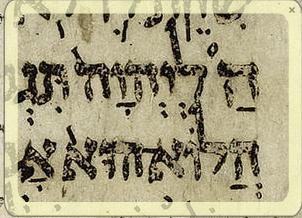
Allepo Codex - parashat Haazinu Posted by Hello

Monday, September 13, 2004

Haazinu Recap

You can check out my post for last year on parashat haazinu. It is all about Devarim 32:6, and more specifically the first word in that pasuk.

I am going to try to rework that devar torah.

First, some preliminaries:
  1. A shva na is a moving shva. That is, one that is pronounced. The general rule for a shva na is that is occurs at the beginning of a syllable. Thus, at the start of a word or at the start of a new syllable in a word.
  2. A shva nach is a resting shva. It is not pronounced. It occurs at the end of a syllable.
  3. If there are two shvas in sequence, the first it the shva nach of the preceding syllable, and the next is the shva na at the start of the new syllable.
  4. The exception to the above (rule 3) is a consonant cluster at the end of a word. E.g. the word ארד, Ard. Then, there is a shva under the resh and the daledh, but both are restive shva nach.
  5. When a shva na occurs under a gutteral - אהחע, and perhaps ר, it is difficult to pronounce. So it converts to a chataf (means fast). The shva symbol is places next to a patach, kametz, or segol, and the vowel is pronounced like a very quick version of the full vowel. We would not expect a regular shva na under a gutteral, and if we see it there, it makes sense to assume that it is a shva nach, a restive shva, instead.
Now on to the main subject matter. Devarim 32:5 states:
שִׁחֵת לוֹ לֹא, בָּנָיו מוּמָם: דּוֹר עִקֵּשׁ, וּפְתַלְתֹּל.
"Is corruption His? No; His children's is the blemish; a generation crooked and perverse."

The trup, or cantillation, first divides the verse at מוּמָם, or blemish.
So we have:
"Is corruption His? No; His children's is the blemish;"
and
"a generation crooked and perverse."

But that first part of the verse is divided by trup into:
"Is corruption His? No;"
and
"His children's is the blemish;"

It it interesting that the translation gave it as a question. "Is corruption His?" It could be read as "Corruption is His." Followed by an emphatic No! to that suggestion. If not for the trup I might have actually attributed the No! to the second part of the phrase. "No, but rather the blemish belongs to His children." But it belongs to the first part: "Corruption is His. Not!"

The next verse reads:
הַ לְיְקוָק, תִּגְמְלוּ-זֹאת-- עַם נָבָל, וְלֹא חָכָם: הֲלוֹא-הוּא אָבִיךָ קָּנֶךָ, הוּא עָשְׂךָ וַיְכֹנְנֶךָ.
"Do ye thus requite the LORD, O foolish people and unwise? is not He thy father that hath gotten thee? hath He not made thee, and established thee?"

I would read this either as a complaint against the people for misbehaving. תִּגְמְלוּ-זֹאת will then mean that you are repaying Hashem for the good He has done for you by doing bad. The other possibility is that הַ לְיְקוָק, תִּגְמְלוּ-זֹאת is asking if you are indeed attributing to Hashem this. That is, would you attribute evil to Hashem? This is then a response to the previous verse where the suggestion was made that corruption was His.

If you read Haazinu carefully the following is on of the major themes: Hashem did good things for us and established us as a nation. However, if we rebel in the future, Hashem will punish us.

Someone might look at this punishment and say that it is coming because Hashem is acting in a not-nice manner. They claim He is corrupt. Thus, we are told that No, the fault lies not in our God but in ourselves, that we corrupted our way. Before going on to tell us the good things Hashem did for us, the suggestion that the fault lies in God in mocked, as coming from a foolish and unwise people.

Alternatively, the ingratitude and rebellion towards a benevolent God is mocked as coming from an unwise people. This would be הַ לְיְקוָק, תִּגְמְלוּ-זֹאת as "would you do this to God" as opposed to "would you attribute this to God."

The word הַ is strange, though. It seems to be functioning as the ha which expresses wonder, transforming the following statement into a question. Indeed, in the second half of the verse, this ha occurs:

הֲלוֹא-הוּא אָבִיךָ קָּנֶךָ

However, there is a difference. In the first half of the verse, we have הַ with a full patach as a vowel. In the second half, as is the case in all other instances, we have הֲ with a chataf patach, which is a shva adapted under a gutteral as explained in rule 5 above. Certain transformative rules can change a chataf patach into a full patach, but it is still strange. Further, the הַ in the beginning of the verse is a separate word, whereas in the second half of the verse it is as it usually is, joined to the word.

There is a tradition, recorded in the gemara, that this heh is a word in and of itself.

I think this may be the answer: There is a possibility that this strange word
הַ does not actually serve as the heh expressing wonder, or a question. I would point out that this is a song, in which poetic terms are used. In Biblical poetry, we would expect, and in fact find, archaic terms. Sometimes these terms are extremely rare in normal Biblical Hebrew. Sometimes we only know of their existence by comparison to other Semitic languages.
In this case, there is a cognate word in Aramaic:
הָא
This word means "behold," and would also fit the context.

In fact, two of the Targumim, Targum Onkelos and Targum Yerushalmi, write הָא as the translation of this strange ha. Only Targum Pseudo-Yonatan does not.

This suggests that there was a knowledge of this fact that the meaning of the word was that of the Aramaic cognate, way back in the time of Chazal. This would account for the tradition and insistence that it should be written as its own word. In fact, it is its own word.

Since it is its own word, we would certainly not expect a chataf patach under the heh, since it is not a heh expressing wonder. And it needs a full vowel to stand as its own word.

Now, a patach does not usually stand in an open syllable. It is a short vowel, so appears in a short syllable, that is, with a consonant following it. That is why in the Aramaic word הָא the aleph does not truly close it, and the vowel patach in lengthened to be a kametz. In this case, this does not happen, but this should not us, for since we are speaking of an archaic word with an archaic form in Biblical poetry, linguistic phonetic rules which would have lengthened the patach into a kametz would not necessarily have taken effect on the word. That phonetic rule may have developed after the word fell out of vogue and so the word was not around to be changed. People still know of this rare word and used it in poetry, in its archaic and unchanged form.

However, the commentators I've seen seem to assume this is actually a heh expressing wonder, which should have a shva na under it, which would be promoted to chataf patach under rule (5). But it actually, at least in our chumashim, has a full patach. (The Leningrad Codex has a chataf patach under the heh.) So, for our chumashim, some promotion rule to a full patach would need to come into play.

The next word, having been separated from word ha, at least in printed form, also has its difficulties, which I addressed in the post linked to above.

I would say that with הַ being the cognate of the Aramaic הָא, the next word should be pronounced and vowelized the way it would normally. That is, = לַאְדֹנָי - לַיֽקוָק"La`do," with a full patach under the lamedh. It it not vowelized that way in our chumashim, nor in the Aleppo Codex. Rather, there is a shva under the lamedh : לְ

Here is what it looks like in the Aleppo Codex:

Aleppo Codex - parashat Haazinu Posted by Hello

However, even though I would say at first that this is how the next word should be vowelized, another factor comes into play. That is that, on a phonological level, unstressed syllables in Hebrew with short vowels are usually closed. That is, if C = consonant and V = vowel, a closed syllable is CVC, while an open syllable is CV. Now, the patach is a short vowel, and it is in הַ which is an open syllable. There is a desire, phonologically speaking, so close this vowel.

At the same time, the next word started initially as אְדֹנָי with a shva na under the א. (Of course in general this would be promoted to the chataf patach as described above, but we are talking initially, before doing any promotion.) A לְ was added to this, with a shva na under the lamedh. (Now, we cannot have two shva na's in a row, so promotion of some sort usually happens, but we are talking here initially.)

So there are three demands - the aleph usually would get a chataf patach, and in the proximity for the Divine Name the lamedh would aquire the full symbol - a patach and the shva under the aleph would quiesce to a shva nach. However, this would be to solve phonetic difficulties, but at the same time we have the demand of the short open syllable in the previous word for closure.

What happens next is beautiful. The shva under the lamedh quiesces to a shva nach, and it is used to close the previous syllable - the הַ. Once this happens, we no longer have two shva na in a row. Then, the shva na under the the aleph, rather than quiescing to a shva nach, remains a shva na. Since it is under a gutteral, it gets promoted to a chataf patach.

Therefore, the word is pronounced: הַ-לְאֲדֹנָי. What the specific pause between letters is is another issue - where the word boundary is, when the lamedh is closing the syllable of the previous word, but I would put the slightest pause, to let it close the syllable while still marking the word boundary.

I would say that this is not the only time we see this phenomenon of the first letter of the subsequent word. Consider the famous pasuk from the אשרי prayer, in Tehillim 84:5:

אַשְׁרֵי, יוֹשְׁבֵי בֵיתֶךָ-- עוֹד, יְהַלְלוּךָ סֶּלָה.

Note the dagesh forte in the סּ of the last word סֶּלָה.

We see it also in the next statement in, from אשרי Tehillim 144:15:

אַשְׁרֵי הָעָם, שֶׁכָּכָה לּוֹ: אַשְׁרֵי הָעָם, שֱׁיְהוָה אֱלֹהָיו.
Note the dagesh forte in the לּ of the word לּוֹ.

In both cases, the previous syllable, that is the final syllable of the previous word, is an unstressed syllable. (Specifically it is pretonically = mile'el stressed.) Further, it is an open syllable, since יְהַלְלוּךָ has the kametz final and the heh in שֶׁכָּכָה is not pronounced and thus does not close it. {Even though the kametz is a long vowel and usually need not be closed, there still seems to be a need for closure.} Further, there is conjunctive rather than disjunctive trup, another factor I claim is necessary to this phenomenon to manifest. I would therefore say that the dagesh forte at the start of the following word serves to double the first letter, as a dagesh forte always does. One of duo then serves to close the previous syllable, and the second serves to begin the new syllable.

Here in Haazinu there is no need for a dagesh forte because there are factors in play (namely the desire not to see two shva na in a row) that do not want the first letter to begin a syllable anyway. As a result, all that happens is the shva na under the lamedh quiesces and it serves to close the previous word. So, while not exactly similar, the situations are analagous.

I want to now turn to the opinion of Ibn Ezra, as brought down by the super-commentary Avi Ezer. This will bring evidence as to how the word was pronounced in medieval times.
אבי עזר
הלה' תגמלו זאת וגו': וכבר פירשתי טעם הה"א בספר מאזנים)
וזה לשון הרב בספר מאזנים.
אמר ר' שמואל הנגיד
נתברר אצלנו שה"א הלה' לבדה והיא זרה
והנה זה הה"א יגלה סוד גדול
והוא ששה"א לא יתכן להיות בשו"א ובפת"ח
כי אין יכולת באדם לקרוא שו"א נע אם לא יהיה אחריו אות בתנועה.
ע"כ יהיה הה"א בפת"ח כדרך ההאי"ן התמהין
וידוע כי הלמ"ד יהיה שו"א נע כמשפט כל למ"ד נוסף, כמו ליעקב.
ואל תשים אל לבך הקריאה שאנו קוראין
כי הוצרכנו להניח להלמ"ד שהיא שו"א נע בעבור היות שו"א נע תחת אל"ף אדון עד כאן לשונו.
ועיין א"ת
ושלש מחלוקות בדבר:
לסיראי ה' לחוד.
ולנהרדאי הל' לחוד.
ולמדינחאי הלה' מלה אחת.
ובחבירי אם מטעמים אאריך אם ירצה השם בזה ברצות ה' דרכי


הלה' תגמלו זאת וגו: Ibn Ezra writes, "And I already explained the reason of the ה in Sefer Moznayim."
And this is the language of the Rav {Ibn Ezra} in Sefer Moznayim:
Rabbi Shmuel HaNaggid said,
it is clear by us that the heh of הלה' is by itself, and it is out of the ordinary.
And behold this heh reveals a great secret,
and that is that the heh cannot bear to have a chataf patach (with shva and with patach)
For man does not have the ability to read a shva na if it does not have after it a consonant with a vowel. {phonologically speaking}
Perforce the heh must have a {full} patach like the heh's expressing wonder.
And it is known that the lamedh has a shva na according to the rule of all lameds added on, such as leYa'akov.
And do not take to heart the {actual} reading that we read {i.e. pronounce}
For we must quiesce the lamedh which was originally a shva na, in order to have a shva na (that is, chataf patach) under the aleph of אֲדֹן.
End quote.
And see א"ת. (??)
And there is a three way dispute in the matter {of how it is written in a sefer torah}:
The Syrians have the first heh by itself. {as its own word, as the yerushalmi says.}
The Nehardaians have the heh lamedh by itself. {and the name of Hashem as the other word.}
The Easterners have both as a single word.
And in my treatise on taamim I will elaborate on this, G-d-willing, on this, if Hashem desires my path.
Analyzing this, we see that Shmuel HaNagid assumed that the heh was one expressing wonder, rather than the Aramaic cognate I suggested. As a result, he has an original heh shva na lamedh shva na aleph shva na. Then he must posit various promotions to the he shva to heh chataf patach to heh patach, as he does, and explain why the lamedh shva na must quiesce.

I, on the other hand, start with a heh patach lamedh shva na aleph shva na. Then, everything else falls into place, with the patach seizing the shva of the lamedh to close it, and the shva na of the aleph remaining, requiring of course promotion to a chataf patach.

In terms of the three way dispute, I think I can explain. The Syrians have exactly what it says in the yerushalmi. That is, the heh is a word in and of itself. As we would expect, since Aleppo is in Syria, the Aleppo Codex reflects this. {And I explained above that the meaning of this tradition.}

Those from Nehardaa have the heh lamedh as its own word. This reflects the pronunciation, as described by Shmuel HaNaggid. That is, the shva na under the lamedh quiesces, and thus there is a pronunciation hal. A careful reader would make sure to pronounce it such, and might put a separation after because the heh is supposed to be a word in and of itself, or just because for such a difficult word they spoke deliberately, putting a slight pause after the syllable that should not really be there. It is reflected in the text.

The Eastern tradition is to hae it as a single word, perhaps because of a lack of a tradition that the heh is a word in and of itself, or because once the lamedh shva na quiesces, it is almost pronounced like a single word.

At any rate, the way I suggested it should be pronounced seems borne out both by Shmuel HaNaggid's description of how it is read, and by the strange tradition from Nehardaa.

I've registered for an interesting set of classes this semester

In CUNY:
  1. Introduction to Robotics
  2. Data Mining on the Web
  3. Introduction to Theoretical Linguistics
  4. Some research work in Linear Algebra
In Revel:
  1. Halachic Literature of Spanish Jewry, 10th-14th century
  2. Introduction to Tannaitic Literature
In RIETS:
  1. Pastoral Psychology

They Should've Listened to Shimon Ben Shetach

As Pirkei Avot 1:9 states:

שמעון בן שטח אומר: הוי מרבה לחקור את העדים, והוי זהיר בדבריך שמא מתוכם ילמדו לשקר.
Shimon ben Shetach says: Increase in interrogating your witnesses, and be careful in your words, lets from them they learn how to lie.

In terms of Rathergate and the bogus 60 Minutes memos, I just read the following, from The American Spectator:
PERHAPS MOST TROUBLING to the CBS News staff looking into how its story went off the rails is the timing of the memos' appearance. "Some 60 Minutes staffers have been working on this story for more than three years off and on," says the CBS News producer. "There have been rumors about these memos and what was in them for at least that long. No one had been able to find anything. Not a single piece of paper. But we know that a lot of people here interviewed a lot of people in Texas and elsewhere and asked very explicit questions about the existence of these memos. Then all of a sudden they show up? In one nice, neat package?"

This CBS New producer went on to explain that the questions 60 Minutes folk were asking were specific enough that people would have been able to fabricate the memorandums to meet the exact specifications the investigative journalists were looking for. "People were asking questions of sources like, 'Have you ever seen or heard of a memo that suspended Bush for failing to appear for a physical?' and 'Have you heard about or know of someone who has any documentation from back in the 1970s that shows there was pressure to get Bush into the National Guard?' It was like they were placing an order for a ready-made product. That is the biggest problem I have with this. It's all too neat and perfect for what we needed. Without these exact pieces of paper, we don't have a story. Dan has as much as admitted that. Everyone knows it. We were at a standstill on this story until these memos showed up."
Little Green Footballs has a good series of posts about the whole issue.

Friday, September 10, 2004

+1 yevamot;

הדרן עלך כיצד אשת אחיו!
(perek 2 of yerushalmi yevamot)

Nitzavim - Vayelech #3: A source for Daf Yomi

The midrash expands on the attainability of Torah, mentioned in the verses below:

Devarim 30:11-14
כִּי הַמִּצְוָה הַזֹּאת, אֲשֶׁר אָנֹכִי מְצַוְּךָ הַיּוֹם--לֹא-נִפְלֵאת הִוא מִמְּךָ, וְלֹא רְחֹקָה הִוא.
לֹא בַשָּׁמַיִם, הִוא: לֵאמֹר, מִי יַעֲלֶה-לָּנוּ הַשָּׁמַיְמָה וְיִקָּחֶהָ לָּנוּ, וְיַשְׁמִעֵנוּ אֹתָהּ, וְנַעֲשֶׂנָּה.
וְלֹא-מֵעֵבֶר לַיָּם, הִוא: לֵאמֹר, מִי יַעֲבָר-לָנוּ אֶל-עֵבֶר הַיָּם וְיִקָּחֶהָ לָּנוּ, וְיַשְׁמִעֵנוּ אֹתָהּ, וְנַעֲשֶׂנָּה.
כִּי-קָרוֹב אֵלֶיךָ הַדָּבָר, מְאֹד: בְּפִיךָ וּבִלְבָבְךָ, לַעֲשֹׂתוֹ.
"For this commandment which I command thee this day, it is not too hard for thee, neither is it far off.
It is not in heaven, that thou shouldest say: 'Who shall go up for us to heaven, and bring it unto us, and make us to hear it, that we may do it?'
Neither is it beyond the sea, that thou shouldest say: 'Who shall go over the sea for us, and bring it unto us, and make us to hear it, that we may do it?'
But the word is very nigh unto thee, in thy mouth, and in thy heart, that thou mayest do it."

The midrash rabba on nitzavim-vayelech states:

זש"ה (משלי כד:ז) רָאמוֹת לֶאֱוִיל חָכְמוֹת; בַּשַּׁעַר, לֹא יִפְתַּח-פִּיהוּ. מהו רָאמוֹת לֶאֱוִיל חָכְמוֹת? א"ר תנחומא הטיפש הזה נכנס לבית הכנסת והוא רואה אותן שנושאים ונותנים בתלמוד והוא אינו יודע מה הן אומרין הוא מתבייש שנא' בַּשַּׁעַר, לֹא יִפְתַּח-פִּיהוּ ואין שער אלא סנהדרין דכתיב (דברים כה:ז) וְעָלְתָה יְבִמְתּוֹ הַשַּׁעְרָה אֶל-הַזְּקֵנִים.

This {what the pesukim above talk about the attainability of Torah} is what it stated by the verse in Mishlei 24:7: "Wisdom is {as unattainable} to a fool as corals; he openeth not his mouth in the gate." What is meant by רָאמוֹת לֶאֱוִיל חָכְמוֹת, "Wisdom is {as unattainable} to a fool as corals?"

Rabbi Tanchuma said, this is the fool who enters the synagogue and sees those who are involved in the give and take of Talmud, and he does not know what they are saying, and is embarrassed, as it states {in the end of the verse in Mishlei} "he openeth not his mouth in the gate." And the word "gate" is a reference to the Sanhedrin, as it states in Devarim 25:7, {about levirate marriage, in the case when the man refuses to marry his brother's widow: }
וְאִם-לֹא יַחְפֹּץ הָאִישׁ, לָקַחַת אֶת-יְבִמְתּוֹ; וְעָלְתָה יְבִמְתּוֹ הַשַּׁעְרָה אֶל-הַזְּקֵנִים, וְאָמְרָה מֵאֵן יְבָמִי לְהָקִים לְאָחִיו שֵׁם בְּיִשְׂרָאֵל--לֹא אָבָה, יַבְּמִי.
And if the man like not to take his brother's wife, then his brother's wife shall go up to the gate unto the elders, and say: 'My husband's brother refuseth to raise up unto his brother a name in Israel; he will not perform the duty of a husband's brother unto me.'
{Thus we see the word שער, gate, refers to the place where the court convenes.}

{A suggestion: the word
ramot may serve a dual purpose, that is, as a pun, in the verse in Mishlei. It refers to some rare gem, what the standard translation renders coral. But unspecified is in what way is wisdom to the fool comparable to coral. One answer is that as a rare gem is is difficult to get access to. But ramot (especially without the aleph, which is quiescent in the word) also means "high up," and thus it is high up and unattainable. "Wisdom is high up for the fool." The contrast is then immediately obvious to that of Moshe's speech to the Israelites: The Torah is not in Heaven, that you need someone to go up and bring it down for you. It is attainable. The midrash continues...}


ד"א רבנן אמרי הטיפש הזה נכנס לבית הכנסת ורואה אותן עוסקים בתורה והוא אומר להן היאך אדם למד תורה תחלה אומרים לו תחלה קורא במגילה ואח"כ בספר ואח"כ בנביאים ואח"כ בכתובים משהוא גומר את המקרא שונה את התלמוד ואח"כ בהלכות ואח"כ באגדות כיון ששומע כך אומר בלבו אימתי אני למד כל זאת וחוזר מן השער הוי בַּשַּׁעַר, לֹא יִפְתַּח-פִּיהוּ.

Another explanation: The Rabbis said, this fool enters the synagogue and sees them involved in Torah and he says to them, "how does one learn Torah in the first place?" They say to him {in reply} "first he reads in megilla {Esther, or the 5 Megillot?? - or is this some text used to teach reading Hebrew?}, then in the sefer {Pentateuch - 5 Books of Moshe}, then in Neviim {Prophets}, and then in Ketuvim {Writings}. Once he finishes the Written Torah, he learns the Talmud, and after that halachot {laws} and after that aggadot {homiletic and narrative interpretations of Torah}. When he hears this, he says in his heart, "When will I learn all of this?!", and turns from the gate. This is what is written, בַּשַּׁעַר, לֹא יִפְתַּח-פִּיהוּ, "In the gate, he does not open his mouth."

{I would add that the focus is perhaps on the fact that he does not even begin - לֹא יִפְתַּח means he did not begin, or open. Or opening his mouth connotes a very limited step, just the learning megilla stage, which he does not do. He does not do the slightest, because the final goal - Wisdom - seems so far off. Rabbi Yannai will give a recommendation how to proceed even in the face of the immensity of the task...}

א"ר ינאי למה"ד לככר שהיה תלוי באויר טיפש אומר מי יוכל להביאו ופקח או' לא אחד תלה אותו מביא סולם או קנה ומוריד אותו כך כל מי שהוא טיפש אומר אימתי אקרא כל התורה ומי שהוא פיקח מהו עושה שונה פרק אחד בכל יום ויום עד שמסיים כל התורה כולה אמר הקדוש ב"ה לא נפלאת היא ואם נפלאת היא ממך שאין אתה עסוק בה הוי כי המצוה הזאת

Rabbi Yannai said, to what is this matter comparable? To a loaf of bread which is suspended in the air {presumably from a string from the ceiling}. The fool says, "who is able to bring it?" And the rational man says, "Did not someone suspend it there?" {And if someone was able to access that space to suspend it there then it must be possible for others to access it as well.} He brings a ladder, or a pole, and brings it {down}. So too he who is foolish says "When will I {have time to} read all the Torah.

And he who is rational, what does he do? He learns a single perek {chapter} every day until he finishes the entirety of Torah.

So says Hashem, לֹא-נִפְלֵאת הִוא מִמְּךָ, " it is not too hard for thee." That is, לֹא-נִפְלֵאת הִוא, "it is not too hard." And if it is too hard, מִמְּךָ, "it is from you" that you are not invliving yourself in it. This is what is meant by the verse כִּי הַמִּצְוָה הַזֹּאת.

{That's why daf yomi is such a great idea. You take a very small chunk every day, and after about seven years, finish bavli. But you can do this with any think you want to learn. A while ago, I decided that I should learn through Tanach, and went through it 3 times so far, by simply setting aside time every day to learn at least some small amount - be it a chapter, or more, or less. The same with yerushalmi. I try to learn a bit each day, and don't shift my attention to some other material, and eventually I'll get through it - I recently started the final seder, seder nashim. And when I'm done I'll have been exposed to all if it, and this exposure is useful for getting to the depths of any single sugya. I recommend this approach highly.}

Nitzavim - Vayelech #2:

כִּי הַמִּצְוָה הַזֹּאת, אֲשֶׁר אָנֹכִי מְצַוְּךָ הַיּוֹם--לֹא-נִפְלֵאת הִוא מִמְּךָ, וְלֹא רְחֹקָה הִוא.
לֹא בַשָּׁמַיִם, הִוא: לֵאמֹר, מִי יַעֲלֶה-לָּנוּ הַשָּׁמַיְמָה וְיִקָּחֶהָ לָּנוּ, וְיַשְׁמִעֵנוּ אֹתָהּ, וְנַעֲשֶׂנָּה.
וְלֹא-מֵעֵבֶר לַיָּם, הִוא: לֵאמֹר, מִי יַעֲבָר-לָנוּ אֶל-עֵבֶר הַיָּם וְיִקָּחֶהָ לָּנוּ, וְיַשְׁמִעֵנוּ אֹתָהּ, וְנַעֲשֶׂנָּה.
כִּי-קָרוֹב אֵלֶיךָ הַדָּבָר, מְאֹד: בְּפִיךָ וּבִלְבָבְךָ, לַעֲשֹׂתוֹ.
"For this commandment which I command thee this day, it is not too hard for thee, neither is it far off.
It is not in heaven, that thou shouldest say: 'Who shall go up for us to heaven, and bring it unto us, and make us to hear it, that we may do it?'
Neither is it beyond the sea, that thou shouldest say: 'Who shall go over the sea for us, and bring it unto us, and make us to hear it, that we may do it?'
But the word is very nigh unto thee, in thy mouth, and in thy heart, that thou mayest do it."
The pshat meaning of the above section might be that the Torah is accessible to the people. Moshe already did the hard work of going up to Heaven and bringing it down for the people. Also, it is not far off generally - not all the way up in heaven or across the sea. Further, it now resides much closer to them - they speak it, and it occupies their thought processes. (The heart as the seat of thought.)

The midrash takes off on the phrase לֹא בַשָּׁמַיִם הִוא, "It is not in heaven," as referring to Moshe's taking of the Torah from Heaven:
כִּי הַמִּצְוָה וגו' לא לֹא בַשָּׁמַיִם, הִוא: אמר להן משה שלא תאמרו משה אחר עומד ומביא לנו תורה אחרת מן השמים כבר אני מודיע אתכם לא בשמים היא שלא נשתייר הימנה בשמים.
"For this commandment ... It is not in heaven..." - Moshe said to them, "that you should not say that another Moshe will stand and bring us another Torah from heaven, I therefore preempt this by informing you that there is not left of it in heaven."
Perhaps this midrash was a response to Christianity's New Testament - that no later figure can give a new Torah. The Torah we have is final, and Hashem is not holding something back that He will later give.

It could also be a response to later attempts at reforming the religion - say, false prophets who claim they have new halachot to teach. We can see this line of thought earlier, in Devarim 13, where we learned of the prohibition of adding to mitzvot, immediately before a discussion of a false prophet.

Perhaps part of what influences this interpretation is the peshitta, or "of course!" factor. Moshe tells them that the Torah is not in Heaven that they need to get it. Of course! Moshe went up to Har Sinai and brought it down. Everyone in the audience knows this. Moshe would not have to specify something so obvious. The answer this particular midrash gives it that not only did Moshe bring it down, but none is left above, so this Torah is complete.

Thus, the midrash continues:
ד"א אמר רבי חנינא היא וכל כלי אומנותה ניתנה ענותנותה צדקה וישרותה ומתן שכרה.
"Another explanation: Rabbi Chanina said: "it" and all the crafts of its trade were given: Its humility, righteousness, and uprightness, and the giving of its reward."
This also seems based on the idea that the pasuk must be telling us something more than just that the Torah was brought from Heaven. Rather, it was completely brought down from heaven.

One final takeoff, which seems like a commentary of Tora UMadda! And a somewhat negative one at that!

ד"א מהו לא בשמים היא שמואל אמר אין התורה מצויה באיסטרולוגין שאומנותן בשמים אמרו לשמואל הרי אתה איסטרולוגין וגדול בתורה אמר להן לא הייתי מביט באיסטרולוגים אלא בשעה שהייתי פנוי מן התורה אימתי כשהייתי נכנס לבית המים.
Another explanation: It is not in heaven..." - Shmuel said, "the Torah is not to be found in astrologers, whose craft is in the heaven." They said {protested} to Shmuel - "But you are an astrologer and are great in Torah!" He said to them, I only look at astrology at the time I am free from {the obligation/ability to learn} Torah. When is that? When I enter into the house of water. {Presumably the bathhouse}
It is actually a pretty good strategy - I'm learning through yerushalmi, but also have to read through various papers, or work on programs, for courses. By shifting some of the course reading to the bathroom (instead of reading, e.g. a newspaper or novel), I create more time that I can learn torah. I still read secular subjects outside of the bathroom. but this creates a bit more time.

Note Shmuel is not against astrology, or secular subject matter. It seems to me to be more of an observation that you cannot be truly great in Torah if your attention is divided, and are focusing a lot of intellectual energy in another direction.

Nitzavim - Vayelech #1:

The midrash rabba on this week's parsha gives a neat derivation, or else hint, to the practice of saying a bracha, blessing, before and after being called up in shul for an aliya to the Torah:
הַמִּצְוָה הַזֹּאת: הלכה אדם מישראל שעומד לקרות בתורה כיצד מברך כך שנו חכמים הפותח והחותם בתורה מברך לפניה ולאחריה ומנין שטעונה ברכה לפניה ולאחריה שכתוב (שם קיט) בא"י ואח"כ למדני חקיך הרי ברכה לפניה. ומנין שטעונה ברכה לאחריה. א"ר שמואל בר נחמן בשם ר' יונתן שכתוב אחר השירה וְזֹאת הַבְּרָכָה מששנה להן את התורה ואח"כ בירך הרי ברכה לאחריה.
A halacha (law): when a Jewish man gets up to read from the Torah, how does he bless? The Sages learned: One who opens and finishes reading the Torah blesses before it and after it.
And from where do we know that it requires a blessing before it and after it? Since it is written in Tehillim 119:12, בָּרוּךְ אַתָּה ה, "Blessed art Thou, O LORD" and afterwards, לַמְּדֵנִי חֻקֶּיךָ, "teach me Thy statutes." Thus the blessing before it.
And from where do we know that it requires a blessing after it? Rabbi Shmuel bar Nachman cited Rabbi Yonatan: after the Shira {song = haazinu = Devarim perek 32, which is introduced in Devarim 31:30 as וַיְדַבֵּר מֹשֶׁה, בְּאָזְנֵי כָּל-קְהַל יִשְׂרָאֵל, אֶת-דִּבְרֵי הַשִּׁירָה, הַזֹּאת--עַד, תֻּמָּם - "And Moses spoke in the ears of all the assembly of Israel the words of this song, until they were finished"} is וְזֹאת הַבְּרָכָה, "And this is the blessing." {Devarim 33:1}
Once he {Moshe} taught them the Torah, after that he blessed. Thus the blessing following it.

Thursday, September 09, 2004

+1 yevamot;

הדרן עלך חמש עשרה נשים!
(perek 1 of yerushalmi yevamot)

LinkWithin

Blog Widget by LinkWithin