Tuesday, August 10, 2004

Reeh #1: The blessing and the curse

Parshat Reeh begins with Moshe laying out a choice for the Israelites:

Devarim 11:26-28:
רְאֵה, אָנֹכִי נֹתֵן לִפְנֵיכֶם--הַיּוֹם: בְּרָכָה, וּקְלָלָה.
אֶת-הַבְּרָכָה--אֲשֶׁר תִּשְׁמְעוּ, אֶל-מִצְו‍ֹת ה אֱלֹקֵיכֶם, אֲשֶׁר אָנֹכִי מְצַוֶּה אֶתְכֶם, הַיּוֹם.
וְהַקְּלָלָה, אִם-לֹא תִשְׁמְעוּ אֶל-מִצְו‍ֹת ה אֱלֹקֵיכֶם, וְסַרְתֶּם מִן-הַדֶּרֶךְ, אֲשֶׁר אָנֹכִי מְצַוֶּה אֶתְכֶם הַיּוֹם: לָלֶכֶת, אַחֲרֵי אֱלֹהִים אֲחֵרִים--אֲשֶׁר לֹא-יְדַעְתֶּם.
"Behold, I set before you this day a blessing and a curse:
the blessing, if ye shall hearken unto the commandments of the LORD your God, which I command you this day;
and the curse, if ye shall not hearken unto the commandments of the LORD your God, but turn aside out of the way which I command you this day, to go after other gods, which ye have not known."


I would like to make a drasha. The blessing is in fact the keeping of the Torah. By living a lifestyle in accordance with God's command, one lives a blessed and elevated life.

Of course, context (pasuk 29) describes the blessing and the curse as associated with Mount Grizim and Mount Eival, and we can take the blessing and curse to be worldly or next-wordly reward/punishment associated with being true to God and keeping his commandments.

However, and not to deny the existence of reward and punishment, the elevation of man as a result of conducting himself in accordance with the divine plan, as opposed to that of his own whims (a recurring theme in this week's parasha), can be a reward and a blessing all its own.

We can see this in the second verse. It does not state "the blessing, if - אם - ye shall hearken unto the commandments of the LORD your God, which I command you this day, but rather that - אשר you shall hearken.

(Obviously at the simplest level of reading the text the word אשר serves many functions, including both "that" and "if/since.)

ערוך השלחן אורח חיים, סימן תרה: מנהג הכפרות בערב יום הכיפורים, ובו ה סעיפים

א: המנהג מכפרות שנוהגים לשחוט על כל בן זכר תרנגול ועל כל נקיבה תרנגולת, כמה גדולים אין דעתם נוחה מזה והרמב"ן והרשב"א ז"ל ביטלו המנהג הזה משום ניחוש ומשום דרכי האמורי כמה שכתוב בתשובת הרשב"א [סימן תצ"ה ועיין בית יוסף] ולכן כתב רבינו הבית יוסף דיש למנוע המנהג

1: The custom of Kapparot that they practice to slaughter for each male a male chicken and for each female a female chicken, many of the gedolim were not pleased with this. And the Ramban and the Rashba, z"l, abolished this practice because of augury and the ways of the Emorites (superstition), as is written in the responsa of the Rashba (Siman 495, and see the Bet Yosef). And therefore Our Teacher the Bet Yosef wrote that there is to refrain from this practice.

ב: אמנם כמה מהגדולים קיימו המנהג וגם בתשובות הגאונים נמצא זה וגם ברשי שבת [פ"א:] הביא מתשובות הגאונים שהיו עושין כפרות בזרעים ובערב ראש השנה היו מסבבין על הראש ואומרים זה חליפתי עיין שם, אך הטור הביא שהיו עושין בתרנגולים ובאילים ובערב יום הכיפורים
2: However, many of the gedolim kept/established the practice, and also in the responsa of the geonim this is found. And also in Rashi in Bavli Shabbat 81a he brings from the responsa of the geonim that they made Kapparot with plants, and on erev Rosh HaShana they would encircle it about the head and say "this is my substitute," see there. However the Tur brings that they would do {Kapparot} with chickens and rams, and on erev Yom Kippur.

{J: I have to check this out inside the Tur again. Does this mean the slaughter of these served as Kapparot, or that they swung it about the head as well? It is hard to imagine them doing this with rams, and if I recall correctly the reason for the prevalence of chickens is that they are cheaper, not easier to swing about one's head. Yet the current minhag is to swing the chickens! As I said, to be looked into.}

ג: וזה לשון רבינו הרמ"א: ויש מהגאונים שכתבו מנהג זה וכן כתבו אותו רבים מן האחרונים וכן נוהגין בכל מדינות אלו ואין לשנות כי הוא מנהג וותיקין. ונוהגין ליקח תרנגול זכר לזכר, ולנקבה לוקחין תרנגולת (ב"י בשם תשב"ץ), ולוקחין למעוברת ב' תרנגולים אולי תלד זכר; ובוחרין בתרנגולים לבנים, על דרך שנאמר: אם יהיו חטאיכם כשנים כשלג ילבינו (ישעיה א:יח) ונהגו ליתן הכפרות לעניים, או לפדותן בממון שנותנים לעניים (מהרי"ל). ויש מקומות שנוהגין לילך על הקברים[/ות] ולהרבות בצדקה, והכל מנהג יפה. ויש להסמיך שחיטת הכפרות מיד לאחר שהחזירו עליו, וסמך ידיו עליו, דמות הקרבן; וזורקין בני מעיהם על הגגות או בחצר, מקום שהעופות יכולין לקחת משם (טור ). עד כאן לשונו.א
3: And this is the language of the Rama: And there were among the geonim who recorded this practice, and so did many of the acharonim record it, and so is the practice in all these countries, and there is not to change, for it is a practice of the early ones.
And the practice is to take a male chicken for a male and for a female a female chicken, and for a pregnant woman two chickens, since perhaps she will give birth to a male child. And they chose {specifically} white chickens {!!}, in the way that it states in Yeshayahu 1:18:
לְכוּ-נָא וְנִוָּכְחָה, יֹאמַר ה; אִם-יִהְיוּ חֲטָאֵיכֶם כַּשָּׁנִים כַּשֶּׁלֶג יַלְבִּינוּ, אִם-יַאְדִּימוּ כַתּוֹלָע כַּצֶּמֶר יִהְיוּ.
"Come now, and let us reason together, saith the LORD; though your sins be as scarlet, they shall be as white as snow; though they be red like crimson, they shall be as wool."
And the practice is to give the kapparot to poor people, or to redeem them with money which is then given to poor people. And there are places where the practice is to go to the graves, and to increase in charity, and it is all a nice custom. And there is to slaughter the kapparot immediately after they return it to him, and he rests his hands upon it, in a manner reminiscent of a sacrifice.

{J: punctuation mine. Punctuation in Hebrew text I took the Rama from seems to dissociate the semicha from the shechita, but this seems a reference to the statement in bavli and yerushalmi that there are three tekefs - immediately's: immediately following geula (the final blessings of shema) is tefilla (shemoneh esrei); immediately following semicha is shechita (talking about by a sacrifice); immediately following netilat yadayim - washing of hands - is beracha, the blessing, though which washing of hands and which blessing we are talking about is a matter of dispute, and context. At any rate, they are saying to do the slaughter immediately after semicha, patterned after korbanot.}

And they throw their innards upon the roofs or in the courtyard, the place that the birds are able to take them from there. Endquote of the Rama.

ד: ובאיזה דברים פקפקו הדגולים והיינו בהידור אחרי לבנים דזהו כעין דרכי האמורי שהיו מחפשין אחר תרנגול לבן כדאיתא בפרק לפני אידיהן [עבודה זרה י"ד.] ולכן לא יהדר אחר לבן אלא אם אירע לידו יקניהו [מגן אברהם סעיף קטן ג' וב"ח] וגם לא יקח תורים ובני יונה הראוים להקרבה דלא ליתחזי כקרבן [שם] וכן מה שכתב לסמוך ידיו אין לעשות כן דמיחזי כסמיכה בקרבנות, ואף דתרנגולים אינם ראויים לקרבן, מכל מקום לא גרע מבשר זה לפסח דאסור, ואיך נעשה זה לכתחילה, ולכן אין לעשות כן [טורי זהב סעיף קטן ז'] והטעם לזריקת המעיים להעופות כדי לרחם על הברואים וגם מן השמים ירחמו עלינו, וכתבו שטוב לשחוט באשמורת שהוא זמן הרחמים ויאמרו זה חליפתי זה תמורתי זה כפרתי, ראשי תיבות חת"ך על שם החותך חיים לכל חי, והעניין דאם נגזר מיתה חס ושלום יהיה זה תמורתי [ולדעתי היה יותר ראוי לומר זה תחתי ולא לשון תמורה ששניהם נשארים בקדושתן, עיין תמורה כו: ודו"ק] א
And in certain matters the gedolim had issues, and these are: in the considering it better and then seeking after specifically white chickens, for this appears like the ways of the Emorites, that they sought after specifically a white chicken, as is brought in the chapter lifnei eidehem (Avoda Zara 14a). And therefore he should not insist upon going after a white one, but rather if one comes to his hand he should take it (magen avraham, seif katan 3, and Bach). And also he should not take two turtle-doves and doves which are appropriate for sacrifice, so that it will not appear like a sacrifice (see there). And so too that which he wrote to lean his hands {on the animal}, one should not do this, because it looks like semicha by korbanot. And even though chickens are not fit for sacrifice, even so they are no worse that {saying} "this meat for Pesach" which is forbidden, and so how can we do this lechatchila, and therefore one should not do this (Taz 7). And the reason for the throwing of the innards to the birds is in order to have mercy on the creations, and so too from Heaven they should have mercy on us. And they wrote that it is good to do the slaughter at dawn {ashmoret} since this is a time of mercy, and they say "this is my substitute, this is my replacement {temurati}, this is my atonement - the first letters for חתך - which refers to "who 'apportions' life to all the living.' And the idea is that if death is decreed, Heaven forefend, this should be my temura = replacement. [And to my mind it would be more appropriate to say "this is tachti - instead of me" and not the language of temura, in which both remain in their consecrated state, see bavli temura 21a, and it is a bit difficult.]

ה: וכל זה בעצם הדבר אבל בעוה"ר אנו רואים הקלקול בשחיטה מריבוי הכפרות והלחץ ואין שוחטים משגיחים מפני העייפות והטורח וכמה טריפות יצאו מתחת ידם וגם הסכין אי אפשר להיות בדוק כראוי וגם ידי השוחט כבדות, ועתה בזמן הזה מצוה וחובה להמעיטן ולא ליכנס ליום הקדוש בחשש שחיטה, וכבר טרחו גם בדורות שלפנינו לבטלן ולא עלתה בידן כי ההמון דבוק בזה כמו על מצות אתרוג ועוד יותר, ולכל הפחות לראות להתחיל בשחיטתן איזה ימים מקודם ולמנוע האשמורת שידי השוחט
כבידות אז. א
5: And all this is in the principles of the matter, but in the real world we see the mess up in the slaughtering from the large amount of kapparot and the pressure, and the slaughterers are not monitoring because of the exhaustion and the difficulty, and many treifot go out from under their hands; and also it is impossible for the knife to be inspected properly, and also the hands of the slaughterer are heavy. And now at this time, it is a mitzvah and a chova (commandment and obligation) to reduce them and not to enter into the holy day with suspect slaughter. And they have already labored, also in the generations before us, to annul this practice and it was not successful, for the general populace clings to this as if on the commandment of etrog and even more. And at the very least one should see that they begin the slaughter some days before, and to hold back {from slaughtering during} the dawn {ashmoret}, for the hands of the slaughterer are heavy then.
{To be continued. This follows the discussion of the Kabbalah red string, mentioned in an earlier post, and a class I gave on superstitious practices.}

Monday, August 09, 2004

+6=masechet bava kamma; +10=masechet bava metzia; +7 bava batra

הדרן עלך שור שנגח את הפרה!
הדרן עלך הכונס צאן לדיר!
הדרן עלך מרובה!
הדרן עלך החובל!
הדרן עלך הגוזל עצים!
הדרן עלך הגוזל ומאכיל!
(prakim 5-10 of yerushalmi bava kamma)

הדרן עלך שנים אוחזין בטלית!
הדרן עלך אלו מציאות!
הדרן עלך המפקיד!
הדרן עלך הזהב!
הדרן עלך איזהו נשך!
הדרן עלך השוכר את האומנין!
הדרן עלך השוכר את הפועלים!
הדרן עלך השואל את הפרה!
הדרן עלך המקבל שדה מחבירו!
הדרן עלך הבית והעלייה!
(prakim 1-10 of yerushalmi bava metzia)

הדרן עלך השותפין!
הדרן עלך לא יחפור אדם!
הדרן עלך חזקת הבתים!
הדרן עלך המוכר את הבית!
הדרן עלך המוכר את הספינה!
הדרן עלך המוכר פירות!
הדרן עלך האומר לחבירו!
(prakim 1-7 of yerushalmi bava batra)

Tuesday, August 03, 2004

Kabbalah Red String

This week Target offered (and then took of their website) Kabbalah Red String, for 26 dollars, presumably because the gematria of Hashems name is 26.


The Kabbalah Centre had previously attempted to trademark the phrase "Kabbalah Red String." Here is the Centre's explanation of the red string. And from the description from Target:
'believed to protect against the evil eye.' Each is guaranteed to have 'traveled to Israel, to the ancient tomb of Rachel the Matriarch, and returned imbued with the essence of protection.'
At kever Rachel, widows circle the tomb reciting Tehillim and making this string. People give charity to the women and they give the red string in exchange. How this protects from the "evil eye?" The best explanation I've seen is that the merit of the charity supporting widows and orphans serves to give an extra merit which can protect in certain situations, including ayin hara, "the evil eye."

(This "evil eye" is also not of necessity something superstitious - one classic explanation is that if one (person X) behaves ostentatiously and causes someone to think to himself, 'Why does that person deserve these riches,' Hashem then sits in judgement to see if that person (X) really does deserve that wealth.)

I've seen these red strings given out now in other locations, such as the kotel. It smacks of superstition, given the explanation that it protects against the evil eye, and given that in India red strings are put around the wrists of a bride and groom-to-be as a good luck charm. A bubba maaseh that sprung up among some seminary girls in Israel is that the girl wears the red string on her wrist, and the first man she sees when it finally breaks is her bashert!

Jewish law does not like superstition. We are commanded to be complete with Hashem, and direct prayers towards Him, and not attempt magic or charms or any superstitious practices. There is a Biblical prohibition to avoid going in the ways of the Emorites. based either on Vayikra 18:13, according to Rashi on Bavli Shabbos 67a:
כְּמַעֲשֵׂה אֶרֶץ-מִצְרַיִם אֲשֶׁר יְשַׁבְתֶּם-בָּהּ, לֹא תַעֲשׂוּ; וּכְמַעֲשֵׂה אֶרֶץ-כְּנַעַן אֲשֶׁר אֲנִי מֵבִיא אֶתְכֶם שָׁמָּה, לֹא תַעֲשׂוּ, וּבְחֻקֹּתֵיהֶם, לֹא תֵלֵכוּ
And the LORD spoke unto Moses, saying: Speak unto the children of Israel, and say unto them: I am the LORD your God. After the doings of the land of Egypt, wherein ye dwelt, shall ye not do; and after the doings of the land of Canaan, whither I bring you, shall ye not do; neither shall ye walk in their statutes.
or Shemot 23:24, according to Rashi on Bavli Chullin 77a or Ramban on that pasuk:
לֹא-תִשְׁתַּחֲוֶה
לֵאלֹהֵיהֶם וְלֹא תָעָבְדֵם, וְלֹא תַעֲשֶׂה כְּמַעֲשֵׂיהֶם: כִּי הָרֵס תְּהָרְסֵם, וְשַׁבֵּר תְּשַׁבֵּר מַצֵּבֹתֵיהֶם
Thou shalt not bow down to their gods, nor serve them, nor do after their doings; but thou shalt utterly overthrow them, and break in pieces their pillars.

(I recently gave a shiur on the concept of Chukat Emori/superstition.)

<>At any rate, in Tosefta Shabbos, 7:1, the red string is in fact listed as a superstition/chukat Emori.

ז,א אלו דברים מדרכי האמורי ... והקושר [מטולטלת על יריכו וחוט אדום על אצבעו והמונה ומשליך צרורות לים או לנהר הרי זה מדרכי] האמורי המספק והמטפח והמרקד לשלהבת ה"ז מדרכי האמורי.
These things are from the ways of the Emorites ... attaching a precious stone to the girdle above the thigh or a red thread to one’s finger; counting pebbles while throwing them into the sea or into a river [and observing their manner of sinking for omens]. These are the ways of the Emorites. Striking hips, clapping hands, and dancing before a fire [in order to extinguish it] - these are ways of the Emorites.

עֵקֶב - Parshat Eikev: Man does not live on bread alone

An insight into this week's parsha, eikev. First, Moshe tells them how Hashem deprived them, and then gave them the manna for 40 years in the Wilderness.
In Devarim 8:3,
וַיְעַנְּךָ, וַיַּרְעִבֶךָ, וַיַּאֲכִלְךָ אֶת-הַמָּן אֲשֶׁר לֹא-יָדַעְתָּ, וְלֹא יָדְעוּן אֲבֹתֶיךָ: לְמַעַן הוֹדִיעֲךָ, כִּי לֹא עַל-הַלֶּחֶם לְבַדּוֹ יִחְיֶה הָאָדָם--כִּי עַל-כָּל-מוֹצָא פִי-ה, יִחְיֶה הָאָדָם.
And He afflicted thee, and suffered thee to hunger, and fed thee with manna, which thou knewest not, neither did thy fathers know; that He might make thee know that man doth not live by bread only, but by every thing that proceedeth out of the mouth of the LORD doth man live.
This can be taken allegorically to mean that one should not just focus on the physical, but rather on the spiritual. The Torah = that which proceedeth out of the mouth of the Lord. One lives a real life by giving attention to the spiritual besides the physical.

In can be taken literally in one of two ways. First, not only bread, and what you would normally consider food, is what sustains man. They learned that Hashem can provide sustenance in other ways - namely, the manna mentioned earlier in the verse.

Secondly, and I think a main point of the verse, is that Hashem wanted them to realize that He was the source of sustenance. Thus first He afflicted them, by exposing them to hunger, and then provided them with this food, the manna. Why? If they had bread, they would not have learned this all-important lesson. Bread is but one instance of it, but man does not live on bread. He lives on whatever Hashem deigns to grant - כָּל-מוֹצָא פִי-ה.

This lesson was drilled into them day in and day out in the Wilderness when Hashem provided them with food. However, once they entered into the land and got food for themselves, the norma way - al derech hateva - they could, and likely would, think that they were providing for themselves and Hashem had nothing to do with it.

Thus, the perek continues, in Devarim 8:7-18:
כִּי ה אֱלֹקֶיךָ, מְבִיאֲךָ אֶל-אֶרֶץ טוֹבָה: אֶרֶץ, נַחֲלֵי מָיִם--עֲיָנֹת וּתְהֹמֹת, יֹצְאִים בַּבִּקְעָה וּבָהָר.
אֶרֶץ חִטָּה וּשְׂעֹרָה, וְגֶפֶן וּתְאֵנָה וְרִמּוֹן; אֶרֶץ-זֵית שֶׁמֶן, וּדְבָשׁ.
אֶרֶץ, אֲשֶׁר לֹא בְמִסְכֵּנֻת תֹּאכַל-בָּהּ לֶחֶם--לֹא-תֶחְסַר כֹּל, בָּהּ; אֶרֶץ אֲשֶׁר אֲבָנֶיהָ בַרְזֶל, וּמֵהֲרָרֶיהָ תַּחְצֹב נְחֹשֶׁת.
וְאָכַלְתָּ, וְשָׂבָעְתָּ--וּבֵרַכְתָּ אֶת-ה אֱלֹקֶיךָ, עַל-הָאָרֶץ הַטֹּבָה אֲשֶׁר נָתַן-לָךְ.
הִשָּׁמֶר לְךָ, פֶּן-תִּשְׁכַּח אֶת-ה אֱלֹקֶיךָ, לְבִלְתִּי שְׁמֹר מִצְו‍ֹתָיו וּמִשְׁפָּטָיו וְחֻקֹּתָיו, אֲשֶׁר אָנֹכִי מְצַוְּךָ הַיּוֹם.
פֶּן-תֹּאכַל, וְשָׂבָעְתָּ; וּבָתִּים טֹבִים תִּבְנֶה, וְיָשָׁבְתָּ.
וּבְקָרְךָ וְצֹאנְךָ יִרְבְּיֻן, וְכֶסֶף וְזָהָב יִרְבֶּה-לָּךְ; וְכֹל אֲשֶׁר-לְךָ, יִרְבֶּה.
וְרָם, לְבָבֶךָ; וְשָׁכַחְתָּ אֶת-ה אֱלֹקֶיךָ, הַמּוֹצִיאֲךָ מֵאֶרֶץ מִצְרַיִם מִבֵּית עֲבָדִים.
הַמּוֹלִיכְךָ בַּמִּדְבָּר הַגָּדֹל וְהַנּוֹרָא, נָחָשׁ שָׂרָף וְעַקְרָב, וְצִמָּאוֹן, אֲשֶׁר אֵין-מָיִם; הַמּוֹצִיא לְךָ מַיִם, מִצּוּר הַחַלָּמִישׁ.
הַמַּאֲכִלְךָ מָן בַּמִּדְבָּר, אֲשֶׁר לֹא-יָדְעוּן אֲבֹתֶיךָ: לְמַעַן עַנֹּתְךָ, וּלְמַעַן נַסֹּתֶךָ--לְהֵיטִבְךָ, בְּאַחֲרִיתֶךָ.
וְאָמַרְתָּ, בִּלְבָבֶךָ: כֹּחִי וְעֹצֶם יָדִי, עָשָׂה לִי אֶת-הַחַיִל הַזֶּה.
וְזָכַרְתָּ, אֶת-ה אֱלֹקֶיךָ--כִּי הוּא הַנֹּתֵן לְךָ כֹּחַ, לַעֲשׂוֹת חָיִל: לְמַעַן הָקִים אֶת-בְּרִיתוֹ אֲשֶׁר-נִשְׁבַּע לַאֲבֹתֶיךָ, כַּיּוֹם הַזֶּה.
"For the LORD thy God bringeth thee into a good land, a land of brooks of water, of fountains and depths, springing forth in valleys and hills;
a land of wheat and barley, and vines and fig-trees and pomegranates; a land of olive-trees and honey;
a land wherein thou shalt eat bread without scarceness, thou shalt not lack any thing in it; a land whose stones are iron, and out of whose hills thou mayest dig brass.
And thou shalt eat and be satisfied, and bless the LORD thy God for the good land which He hath given thee.
Beware lest thou forget the LORD thy God, in not keeping His commandments, and His ordinances, and His statutes, which I command thee this day;
lest when thou hast eaten and art satisfied, and hast built goodly houses, and dwelt therein;
and when thy herds and thy flocks multiply, and thy silver and thy gold is multiplied, and all that thou hast is multiplied;
then thy heart be lifted up, and thou forget the LORD thy God, who brought thee forth out of the land of Egypt, out of the house of bondage;
who led thee through the great and dreadful wilderness, wherein were serpents, fiery serpents, and scorpions, and thirsty ground where was no water; who brought thee forth water out of the rock of flint;
who fed thee in the wilderness with manna
, which thy fathers knew not, that He might afflict thee, and that He might prove thee, to do thee good at thy latter end;
and thou say in thy heart: 'My power and the might of my hand hath gotten me this wealth.'
But thou shalt remember the LORD thy God, for it is He that giveth thee power to get wealth, that He may establish His covenant which He swore unto thy fathers, as it is this day."
Thus, Moshe is trying to address the issue mentioned above. The land of Israel will have all sorts of good food, and sources of water, such that there will not be this direct dependence on Hashem anymore. One might deny Hashem's role in any of this, and think that all his wealth is his own doing. That is why Moshe is reminding them of the lesson of the manna once again. Man lives and gets his sustenance at the direction of Hashem. In the Wilderness, it was through overt miracles, in order to make this clear. But Hashem also directs the world in less direct ways - by controlling weather conditions, the growth of plants, etcetera. Further, they were in this land in the first place because Hashem took them from Egypt, and helped them conquer the land.

Thus, Moshe says, after you have eaten and are satisfied, they should bless Hashem who has given them the land. Recall all this current wealth is also a gift of God, just like the manna.

This verse - "And thou shalt eat and be satisfied, and bless the LORD thy God for the good land which He hath given thee" - is also the Biblical source for birkat hamazon, Grace After Meals. I think it is a good kavana, intent, to have in mind when benching - that man does not live on bread alone, but this bread, and the rest of the meal, was a gift from Hashem, for which we should thank Him.

Techelet / Argaman Spotting

So it seems that in tonight's episode of Summerland, reference was made to the murex. Dr. O'Keif was showing Aunt Eva various sea creatures, and he shows her a snail. She recognizes it as the murex, used to dye royal robes purple. (She learned it in fashion school.)

Sunday, August 01, 2004

Siyum on Seder Moed

Shabbos before last (July 24th), I had a siyum on Moed Katan and thus on Seder Moed during a seuda shlishit for the 9th of Av yartziet of my paternal grandfather, for whom I am named. The siyum went well, and was well-attended, even though no meat was served. (See post citing the Aruch HaShulchan on making a siyum during the 9 days.)

הדרן עלך אלו מגלחין!
3rd perek of yerushalmi moed katan
וסליקא לה מסכת מועד קטן וכולא סדרא מועד

Saturday, July 31, 2004

reviit: the perfect shiur

There are various estimates of reviit, the measure that a cup of wine for kiddush or the seder must be. The minimum measure given is approximately 3.3 fluid ounces, or about 86 milliliters. This is strange because based on my chart, 3 liquid ounces is 88.72 milliliters, so 86 would be slightly less than 3 fluid ounces. (According to R’ Moshe Feinstein and the Chazon Ish a larger measurement should be used - 137 ml or 150 ml respectively.) After using a particularly small cup for havdala, I measured it by filling it with water and pouring the liquid into a measuring cup. (It was more than the minimum shiur.)

In the course of searching for the measure of a reviit on the Internet, I came across ewineplanet.com, which is not a Jewish site. They have an article there about the appropriate serving size and method of serving wine:

Glass Size:

A glass should be large enough to accommodate a measure of wine, leaving the glass no more than a quarter or a third full. It the glass is too small or too full, the wine cannot be swirled around to release its aromas; and the glass cannot be tilted to view it.

A normal serving of wine would be around 90ml/3fl oz (one-eighth of a bottle). So a glass should hold at least 270ml/9fl oz. Many glasses designed for red wines hold more. Avoid exaggerated glasses of the sort used in some restaurants where the normal measure of red wine forms a mere puddle in the bottom. These have a specialist use: they promote volatilizing of the aromas in a young wine on the large surface area — but they should not be used with old, delicate wines. A large glass, but not too large, is the ideal for fine red wines. Aim for one with a capacity of 350-400ml/12-14fl oz.

The exception to the size rule is the champagne flute — a tall, slender glass designed to show off the colour and bubbles of sparkling wine. It is filled three-quarters full, presenting a column of wine to be appreciated.

That is, the appropriate serving of wine according to wine connoisseurs is exactly a reviit!

Wednesday, July 28, 2004

VaEtchanan: When Did Moshe Pray?

The first pasuk in this week's parasha, parshat vaEtchanan (Devarim 3:23) reads:
וָאֶתְחַנַּן, אֶל-ה, בָּעֵת הַהִוא, לֵאמֹר.
"And I besought the LORD at that time, saying:"

This beseeching is for the privilege of being to enter the land of Israel and, presumably, to lead the Jews in the conquest of the last.

This is strange because immediately beforehand, in the last psukim of the previous parsha, Moshe appoints Yehoshua. Devarim 3:21-22:

וְאֶת-יְהוֹשׁוּעַ צִוֵּיתִי, בָּעֵת הַהִוא לֵאמֹר: עֵינֶיךָ הָרֹאֹת, אֵת כָּל-אֲשֶׁר עָשָׂה ה אֱלֹהֵיכֶם לִשְׁנֵי הַמְּלָכִים הָאֵלֶּה--כֵּן-יַעֲשֶׂה ה לְכָל-הַמַּמְלָכוֹת, אֲשֶׁר אַתָּה עֹבֵר שָׁמָּה.
לֹא, תִּירָאוּם: כִּי ה אֱלֹקֵיכֶם, הוּא הַנִּלְחָם לָכֶם.
"And I commanded Joshua at that time, saying: 'Thine eyes have seen all that the LORD your God hath done unto these two kings; so shall the LORD do unto all the kingdoms whither thou goest over.
Ye shall not fear them; for the LORD your God, He it is that fighteth for you.'"

Why command Yehoshua to do this if he hopes to go himself, and why beseech Hashem after appointing Yehoshua? Further, Hashem, after redusing Moshe, tells him to charge and strenghten Yehoshua. Hadn't he already done that in the last psukim of last week's parsha? Devarim 3:28:

וְצַו אֶת-יְהוֹשֻׁעַ, וְחַזְּקֵהוּ וְאַמְּצֵהוּ: כִּי-הוּא יַעֲבֹר, לִפְנֵי הָעָם הַזֶּה, וְהוּא יַנְחִיל אוֹתָם, אֶת-הָאָרֶץ אֲשֶׁר תִּרְאֶה.
"But charge Joshua, and encourage him, and strengthen him; for he shall go over before this people, and he shall cause them to inherit the land which thou shalt see.' "

A little bit of annoying grammar: The first word is וָאֶתְחַנַּן. There is a kametz vowel under the vav, which is slightly unusual. It stems from a patach under the vav - that is, the vav hahipuch, (vav which turns about) which in this instance takes a verb whose form seems future tense (called imperfect) and makes it roughly past tense (called perfect). The usual pattern of this is a vav with a patach under it and a dagesh chazak, a dot, in the next letter, which causes a doubling of the next consonant. Alas, the next consonant is an aleph, which as a gutteral, cannot be doubled. As a result a transformation called tashlum dagesh (recompensing for the dot), or in English "compensatory lengthening" takes place, in which the patach vowel under the vav becomes the longer version of the vowel, namely the kametz.

That accounts for the kametz. The remainder of the word is simply first person reflexive imperfect, which the vav hahipuch makes into first person reflexive perfect.

Which brings us to the question I asked before? Why pray now, after he has already appointed Yehoshua?

This is actually Ibn Ezra's question, and he answers by saying it is not the perfect, but the pluperfect. Both perfect and pluperfect are past tenses, but there is a difference. Consider:

He went to the store.
He had (already) gone to the store.

Both statements happen in the past. However the first just uses past tense and states what happened, while the other is already in the past and refers to something that happened even earlier from that past-tense perspective.

John ran to the store. He had put his wallet in his pocket earlier that morning, so he did not worry about having enough cash. Once he arrived at the store he bought Raisin Bran. His wife Ethel had reminded him to buy it several times in the last week.

In English, the word "had" is used to signal the pluperfect. In Hebrew, perfect and pluperfect have the same form, so you have to distinguish between them by context.

Ibn Ezra says that this first verse of the parsha is the pluperfect, which means that it is to be translated: "And I had besought the LORD at that time, saying:"

That is, before appointing Yehoshua, he had asked Hashem to be permitted to enter eretz yisrael and lead the conquest. Hashem refused, and he then appointed Yehoshua.

One could read it differently, in that Moshe already knew Hashem had said that Moshe would not enter the land. He took the first step of speaking to Yehoshua, commanding him, and then had second thoughts, so he prayed to Hashem to be allowed to lead the Jews into the Promised Land. Hashem refused, and commanded him to reiterate the command and encouragement to Yehoshua - that is, continue as before to create the transition of leadership. I thought of this but discount it - it seems a bit forced, as to why there is a second charge to appoint and encourage Yehoshua.

However, I can suggest another approach, which I do think is pshat, and in fact better pshat than that offered by Ibn Ezra. The key here is the words בָּעֵת הַהִוא - "at that time." The division of parshiot of Devarim and VaEtchanan obscures the pattern, but it is there, if you check out the chapter in mechon mamre.

Pasuk 18 reads:

וָאֲצַו אֶתְכֶם, בָּעֵת הַהִוא לֵאמֹר: ה אֱלֹקֵיכֶם, נָתַן לָכֶם אֶת-הָאָרֶץ הַזֹּאת לְרִשְׁתָּהּ--חֲלוּצִים תַּעַבְרוּ לִפְנֵי אֲחֵיכֶם בְּנֵי-יִשְׂרָאֵל, כָּל-בְּנֵי-חָיִל.
And I commanded you at that time, saying: 'The LORD your God hath given you this land to possess it; ye shall pass over armed before your brethren the children of Israel, all the men of valour.

and then continues with what Moshe told the Jews.

Pasuk 21 reads:

וְאֶת-יְהוֹשׁוּעַ צִוֵּיתִי, בָּעֵת הַהִוא לֵאמֹר: עֵינֶיךָ הָרֹאֹת, אֵת כָּל-אֲשֶׁר עָשָׂה ה אֱלֹהֵיכֶם לִשְׁנֵי הַמְּלָכִים הָאֵלֶּה--כֵּן-יַעֲשֶׂה ה לְכָל-הַמַּמְלָכוֹת, אֲשֶׁר אַתָּה עֹבֵר שָׁמָּה
And I commanded Joshua at that time, saying: 'Thine eyes have seen all that the LORD your God hath done unto these two kings; so shall the LORD do unto all the kingdoms whither thou goest over.

and then continues with Moshe's encouragement to Yehoshua.

Pasuk 23 reads:

וָאֶתְחַנַּן, אֶל-ה, בָּעֵת הַהִוא, לֵאמֹר.
"And I besought the LORD at that time, saying:"

and then continues with Moshe's conversation with Hashem: the plea, the refusal, and the command.

I put forth that וָאֶתְחַנַּן is not the pluperfect, but the perfect. In a form of ain mukdam emeuchar batorah, that there is not always an imposition of a chronological ordering in the Torah, here, the style is to look at the same event from three different perspectives. First, what Moshe told the Jews. Then, what Moshe told Yehoshua. Finally, the conversation between Moshe and Hashem. It is ordered topically, by whom Moshe spoke with, rather than chronologically. And to make sure we know that these all happened in the same event, each segment is introduced with בָּעֵת הַהִוא, "at that (same) time."

Finally, a midrash I did not have a chance to track down. In this midrash, Moshe knows he cannot lead the Jews into the land to conquer it, but wants to enter as an ordinary citizen. Hashem says he (Moshe) will not be able to stand it. Moshe thinks he will, but then Hashem speaks to Yehoshua and not Moshe. Moshe asks Yehoshua what Hashem said, to which Yehoshua replies that Moshe did not tell Yehoshua all that Hashem told him. Moshe feels awful and admits that Hashem was correct that he would not be able to stand it.

I saw the above in The Midrash Says on Devarim but never saw it in the original, so I do not know the source. However, I would imagine that the current psukim factor in there strongly. Specifically, Moshe does not ask to lead the Jews but just to see the land. Further, Moshe asks this of Hashem after (before we have Ibn's Ezra's, or my answer) appointing Yehoshua. Perhaps, or actually most probably, Hashem's statement of , רַב-לָךְ--אַל-תּוֹסֶף דַּבֵּר אֵלַי עוֹד, בַּדָּבָר הַזֶּה was taken as it being too much for you, Moshe, to stand, that you will no longer be able to speak to Me as you have in the past, so pass away, and do not become an ordinary citizen. (Update: Further, רַב-לָךְ would mean Yehoshua would be a Rav to you, and you will be the student.) But we see that before Ibn Ezra was bothered with this issue, Chazal had already considered it.


Tuesday, July 27, 2004

Midrash Rabba - Eicha - Petichata - 4

ד רבי אבהו פתח (הושע ו')והמה כאדם עברו ברית זה אדם הראשון אמר הקב"ה אדם הראשון הכנסתי אותו לגן עדן וצויתיו ועבר על צוויי ודנתי אותו בגירושין ובשילוחין וקוננתי עליו איכה הכנסתי אותו לגן עדן שנאמר (בראשית ב')ויקח ה' אלהים את האדם ויניחהו בגן עדן וצויתיו שנאמר (שם )ויצו ה' אלהים על האדם לאמר וגו' ועבר על צוויי שנאמר (שם ג')המן העץ אשר צויתיך וגו' ודנתי אותו בגירושין שנאמר (שם )ויגרש את האדם ודנתי אותו בשילוחין שנאמר (שם )וישלחהו ה' מגן עדן וקוננתי עליו איכה שנאמר (שם )ויאמר לו איכה איכה כתיב אף בניו הכנסתי אותם לא"י שנאמר (ירמיה ב')ואביא אתכם אל ארץ הכרמל וצויתים שנאמר (ויקרא כ"ד) צו את בני ישראל ועברו על צוויי שנאמר (דניאל ט')וכל ישראל עברו את תורתך ודנתי אותם בגירושין שנאמר (הושע ט')מביתי אגרשם ודנתי אותם בשילוחין שנאמר (ירמיה ט"ו)שלח מעל פני ויצאו וקוננתי עליהם איכא ישבה בדד :

{ Hosheah 6:5-7:

עַל-כֵּן, חָצַבְתִּי בַּנְּבִיאִים--הֲרַגְתִּים, בְּאִמְרֵי-פִי; וּמִשְׁפָּטֶיךָ, אוֹר יֵצֵא.
כִּי חֶסֶד חָפַצְתִּי, וְלֹא-זָבַח; וְדַעַת אֱלֹקִים, מֵעֹלוֹת.
וְהֵמָּה, כְּאָדָם עָבְרוּ בְרִית; שָׁם, בָּגְדוּ בִי.
"Therefore have I hewed them by the prophets, I have slain them by the words of My mouth; and thy judgment goeth forth as the light.
For I desire mercy, and not sacrifice, and the knowledge of God rather than burnt-offerings.
But they like men have transgressed the covenant; there have they dealt treacherously against Me."

}

4. Rabbi Abahu began, (Hoshea 6:7) וְהֵמָּה, כְּאָדָם עָבְרוּ בְרִית - "But they like Man (Adam) have transgressed the covenant" - this refers to the First Man (Adam).

Hashem said 'the First Man, I brought him in to the Garden of Eden, and I commanded him, and he transgressed my commandment, and I judged him with driving out and sending away, and I lamented (וקוננתי) upon him "Eicha."

'I brought him in to the Garden of Eden' - as it states (Bereishit 2:15) וַיִּקַּח ה אֱלֹקִים, אֶת-הָאָדָם; וַיַּנִּחֵהוּ בְגַן-עֵדֶן - "And the LORD God took the man, and put him into the garden of Eden..."

'and I commanded him' - as it states, (Bereishit 2:16) וַיְצַו ה אֱלֹקִים, עַל-הָאָדָם לֵאמֹר - "And the LORD God commanded the man, saying..."

'and he transgressed my commandment' - as it states, (Bereishit 3:11) הֲמִן-הָעֵץ, אֲשֶׁר צִוִּיתִיךָ - "Hast thou {eaten} of the tree, whereof I commanded thee...?"

'and I judged him with driving out' - as it states, (Bereishit 3:24) וַיְגָרֶשׁ, אֶת-הָאָדָם - "So He drove out the man..."

'and I judged him with sending away' - as it states, (Bereishit 3:23) וַיְשַׁלְּחֵהוּ ה אֱלֹקִים, מִגַּן-עֵדֶן, "Therefore the LORD God sent him forth from the garden of Eden..." {though the words Elokim missing from the midrash}.

"and I lamented (וקוננתי) upon him "Eicha."' - as it states, (Bereishit 3:8), וַיֹּאמֶר לוֹ, אַיֶּכָּה - "and {Hashem} unto him: 'Where art thou?' {Note: this is where Adam is and Chava hid in the garden when they heard the sound of Hashem tranveling in the garden. The midrash takes אַיֶּכָּה - 'where are you' as אֵיכָה - 'how does,' the first word in Lamentations. It does so by ignoring the nikud, the krei and showing how it can be read by looking only at the ketiv, the consonantal text.} אֵיכָה is written.

'Even his sons I brought into the Land of the Carmel', as it states, (Yirmiyahu 2:7) וָאָבִיא אֶתְכֶם אֶל-אֶרֶץ הַכַּרְמֶל - "And I brought you into a land of fruitful fields..."

'and commanded them,' as it states, (Vayikra 24:2) צַו אֶת-בְּנֵי יִשְׂרָאֵל - "Command the children of Israel." {The specific commandment is "that they bring unto thee pure olive oil beaten for the light, to cause a lamp to burn continually," but this is being taken to refer instead in this Midrash to the entire Torah. This verse is taken because it has the word צו, "command."}

'and they transgressed by commandment,' as it states, (Daniel 9:11) וְכָל-יִשְׂרָאֵל, עָבְרוּ אֶת-תּוֹרָתֶךָ - "Yea, all Israel have transgressed Thy law (Torah)."

'and I judged them with driving out,' as it states, (Hoshea 9:15) מִבֵּיתִי אֲגָרְשֵׁם - "I will drive them out of My house."

'and I judged them with sending away,' as it states, (Yirmiyahu 15:1) שַׁלַּח מֵעַל-פָּנַי, וְיֵצֵאוּ - "cast them out of My sight, and let them go forth."

'and I lamented upon them (Eicha 1:1) אֵיכָה יָשְׁבָה בָדָד - "Eicha Yashva Badad", How doth sit solitary...'

Midrash Rabba - Eicha - Petichata - 3

ג רבי אבא בר כהנא פתח (ירמיהו ט"ו)לא ישבתי בסוד משחקים ואעלוז אמרה כנסת ישראל לפני הקב"ה רבון העולמים מימי לא נכנסתי בבתי תיאטראות ובתי קרקסאות של אומות העולם ושחקתי עמהם ואעלוז מפני ידך בדד ישבתי נגעה בי ידו של פרעה ולא ישבתי בדד נגעה בי ידו של סנחריב ולא ישבתי בדד וכיון שנגעה בי ידך בדד ישבתי איכה ישבה בדד:

{The verse used by Rabbi Abbi is Yirmiyahu speaking to Hashem, in Yirmiyahu 15:17-18:
לֹא-יָשַׁבְתִּי בְסוֹד-מְשַׂחֲקִים, וָאֶעְלֹז: מִפְּנֵי יָדְךָ בָּדָד יָשַׁבְתִּי, כִּי-זַעַם מִלֵּאתָנִי.
לָמָּה הָיָה כְאֵבִי נֶצַח, וּמַכָּתִי אֲנוּשָׁה; מֵאֲנָה, הֵרָפֵא--הָיוֹ תִהְיֶה לִי כְּמוֹ אַכְזָב, מַיִם לֹא נֶאֱמָנוּ.
"I sat not in the assembly of them that make merry, nor rejoiced; I sat alone because of Thy hand; for Thou hast filled me with indignation.
Why is my pain perpetual, and my wound incurable, so that it refuseth to be healed? Wilt Thou indeed be unto me as a deceitful brook, as waters that fail?"


and appropriates these words for the Jews.
It is also appropriate for Eicha, since Yirmiyahu is sitting alone, and Eicha starts with the city sitting solitary/alone.
}

Rabbi Abba bar Kahana began, לֹא-יָשַׁבְתִּי בְסוֹד-מְשַׂחֲקִים, וָאֶעְלֹז - "I sat not in the assembly of them that make merry, nor rejoiced." Said the congregation of Israel before Hashem, 'Master of the Universe, in all my days I have not entered into the theaters nor the circuses of the nations of the world and made merry with them, and rejoiced.'

'Because of Your Hand, in solitude I sat. Pharaoh's hand touched me {this is Pharaoh Necho who killed King Yoshiyahu} and I did not sit alone. The hand of Sancheriv touched me and I did not sit alone. And once your hand touched me, alone I sat. אֵיכָה יָשְׁבָה בָדָד - "How doth sit solitary..."

Midrash Rabba - Eicha - Petichata - 2 part iv

ר' יוחנן ור' שמעון בן לקיש ורבנן ר' יוחנן אמר למלך שהיו לו שני בנים כעס על הראשון נטל את המקל וחבטו והגלהו אמר אוי לזה מאיזו שלוה נגלה כעס על השני ונטל את המקל וחבטו והגלהו אמר אנא הוא דתרבותי בישא כך גלו עשרת השבטים והתחיל הקב"ה אומר להם את הפסוק הזה (הושע ז')אוי להם כי נדדו ממני וכיון שגלו יהודה ובנימן כביכול אמר הקב"ה (ירמיה י')אוי לי על שברי

Rabbi Yochanan, Rabbi Shimon ben Lakish, and the Rabanan.
Rabbi Yochanan said, {a parable} to a king who has two sons. He became angry with the first one, took the staff and hit him, and exiled him. He said, 'Woe to this one, from what security he was exiled.' He became angry with the second one, and took the staff and hit him, and exiled him. He {the king} said, 'I am he whose situation is grim.'

Similarly, the 10 Tribes were exiled, and Hashem began to say to them this verse (Hoshea 7:13): אוֹי לָהֶם כִּי-נָדְדוּ מִמֶּנִּי - "Woe unto them! For they have strayed from me. And once {the tribes of} Yehuda and Benyamin were exiled, it was as if Hashem said, (Yirmiyahu 10:19) אוֹי לִי עַל-שִׁבְרִי - "Woe is me for my hurt!"

רשב"ל אמר למלך שהיה לו שני בנים כעס על הראשון ונטל את המקל וחבטו ופרפר ומת התחיל מקונן עליו כעס על השני ונטל את המקל וחבטו ופרפר ומת אמר מעתה אין בי כח לקונן עליהם אלא קראו למקוננות ויקוננו עליהם כך גלו עשרת השבטים והתחיל מקונן עליהם (עמוס ה')שמעו את הדבר הזה אשר אנכי נושא עליכם קינה בית ישראל וכיון שגלו יהודה ובנימין כביכול אמר הקב"ה מעתה אין בי כח לקונן עליהם הה"ד (ירמיה ט')קראו למקוננות וגו' ותמהרנה ותשאנה עלינו נהי עליהם אין כתיב כאן אלא עלינו דידי ודידהון ותרדנה עיניהם דמעה אין כתיב כאן אלא עינינו דידי ודידהון ועפעפיהם יזלו מים אין כתיב כאן אלא ועפעפינו דידי ודידהון

Rabbi Shimon ben Lakish said, {a parable} to a king who had two sons. He became angry with the first one and took the staff and hit him, and he spasmed and died. {Etz Yosef says Resh Lakish has the son die in the parable since it is custom to say laments only on the dead.} He began to lament upon him. He became angry with the second one and took his staff and hit him, and he spasmed and died. He said, 'Now I have not within me the strength to lament upon them. Rather, (Yirmiyahu 9:16) קִרְאוּ לַמְקוֹנְנוֹת, "call for the mourning {lamenting} women..."

Similarly, the 10 tribes were exiled, and He began to lament upon them. (Amos 5:1) שִׁמְעוּ אֶת-הַדָּבָר הַזֶּה, אֲשֶׁר אָנֹכִי נֹשֵׂא עֲלֵיכֶם קִינָה--בֵּית יִשְׂרָאֵל - "Hear ye this word which I take up for a lamentation over you, O house of Israel." And once {the tribes of} Yehuda and Binyamin were exiled, it was as if Hashem said, 'Now I do not have the strength to say lamentations.' This is what is written, (Yirmiyahu 9:16) קִרְאוּ לַמְקוֹנְנוֹת, "call for the mourning {lamenting} women..." {though the verse actually has a vav in the beginning - וְקִרְאוּ לַמְקוֹנְנוֹת.)

{
Thus, Resh Lakish contrasts the exile of the 10 tribes, when Amos speaks and says the lament - or perhaps citing Hashem who takes up the lament, with the exile of Binyamin and Yehuda when Yirmiyahu speaks of calling for professional female wailing women to take up the lament.

He continues to interpret from Yirmiyahu, in this case, the next verse, Yirmiyahu 9:17, about what these mourning women will do:

וּתְמַהֵרְנָה, וְתִשֶּׂנָה עָלֵינוּ נֶהִי; וְתֵרַדְנָה עֵינֵינוּ דִּמְעָה, וְעַפְעַפֵּינוּ יִזְּלוּ-מָיִם.
"And let them make haste, and take up a wailing for us, that our eyes may run down with tears, and our eyelids gush out with waters."

}

וּתְמַהֵרְנָה, וְתִשֶּׂנָה עָלֵינוּ נֶהִי - "And let them make haste, and take up a wailing for us" - {Resh Lakish focuses on the fact that the phrase we might expect is "they took up a wailing for them, since after all, it is Hashem who is speaking about the tribes of Yehuda and Binyamin. Since they are not wailing for Hashem, but only those Hashem is speaking about, it should say them, not us.}

"for them" it does not say but rather "for us." Mine {Hashem's} and theirs {Yehuda and Binyamin}.

{וְתֵרַדְנָה עֵינֵינוּ דִּמְעָה}
וְתֵרַדְנָה עֵינֵהם דִּמְעָה - "that their eyes may run down with tears" is not written here, but rather "that our eyes may run down with tears." Mine and theirs.

{וְעַפְעַפֵּינוּ יִזְּלוּ-מָיִם}
וְעַפְעַפֵּיהם יִזְּלוּ-מָיִם - "and their eyelids gush out with waters" is not written here, but rather "and our eyelids gush out with waters." Mine and theirs.

רבנן אמרין למלך שהיו לו שנים עשר בנים ומתו שנים התחיל מתנחם בעשרה מתו עוד שנים והתחיל מתנחם בשמונה מתו שנים התחיל מתנחם בששה מתו שנים התחיל מתנחם בארבעה מתו שנים התחיל מתנחם בשנים וכיון שמתו כולם התחיל מקונן עליהם איכה ישבה בדד:

The Rabanan said, {a parable} to a king who had 12 sons, and two died. He began to take solace in the {remaining} 10. Another two died, and he began to take solace in the {remaining} 8. Another two died, and he began to take solace in the {remaining} 6. Two died, and he began to take solace in the {remaining} 4. Two died, and he began to take solace in the {remaining} 2. And once they all died, he began to lament upon them, (Eicha 1:1), אֵיכָה יָשְׁבָה בָדָד, "How doth sit solitary..."

{It seems that the Rabanan are focusing on בָדָד, solitary. If so, the midrash may be to take this phrase and apply it to Hashem, who now sits alone, where He previously had many sons = tribes. From the same verse, רַבָּתִי עָם - that was full of people. This can be trying in part to address those verses cited by Resh Lakish, where he derived that the lament was both for the nation and Hashem. Otherwise, the purpose of listing the 12 is just to match up to the first verse of Eicha, about how it was once full (with 12 children=tribes) and is now desolate.}

Midrash Rabba - Eicha - Petichata - 2 part iii

א"ר יהודה בן פזי (הושע ח)זנח ישראל טוב וגו' ואין טוב אלא תורה שנא' (משלי ד')כי לקח טוב נתתי לכם וגו'

Rabbi Yehuda ben Pazi said {giving further proof tragedy when the Israel abandons Torah}, it states in Hoshea 8:3, זָנַח יִשְׂרָאֵל, טוֹב; אוֹיֵב, יִרְדְּפוֹ - "Israel hath cast off that which is good; the enemy shall pursue him."

And טוב (good) only means Torah, as it states in Mishlei 4:2, כִּי לֶקַח טוֹב, נָתַתִּי לָכֶם; תּוֹרָתִי, אַל-תַּעֲזֹבוּ. - For I give you good doctrine; forsake ye not my teaching (Torati}.

{Note the end of the 8th perek in Hoshea mentions idolatry as the cause. In pasuk 11 - כִּי-הִרְבָּה אֶפְרַיִם מִזְבְּחוֹת, לַחֲטֹא: הָיוּ-לוֹ מִזְבְּחוֹת, לַחֲטֹא - "For Ephraim hath multiplied altars to sin, yea, altars have been unto him to sin."}

א"ר אבא בר כהנא לא עמדו פילוסופין לאומות העולם כבלעם בן בעור וכאבנימוס הגרדי אמרו להם יכולין אנו להזדווג לאומה זו אמרו להם לכו וחזרו על בתי כנסיות שלהם אם התינוקות מצפצפין בקולן אי אתם יכולין להם ואם לאו אתם יכולין להם שכן הבטיחם אביהם ואמר להם (בראשית כ"ז)הקול קול יעקב והידים ידי עשו כל זמן שקולו של יעקב בבתי כנסיות ובתי מדרשות אין הידים ידי עשו וכל זמן שאין קולו מצפצף בבתי כנסיות ובתי מדרשות הידים ידי עשו וכן הוא אומר (ישעיה ה')לכן כאכול קש לשון אש וגו' וכי יש קש אוכל אש והלא דרכה של אש אוכלת קש ואת אומר לכן כאכול קש לשון אש אלא קש זה ביתו של עשו שנאמר (עובדיה א')והיה בית יעקב אש ובית יוסף להבה ובית עשו לקש לשון אש זה ביתו של יעקב וחשש להבה ירפה זה ביתו של יוסף שרשם כמק יהיה אלו האבות שהם שרשיהם של ישראל ופרחם כאבק יעלה אלו השבטים שהם פרחיהם של ישראל מפני מה (ישעיה ה')כי מאסו את תורת ה' צבאות וגו'

Rabbi Abba bar Kahana said, there were not established philosophers to the nations of the world like Bilaam son of Beor and Avnimos the Gardi. They {the nations of the world} said to them, are we able to match up {and do evil} to this nation {the Jews}? They {the philosophers} repliedm go and check up on their houses of gathering (synagogues}. If the children are chirping in their voices you are unable to {overcome} them. And if not you are able to take them on. For so did their father {Yitzchak} assure them and said to them, (Bereishit 27:22) הַקֹּל קוֹל יַעֲקֹב, וְהַיָּדַיִם, יְדֵי עֵשָׂו - 'The voice is the voice of Jacob, but the hands are the hands of Esau.'

Whenever the voice of Yaakov is in the synagogues and study halls the hands are not the hands of Esav {thus the nations of the world will not be able to overcome Israel.} And whenever his voice does not chirp in the synagogues and study halls, the hands are those of Esav.

And so too it states, in Yeshayahu 5:24 לָכֵן כֶּאֱכֹל קַשׁ לְשׁוֹן אֵשׁ - "Therefore as the tongue of fire devoureth the stubble..."

{But the words are reversed, so that it is meant on a pshat level to be read, 'Therefore eats stubble, the tongue of fire," that is, "Therefore the tongue of fire eats stubble." It can then be read, hyper-literally and thus midrashically, "Therefore stubble eats the tongue of fire."}

{Note: the verse in Yeshaya ends: וַחֲשַׁשׁ לֶהָבָה יִרְפֶּה, שָׁרְשָׁם כַּמָּק יִהְיֶה, וּפִרְחָם כָּאָבָק יַעֲלֶה: כִּי מָאֲסוּ, אֵת תּוֹרַת ה צְבָאוֹת, וְאֵת אִמְרַת קְדוֹשׁ-יִשְׂרָאֵל, נִאֵצוּ.
"and as the chaff is consumed in the flame, so their root shall be as rottenness, and their blossom shall go up as dust; because they have rejected the law of the LORD of hosts, and contemned the word of the Holy One of Israel."}

And does stubble indeed consume fire? And is it not instead the way of fire to eat stubble?! And yet you say "Therefore stubble eats the tongue of fire?!"

Rather, stubble - קַשׁ - is the house of Esav, as it states in Ovadia 1:18: וְהָיָה בֵית-יַעֲקֹב אֵשׁ וּבֵית יוֹסֵף לֶהָבָה, וּבֵית עֵשָׂו לְקַשׁ - "And the house of Jacob shall be a fire, and the house of Joseph a flame, and the house of Esau for stubble..."

אֵשׁ (fire) {in the original verse in Yeshayahu, not in the verse in Ovadia} - this is the house of Yaakov. {We can derive this from that same verse in Ovadiah.

Rabbi Abba bar Kahana continues to interpret the verse in Yeshayahu.}

וַחֲשַׁשׁ לֶהָבָה יִרְפֶּה - "and as the chaff is consumed in the flame" {but again, the order in the verse is irregular, and can be read hyper-literally as "and and the chaff consumes the flame."} This is Yosef. {Again, we can refer to the verse in Ovadia to get the equality לֶהָבָה "flame" = Yosef.}

שָׁרְשָׁם כַּמָּק יִהְיֶה - "so their root shall be as rottenness" - these are the {fore}fathers, who are the roots of Israel.

וּפִרְחָם כָּאָבָק יַעֲלֶה - "and their blossom shall go up as dust" - these are the tribes, who are the blossoms of Israel.

For what cause? {And here the verse ends:}
כִּי מָאֲסוּ, אֵת תּוֹרַת ה צְבָאוֹת וְאֵת אִמְרַת קְדוֹשׁ-יִשְׂרָאֵל, נִאֵצוּ... - "because they have rejected the law (Torah) of the LORD of hosts, and contemned the word of the Holy One of Israel."

{Rabbi Yudan goes on to interpret this last verse in Yeshayahu further.}

א"ר יודן כי מאסו את תורת ה' צבאות זו תורה שבכתב ואת אמרות קדוש ישראל נאצו זו תורה שבעל פה וכיון שהשליכו דברי תורה לארץ התחיל ירמיה מקונן עליהם איכה (ירמיה ט')כה אמר ה' צבאות התבוננו וקראו למקוננות

Rabbi Yudan said:

כִּי מָאֲסוּ, אֵת תּוֹרַת ה צְבָאוֹת - "because they have rejected the law (Torah) of the LORD of hosts" - this refers to the written law.

וְאֵת אִמְרַת קְדוֹשׁ-יִשְׂרָאֵל, נִאֵצוּ - "and contemned the {spoken} word of the Holy One of Israel." - this refers to Oral Law. {since אִמְרַת literally refers to speech.}

And since they cast divrei Torah to the ground, Yirmiyahu began to lament over them "Eicha", {Lamentations}.

{Rav Zev Wolf in his commentary notes that the next statement, a citation of Yirmiyahu 9:16, seems to be by the anonymous narrative voice of the midrash, that is, the stama demidrash, and serves to close the preceding midrash which stated the Yirmiyahu begain to lament, and to introduce the next midrash.}

Yirmiyahu 9:16
כֹּה אָמַר ה צְבָאוֹת, הִתְבּוֹנְנוּ וְקִרְאוּ לַמְקוֹנְנוֹת, "Thus saith the LORD of hosts: Consider ye, and call for the mourning women..."

{Some context: verses 16-18:
כֹּה אָמַר ה צְבָאוֹת, הִתְבּוֹנְנוּ וְקִרְאוּ לַמְקוֹנְנוֹת וּתְבוֹאֶינָה; וְאֶל-הַחֲכָמוֹת שִׁלְחוּ, וְתָבוֹאנָה.
וּתְמַהֵרְנָה, וְתִשֶּׂנָה עָלֵינוּ נֶהִי; וְתֵרַדְנָה עֵינֵינוּ דִּמְעָה, וְעַפְעַפֵּינוּ יִזְּלוּ-מָיִם.
כִּי קוֹל נְהִי נִשְׁמַע מִצִּיּוֹן, אֵיךְ שֻׁדָּדְנוּ; בֹּשְׁנוּ מְאֹד כִּי-עָזַבְנוּ אָרֶץ, כִּי הִשְׁלִיכוּ מִשְׁכְּנוֹתֵינוּ.
"Thus saith the LORD of hosts: Consider ye, and call for the mourning women, that they may come; and send for the wise women, that they may come;
And let them make haste, and take up a wailing for us, that our eyes may run down with tears, and our eyelids gush out with waters.
For a voice of wailing is heard out of Zion: 'How are we undone! We are greatly confounded, because we have forsaken the land, because our dwellings have cast us out.'"
}

Midrash Rabba - Eicha - Petichata - 2 part ii

ר' הונא ור' ירמיה בשם ר' חייא בר אבא אמרי כתיב (ירמיה ט"ז)ואותי עזבו ואת תורתי לא שמרו הלואי אותי עזבו ותורתי שמרו מתוך שהיו מתעסקין בה המאור שבה היה מחזירן למוטב

{The Midrash continues along the idea that the destruction came about because of abandonment of learning Torah. In Yirmiyahu 16:9-11f, Hashem tells him to say a prophecy of doom, and that the people will ask what they did to deserve this prophecy, to which Yirmiyahu is supposed to tell them the reason. Again the plain pshat meaning of the text seems to be idolatry, as well as not keeping the mitzvot, but it will be taken midrashic-ly to be abandoning the [study of] Torah.

כִּי כֹה אָמַר ה צְבָאוֹת, אֱלֹקֵי יִשְׂרָאֵל, הִנְנִי מַשְׁבִּית מִן-הַמָּקוֹם הַזֶּה לְעֵינֵיכֶם, וּבִימֵיכֶם--קוֹל שָׂשׂוֹן וְקוֹל שִׂמְחָה, קוֹל חָתָן וְקוֹל כַּלָּה.
וְהָיָה, כִּי תַגִּיד לָעָם הַזֶּה, אֵת כָּל-הַדְּבָרִים, הָאֵלֶּה; וְאָמְרוּ אֵלֶיךָ, עַל-מֶה דִבֶּר ה עָלֵינוּ אֵת כָּל-הָרָעָה הַגְּדוֹלָה הַזֹּאת, וּמֶה עֲו‍ֹנֵנוּ וּמֶה חַטָּאתֵנוּ, אֲשֶׁר חָטָאנוּ לַה אֱלֹקֵינוּ.
וְאָמַרְתָּ אֲלֵיהֶם, עַל אֲשֶׁר-עָזְבוּ אֲבוֹתֵיכֶם אוֹתִי נְאֻם-ה, וַיֵּלְכוּ אַחֲרֵי אֱלֹהִים אֲחֵרִים, וַיַּעַבְדוּם וַיִּשְׁתַּחֲווּ לָהֶם; וְאֹתִי עָזָבוּ, וְאֶת-תּוֹרָתִי לֹא שָׁמָרוּ.
וְאַתֶּם הֲרֵעֹתֶם לַעֲשׂוֹת, מֵאֲבוֹתֵיכֶם; וְהִנְּכֶם הֹלְכִים, אִישׁ אַחֲרֵי שְׁרִרוּת לִבּוֹ-הָרָע, לְבִלְתִּי, שְׁמֹעַ אֵלָי.
"For thus saith the LORD of hosts, the God of Israel: Behold, I will cause to cease out of this place, before your eyes and in your days, the voice of mirth and the voice of gladness, the voice of the bridegroom and the voice of the bride.
And it shall come to pass, when thou shalt tell this people all these words, and they shall say unto thee: 'Wherefore hath the LORD pronounced all this great evil against us? or what is our iniquity? or what is our sin that we have committed against the LORD our God?'
then shalt thou say unto them: 'Because your fathers have forsaken Me, saith the LORD, and have walked after other gods, and have served them, and have worshipped them, and have forsaken Me, and have not kept My law;
and ye have done worse than your fathers; for, behold, ye walk every one after the stubbornness of his evil heart, so that ye hearken not unto Me;..."

}

R Huna and R Yirmiyahu citing R Chiyya bar Abba: It states וְאֹתִי עָזָבוּ, וְאֶת-תּוֹרָתִי לֹא שָׁמָרוּ - "...and have forsaken Me, and have not kept My law."
'If only you abandoned Me yet watched {=studied} my Torah, for if they were involving themselves in it {its study} the enlightenment which is in it would have turned them back to goodness.

רב הונא אמר למוד תורה אע"פ שלא לשמה שמתוך שלא לשמה בא לשמה אריב"ל בכל יום ויום בת קול יוצאת מהר חורב ואומרת אוי להם לבריות מעלבונה של תורה

Rav Huna said, 'Learn Torah, even not Lishma {for its own sake}, for out of not Lishma will {eventually} come to be for its own sake.

Rabbi Yeshoshua ben Levi (?) said, 'Every single day a bat kol goes out from Mount Chorev and says, "Woe to the Creations from the insult to Torah."

שמואל תני לה בשם ר' שמואל בר אמי אימתי המלכות גוזרת גזרה וגזירתה מצלחת בשעה שישראל משליכין דברי תורה לארץ הה"ד (דניאל ח)וצבא תנתן על התמיד בפשע אין צבא אלא מלכיות שנאמר (ישעיה כ"ד)יפקוד ה' על צבא המרום במרום וגו' התמיד אלו ישראל דכתיב (יהושע א')והגית בו יומם ולילה בפשע בפשעה של תורה כל זמן שישראל משליכין דברי תורה לארץ המלכות היא גוזרת ומצלחת שנא' (דניאל ח) ותשלך אמת ארצה וגו' ואין אמת אלא תורה שנאמר (משלי כ"ג)אמת קנה ואל תמכור אם השלכת דברי תורה לארץ מיד הצליחה המלכות הה"ד (דניאל ח)ועשתה והצליחה

Shmuel taught in the name of R Shmuel bar Ami, when does the government decree a decree {an evil decree against the Jews} and its decree succeeds? At the hour that the Jews cast off the words of Torah {divrei Torah} to the ground. This is what is stated in Daniel 8:12 -

{where the context is Daniel's vision, in which a he-goat smites a ram, and then waxes exceedingly great unto the host of heaven, and is casting down and trampling stars. Then the psukim state (8:11-14):
וְעַד שַׂר-הַצָּבָא, הִגְדִּיל; וּמִמֶּנּוּ הרים (הוּרַם) הַתָּמִיד, וְהֻשְׁלַךְ מְכוֹן מִקְדָּשׁוֹ.
וְצָבָא תִּנָּתֵן עַל-הַתָּמִיד, בְּפָשַׁע; וְתַשְׁלֵךְ אֱמֶת אַרְצָה, וְעָשְׂתָה וְהִצְלִיחָה.
וָאֶשְׁמְעָה אֶחָד-קָדוֹשׁ, מְדַבֵּר; וַיֹּאמֶר אֶחָד קָדוֹשׁ לַפַּלְמוֹנִי הַמְדַבֵּר, עַד-מָתַי הֶחָזוֹן הַתָּמִיד וְהַפֶּשַׁע שֹׁמֵם--תֵּת וְקֹדֶשׁ וְצָבָא, מִרְמָס.
וַיֹּאמֶר אֵלַי--עַד עֶרֶב בֹּקֶר, אַלְפַּיִם וּשְׁלֹשׁ מֵאוֹת; וְנִצְדַּק, קֹדֶשׁ
"Yea, it magnified itself, even to the prince of the host; and from him the continual burnt-offering was taken away, and the place of his sanctuary was cast down.
And the host was given over to it together with the continual burnt-offering through transgression; and it cast down truth to the ground, and it wrought, and prospered.
Then I heard a holy one speaking; and another holy one said unto that certain one who spoke: 'How long shall be the vision concerning the continual burnt-offering, and the transgression that causes appalment, to give both the sanctuary and the host to be trampled under foot?'
And he said unto me: 'Unto two thousand and three hundred evenings and mornings; then shall the sanctuary be victorious.'"


The context thus seems to be about the destroyed Bet Hamikdash. To resume, "this is what is stated in Daniel 8:12,"}

וְצָבָא תִּנָּתֵן עַל-הַתָּמִיד, בְּפָשַׁע, "And the host was given over to it together with the continual burnt-offering through transgression;"

{and the verse ends, וְתַשְׁלֵךְ אֱמֶת אַרְצָה, וְעָשְׂתָה וְהִצְלִיחָה - "and it cast down truth to the ground, and it wrought, and prospered."}


צָבָא - And צָבָא, host, only refers to the government, as it states in Yeshayahu 24:21
וְהָיָה בַּיּוֹם הַהוּא, יִפְקֹד ה עַל-צְבָא הַמָּרוֹם בַּמָּרוֹם; וְעַל-מַלְכֵי הָאֲדָמָה, עַל-הָאֲדָמָה.
"And it shall come to pass in that day, that the LORD will punish the צְבָא - host of the high heaven on high, and the kings of the earth upon the earth."


{This is strange since it seems that צְבָא here is used for something in heaven, and is not directly connected to the kings, who are of the earth. How does this verse then show that צְבָא refers to the government? Rav Zev Wolf in his perush tries to make צְבָא distributive, and thus the end of the verse would be the kings and צְבָא's of the earth, which would then refer to the whole regime.
I would point out that Biblical poetry works symmetrically, with the first half of the verse parallel the the second. Thus, there is צְבָא in heaven, matching to kings on earth. Thus צְבָא is a synonym of government.}

עַל-הַתָּמִיד - together with {though now taken literally, as "upon." The government upon} the continual burnt-offering. This refers to the Jews, as it states in Yehoshua 1:8, וְהָגִיתָ בּוֹ יוֹמָם וָלַיְלָה - "but thou shalt meditate therein day and night..." {Thus, the Jews who should be continuously learning Torah.}

בְּפָשַׁע - in the sinful neglect (בפשעה) of Torah.

Any time that the Jews cast divrei Torah to the ground the government decrees and succeeds in the decree, as it states {further at the end of the aforementioned verse,} in Daniel 8:12

וְתַשְׁלֵךְ אֱמֶת אַרְצָה - "and it cast down truth to the ground, etc. {and it wrought, and prospered.}"

And אֱמֶת only refers to Torah, as it states in Mishlei 23, אֱמֶת קְנֵה, וְאַל-תִּמְכֹּר; - "Buy the truth, and sell it not;"

If you cast divrei Torah to the ground, immediately the goverment will be successful {in its decrees against the Jews}. This is what is written, at the end of the verse in Daniel 8:12, וְעָשְׂתָה וְהִצְלִיחָה, "and it wrought, and prospered." {That is, it made decrees, and was successful in those decrees.}

Midrash Rabba - Eicha - Petichata - 2

ב רבי אבא בר כהנא פתח (שם ט')מי האיש החכם ויבן את זאת וגו' תני רשב"י אם ראית עיירות נתלשות ממקומן בארץ ישראל דע שלא החזיקו בשכר סופרים ובשכר משנים שנאמר (שם )על מה אבדה הארץ ויאמר ה' על עזבם את תורתי רבי הוה משלח לר' אסי ולר' אמי דיפקון ויתקנון קרייתא דארעא דישראל והוון עלין לקרייתא ואמרין להון אייתו לן נטורי קרתא והוון מייתו להון ריש מטרתא וסנטרא והוון אמרין להון אלין נטורי קרתא אלין חרובי קרתא אמרו להון ומאן אינון נטורי קרתא א"ל אלו סופרים ומשנים שהם הוגים ומשנים ומשמרין את התורה ביום ובלילה על שם שנאמר (יהושע א')והגית בו יומם ולילה וכן הוא אומר (תהלים קכ"ז)אם ה' לא יבנה בית וגו' ר' הונא ור' ירמיה בשם ר' שמואל ברבי יצחק אמר מצינו שויתר הקב"ה על עבודת כוכבים ועל גילוי עריות ועל שפיכות דמים ולא ויתר על מאסה של תורה שנאמר על מה אבדה הארץ על עבודת כוכבים ועל גילוי עריות ועל שפיכות דמים אין כתיב כאן אלא על עזבם את תורתי

2. Rabbi Abba bar Kahana (further) began with Yirmiyahu 9:11, מִי-הָאִישׁ הֶחָכָם וְיָבֵן אֶת-זֹאת, "Who is the wise man, that he may understand this? ..."And who is he to whom the mouth of the LORD hath spoken, that he may declare it? Wherefore is the land perished and laid waste like a wilderness, so that none passeth through?"

{That is, Yirmiyahu is asking who is wise who can declare why this destruction of Israel and of the Bet Hamikdash happened. This is a important question to deal with on Tisha BeAv, to try to make sense out of the disaster.

A fuller context (Yirmiyahu 9:11-13):

מִי-הָאִישׁ הֶחָכָם וְיָבֵן אֶת-זֹאת, וַאֲשֶׁר דִּבֶּר פִּי-ה אֵלָיו וְיַגִּדָהּ; עַל-מָה אָבְדָה הָאָרֶץ, נִצְּתָה כַמִּדְבָּר מִבְּלִי עֹבֵר
וַיֹּאמֶר ה--עַל-עָזְבָם אֶת-תּוֹרָתִי, אֲשֶׁר נָתַתִּי לִפְנֵיהֶם; וְלֹא-שָׁמְעוּ בְקוֹלִי, וְלֹא-הָלְכוּ בָהּ.
וַיֵּלְכוּ, אַחֲרֵי שְׁרִרוּת לִבָּם--וְאַחֲרֵי, הַבְּעָלִים, אֲשֶׁר לִמְּדוּם, אֲבוֹתָם.
"Who is the wise man, that he may understand this? And who is he to whom the mouth of the LORD hath spoken, that he may declare it? Wherefore is the land perished and laid waste like a wilderness, so that none passeth through?
And the LORD saith: Because they have forsaken My law which I set before them, and have not hearkened to My voice, neither walked therein;
But have walked after the stubbornness of their own heart, and after the Baalim, which their fathers taught them."


Thus the psukim seem to attribute it to abandoning the mitzvot and doing whatever they wanted, and worshipping idols. The midrash is going to take a closer reading and deconstruct the verse.
}

Rabbi Shimon bar Yochai (a Tanna) taught: If you see cities cut off from their place in the Land of Israel, know that it is because they did not strengthen in the wages of scribes and the wages of teachers, as it states (Yirmiyahu 9:11) "Wherefore is the land perished?" and it states (Yirmiyahu 9:12), "Because they have forsaken My law {Torah}."

Rabbi sent R Asi and R Ami to visit and fix up the cities in the Land of Israel, and they would come to a city and say to them, bring to us the protectors of the city. {Netorai Karta, not Neturay Karta. = protectors/watchers of the city.} And thy brought to them the head of the guards and the sentries. And they would say to them, 'these are not the protectors of the city. These are the destroyers of the city!'
'And who then, are the protectors of the city?'
They said to them, 'these are the scribes and teachers who consider and teach and keep {=watch over} the Torah day and night,' based on what is said (Yehoshua 1:8) וְהָגִיתָ בּוֹ יוֹמָם וָלַיְלָה - "but thou shalt meditate therein day and night..."

{This is in the context of military success, as the angel of Hashem is telling him to be strong and courageous, as Hashem is going to help him conquer the land of Israel, and in the midst of it all, in pasuk 7 and 8, the angel tells him:
רַק חֲזַק וֶאֱמַץ מְאֹד, לִשְׁמֹר לַעֲשׂוֹת כְּכָל-הַתּוֹרָה--אֲשֶׁר צִוְּךָ מֹשֶׁה עַבְדִּי, אַל-תָּסוּר מִמֶּנּוּ יָמִין וּשְׂמֹאול: לְמַעַן תַּשְׂכִּיל, בְּכֹל אֲשֶׁר תֵּלֵךְ.
לֹא-יָמוּשׁ סֵפֶר הַתּוֹרָה הַזֶּה מִפִּיךָ, וְהָגִיתָ בּוֹ יוֹמָם וָלַיְלָה, לְמַעַן תִּשְׁמֹר לַעֲשׂוֹת, כְּכָל-הַכָּתוּב בּוֹ: כִּי-אָז תַּצְלִיחַ אֶת-דְּרָכֶךָ, וְאָז תַּשְׂכִּיל.
"Only be strong and very courageous, to observe to do according to all the law, which Moses My servant commanded thee; turn not from it to the right hand or to the left, that thou mayest have good success whithersoever thou goest.
This book of the law shall not depart out of thy mouth, but thou shalt meditate therein day and night, that thou mayest observe to do according to all that is written therein; for then thou shalt make thy ways prosperous, and then thou shalt have good success."}

And further it states in Tehillim 127:1,

שִׁיר הַמַּעֲלוֹת, לִשְׁלֹמֹה:
אִם-ה, לֹא-יִבְנֶה בַיִת-- שָׁוְא עָמְלוּ בוֹנָיו בּוֹ;
אִם-ה לֹא-יִשְׁמָר-עִיר, שָׁוְא שָׁקַד שׁוֹמֵר.
"A Song of Ascents; of Solomon. {N}
Except the LORD build the house, they labour in vain that build it; {N}
except the LORD keep the city, the watchman waketh but in vain."


{This verse in Tehillim shows that the watchmen - such as sentries presented by the people as the protectors of the city - are not effective unless Hashem watches over the city, and we see that Hashem does so when people are learning the Torah.}

R Huna and R Yirmiya in the name of R Shmuel son of Rabbi Yitzchak said, 'We have seen that Hashem lets slide idolatry and sexual misconduct and shedding of blood, but does not let pass the disgracing of Torah, as it states, עַל-מָה אָבְדָה הָאָרֶץ and עַל-עָזְבָם אֶת-תּוֹרָתִי - "Wherefore is the land perished...?" and continues "Because they have forsaken My Torah {law}."

{Even though the next verse actually mentions idolatry - worshipping the Baalim, and we might interpret the verse as abandoning the fulfilling of the commandments in the Torah, Chazal are taking it to mean the abandonment of the study of the Torah.}

Midrash Rabba Eicha, Petichata, 1

איכה
פתיחתא
פתיחתא דחכימי
: א רבי אבא בר כהנא פתח (ישעיה י')צהלי קולך בת גלים אמר ישעיהו לישראל עד שאתם אומרים שירים ומזמורים לפני עבודת כוכבים צהלי קולך בדברי תורה צהלי קולך בבתי כנסיות בת גלים מה גלים הללו מסויימין בים כך אבותיהם מסויימין בעולם ד"א בת גלים בת גולים ברתיהון דגלוואי בתו של אברהם אותו שכתוב בו (בראשית י"ב)ויהי רעב בארץ וירד אברם מצרימה בתו של יצחק שכתוב בו (שם כ"ו)וילך יצחק אל אבימלך מלך פלשתים גררה בתו של יעקב שכתוב בו (שם כ"ח)וילך פדנה ארם הקשיבי הקשיבי למצותי הקשיבי לדברי תורה הקשיבי לדברי נבואה הקשיבי לצדקות ומעשים טובים לישה ואם לאו לישה הא אריה סליק עלך זה נבוכדנצר הרשע דכתיב ביה (ירמיה ד')עלה אריה מסובכו עניה עניה מן הצדיקים עניה מדברי נבואה עניה ממצות ומעשים טובים ענתות ואם לאו ענתות הא ענתותא אתי ומתנבא עליך דכתיב (שם א')דברי בן חלקיהו וגו' כיון שבא הפורענות קונן עליהם איכה:

Eicha (Lamentations)
Openings (Beginnings)
The Openings {beginnings of drashot, starting off from other verses} of the Chachamim:
1 Rabbi Abba bar Kahana began from Yeshayahu 10:30. {The context is a description of various town's reactions to the oncoming invading hordes of Sancherib, who conquered many cities, but was turned back at the last minute from Yerushalayim by an angel. See more about this in 2 Kings 18-19
Yeshaya 10:25-32:

בָּא עַל-עַיַּת, עָבַר בְּמִגְרוֹן; לְמִכְמָשׂ, יַפְקִיד כֵּלָיו
עָבְרוּ, מַעְבָּרָה, גֶּבַע, מָלוֹן לָנוּ; חָרְדָה, הָרָמָה--גִּבְעַת שָׁאוּל, נָסָה.
צַהֲלִי קוֹלֵךְ, בַּת-גַּלִּים; הַקְשִׁיבִי לַיְשָׁה, עֲנִיָּה עֲנָתוֹת.
נָדְדָה, מַדְמֵנָה; יֹשְׁבֵי הַגֵּבִים, הֵעִיזוּ.
עוֹד הַיּוֹם, בְּנֹב לַעֲמֹד; יְנֹפֵף יָדוֹ הַר בית- (בַּת-) צִיּוֹן, גִּבְעַת יְרוּשָׁלִָם.
"He is come to Aiath, he is passed through Migron; at Michmas he layeth up his baggage;
They are gone over the pass; they have taken up their lodging at Geba; Ramah trembleth; Gibeath-shaul is fled.
Cry thou with a shrill voice, O daughter of Gallim! Hearken, O Laish! O thou poor Anathoth!
Madmenah is in mad flight; the inhabitants of Gebim flee to cover.
This very day shall he halt at Nob, shaking his hand at the mount of the daughter of Zion, the hill of Jerusalem.

Rabbi Abba bar Kahana deconstructs the verse, interpreting many of the names of places just as Chazal interpreted many of the place names at the beginning of Devarim.}

צַהֲלִי קוֹלֵךְ, בַּת-גַּלִּים - {literally Cry out with a [shrill] voice daughter of [the place] Gallim.} Yeshayahu said to Israel, before {rather than} you say songs and hymns before idols, "Cry out with your voice" in words of Torah, ""Cry out with your voice" in synagogues.

בַּת-גַּלִּים - {literally daughter of [the town] Gallim. But Gal can also be taken mean a wave, or refer to Golim, exiles.} Just as these waves stand out in the sea, so too your fathers stood out in the world. Another interpretation, daughter of Galim, {read it} daughter of Golim, that is Daughters of Exiles. {You are} the daughter of Avraham, that is written concerning him (Bereishit 12:10) וַיְהִי רָעָב, בָּאָרֶץ; וַיֵּרֶד אַבְרָם מִצְרַיְמָה - "And there was a famine in the land; and Abram went down into Egypt..." The daughter of Yitzchak that it is written concerning him, (Bereishit 26:1) וַיְהִי רָעָב, בָּאָרֶץ, מִלְּבַד הָרָעָב הָרִאשׁוֹן, אֲשֶׁר הָיָה בִּימֵי אַבְרָהָם; וַיֵּלֶךְ יִצְחָק אֶל-אֲבִימֶלֶךְ מֶלֶךְ-פְּלִשְׁתִּים, גְּרָרָה. - "And there was a famine in the land, beside the first famine that was in the days of Abraham. And Isaac went unto Abimelech king of the Philistines unto Gerar." The daughter of Yaakov, that is written about him, (Bereishit 28:5) וַיִּשְׁלַח יִצְחָק אֶת-יַעֲקֹב, וַיֵּלֶךְ פַּדֶּנָה אֲרָם - {And Isaac sent away Jacob;} and he went to Paddan-aram..."

הַקְשִׁיבִי - {literally "Hearken," part of the phrase "Hearken, Oh Laish!"} Hearken to my Commandments, Hearken to the words of Torah, Hearken to the words of Prophecy, Hearken to acts of righteousness and good deeds.

לַיְשָׁה - {literally the place Laish, but can refer to a lion.} And if not Pif you do not hearken}, לַיְשָׁה, behold, the lion goes out against you - this is the wicked Nevuchadnezzar, which it is written regarding him (Yirmiyahu 4 עָלָה אַרְיֵה, מִסֻּבְּכוֹ - "A lion is gone up from his thicket..." {His prophecy was about the destruction eventually carried out by Nevuchadnezzar}

עֲנִיָּה - {literally "cry out," but can be taken to refer to poverty.} Poverty from the righteous, poverty from words of Prophecy, poverty from Mitzvot {commandments} and good deeds.

עֲנָתוֹת - {literally Anatot, a place, and the hometown of Yirmiyahu. The place, or people of the place, would cry out. There is a poetic choice of עֲנִיָּה as a verb with the location עֲנָתוֹת, as they sound similar. But this is taken to refer to Yirmiyahu and his prophecies and lamentations. Because you did not hearken, } behold the resident of Anatot comes and prophesies upon you as it states, (Yirmiyahu 1:1) דִּבְרֵי יִרְמְיָהוּ, בֶּן-חִלְקִיָּהוּ, מִן-הַכֹּהֲנִים אֲשֶׁר בַּעֲנָתוֹת, בְּאֶרֶץ בִּנְיָמִן. - "The words of Jeremiah the son of Hilkiah, of the priests that were in Anathoth in the land of Benjamin." And once the punishment comes he {Yirmiyahu} laments upon them "Eicha", {Lamentations}.

Thursday, July 22, 2004

Dvarim 2:

While reading through Midrash Rabba on Devarim this week, I saw what seemed to be a daring - perhaps even blasphemous (!) midrash:
א"ר לוי בר חמא ומה מי שעובד עבודת כוכבים הרי הוא כמותו שנאמר (תהלים קטו) כמוהם יהיו עושיהם וגו' מי שעובד להקב"ה לא כל שכן שיהיה כמותו. ומנין שכך כתיב (ירמיה יז) ברוך הגבר אשר יבטח בה' וגו'.
Rabbi Levi bar Chama said, "Just as one who serves an idols, he is compared to it, as it states, (Tehillim 115:8) 'Like them are those who make them, etc.,' one who serves Hashem, certainly that he will be like Him. And from where? Since it states (Yirmiyahu 17:7), "Blessed is the man that trusteth in the LORD, etc."
By way of partial explanation, the full verse in Tehillim is
כְּמוֹהֶם, יִהְיוּ עֹשֵׂיהֶם-- כֹּל אֲשֶׁר-בֹּטֵחַ בָּהֶם.
They that make them shall be like unto them; yea, every one that trusteth in them.
Thus, there is an element of trust in the idol, not merely constructing it. And it is explicit that those who make (and trust) in the idol are considered like the idol. The next few psukim exhort various groups to trust, rather, in Hashem. For example, the next verse goes:
יִשְׂרָאֵל, בְּטַח בַּה; עֶזְרָם וּמָגִנָּם הוּא
O Israel, trust thou in the LORD! He is their help and their shield!
How does the verse in Yirmiyahu show that one who serves Hashem will be like Hashem (!) ? Well, without the verse, we had a kal vachomer! :) I think the derivation from the verse in Yirmiyahu actually requires a bit of the continuation:
בָּרוּךְ הַגֶּבֶר, אֲשֶׁר יִבְטַח בַּה; וְהָיָה ה, מִבְטַחוֹ.
Blessed is the man that trusteth in the LORD, and whose trust the LORD is.
Again we have the element of trust. But let us chop of the last word:
בָּרוּךְ הַגֶּבֶר, אֲשֶׁר יִבְטַח בַּה; וְהָיָה ה.
This would read, "Blessed is the man who trusts in Hashem, and he will be Hashem." vehaya Hashem = "and he will be Hashem." You can add the word mivtacho if you desire. Then, he will, with certitude, be Hashem.

What the meaning of this midrash is, I am not sure. (Probably something about adopting the midot of Hashem, or perhaps this is some parallel to Midrash Rabbati's discussion of Chanoch - for another time.) Here we just looked at the existence of this, as I said, somewhat daring, or blasphemous midrash, and perhaps the mechanics of the midrash.

Dvarim #1:

One thing that might strike you as you look over this week's parsha is that it is quite a mouthful! Moshe gave a lengthy oration, detailing recent Jewish history, giving mussar, giving blessings and encouragement, and telling them a bit about what would happen to them in later times - about four prakim worth. Most of the book of Dvarim consists of a long speech, or speeches. (Rabbi Berel Wein writes "he delivers an impassioned six month long oration which comprises most of the Book of Dvarim.") This is quite a change from his initial attitude. He originally, in Shemot 4, protested that he was not a man of words.
בִּי אֲדֹנָי, לֹא אִישׁ דְּבָרִים אָנֹכִי גַּם מִתְּמוֹל גַּם מִשִּׁלְשֹׁם, גַּם מֵאָז דַּבֶּרְךָ אֶל-עַבְדֶּךָ: כִּי כְבַד-פֶּה וּכְבַד לָשׁוֹן, אָנֹכִי
'Oh Lord, I am not a man of words, neither heretofore, nor since Thou hast spoken unto Thy servant; for I am slow of speech, and of a slow tongue.'
This could be viewed as the development of Moshe Rabbeinu in his role as leader, an idea worth developing.

However, a different perspective is given by Rabbi Tanchuma, cited in Midrash Rabba, gives an interesting analogy, to explain this. He assumes a static Moshe Rabbeinu, and explains this inconsistency of attitude as follows:
ד"א אלה הדברים אמר ר' תנחומא למה"ד לאדם שהיה מוכר ארגמן והיה מכריז הרי ארגמן הציץ המלך ושמע את קולו קרא אותו וא"ל מה אתה מוכר א"ל לא כלום א"ל אני שמעתי את קולך שהיית אומר הרי ארגמן ואתה אומר לא כלום א"ל מרי אמת ארגמן הוא אלא אצלך אינו כלום. כך משה לפני הקב"ה שברא את הפה ואת הדיבור אמר (שם ד) לא איש דברים אנכי אבל אצל ישראל כתיב בו אלה הדברים
Another explanation. "These are the words..." R' Tanchuma said, to what can this matter be compared? To a man who sold Argaman (purple), and would call out "Here is Argaman." The King peered out and heard his voice. He {King} called him and said to him, "What are you selling?" He replied, "Nothing." He {King} said to him, "I heard your voice that was saying, 'Here is Argaman' and you are saying 'Nothing!' He replied, "My master, in truth it is Argaman, but for {in quality} as regards you it is nothing. So did Moshe, before Hashem who created the mouth and speech, said "I am not a man of words," but by Israel it is written as regards him, "These are the words..."
It is interesting that the explanation in part comes from Hashem's next words, that is, Hashem's response to Moshe's claim that he is not a man of words. Hashem says:
? מִי שָׂם פֶּה לָאָדָם, אוֹ מִי-יָשׂוּם אִלֵּם, אוֹ חֵרֵשׁ אוֹ פִקֵּחַ אוֹ עִוֵּר--הֲלֹא אָנֹכִי, ה.
'Who hath made man's mouth? or who maketh a man dumb, or deaf, or seeing, or blind? is it not I the LORD?'
Of course Hashem then tells him that He will be with Moshe's mouth, and help him out in this regard, which would be another answer to how Moshe can give such a lengthy speech. However, that perhaps was only regarding addressing Pharaoh.

At any rate, I thought it was worthy to point out that R' Tanchuma takes his cue from that same response of Hashem, but on a midrashic level. This is as opposed to constructing an answer to this from thin air. I feel that this is quite often how midrashim work.

R' Tanchuma's answer was basically that compared with Hashem, the creator of speech, Moshe is not a man of words, but in addressing Israel, he can hold his own.

Another twist to this midrash, which I'm almost positive I spoke about earlier on parshablog, but could not find it, is the argaman angle. During 100 BCE to 68 CE, "Caesar and Augustus restricted the use of dyes {J: both techelet and argaman} to the governing classes. Nero issues a decree that gave the emperor exclusive right to wear purple or blue garments." During 337 CE to 383 CE, "[u]nder Constantius (337-362) the restrictions against the use of tekhelet were strictly enforced. An edict (383) by Gratian, Valentinian, and Theodosius made the manufacture of higher quality purple and blue a state monopoly." (See timeline by Naron.)

So, we can see why the seller may have been reluctant to reveal to the king that he was dealing in argaman. And perhaps we can understand his response a bit more. It is a type of purple, but not of royal quality, so please don't strike me down! It is of inferior quality, though it could be called purple.

Tuesday, July 20, 2004

More On Tevilat Kelim


A group of men immerse an idol of Lord Ganesh into the sea in Chennai, on Sunday, to mark the end of the week-long Ganesh Chaturthi festival. The Madras High Court has directed the state Pollution Control Board to evolve a scientific method of immersing Ganesh idols made of plaster of Paris and other harmful chemicals which have an adverse effect on marine life and marine eco-systems. AFP


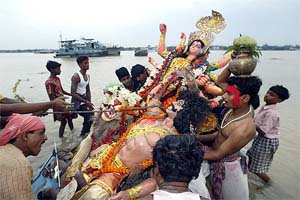
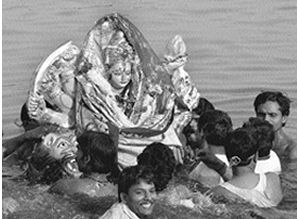
Immersion of a goddess called Durga

Posted by Hello


Devotees immerse an idol of goddess Durga into the Hooghly river in Kolkata on Sunday. — Reuters Posted by Hello


An immersion of the idol of the goddess (Durga) in the Yamuna in New Delhi on Oct.5. Posted by Hello

So we see that tevilat kelim is not a purely Jewish phenomenon.

;)

So as not to spoil the joke, a partial explanation is in the comments.

Sunday, July 18, 2004

ערוך השלחן הלכות תשעה באב, סימן תקנ"א


כו: כתבו רבותינו בעלי השלחן ערוך בסעיף י' יש מע שאומר שהנוהג שלא לאכול בשר בימים הנזכרים מותרים בתבשיל
שנתבשל בו בשר, ואסורים בבשר מלוח ובשר עוף ויין תוסס, ומותר לשתות יין הבדלה, וברכת המזון, ונוהגין להחמיר שלא לשתות יין לא בברכת המזון ולא בהבדלה, אלא נותנים לתנוק, ובמקום דליכא תנוק מותר בעצמו לשתות ההבדלה, עד כאן לשונו.
ואנחנו נוהגים לאסור בתבשיל שנתבשל בו בשר [מגן אברהם סקכ"ט] וכן המנהג הפשוט ואין לשנות, וביין לברכת המזון, גם בלא גם בלא זה אין אנו נוהגין בחול בכוס לברכת המזון, ופשוט הוא דאם יש כוס יהיה של שכר או מע דבש, אך בהבדלה יש נוהגין לשתות, ואנחנו אין שותים ועושים הבדלה על השכר, וזה שכתבו ליתן לתנוק, ויש מי שדקדק מדבריהם דמותר ליתן לתנוק בשר ויין בכל ימים אלו [שם סקל"א] ואין המנהג כן אצלינו, ובוודאי תנוק שצריך לזה מפני חלישותו מותר, וגם בגדול מותר כשהוא חלוש לאכול בשר עוף כמ"ש, וגם המעוברת והמיניקות אם קשה עליהן מאכלי חלב וודאי מתירין להן בשר עוף, ואם אין בשר עוף יאכלו בשר בהמה, דבמקום חשש בריאות הגוף לא גזרו. אך בסתם תנוקות בוודאי אין להאכילם מאכלי בשר, וכן המנהג ואין לשנות. וזה שכתבו ליתן ההבדלה לתנוקות, זהו מפני שגם בעצמו מותר לשתות כמ"ש, דאם אין תנוק ישתה בעצמו, אך כשיש תנוק מוטב משישתה הגדול, ולא מפני שלתנוקות הותר ליתן להם בשר לכתחילה [וצ"ע על המ"א]

The Aruch HaShulchan on wine for havdala and bentching, whether to have a child drink instead, and feeding meat to children and pregnant and nursing women.
To be translated, and continued...


כז: עוד כתבו דבמילה ופדיון הבן וסיום מסכת וסעודת ארוסין אוכלין בשר ושותין יין כל השייכים לסעודה, אבל יש לצמצם שלא להוסיף, ובשבוע שחל תשעה באב בתוכה אין לאכל בשר ולשתות יין רק מניין מצומצם, וזה אפילו בע"ב ובלבד שלא יהיה בסעודה המפסיק בה, וכל מי שאוכל בשר במקום שנוהגים בו איסור פירץ גדר הוא וינשכנו נחש, ומותר לשתות כל שכר אפילו של דבש שקורין מע"ד, עד כאל לשונו. וחילקו בין מן ראש חודש לבין שבוע שחל תשעה באב בתוכה, דבשבוע זו יראו שלא יהיה יותר ממנין מצומצם ומן ראש חודש יכול להיות יותר, ורק לבלי להוסיף קרואים שאין להם שייכות להברית מילה ואילולי האכילת בשר לא היו קוראים אותם בוודאי יש לאסור

כח: ודע שיש שמניחים הסיום מסכת על ימים אלו כדי לאכול בשר ודבר מכוער הוא, דאף על גב דבמועד קטן [ט.] מוכח דמותר לשייר מקצת הגמר לסיום מצוה כדאיתא שם בבנין בית המקדש, עיין שם, מכל מקום להניח לכתחילה בשביל אכילת בשר לא נאה ולא יאה. ויש שלומדים לכתחילה מסכת כדי לעשות סיום בימים אלו ודבר זה אפשר כדאי לעשות שעל ידי זה יעסוק בתורה. מיהו אין לבקש על הסיום רק תלמידי חכמים השייכים ללימוד התורה. ואנחנו לא נהגנו בסיום ואפילו כשעארע סיום בימים אלו אנו מניחים הסיום עד אחר תשעה באב כדי שנוכל לשמוח בשמחת הסיום לכבוד התורה כראוי


+1 perek moed katan; +1 perek bava kamma

הדרן עלך מי שהפך!
(2nd perek yerushalmi moed katan)

הדרן עלך שור שנגח ארבעה וחמשה!
(4th perek yerushalmi bava kamma)

This coming Shabbos, a siyum on yerushalmi Seder moed!

LinkWithin

Blog Widget by LinkWithin