Monday, October 13, 2014

Minchas Shai introduces us to Ben Asher and Ben Naftali

Minchas Shai (Rabbi Yedidya Nortzi, 1560 – 1626), in a comment on the third pasuk of Bereishit, tells us about Ben Asher and Ben Naftali.

The pasuk in question is:
וַיֹּ֥אמֶר אֱלֹהִ֖ים יְהִ֣י א֑וֹר וַֽיְהִי־אֽוֹר׃
He writes:

"יְהִ֣י א֑וֹר -- with a galgal [Minchas Shai's term here for munach], rather than with a makef [connecting yehi to or, which would retain the etnachta]. So is it in an early printing and in the Sefardic sefarim. And so it is to Ben Asher. However, Ben Naftali has it without a galgal but with a makef. And this is the first distinction between them.

And these people [Ben Asher and Ben Naftali] were two heads of yeshivot in Masorah. The name of one of them was Yaakov ben Naftali and the name of the second was Aharon ben Asher. And Rabbi Avraham of Balmes  (d. Venice 1523) called him Moshe ben Ashem. And in the Shalshelet Hakabbalah [from Rabbi Gedalya ben Yosef Ibn Yachya, pg 32] it is written that
after the generation of Rabbenu Saadia Gaon, there were two great Sages who disagreed regarding many words in the Torah and their trup, and they were called Rabbi Aharon ben Moshe of the tribe of Asher, and Rabbi Moshe ben David from the tribe of Naftali.
[Josh: note that the quote actually begins, בדור הזה היה לפי דעתי...]

And we rely on the reading of Ben Asher. And so did the Rambam za'l [Mishneh Torah, Hilchot Sefer Torah, 8:5] rely upon him, and this is like the custom of the Westerners. And the Easterners rely on the reading of Ben Naftali. And this is an important rule in the Scriptures. Therefore, know this, and I will not need to repeat it in every place."

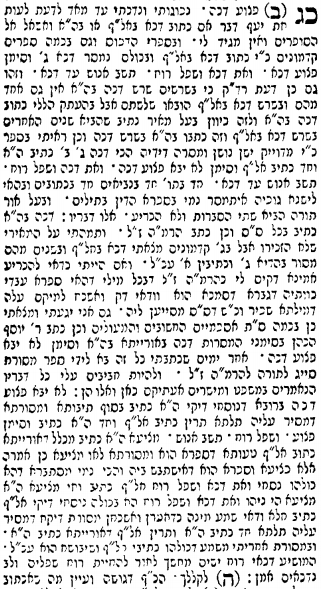
End quote of Minchas Shai. As to why Minchas Shai refers to this as a galgal, William Wickes addresses this in his Ṭaʻame 21 sefarim: a treatise on the accentuation of the twenty-one so-called Prose Books of the Old Testament, in a footnote beginning on the bottom of page 23. Wickes writes:


I suppose we can see some of that angle rounded off in the Munach when we look at the Leningrad Codex:


Here is a larger context for Wickes' statement, where he describes the various names associated with the Munach.


Update: Interestingly, in the Minchas Shai edition by Tzvi Betzer, he notes that this is not mentioned in the standard list of differences between Ben Naftali and Ben Asher manuscripts, and so he must have found this in some manuscript list of differences:

חילוף ראשון שביניהם: החילוף הזה אינו נזכר בחילופים - ד, וכנראה מצא אותו נורצי ברשימת חילופים בכתב־יד.

Sunday, September 14, 2014

A dead man's shoes

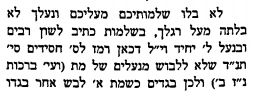
In Taama De'kra on parashat Ki Tavo, Rav Chaim Kanievsky writes:


That is, towards the end of Ki Tavo, Devarim 29, the pasuk states:

ד  וָאוֹלֵךְ אֶתְכֶם אַרְבָּעִים שָׁנָה, בַּמִּדְבָּר; לֹא-בָלוּ שַׂלְמֹתֵיכֶם מֵעֲלֵיכֶם, וְנַעַלְךָ לֹא-בָלְתָה מֵעַל רַגְלֶךָ.4 And I have led you forty years in the wilderness; your clothes are not waxen old upon you, and thy shoe is not waxen old upon thy foot.

"לֹא-בָלוּ שַׂלְמֹתֵיכֶם מֵעֲלֵיכֶם, וְנַעַלְךָ לֹא-בָלְתָה מֵעַל רַגְלֶךָ -- Regarding clothing it is written in plural and by shoe it written in singular. And there is to say that here it hints to the Sefer Chassidim, siman 454, that one should not wear the shoes of a dead person (and see Berachot 57b). And therefore, the clothing, when one person dies, another could wear his clothing, so it is written in plural, but shoes, only one person can where them. And there is nothing which is not alluded to in the Torah."
We can see the referred to item in Sefer Chassidim here:


"One who owes others should not give a lot of charity, until he has repaid his debt. And a person should not give something dangerous as charity. If someone was given shoes of a deceased [מנעלים של מת] and wishes to give them to a pauper, they tell him "And you shall love your fellow as yourself!" Rather, sell them to a gentile so that no Jewish person comes to danger, and then give the money to the pauper."
There are many explanations and rationalizations given to this statement in Sefer Chassidim. It can be connected to Berachot 57b, as Rav Kanievsky did above:
Our Rabbis taught: [If one dreams of] a corpse in the house, it is a sign of peace in the house; if that he was eating and drinking in the house, it is a good sign for the house; if that he took articles from the house, it is a bad sign for the house. R. Papa explained it to refer to a shoe or sandal. Anything that the dead person [is seen in the dream] to take away is a good sign except a shoe and a sandal; anything that it puts down is a good sign except dust and mustard.
Perhaps we can say that the fact that Rav Papa, or the brayta, see a negative omen in a dreaming that dead man took shoes from a house indicates that this was regarded (legitimately, superstitiously, culturally) as a danger. If so, then perhaps this could in turn serve as a basis for idea presented by Rabbi Yehuda HaChassid.

Though I don't think we need to try too hard to legitimize it. There are many strange things in Sefer Chassidim, which don't have a basis in the halacha or hashkafa of Chazal, nor were accepted as binding by the general Jewish community. Nor do we need to find an allusion to it in a pasuk.

There are various explanations floating around as to the meaning, and basis, of this position. (See Nit'ei Gavriel for a discussion.). For instance, some say this refers to shoes made from leather from a deceased (and therefore sick) animal. Some say it does refer to the shoes of a deceased person, but the problem is sweat from the deceased. Some say (Koret HaBrit) that the concern is that wearing such shoes will cause one to think about this during the day, and that those thoughts will cause one to dream about it at night, and we saw that this is a negative omen, and from this the sakana.

My problem with the last explanation is this. The idea that daytime thoughts cause the contents of nighttime dreams comes from the same approximate sugya in Berachot, about dreams, on 55b-56a:
R. Samuel b. Nahmani said in the name of R. Jonathan: A man is shown in a dream only what is suggested by his own thoughts, as it says, As for thee, Oh King, thy thoughts came into thy mind upon thy bed.37  Or if you like, I can derive it from here: That thou mayest know the thoughts of the heart.38  Raba said: This is proved by the fact that a man is never shown in a dream a date palm of gold, or an elephant going through the eye of a needle.39
The Emperor [of Rome]1  said to R. Joshua b. R. Hananyah: You [Jews] profess to be very clever. Tell me what I shall see in my dream. He said to him: You will see the Persians2  making you do forced labour, and despoiling you and making you feed unclean animals with a golden crook. He thought about it all day, and in the night he saw it in his dream.3  King Shapor [I] once said to Samuel: You [Jews] profess to be very clever. Tell me what I shall see in my dream. He said to him: You will see the Romans coming and taking you captive and making you grind date-stones in a golden mill. He thought about it the whole day and in the night saw it in a dream. 
I would suggest that Chazal were not monolithic in their attitude towards dreams. Instead, there are at least two strains. A gross simplification would be to call one Rationalist and the other Mystical (or non-Rationalist), but it is a convenient gross simplification. The Rationalist position understood dreams as the synapses in the brain continuing to fire at night, such that we keep thinking about what we were thinking about during the day. The Mystical position took dreams as a form of prophecy, as messages from on high.

(Complicating this is that dream interpretation was regarded as a science, And these is the well-developed idea of reality following whatever interpretation is offered, which seems to contrast with definitive explanations given for specific symbolism. And that certain types of dreams, over others, were understood to be prophetic, for instance, those which are repeated and occur towards the end of night, I think there are more than two positions to be had, and one member of Chazal might hold a nuanced position that cannot be neatly placed into Rationalist and non-Rationalist,)

Once we say that a particular dream is caused by daytime thoughts, I would argue that this strips it of its meaning, and its danger. Neither the Emperor of Rome nor King Shapur were put in danger by their dreams. If one wears the shoes of a deceased person and therefore dreams that dream mentioned by the gemara, there is no negative omen, and no danger in it. We should not conflate these two incompatible conceptions of dreams in order to create a prohibition, or an explanation for a prohibition.

Thursday, September 11, 2014

Minchas Shai on parshat Ki Tavo, pt i

Minchas Shai on parashat Ki Tavo begins as follows:


1) He writes that the sidra of Ki Tavo begins with a petucha gap.

2) He writes that אשר has a pashta. As opposed to what? Since this is often a response to Bomberg's Mikraos Gedolos, correcting the multiple errors, we should examine it, just to be sure that there is not something else there. Looking at Bomberg's first Mikraos Gedolos (pg 252), it has a pashta:


So too in Bomberg's second Mikraos Gedolos (pg 441), the word אשר has a pashta:


Presumably, then, the reason to note that אשר in the first pasuk has a pashta is that one might have made a mistake. That mistake would be to confuse it with a kadma. In the second pasuk of Ki Tavo, there are two instances of אשר, and each is marked with a kadma. The pashta and kadma look alike, but the pashta always appears on the very last letter of the word, while the kadma appears over the letter starting the stressed syllable. So, for a kadma, the symbol appears on the ש while for a pashta the symbol appears on the ר.

3) He also notes that in the phrase וְיָשַׁ֥בְתָּ בָּֽהּ, there is a dagesh in the bet. This too appears in Bomberg's Mikraos Gedolos correctly.

The purpose of pointing the dagesh out is that we might have erroneously thought that the dagesh should not appear there. After all, the previous word ended in a vowel (thus, an open syllable) and the trup symbol on that previous word, a mercha, was a joining, conjunctive, trup. While in the general case, the letters בגת כפת receive a dagesh kal  at the beginning of a word or after a sheva nach, the exception is where the previous word ended in an open syllable (usually the letters אהוי, but a kamatz under a ת also works) and there in a conjunctive trup. So we would expect no dagesh here.

An example of this from Ki Tavo is in this perek, pasuk 11:

וְשָֽׂמַחְתָּ֣ בְכָל־הַטּ֗וֹב

There is no dagesh in the ב because of the kametz under the ת, and because the trup symbol on that previous word is a munach, a conjunctive trup.

So why is there a dagesh placed in the ב in the first pasuk? The critical difference is that in וְשָֽׂמַחְתָּ֣ בְכָל־הַטּ֗וֹב, the trup symbol and thus the stress is on the very last syllable. However, in the וְיָשַׁ֥בְתָּ בָּֽהּ the trup symbol and thus the stress is on the penultimate (second to last) syllable.

That is, in וְיָשַׁ֥בְתָּ בָּֽהּ, the trup symbol and stress was moved from its normal place on the last syllable so as to prevent two stressed syllables in a row (veyashavTA BAH). That is called nasog achor. In such a case, the rule of dechik is that the first letter of that following word gets a dagesh chazak, which geminates (doubles) it.

So that means that the dagesh in the ב is a dagesh chazak, which both geminates it and renders it a plosive (bet) rather than fricative (vet), rather than being merely a dagesh kal, which would have also rendered it a plosive.

Tuesday, September 02, 2014

The Semag's strange girsa of וְכִי תָבֹא בְּקָמַת רֵעֶךָ

(Cross-posted to Girsology.)

In the middle of parshat Ki Teitzei [Devarim 23:25-26], we read:

כה  כִּי תָבֹא בְּכֶרֶם רֵעֶךָ, וְאָכַלְתָּ עֲנָבִים כְּנַפְשְׁךָ שָׂבְעֶךָ; וְאֶל-כֶּלְיְךָ, לֹא תִתֵּן.  {ס}25 When thou comest into thy neighbour's vineyard, then thou mayest eat grapes until thou have enough at thine own pleasure; but thou shalt not put any in thy vessel. {S}
כו  כִּי תָבֹא בְּקָמַת רֵעֶךָ, וְקָטַפְתָּ מְלִילֹת בְּיָדֶךָ; וְחֶרְמֵשׁ לֹא תָנִיף, עַל קָמַת רֵעֶךָ.  {ס}26 When thou comest into thy neighbour's standing corn, then thou mayest pluck ears with thy hand; but thou shalt not move a sickle unto thy neighbour's standing corn. {S}


Minchas Shai writes regarding this: 
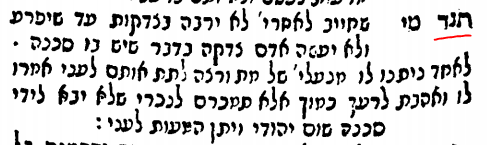
כִּי תָבֹא בְּקָמַת רֵעֶךָ -- in Sema'g [Sefer Mitzvot Gedolot] the volume on Lavin, siman 183, the following language is written:
It is written in parashat Ki Teitzei, כִּי תָבֹא בְּקָמַת רֵעֶךָ etc., and [תניא] we learn in a brayta, בְּיָדֶךָ and not with a sickle or a scythe. And just as it warned the worker not to grab the standing grain and eat eat, except by hand, so did it warn by a vineyard not to harvest for his [own] eating with something with which one usually harvests, for behold, they are juxtaposed one to the other, and this is even according to Rabbi Yehuda that we don't darshen semuchin [juxtapositions], in Mishneh Torah [meaning sefer Devarim], he does darshen semuchin. And furthermore, since it is written [in pasuk 25] כִּי תָבֹא בְּכֶרֶם רֵעֶךָ, and it is written וְכִי תָבֹא בְּקָמַת רֵעֶךָ, the vav [of וְכִי] adds on the first matter, and we learn one from the other." However, in Sefardic sefarim, there is no vav present.
End quote [of Semag].

And I am wondrously astonished at this, for I have not seen nor heard in my days that there is a dispute in this matter, neither in the Bavli nor Yerushalmi. And if someone should whisper to you that we don't know the facts of the matter clearly [such that this introduces uncertainty], tell him that from the Masoret we know that it is written without a vav, and the Gadol HaDor has said it -- and who is this? Rama  [Rabbi Meir Abulafia] who wrote this in his Masorot, that within the entire sefer Devarim, the beginning of each pasuk is כִּי except for eight instances in which the beginning of the pasuk is וְכִי. And the sign is ... [then he lists the eight pesukim. Those eight pesukim are, in the same order:

דברים פרק יד
  • פסוק כ"ד: וְכִי-יִרְבֶּה מִמְּךָ הַדֶּרֶךְ, כִּי לֹא תוּכַל שְׂאֵתוֹ--כִּי-יִרְחַק מִמְּךָ הַמָּקוֹם, אֲשֶׁר יִבְחַר יְהוָה אֱלֹהֶיךָ לָשׂוּם שְׁמוֹ שָׁם:  כִּי יְבָרֶכְךָ, יְהוָה אֱלֹהֶיךָ. 
דברים פרק טו
  • פסוק י"ג: וְכִי-תְשַׁלְּחֶנּוּ חָפְשִׁי, מֵעִמָּךְ--לֹא תְשַׁלְּחֶנּוּ, רֵיקָם. 
  • פסוק כ"א: וְכִי-יִהְיֶה בוֹ מוּם, פִּסֵּחַ אוֹ עִוֵּר, כֹּל, מוּם רָע--לֹא תִזְבָּחֶנּוּ, לַיהוָה אֱלֹהֶיךָ. 
דברים פרק יח
  • פסוק ו: וְכִי-יָבֹא הַלֵּוִי מֵאַחַד שְׁעָרֶיךָ, מִכָּל-יִשְׂרָאֵל, אֲשֶׁר-הוּא, גָּר שָׁם; וּבָא בְּכָל-אַוַּת נַפְשׁוֹ, אֶל-הַמָּקוֹם אֲשֶׁר-יִבְחַר יְהוָה. 
  • פסוק כ"א: וְכִי תֹאמַר, בִּלְבָבֶךָ:  אֵיכָה נֵדַע אֶת-הַדָּבָר, אֲשֶׁר לֹא-דִבְּרוֹ יְהוָה. 
דברים פרק יט
  • פסוק י"א: וְכִי-יִהְיֶה אִישׁ, שֹׂנֵא לְרֵעֵהוּ, וְאָרַב לוֹ וְקָם עָלָיו, וְהִכָּהוּ נֶפֶשׁ וָמֵת; וְנָס, אֶל-אַחַת הֶעָרִים הָאֵל. 
דברים פרק כא
  • פסוק כ"ב: וְכִי-יִהְיֶה בְאִישׁ, חֵטְא מִשְׁפַּט-מָוֶת--וְהוּמָת:  וְתָלִיתָ אֹתוֹ, עַל-עֵץ. 
דברים פרק כג
  • פסוק כ"ג: וְכִי תֶחְדַּל, לִנְדֹּר--לֹא-יִהְיֶה בְךָ, חֵטְא. 
]

End quote of Minchas Shai.

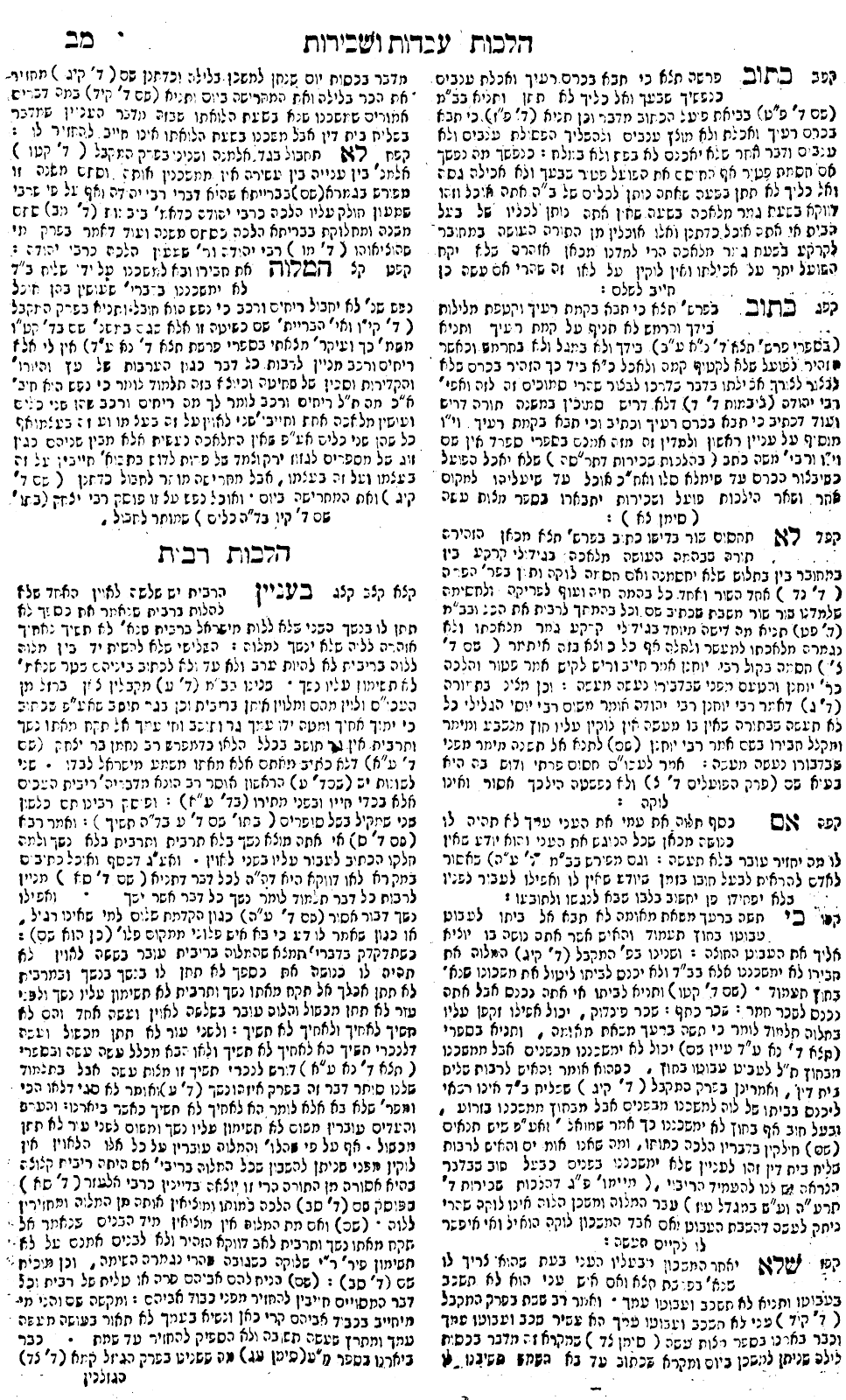
We can see the Semag in full here, in the second paragraph (183) on the right hand side:


The author of Sefer Mitzvos Gedolos, namely Rabbi Moshe ben Yaakov of Coucy, was a French Tosafist in the first half of the 13th century.

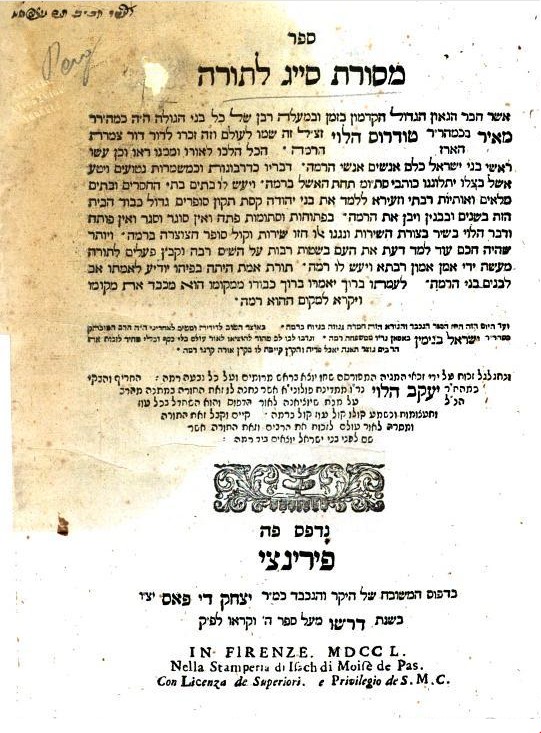
Here is the Likutei HaMasoret from the Rama, Rabbi Meir Abulafia, just as Minchas Shai recorded it. However, since the Rama lived and operated in Spain and so would naturally describe the state of Sefardic precise texts, and the Semag explicitly says that the Sefardic texts don't have this, this might be of limited utility. Obviously Minchas Shai maintains that it is an effective Masoret. At any rate, at the end of Masoret Seyag Lechachma, here is what we find:


Looking to Vetus Testamentum to see if there is any text with וכי in this pasuk, there is nothing. Namely, he lists Cod 300, but that is Minchas Shai!


When we look up at the end of Vetus Testamentum to see what this text is, we see that #300 is a printed text, and more specifically, is Minchas Shai's commentary. As the author explains here:


:
Cod. 300, Biblia impressa, merito celibratissima, Minchath Shai; de quo jam fusius egi, $62. Addam tantum, Notas hic effe signitas 300; Textum vero, 300 T.
I don't speak Latin, so here is my best guess (with a little help from Google Translate.)
Bible, printed, deservedly celebrated, Minchath Shai; of which I have done already in more detail, $ 62. I will show his comments as 300; The text, itself, as 300 T.
Here is the printed TaNaCh with Minchas Shai, with text כי and comment from Minchas Shai about the Semag and וכי:


Sunday, August 31, 2014

The spelling of פְצוּעַ-דַּכָּא

In Ki Teizei, in Devarim 23:3, we read the law of the petzua daka. The following is from Mechon-Mamre, which records the Yemenite tradition:
ב  לֹא-יָבֹא פְצוּעַ-דַּכָּא וּכְרוּת שָׁפְכָה, בִּקְהַל ה.  {ס}
2 He that is crushed or maimed in his privy parts shall not enter into the assembly of the LORD.{S}
This spelling of דַּכָּא is in line with the Ashkenazic texts here, but differs from the Sefardim Masoretic texts (as noted here:

)
Here we first present Minchas Shai. Then, many of the sources he cites. Then, some other Masoretic texts (Leningrad Codex, Lisbon Codex, Codex Hilleli). Finally, we discuss how we would decide, if it were up to us.

Minchas Shai writes:
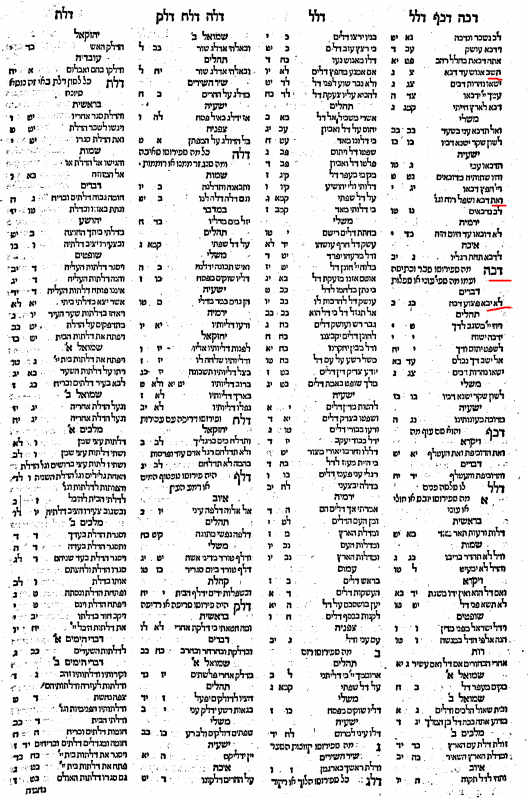
"פְצוּעַ-דַּכָּה -- I am feeble and sore crushed[1] that I should know how to sustain with words him that is weary[2] if it is written דַּכָּא with an aleph or with a heh. And I asked the scribes and there was none who could relate it to me[3]. And in the printed texts, as well as many early manuscript texts, it is written דַּכָּא with an aleph. And in all of there, there is an associated Masorah of: 'דַּכָּא, there are three. And as a sign: פְצוּעַ-דַּכָּא; and וְאֶת-דַּכָּא וּשְׁפַל-רוּחַ; and תָּשֵׁב אֱנוֹשׁ עַד-דַּכָּא. [That is, Devarim 23:2Yeshaya 57:15, and Tehillim 90:3, and all spelled with an aleph.]
And so is the position of the Radak, for in Shorashim, shoresh דכה, with a heh, there is not a single one of them, while in shoresh דכא with an aleph, he brings all three of them.
However, in Codex Hilleli, it is written דַּכָּה, with a heh. And this [variation] was the intent of the author of Meir Netiv [R' Yitzchak ben Kelonomus Natan, author of the first Hebrew Concordance],  who brings the latter two in the shoresh of דכא and this one [in Ki Teitzei] he writes with a heh in the shoresh דכה.
And so did I see in a quite old and precise manuscript, and the Masorah upon it was as follows:
 דכה ג' ב' כתיב ה"א וחד כתיב באל"ף וסימן לא יבא פצוע דכה. ואת דכה ושפל רוח. תשב אנוש עד דכא. חד בתורה חד בנביאים חד בכתובים.
[That is:] דכה, there are three. Two are written with a heh and one is written with an aleph, and the sign is לא יבא פצוע דכה. ואת דכה ושפל רוח. תשב אנוש עד דכא. One in Torah, one in Neviim, and one in Ketuvim. [Note this one has two with a heh.]
And in the very same language was the Masorah as well in that same sefer, in Tehillim.
And the author of Or Torah brought the two positions and did not decide between them. These are his words:
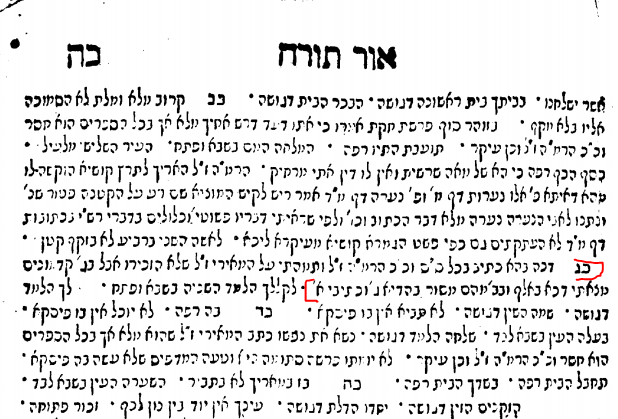
דכה with a heh is written in all Sefardic sefarim, and so wrote the Rama [Rabbi Meir Abulafia] za'l. And I was astonished at the Meiri who does not mention it, but in three early ones [sefarim?] I found דכא with an aleph, and in two of them there was an explicit Masorah of
 ג' וכתיבין א',  
'there are three and they are written with an aleph.'
End quote [from Or Torah].
And if I were fit to decide, I believe that I would hold like the Rama za'l [that it is with a ה], for in all matters of this sefer we act like him, for he is a man upon whom to rely, he is certainly precise and one can find to establish the matter upon him [...]. And all the more so that the Sefardim sefarim support him. I as well endeavored and found this [with a heh] in several good and reputable sifrei Torah. And so wrote Rav Yosef haCohen in Simanei HaMasorot, that דכה in the Torah is with a heh, and a sign is לא יבא פצוע דכה.
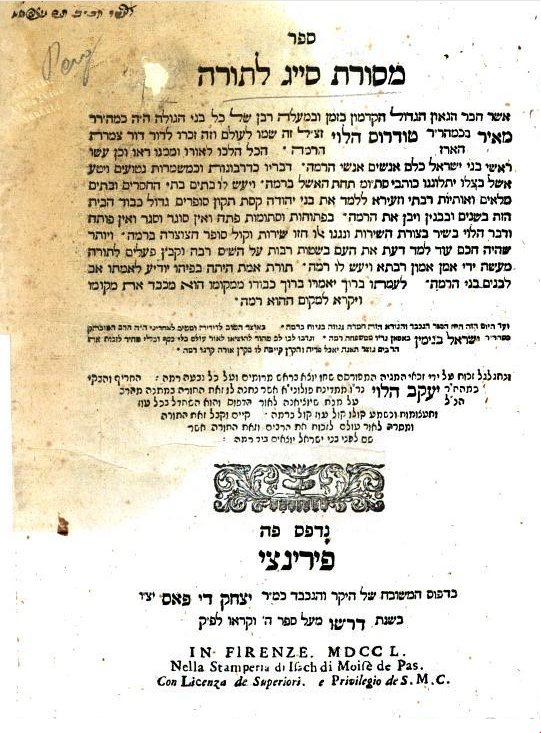
Some time after I wrote all this, the sefer Masoret Seyag LaTorah from the Rama za'l came to my hands. And since all his words, written in judgement and straightforwardness [?] are dear to me, I will record them here, and these are they:
לא יבא פצוע דכה -- in most precise nuschaot, there is a heh written at the end of the word, and the Masorah which is given upon it is: 'there are three, three written with an aleph and one written with a heh. And the sign is פצוע; ושפל רוח; תשב אנוש. The middle one is written with a heh.' We may deduce that where the Torah has written with an aleph?! It is a scribal error, and the Masorah is not that such is in the מציעא (middle one) but rather the פציעא [the case of פצוע], and it was the scribe who messed it up. And such is logical, for all of them have thenusach of ואת דכא ושפל רוח, written with an aleph, and if the middle [מציעא] is with a heh, well this is the middle one! Rather, we may certainly deduce as we said. And we have found a precise Masorah which states about it: 'three, one written with a heh and two with an aleph; of the Torah is written with a heh.' And in another Masoret it is implied that all of them are written with an aleph, and it is an error.
End quote [of Rama].
He who saved those of crushed [דכאי] spirit from darkness to light, to revive the spirit of the low and the hearts of the crushed, Amen."
End quote of Minchas Shai.
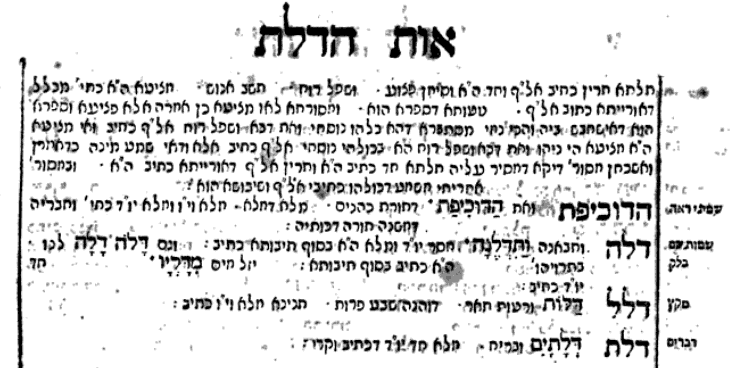
We can now examine some of the sources which Minchas Shai quoted. First off, here is the Rama, entry דכה, in Masoret Seyag LaChachma:
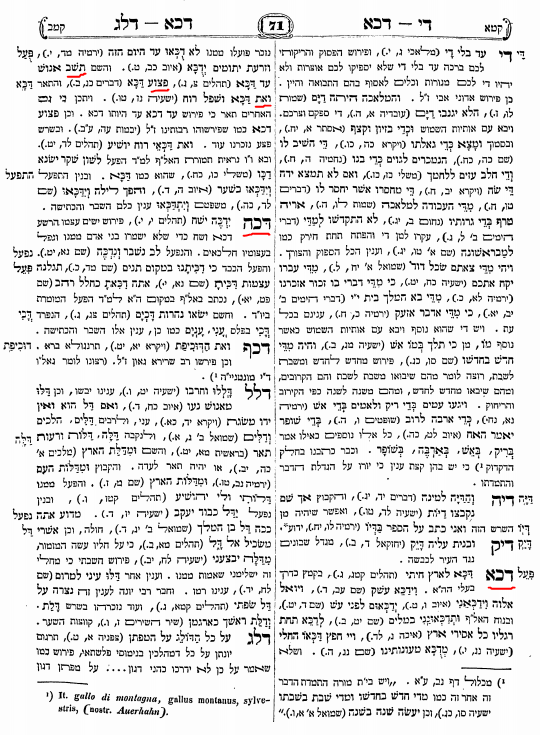
Here is Radak, in Sefer Shorashim. Look in the second column, at the top, where I have underlined in red all three pesukim spelled with an aleph.
Here is the Concordance, that is, Meir Netiv, by R' Yitzchak ben Kelonomus Natan. I've underlined in red the two examples of דכא in Nach, spelled with an aleph, as well as the דכה in Torah, spelled with a heh.
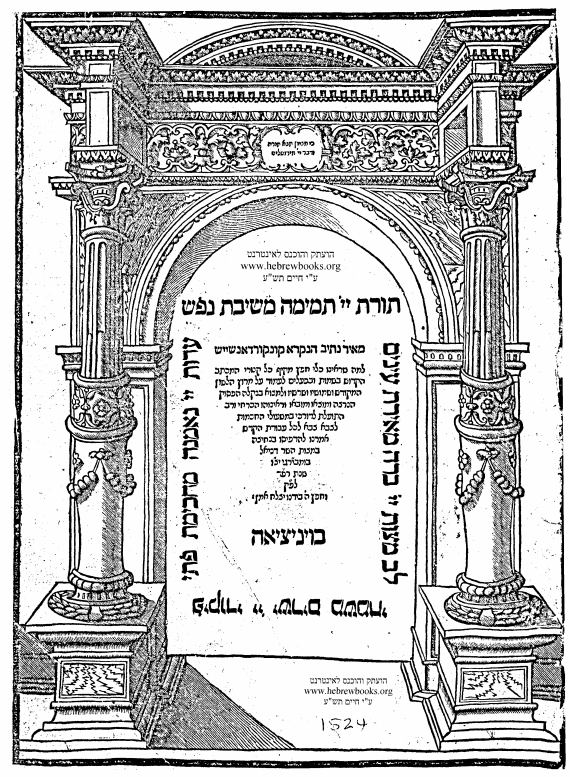
Here is Or Torah:
Here is Codex Hilleli, pg 489:
The Masorah Gedolah, on the bottom, reads:
דכא -- There are three. One is written with a heh and two written with an aleph. And their sign is לא יבא פצוע דכה, which is written with a heh. ואת דכה ושפל רוח. תשב אנוש עד דכא. [I can’t make out the text further at this point, but I assume it states ‘is written with an aleph’.]
hilleli3.PNG
.
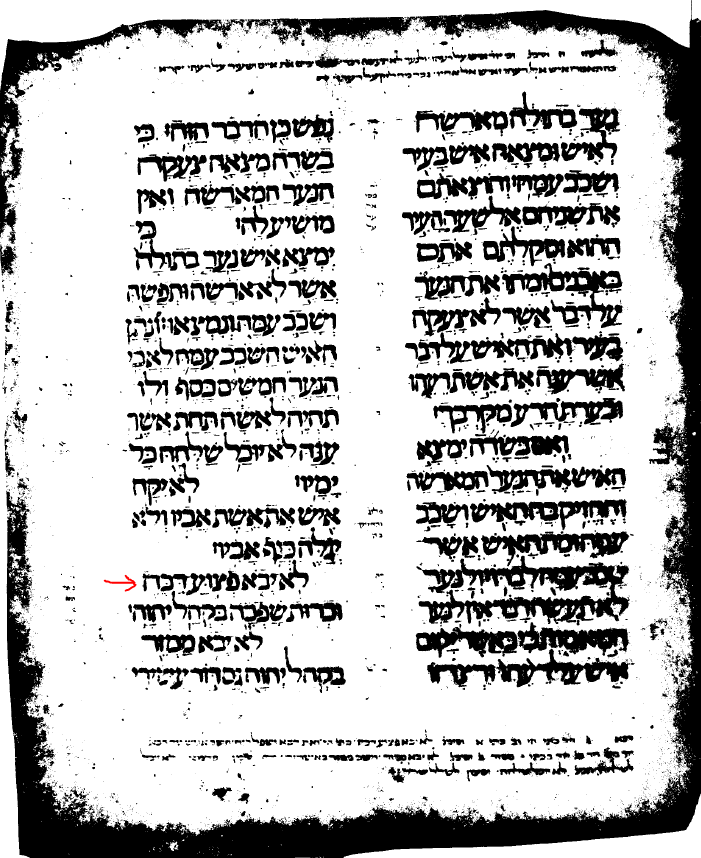
Here is the Lisbon Codex, page 376:
The Masorah Gedolah on top reads:
There are three, one written with a heh and two written with an aleph. And their sign is
לא יבא פצוע דכה. ואת דכה ושפל רוח להחיות רוח שפלים. תשב אנוש עד דכא.
The first one is with a heh.
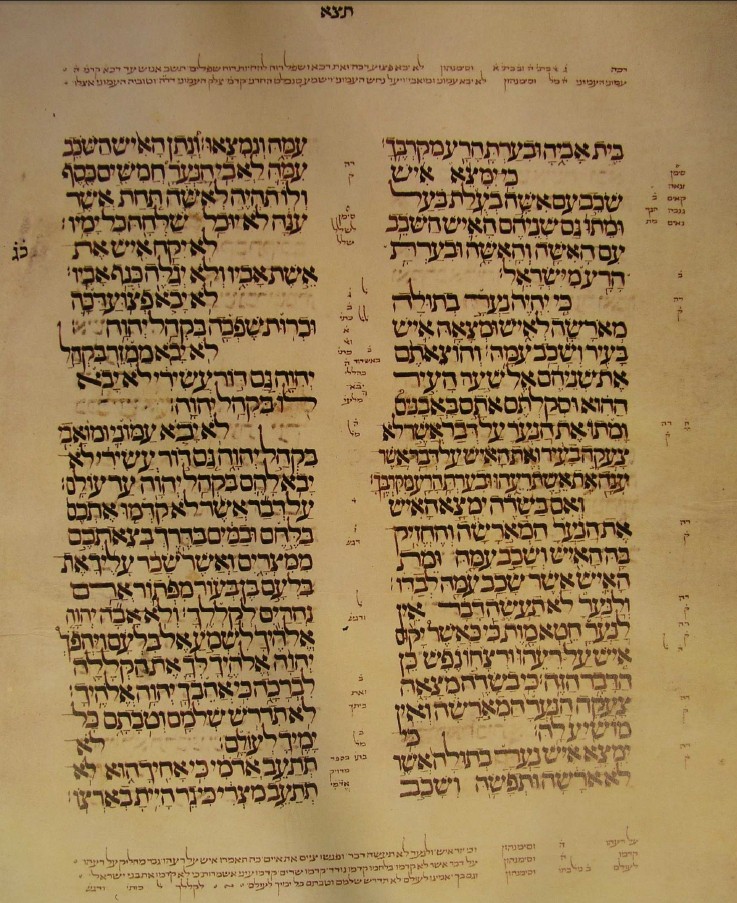
And here is the Leningrad Codex, page 229:
The Masorah Gedolah, up top, reads:
דכא -- there are three: לא יבא פצוע דכא. ואת דכה ושפל רוח. תשב אנוש עד דכא.
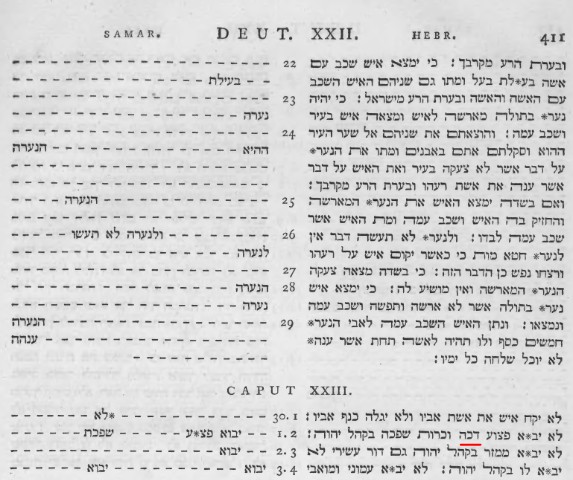
Looking at the Samaritan text of the Torah, we find the following (pg 222):
The text on the left is the Samaritan and the text on the right is the Masoretic text. Since they have דכה on the right and the text on the left has simply dashes, that means that the Samaritan text here agrees with דכה as the spelling.
At the bottom of the page, he has a write-up of variant texts. There are no Samaritan texts, but there are a bunch of Masoretic variants, and some discussion:
Hac voce דכה vel דכא (unà eum ויהי vel ויהיו Gen. 9,29)  distinguunt quidam Rabbini codices MStos Hispanicos a Germanicis. Ait Rabbi Menachem de Lonzano, in Or Torah (658) se invenis דכה omnibus libris Hispanicis. Et in prolixa annotatione Bibl. 300, variae pro lectione utraque adducuntur auctoritates: adeo ut pie precetur editor, Rabbi Yedidya Solomon Norzi, המושיע דכאי רוח ישים מחושך לאור, etc.
Finally, if it were up to me, what would I decide would be the proper version? I would lean heavily towards דַּכָּה with a heh. This even though the Leningrad Codex and the Teimanim have with an aleph. This because I am a strong believer in the entropy of the Masoretic text. That is, spelling the word with an aleph and with a heh are both perfectly fine, from a spelling perspective. There are numerous items under both roots in the Concordance. And with these three words scattered across Tanach, I would be suspicious of a regularization of the spelling. Sure, some words are spelled regularly, but if given the choice, a variation in spelling seems more likely. It is a scribe impelled by a harmonizing instinct who would, quite understandably, change דַּכָּה into דַּכָּא. This would be a movement away from the seemingly-incorrect original. However, there is no such motivation for a scribe to change it in the opposite direction.
I would add that I am suspicious of Rama’s emendation of the Masoretic note, where he changes מציעא into פציעא. It is quite a clever sevara. However, we see that contrary to Rama’s assertion, some texts indeed, have the דכה in Yeshaya with a heh -- see the beginning of Minchas’s Shai’s discussion, where he brings such a masorah:  דכה ג' ב' כתיב ה"א וחד כתיב באל"ף וסימן לא יבא פצוע דכה. ואת דכה ושפל רוח. תשב אנוש עד דכא. חד בתורה חד בנביאים חד בכתובים. And furthermore, see how in the Lisbon Codex, the Masorah talks about the first, קדמ’ ש. In such context, we see that talking about the first, middle, or last, makes sense. But if so, we could have such entropy while maintaining an aleph in the pasuk in Devarim.

[1] a reference to Tehillim 38:8, which makes use of the root דכא
[2] a reference to Yeshaya 50:4

[3] a reference to Bereishit 41:24

Wednesday, August 27, 2014

The three sevirin וְלֹא

A) At the start of parshas Shofetim, we read (Devarim 16:19):

יט  לֹא-תַטֶּה מִשְׁפָּט, לֹא תַכִּיר פָּנִים; וְלֹא-תִקַּח שֹׁחַד--כִּי הַשֹּׁחַד יְעַוֵּר עֵינֵי חֲכָמִים, וִיסַלֵּף דִּבְרֵי צַדִּיקִם.19 Thou shalt not wrest judgment; thou shalt not respect persons; neither shalt thou take a gift; for a gift doth blind the eyes of the wise, and pervert the words of the righteous.

Note that there are three instructions:

  • לֹא-תַטֶּה מִשְׁפָּט
  • לֹא תַכִּיר פָּנִים
  • וְלֹא-תִקַּח שֹׁחַד

It is more common, in such a list, for the second item to be introduced by a vav hachibbur, a connecting vav. But it is not an error for it to be missing.

Upon this pasuk, Minchas Shai explains just that:


"לֹא תַכִּיר פָּנִים -- there are three [such instances of לא] which are sevirin [has the meaning of such that we would expect it to be] ולא, as I wrote in parshas Mishpatim, perek 23 [pasuk 13], regarding לֹ֥א יִשָּׁמַ֖ע עַל־פִּֽיךָ."
B) Looking to parshas Mishpatim, we see the following pasuk [Shemos 23:13]:
יג  וּבְכֹל אֲשֶׁר-אָמַרְתִּי אֲלֵיכֶם, תִּשָּׁמֵרוּ; וְשֵׁם אֱלֹהִים אֲחֵרִים לֹא תַזְכִּירוּ, לֹא יִשָּׁמַע עַל-פִּיךָ.13 And in all things that I have said unto you take ye heed; and make no mention of the name of other gods, neither let it be heard out of thy mouth.

There, Minchas Shai says the following:

"לֹא יִשָּׁמַע עַל-פִּיךָ -- in the commentary of Ibn Ezra it is written: and this is לֹא יִשָּׁמַע עַל-פִּיךָ etc.. [Note: this is likely a typographical error in Minchas Shai, and he meant to cite Ibn Ezra as saying ולא.] And the Aruch, entry מטר [Note: couldn't find this] that until recent generations to now, they would mess up and read ולא ישמע על פיך, and the soferim taught not to read with a vav, end quote. Furthermore, in the masoret, three one would expect ולא and they are לא, and the mnemonic of לא תשימון עליו נשך, and לא ישמע על פיך, and לא תכיר פנים."

Because there seems to be a typographical error in Minchas Shai in a critical place, I will show the first printing as well.


Interestingly, in the linked Ibn Ezra at Daat, it has a vav:
[כג, יג]
ובכל אשר -
עתה הזכיר עבודת כוכבים, והטעם כל מה שאמרתי הם מצותי ומשפטי. ולא כן. משפטי אלוהים אחרים. 
ואמר: לא תזכירו - שלא תזכירו שמותם להישבע בהם גם שלא ישביעו בהם עובדיה. וזה ולא ישמע על פיך שתשביע בו אחרים. שלא תאמר לעובד כוכבים השבע לי באלהיך.

As well, in the printing in Mechokekei Yehuda
, he has Ibn Ezra's lengthy commentary which cites it as ולא, while in Ibn Ezra's short commentary,  he cites it as simply לא.

At first, I was unsure of Minchas Shai's purpose in citing Ibn Ezra here. (At this point, I assumed that he was citing him saying לא.) To establish the correct girsa of Ibn Ezra's commentary? To bring it as further evidence, from a Rishon, that this is the correct text? Perhaps the key is the word וזה, by which he shows how this phrase of לֹא יִשָּׁמַע עַל-פִּיךָ is a restatement of the immediately preceding idea, of וְשֵׁם אֱלֹהִים אֲחֵרִים לֹא תַזְכִּירוּ. In this manner, we can understand why the connecting vav is not due here.

But in fact, I think there was a typographical error at a critical juncture here -- that Minchas Shai wished to cite a bad girsa in Ibn Ezra, but it was somehow encoded in accordance with the correct girsa.

Christian David Ginsberg also records this as לא with סביר of ולא. But he makes another interesting observation:


He writes: savir ולא, and in some other sefarim [ס"א is defined at the start of his work as "MSS. collated by C. D. G."] it is ולא as a krei and ketiv.

This seems to me like an encoding, in the MSS., of the practice Minchas Shai deemed erroneous.

 Naturally, the Samaritan Pentateuch (as it appears in Vetus Testamentum) adds the vav, in order to make the text smoother:


And in the bottom of that page, in lists many Hebrew Biblical texts that similarly have ולא.

C) The third instance is actually a bit earlier in Mishpatim, namely Shemos 22:24:

כד  אִם-כֶּסֶף תַּלְוֶה אֶת-עַמִּי, אֶת-הֶעָנִי עִמָּךְ--לֹא-תִהְיֶה לוֹ, כְּנֹשֶׁה; לֹא-תְשִׂימוּן עָלָיו, נֶשֶׁךְ.24 If thou lend money to any of My people, even to the poor with thee, thou shalt not be to him as a creditor; neither shall ye lay upon him interest.

Upon which, Minchas Shai says:

Tuesday, August 26, 2014

The deficient צַדִּיקִם

(Cross-posted to Girsology.)

There is a girsological error in parshat Shofetim in my Mikraos Gedolos, in the second pasuk of the parsha. The pasuk (Devarim 16:19) reads:


While this reads צַדִּיקִים, it should read צַדִּיקִם, without the second yud. The reason I say this is the following comment from Minchas Shai:
"צַדִּיקִם -- In He'etek Hilleli and in all the precise sefarim it is missing the second yud. And so too in the Masores: In the entire Torah, it [the word צַדִּיקִם] is deficient in the second yud, except for one case, which is plene and plene [in that both yuds are present], namely וִיסַלֵּף דִּבְרֵי צַדִּיקִים of parshat Mishpatim, [Shemos 23:8
You shall not accept a bribe, for a bribe will blind the clear sighted and corrupt words that are right.ח. וְשֹׁחַד לֹא תִקָּח כִּי הַשֹּׁחַד יְעַוֵּר פִּקְחִים וִיסַלֵּף דִּבְרֵי צַדִּיקִים:
]
as I wrote in parshas vaEschanan."
It is understandable how the yud was introduced here as a typographical error, rather than relying on a Masorah from one of the not-so-precise sefarim. The more common spelling of all masculine plurals in Biblical Hebrew is with the yud in the ים suffix. While there are plenty of words which are chaser [deficient] yud or vav, it is not so common in the morphological endings. Also, the very phrase in question, וִיסַלֵּף דִּבְרֵי צַדִּיקִים, appears elsewhere malei [plene].

Since we have access to Codex Hilleli (pg 475), we can see this very spelling of צַדִּיקִם, and this very Masoretic note, as a Masoreh Ketanah:

As far as I can tell, the full text of the masoretic note does not appear as stated by Minchas Shai, at least here. I think it reads:
כל אורייתא חסר בר מן א' מלא 
"The entire Torah has it [the second yud] deficient, except for one which is plene." 
So too the Lisbon Codex (pg 368):


And an identical Masoretic note.

The Leningrad Codex has identical deficient spelling:


Namely, on pg 223:


So too the Teimanim. To cite Mechon-Mamreh:

טז,יט לֹֽא־תַטֶּ֣ה מִשְׁפָּ֔ט לֹ֥א תַכִּ֖יר פָּנִ֑ים וְלֹֽא־תִקַּ֣ח שֹׁ֔חַד כִּ֣י הַשֹּׁ֗חַד יְעַוֵּר֙ עֵינֵ֣י חֲכָמִ֔ים וִֽיסַלֵּ֖ף דִּבְרֵ֥י צַדִּיקִֽם׃לָא תַּצְלֵי דִּין, לָא תִּשְׁתְּמוֹדַע אַפִּין; וְלָא תְּקַבֵּיל שֻׁחְדָּא--אֲרֵי שֻׁחְדָּא מְעַוַּר עֵינֵי חַכִּימִין, וּמְקַלְקֵיל פִּתְגָמִין תְּרִיצִין.

Rabbi Meir Abulafia (1170-1244), the Rama, wrote about this phenomenon in the sefer Masores Seyag Lachochma:

"צַדִּיקִם -- the first yud is plene and the last yud is written deficient. And all צַדִּיקִם and הַצַּדִּיקִם in the Torah are like it, except for one which is plene and plene, with two yuds, and this is וִיסַלֵּף דִּבְרֵי צַדִּיקִים."
The marginal note mentions that this is in "Mishpatim there", meaning Shemos 23:8. (But I wonder if these marginal note, referring to the specific parsha, were from the Rama or from the one who brought the manuscript to print, Rabbi Yaakov HaLevi of Polonia:


The note itself, which only highlights the phrase וִיסַלֵּף דִּבְרֵי צַדִּיקִים, is ambiguous, in that perhaps it refers to the phrase in Mishpatim, perhaps in Shofetim, or perhaps in both. But assuming it is from the Rama himself, then it is unambiguous.)

Looking at Vetus Testamentum (pg 217) to see what the Samaritans have, we should not be surprised that they have both yuds. This is characteristic of the Samaritan text, to eliminate any awkward and unregularized spelling. The Samaritan text is on the left:


On the bottom of the page is a listing of variant manuscripts. Interestingly enough, there appear some Samaritan manuscripts in which the first yud is missing, as צדקים! For the Hebrew (meaning Jewish, rather than Samaritan), there is only one such צדקים, and a large number of instances of צדיקים:


LinkWithin

Blog Widget by LinkWithin