Showing posts with label gemara. Show all posts

Monday, January 23, 2012

Succah 2a, part iii

I discuss the following portion, regarding the three-way machlokes between Rabba, Rabbi Zera, and Rava, about why a Succah must be 20 amos or less, in a somwhat novel manner:
מנה"מ אמר רבה דאמר קרא (ויקרא כג, מג) למען ידעו דורותיכם כי בסוכות הושבתי את בני ישראל עד עשרים אמה אדם יודע שהוא דר בסוכה למעלה מעשרים אמה אין אדם יודע שדר בסוכה משום דלא שלטא בה עינא רבי זירא אמר מהכא (ישעיהו ד, ו) וסוכה תהיה לצל יומם מחורב עד עשרים אמה אדם יושב בצל סוכה למעלה מעשרים אמה אין אדם יושב בצל סוכה אלא בצל דפנות א"ל אביי אלא מעתה העושה סוכתו בעשתרות קרנים הכי נמי דלא הוי סוכה א"ל התם דל עשתרות קרנים איכא צל סוכה הכא דל דפנות ליכא צל סוכה ורבא אמר מהכא (ויקרא כג, מב) בסוכות תשבו שבעת ימים אמרה תורה כל שבעת הימים צא מדירת קבע ושב בדירת עראי עד עשרים אמה אדם עושה דירתו דירת עראי למעלה מעשרים אמה אין אדם עושה דירתו דירת עראי אלא דירת קבע א"ל אביי אלא מעתה עשה מחיצות של ברזל וסיכך על גבן הכי נמי דלא הוי סוכה א"ל הכי קאמינא לך עד כ' אמה דאדם עושה דירתו דירת עראי כי עביד ליה דירת קבע נמי נפיק למעלה מכ' אמה דאדם עושה דירתו דירת קבע כי עביד ליה דירת עראי נמי לא נפיק


Here are some mar'ei mekomos I used in producing this:

Succah 2a

Vayikra 24:42-43

Yeshaya 4:6

And in English translation of Rashi

And various meforshim at Daat

Wednesday, January 18, 2012

Succah 2a, part i and i

I decided to present a series of shiurim on Succah. No, it is not daf Yomi, which recently starting Arachin, but I don't imagine that it could follow the schedule of daf Yomi, given the depth and resulting pace. I present some interesting ideas in this, I think.

I discuss the following portion:

מתני' סוכה שהיא גבוהה למעלה מעשרים אמה פסולה ורבי יהודה מכשיר ושאינה גבוהה עשרה טפחים ושאין לה (שלשה) דפנות ושחמתה מרובה מצלתה פסולה:
גמ' תנן התם מבוי שהוא גבוה מעשרים אמה ימעט רבי יהודה אומר אינו צריך מאי שנא גבי סוכה דתני פסולה ומאי שנא גבי מבוי דתני תקנתא סוכה דאורייתא תני פסולה מבוי דרבנן תני תקנתא ואיבעית אימא בדאורייתא נמי תני תקנתא מיהו סוכה (דנפישי מילתה) פסיק ותני פסולה מבוי דלא נפיש מיליה תני תקנתא


and here


Here are some mar'ei mekomos I used in producing this.

Eruvin daf 2a

Succah daf 2a

Mishnayot Succah

Mishnayot Eruvin

Also might be helpful
with nikkud and translation

Tosefta Succah


Tuesday, November 16, 2010

How Eliyahu Segal can learn a Yerushalmi better than Rav Chaim Kanievsky

Summary: As a possible illustration of the importance of knowing realia. And that this does not detract from knowing gemara and halacha, but might in fact bolster it.

Post: I will lead off with a bit of aggadah, about a halachic dispute, which appears in Bava Metzia 84b:
One day R. Johanan was bathing in the Jordan, when Resh Lakish saw him and leapt into the Jordan after him. Said he [R. Johanan] to him, 'Your strength should be for the Torah.'13  — 'Your beauty,' he replied, 'should be for women.' 'If you will repent,' said he, 'I will give you my sister [in marriage], who is more beautiful than I.' He undertook [to repent]; then he wished to return and collect his weapons, but could not.14  Subsequently, [R. Johanan] taught him Bible and Mishnah, and made him into a great man. Now, one day there was a dispute in the schoolhouse [with respect to the following. Viz.,] a sword, knife, dagger, spear, hand-saw and a scythe — at what stage [of their manufacture] can they become unclean? When their manufacture is finished.15  And when is their manufacture finished? — R. Johanan ruled: When they are tempered in a furnace. Resh Lakish maintained: When they have been furbished in water. Said he to him: 'A robber understands his trade.'16  Said he to him, 'And wherewith have you benefited me: there [as a robber] I was called Master, and here I am called Master.'17  'By bringing you under the wings of the Shechinah,' he retorted. R. Johanan therefore felt himself deeply hurt,18  [as a result of which] Resh Lakish fell ill. 
While this was possibly said humorously, and while it is certainly so that as a result Rabbi Shimon ben Lakish was deeply offended, the statement might well be true, and intended as true. In order to paskin, one needs to know the metzius. As a former gladiator (not literally a robber), or as an attendant to gladiators, Resh Lakish may well have been aware of the steps in the manufacture of knives, and so knew that it was not at this earlier stage, when they are tempered in a furnace, but at a later stage, in which they cool and thus temper the blade in water, that the manufacture is finished. Only then would they become ritually unclean. And so, even though Rabbi Yochanan taught Resh Lakish everything, Resh Lakish could disagree and give insight as to the meaning of this earlier statement.

Other, explicit examples, of Chazal seeking "secular" knowledge to allow them to pasken better would include Rav, in Sanhedrin 5b:
 But did not Rav himself say: I spent eighteen months with a shepherd in order to learn which was a permanent and which a passing blemish?
As well as Shmuel, in Niddah 47a:
Shmuel said: Not that the wrinkle actually arises {=appears}, but rather, when she puts her hand behind her, it appears as if the wrinkle below the breast appears.
Shmuel examined his slave and gave her four zuz as payment for her embarrassment.
A few years back, I was learning Yerushalmi with my (single, handsome, intelligent, and available) friend Eliyahu Segal, using a Yerushalmi with commentary provided from the shiurim of Rav Chaim Kanievsky, shlita. Here is the Yerushalmi, in Berachot daf 60b:


מסכת ברכות פרק ח

דף ס, ב פרק ח הלכה ה גמרא  ואילו הן הסימנין אמר רבי יהודה כל שאזניו קטנות אמו סוס ואביו חמור.  גדולות אמו חמורה ואביו סוס.  רבי מנא מפקד לאילין דנשיאה אין בעיתון מיזבון מוליון תהון זבנין אילין דאודניהון דקיקין שאמו סוסה ואביו חמור.

To translate: "And these are the signs: Rabbi Yehuda said: Anything which has small ears, its mother was a horse and its father was a donkey. Large, its mother was a she-donkey and its father was a horse. Rabbi Mana took pains to instruct those of the house of the Nasi: If you wish to purchase mules (that is, donkey/horse hybrids), purchase those whose ears are small, for their mother was a horse and their father was a donkey."

Why should he insist upon this? Why should Rabbi Mana care? The meforshim on the daf suggest that it is because of kilayim. Obviously not kilayim of mating them, because we know (via science) that these offspring are sterile, but rather in terms of having them pull the plow together. This is how the Yedid Nefesh translation / commentary puts it:


The problem is thus kilayim. So too, IIRC, Rav Kanievsky suggested that the problem was kilayim. I understood this to mean working them together in the same yoke.

(Pnei Moshe just says the problem is kilayim, which could mean either mating them or, more distant, working them under the same yoke. Other meforshim on the daf clarify this means working them together. A difficulty is that, as we see in Rambam, mideOrayta only mating a kosher and non-kosher species is forbidden, with two kosher or two non-kosher species being miDivrei Soferim. And then there is the question if it is identical pairs of species in play for working together. Ayin sham)

What would arise from this is a practical halacha. Cross-breeds of this sort cannot be worked together, we would derive from Rabbi Mana's instruction. Maybe there is another source from this as well.

Eliyahu, for some reason, had been reading recently, about cross-breeding donkeys and horses. Where the mother is a donkey, it is called a hinny. Where the mother is a horse, it is called a mule. The Wikipedia articles I linked to give reasons for the rarity of hinnies, but Eliyahu had read testimony that farmers did not like hinnies, as they were not as useful for work as mules. Therefore, they would prefer to have a mule, where the mother was a horse and the father was a donkey.

With this extra piece of information from the world, we can gain a new perspective on this gemara. Who says that Rabbi Mana's concern was halachic? He might well have been giving good business advice to those in charge of the Nasi's house, on the basis of this maamar identifying hinnies and mules. Indeed, perhaps we could add the following: look back at the continuation of the gemara, brought in the image from Yedid Nefesh, and see that it is specifically the hinny that Tzivon and Ana created via hybridization, which displeased Hashem and brought Him to create his own hybrid.

Now, this does not mean that this must be peshat in this gemara. But it certainly could be peshat in this gemara. And if so, it could well resolve a lot of the difficulties and complications I briefly mentioned above.

(Eliyahu wanted to write to Rav Kanievsky to suggest this peshat, or something similar, though I don't think he ever did. So I don't know that Rav Kanievsky would necessarily agree. But I like to think that he would.)

Note that of course this does not mean that Eliyahu can learn every Yerushalmi better than Rav Kanievsky. Just that in this particular instance, an extra piece of knowledge of the metzius can yield a drastically different peshat in the gemara.

I meant to write this up years ago, but what brought this to the fore was a post by Avakesh, on how secular education can be an impediment to learning correct peshat in gemaras:
One would  ask,  "Why is more knowledge worse"? The answer is that Talmudic thinking is predicated on such a different way of seeing so many processes and facts that an over-educated mind is at a serious disadvantage, for it must first free itself from its pre-conceptions and then twist itself into what is a new and foreign way of perceiving relaity, whereas a mind never exposed to secular knowledge, does not.
And (or, though):
Note that I am not arguing for the superiority of one or another way of looking at the natural world. I am simply saying that for an aspiring Talmudist, secular knowledge may, in fact, be an impediment to quick and accurate understanding of talmudic sugyos. It may be a advantage in understanding Aggada.. but that's another discussion.
I think that even for understanding Talmudic sugyos, since they often touch on reality, a better grasp of reality can often (though not always) provide an advantage. Of course, one must realize that in different eras, there were different ways of looking at the world, and overcome any biases which would involve retrojecting our own attitudes backwards. But I don't think this is limited to secular knowledge, and furthermore think that one might be more likely to make such a careful distinction if one is more broadly trained.

Update: An update, courtesy of Eliyahu:
apparently jamaican breeders dispute the comparative hardiness of mules and prefer hinnies as opposed to other breeders. http://books.google.com/books?id=iB_OAAAAMAAJ&pg=PA345&lpg=PA345&dq=mules+hardier+than+hinnies&source=bl&ots=LatqUJ7z8g&sig=LuCXiJolWGMhozJhJmkNNMIWfbI&hl=en&ei=1QTjTOTjO4L98AbQ-7SbDw&sa=X&oi=book_result&ct=result&resnum=1&ved=0CBMQ6AEwAA#v=onepage&q=mules%20hardier%20than%20hinnies&f=false
also see: http://books.google.com/books?id=4XgXAQAAIAAJ&pg=PA90&lpg=PA90&dq=mules+hardier+than+hinnies&source=bl&ots=OFBwiw9gLk&sig=s1OdkubRjBZfbHVJAf_Bvrrj8mg&hl=en&ei=1QTjTOTjO4L98AbQ-7SbDw&sa=X&oi=book_result&ct=result&resnum=9&ved=0CFIQ6AEwCA#v=onepage&q=mules%20hardier%20than%20hinnies&f=false

where hinnies are betters than horses but worse than a donkey and mule.
The book link discusses how hinnies are worse than donkeys and mules. See inside.

Thursday, April 22, 2010

Do Chazal darshen the Samaritan version of Vayikra 20:7?

Summary: In parashat Kedoshim, yet another instance in which a derashat Chazal matches the Samaritan text of the Chumash instead of our Masoretic text. In this instance, however, it is somewhat plausible that Chazal are merely darshening the union of two similar pesukim; and that the Samaritans, as is their wont, harmonized the two similar pesukim. Still, after considering Minchas Shai, Gra, a few suggestions of my own, and considering Talmudic variants, I conclude that Chazal were once again darshening a non-Masoretic text.


Post: In parashat Kedoshim, in Vayikra 20:7, we encounter the pasuk:

ז  וְהִתְקַדִּשְׁתֶּם--וִהְיִיתֶם, קְדֹשִׁים:  כִּי אֲנִי יְהוָה, אֱלֹהֵיכֶם.7 Sanctify yourselves therefore, and be ye holy; for I am the LORD your God.

There is a similar pasuk in the beginning of Kedoshim, in Vayikra 19:2:

ב  דַּבֵּר אֶל-כָּל-עֲדַת בְּנֵי-יִשְׂרָאֵל, וְאָמַרְתָּ אֲלֵהֶם--קְדֹשִׁים תִּהְיוּ:  כִּי קָדוֹשׁ, אֲנִי יְהוָה אֱלֹהֵיכֶם.2 Speak unto all the congregation of the children of Israel, and say unto them: Ye shall be holy; for I the LORD your God am holy.

But the much closer match to Vayikra 20:7 is Vayira 11:44, in parashar Shemini:

מד  כִּי אֲנִי יְהוָה, אֱלֹהֵיכֶם, וְהִתְקַדִּשְׁתֶּם וִהְיִיתֶם קְדֹשִׁים, כִּי קָדוֹשׁ אָנִי; וְלֹא תְטַמְּאוּ אֶת-נַפְשֹׁתֵיכֶם, בְּכָל-הַשֶּׁרֶץ הָרֹמֵשׂ עַל-הָאָרֶץ.44 For I am the LORD your God; sanctify yourselves therefore, and be ye holy; for I am holy; neither shall ye defile yourselves with any manner of swarming thing that moveth upon the earth.


Minchas Shai notes that in Berachot 53b, at the very end of the eighth perek, the gemara states:
דאמר רב יהודה אמר רב ואמרי לה במתניתא תנא (ויקרא כ) והתקדשתם אלו מים ראשונים והייתם קדושים אלו מים אחרונים כי קדוש זה שמן אני יי' אלהיכם זו ברכה: 

Or in English:
Rab Judah said in the name of Rab: some say it was taught in a Baraitha, Sanctify yourselves:  this refers to washing of the hands before the meal; And be ye holy: this refers to washing of the hands after the meal; 'For holy': this refers to the oil; 'Am I the Lord your God': this refers to the grace.

Thus,

Minchat Shai suggests that there is no one pasuk in play, but rather it is a combination of multiple, similar pesukim.

Why say this? Well, they darshen the following elements of the "pasuk", in the following order::

(A) והתקדשתם
(B) והייתם קדושים
(C) כי קדוש
(D) אני יי' אלהיכם

Meanwhile, Vayikra 20:7 has:
(A) וְהִתְקַדִּשְׁתֶּם
(B) וִהְיִיתֶם, קְדֹשִׁים
(D) כִּי אֲנִי יְהוָה, אֱלֹהֵיכֶם

But no (C), ki kadosh. It does have the ki of ki kadosh, but this is irrelevant until we see how the Samaritans have it.

Vayikra 19:2 has hardly any of those elements, While the message is similar in terms of Kedoshim Tihyu, the only phrases it has verbatim are:
(C) כִּי קָדוֹשׁ
(D) אֲנִי יְהוָה אֱלֹהֵיכֶם

Vayikra 11:44 has:
(D) כִּי אֲנִי יְהוָה, אֱלֹהֵיכֶם
(A) וְהִתְקַדִּשְׁתֶּם
(B) וִהְיִיתֶם קְדֹשִׁים
(C) כִּי קָדוֹשׁ אָנִי

This has all the same elements! But, assuming the girsa in our gemara is correct, there is quite a mismatch. (D) is cited and darshened last, rather than first. And the gemara does not have ki as part of (D). And the gemara does not have ani as part of (C). The latter two objections are not that serious, at first glance. After all, the brayta may only be citing the part of each phrase it needs. But likely, that (D) is out of order and that they can be found in the right order (minus one element) driveds Minchas Shai to look to 20:7, and then to other pseukim  to get element (C).

The next pasuk, 11:45, reads:

מה  כִּי אֲנִי יְהוָה, הַמַּעֲלֶה אֶתְכֶם מֵאֶרֶץ מִצְרַיִם, לִהְיֹת לָכֶם, לֵאלֹהִים; וִהְיִיתֶם קְדֹשִׁים, כִּי קָדוֹשׁ אָנִי.45 For I am the LORD that brought you up out of the land of Egypt, to be your God; ye shall therefore be holy, for I am holy.

And so it has:
(D) כִּי אֲנִי יְהוָה
(B)  וִהְיִיתֶם קְדֹשִׁים
(C) כִּי קָדוֹשׁ אָנִי

These, too, are not precise matches -- (D) misses elokeichem and has an additional ki, and (C) has an extra ani. Furthermore, it is missing element (A). And, it is out of order.

The Gra has a rather ingenious suggestion, in Hagahos HaGra, as well as in Aderes Eliyahu on parashat Shemini. From the prooftext of the last, based on ani Hashem Elokeichem, he removes the words Hashem Elokeichem. Thus:

Thus, to see the gemara again, he would have the brayta, but with the text marked in red removed:
דאמר רב יהודה אמר רב ואמרי לה במתניתא תנא (ויקרא כ) והתקדשתם אלו מים ראשונים והייתם קדושים אלו מים אחרונים כי קדוש זה שמן אני יי' אלהיכם זו ברכה

As far as I can tell, this emendation is based on sevara, rather than any actual manuscript. But in one fell swoop, the Vilna Gaon solves a number of problems. Now, the prooftext, in order, is:
(A) והתקדשתם
(B) והייתם קדושים
(C) כי קדוש
(D) אני

This would then not be the pasuk in Kedoshim, but it would be the first of the two pesukim I cited from parashat Shemini. That pasuk again, Vayikra 11:44, read:


מד  כִּי אֲנִי יְהוָה, אֱלֹהֵיכֶם, וְהִתְקַדִּשְׁתֶּם וִהְיִיתֶם קְדֹשִׁים, כִּי קָדוֹשׁ אָנִי; וְלֹא תְטַמְּאוּ אֶת-נַפְשֹׁתֵיכֶם, בְּכָל-הַשֶּׁרֶץ הָרֹמֵשׂ עַל-הָאָרֶץ.44 For I am the LORD your God; sanctify yourselves therefore, and be ye holy; for I am holy; neither shall ye defile yourselves with any manner of swarming thing that moveth upon the earth.


If so, the derasha is not based on the phrase כִּי אֲנִי יְהוָה אֱלֹהֵיכֶם in the beginning of the pasuk at all. That accounts for the word כי not appearing in the derasha. Rather, the word ani comes from the last word of the phrase כִּי קָדוֹשׁ אָנִי. Thus, in order in the pasuk, without a single gap in the words, we have:
(A) וְהִתְקַדִּשְׁתֶּם
(B) וִהְיִיתֶם קְדֹשִׁים
(C) כִּי קָדוֹשׁ
(D) אָנִי

Brilliant! Even so, this suggestion is not without difficulty. Slight difficulties are that the derasha works better with ani Hashem Elokeichem as a source for Birkat Hamazon, rather than merely ani; and that it is a rather artificial breakup to split the phrase ki kadosh | ani in this manner, and then darshen it, rather than keeping it intact. But the foremost difficulty, to my mind, is that he had to change the text of the gemara! This would be mitigated a lot if we can find an old manuscript or two which have this change.

From some searches of Talmudic manuscripts on the Internet, the Firenze manuscript is almost there. It has ani Hashem, rather than ani Hashem Elokeichem. Thus,

Well, not exactly. One extra feature this has, that our printed Talmudic text lacks, it that the brayta cites the full range of the pasuk first, before darshening it. That, then, is
וְהִתְקַדִּשְׁתֶּם וִהְיִיתֶם קְדֹשִׁים, כִּי קָדוֹשׁ  אֲנִי יְהוָה אֱלֹהֵיכֶם 

My own proposed nikkud, especially in the word ani, where I put a chataf patach rather than a kametz. This looks and smells like a citation of a pasuk the brayta is engaged in. And then, in terms of the derasha, the brayta would flow as follows, with the text marked in red removed:

והתקדשתם אלו מים ראשונים והייתם קדושים אלו מים אחרונים כי קדוש זה שמן אני יי' אלהיכם זו ברכה

Still, the assumption would be that it is citing a continuous pasuk, and furthermore, that that ani Hashem (Elokeichem) is being darshened. And if so, the eruv parshiyos suggestion of Minchas Shai is difficult. And the suggestion of the Gra does not work with this gemara -- we would need to emend it. That the word elokeichem is omitted later would appear to be a shorthand by the brayta or by the scribe.

Another possibility presents itself, with this girsa in the gemara. That is that the derasha is based on a combination of contiguous pesukim in Shemini, in Vayikra 11:44 and 11:45. That is, we would skip the ki ani Hashem Elokeichem at the beginning of 11:44. Then, 11:44 gives us, in order,


(A) וְהִתְקַדִּשְׁתֶּם
(B) וִהְיִיתֶם קְדֹשִׁים
(C) כִּי קָדוֹשׁ אָנִי


Finally, for (D), we would go to the very start of 11:45, and extract:
(D) כִּי אֲנִי יְהוָה

This recommends itself because 11:45 is missing the word Elokeichem. And if this is not the intent of the brayta, perhaps it was the intent of a scribe, who thought that the phrases should appear in order.

The "problem" with such an interpretation of this manuscript is that the brayta earlier cites it as a seemingly contiguous run of words in a single pasuk. And in that earlier citation, did include the word Elokeichem. And there are extra words here and there, such as ki in (D) and ani in (C). And it is strange to ignore the similar phrase at the start of 11:44 in order to cite the phrase at the start of 11:45. Therefore, I would still fall back to the idea that the sofer or author of the brayta was citing it shorthand, but meant some whole pasuk, even if that pasuk would appear to not exist. And so it remains something of a problem.

Ksav Yad Paris has precisely as in our gemara, where the derasha is in ani Hashem Elokeichem:

So too Ksav Yad Minkin:

But perhaps with enough searching, we might find something parallel to the Gra's suggested emendation.

However, while all of the above were great suggestions, I would conclude that they are all incorrect. In truth, the gemara in Berachos is perfect and needs no emendation. And, as indicated by Ksav Yad Firenze, they are darshening a continuous single pasuk. Now, in our Masoretic text we have no such pasuk. But the Samaritans do have it.

In parashat Kedoshim, the Samaritans have the text on the left, while we have the text on the right:

Note how they add in one word, kadosh. With that added word, added in order to harmonize the other pesukim such as in Shemini, the verse now reads just as in the brayta at the end of the eighth perek of Berachot. Of course, they had to go and partially ruin it. Because the Samaritans also remove the first word, vehitkadashtem. But this does not concern me. I am going to do a palginan diburo. After all, they didn't use entirely Samaritan texts. (Perhaps based on them partially, though.) For as Chazal they said to the Samaritans, ziyaftem Toraschem! But this is enough to demonstrate that at the time of Chazal, a variant of th pasuk in Kedoshim existed, and that (part?) of that variant was the extra word kadosh. And apparently, this was what the brayta darshened, the pasuk word for word as it appears in the brayta in Ktav Yad Firenze. And it accounts fir why ki kadsosh  does not inclue ani, and why ani Hashem Elokeichem does not include ki. Wonderful!

Despite this being the version of the pasuk darshened by Rav, or by a brayta, I believe that our Masoretic text is correct in this instance, under lectio difficilior. The addition of kadosh makes things nice and neat, and harmonized to other pesukim, which is why the Samaritans made this change. Rather, as in a number of instances I've already discussed, this is Chazal darshening non-Masoretic texts. But we should not jump to emend our texts to match, in every instance.

Related, the Samaritan variant in Shemini is also interesting:

Note how they add the word elokeichem in 11:45. If so, the suggestion I had above of the derasha spanning two pesukim, 11:44 through 11:45, would work most nicely. (A), (B), (C), (D) would be in order, and as written in the brayta. Of course, it would still be difficult that certain words like ki and ani aren't cited.

Despite this Shemini possibility, the approach which recommends itself most to me, and which I am 99.44% certain is correct, is the penultimate one. That is, it is a derasha on Kedoshim, on 20:7, but where Chazal had text parallel to the Samaritan text, with the word kadosh inserted.

Wednesday, October 21, 2009

Rabban Gamliel and confirmation by experimentation

Many years ago, I learned this gemara in Ketubot daf 10b.
Someone came before Rabban Gamaliel the son of Rabbi [and] said to him, 'My master, I have had intercourse [with my newly-wedded wife] and I have not found any blood.' She [the wife] said to him, 'My master, I am still a virgin.' He [then] said to them: Bring me two handmaids, one [who is] a virgin and one who had intercourse with a man. They brought to him [two such handmaids], and he placed them upon a cask of wine. [In the case of] the one who was no more a virgin its smell7 went through,8 [in the case of] the virgin the smell did not go through.9 He [then] placed this one [the young wife] also [on a cask of wine]. and its smell10 did not go through. He11 [then] said to him:12 Go, be happy with thy bargain.13 — But he should have examined her from the very beginning!14 — He had heard a tradition,15 but he had not seen it done in practice.16 and he thought. The matter might not be certain17 and it would not be proper18 to deal lightly with daughters of Israel.19
And naturally, it sounded a bit "strange." Is this really the case? There is no direct pathway between the lower regions and the mouth, such that the odor of alcohol should pass through! As such, one would suspect that this is based on the faulty science of the day.

Indeed, I think the Jewish Worker had the same analysis back in 2005:
The difficulty with the story should be obvious to everyone, we know now that this kind of test proves nothing and in fact is based on a completely false physiological premise. The fact that this story is quoted l'halacha further complicates the issue as the gemara clearly needs to be taken literally.

It seems clear to me that Chazal were relying on the medical knowledge of their day and that this test is not Torah M'Sinai.
However, neither Jewish Worker nor I have performed this test myself. So it seems a bit presumptuous to dismiss it out of hand, even if it seems crazy to us, based on our own assumptions and knowledge of the science of our day.

What brings this to mind is a somewhat risque possible urban legend that Snopes covers, about a vodka tampon. They write:
The most commonly-given reason, the avoidance of bowery breath, has the least going for it. If one were to ingest vodka vaginally (or anally -- the rumor is also expressed that way), the practice wouldn't result in booze-free breath because alcohol is partially expelled from the body via the lungs. Once liquor is in the blood, at least some of it gets breathed out, which is how breathalyzers measure blood alcohol content.
Sitting on top of a cask is not the same as somehow bringing it into one's body, but if there are fumes, perhaps they can enter the body and get someone slightly intoxicated. And it is not travelling through the body directly, but entering the bloodstream and then exiting the lungs.

And perhaps if the hymen is intact, the alcohol fumes do not have as much surface area to come in contact with, and so not so much alcohol would be absorbed into the bloodstream, such that alcohol would not be smelled on the woman's breath.

This sound like something that can be subjected to an empirical test. Rabban Gamliel the son of Rabbi was able to call for two participants for his study. But it would be interesting if we could confirm or refute his findings.

Regardless, I think that the straightforward reading of this gemara is that this was not halacha leMoshe miSinai, and this would be so whether or not this scientific "fact" is confirmed or refuted. The gemara itself said that he heard it as a tradition. In most cases of tradition which is halacha leMoshe miSinai, does one take steps to confirm the veracity? Well, in most cases one cannot, but still, how would he doubt a halacha leMoshe miSinai. Rather, he had heard a report of this, either from a scientist or from a rabbi (who may have heard it from a scientist), and so he saw fit to empirically test it. He certainly did not know it was true via ruach hakodesh!

Monday, September 07, 2009

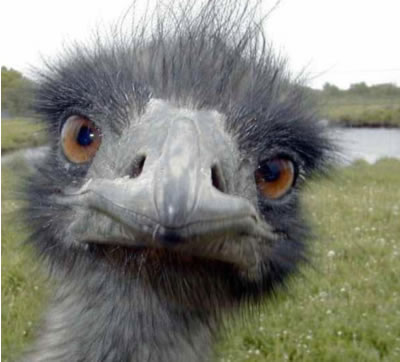
Was the Bar Yochni an Ostrich?

When Rabbi Slifkin visited Kew Gardens Hills last, I purchased a copy of his Sacred Monsters. This post is not a review -- those take too long -- but it is a very good read, and I would encourage others to check it out.

Of course, being the radical that I am, and having a somewhat different methodology, I would approach some of the sources he brings in a slightly different manner. Here is one such example. He discusses the possible identification of the Bar Yochni as the ostrich, since the pesukim in Iyov appear to be speaking of an ostrich, and a Rashi in Menachot, and a gemara in Bechorot, equates the two. There are reasons he brings to doubt it, such as a gemara that talks of it bringing its eggs up, which the ostrich does not do; but also a gemara which discusses the face of the Bar Yochni as something much larger than a tefach -- while the face of an ostrich is about a tefach -- maybe a bit larger, but not much.

From my perspective, not all Talmudic sources should be weighted equally. I'll consider three sources in this post.

The first, a gemara in Bechorot:
בכורות דף נז, ב גמרא
פעם אחת נפלה ביצת בר יוכני וטבעה ששים כרכים ושברה שלש מאות ארזים
ומי שדיא ליה והא כתיב (איוב לט) כנף רננים נעלסה
אמר רב אשי ההוא מוזרתא הואי:
This quite clearly comes from the Tannaim and Amoraim. The first statement I believe is stated by Rabbi Yishmael ben Satriel, a Tanna, while the clarification comes from Rav Ashi, an Amora. The question which prompts the statement might have been filled in by the setama de-gemara, and perhaps not -- but regardless, we have named Tannaim and Amoraim for a good portion of it.

In contrast, consider the gemara in Yoma 80a:
דף פ, א גמרא
טומאת אוכלין כביצה מנלן
א"ר אבהו א"ר אלעזר דאמר קרא (ויקרא יא) מכל האוכל אשר יאכל
אוכל הבא מחמת אוכל ואיזה זה ביצת תרנגולת
ואימא גדי מחוסר שחיטה
ואימא בן פקועה טעון קריעה
ואימא ביצת בר יוכני
תפסת מרובה לא תפסת תפסת מועט תפסת
ואימא ביעתא דציפורתא דזוטר טובאץ...ש
Here again, the Bar Yochni appears as a bird with an exceptionally large egg. But while Rabbi Abahu, a named Amora, makes the initial statement, the question and answer is anonymous and in Aramaic, and of the style of the setama. And furthermore, as I argue in the general case, you can almost always find what is stated by the setama stated elsewhere, in another context, attributed to a named Amora, which means that the setama, while creative, will rely on existing Talmudic material and will apply it to new contexts. Here, I would posit, the anonymous setama is taking the gemara in Bechorot as evidence for the existence of this large egg of the Bar Yuchni and applying it to his systematic analysis of the Amoraic-level gemara.

The third reference to the Bar Yochni can be found in Sukkah 5a-b:
סוכה דף ה, א גמרא
רב הונא אמר מהכא (ויקרא טז) על פני הכפורת קדמה ואין פנים פחות מטפח
ואימא כאפי
סוכה דף ה, ב גמרא
דבר יוכני
תפשת מרובה לא תפשת תפשת מועט תפשת
ואימא כאפי דציפרתא דזוטר טובא
...
Once again, while Rav Huna, a named Amora, makes a statement, the give and take is anonymous, in Aramaic, and in the style of the setama di-gemara. Indeed, they are the same questions as we find in the gemara in Yoma.

I would posit that the setamaist never saw a bar yochni. He is relying entirely on the account in Bechorot. The gemara in Bechorot described the Bar Yochni as a bird with an extraordinarily-sized egg. The setama in Yoma used this to ask a question and provide an answer. And the setama in Sukkah saw this precedent and asked a similar question, just based on the face of the Bar Yochni rather than its egg. While the gemara in Bechorot does not describe the size of the Bar Yochni's face, it stands to reason that with such an exceptionally large egg, capable or drowning 60 towns, it is a large bird in general and therefore has an exceptionally large face.

Therefore, the application of the setama in Sukkah should not be used to define features of the actual Bar Yochni bird, and it should then not discount the ostrich as a candidate, even though the ostrich has a face indeed the size of a tefach.

Even an ostrich is not this exceptional size, that its egg can drown 60 cities. Should we conclude that the Bar Yochni in general is an allegory, and that they did not intend any actual bird? Well, the number 60 in terms of 60 towns is what Maharatz Chayos would call a guzma, and perhaps these "magic numbers" indeed should convey to us that it is intended as allegory. But I am not at all positive that the Bar Yochni was a fictional bird. Let us reexamine the context in the gemara in Bechorot:
העיד רבי ישמעאל בן סתריאל מערקת לבינה לפני רבי במקומנו מפשיטין את המתה ומלבישין את החי
אמר רבי נתגלה טעמא של משנתינו
חזירין שבמקומנו יש להם ששים רבוא קלפים בבית המסס שלו
פעם אחת נפל ארז אחד שבמקומנו ועברו שש עשרה קרונות על חודו אחת
פעם אחת נפלה ביצת בר יוכני וטבעה ששים כרכים ושברה שלש מאות ארזים
ומי שדיא ליה והא כתיב (איוב לט) כנף רננים נעלסה
אמר רב אשי ההוא מוזרתא הואי:
Thus, this Rabbi Yishmael is talking about the strange and excessively large dimensions in Arkat Levena. And so he speaks about arazim, cedars, of exceptionally large size such that one fell and sixteen wagons were able to pass over it. This does not mean that cedars are metaphorical, and don't exist. It means that the particular cedars in Arkat Levena were this size.

It reminds me of a joke about Texas:
There once was a blind man who decided to visit Texas. When he arrived on the plane, he felt the seats and said, "Wow, these seats are big!" The person next to him answered, "Everything is big in Texas."

When he finally arrived in Texas, he decided to visit a bar. Upon arriving in the bar, he ordered a beer and got a mug placed between his hands. He exclaimed, "Wow these mugs are big!" The bartender replied, "Everything is big in Texas."

After a couple of beers, the blind man asked the bartender where the bathroom was located. The bartender replied, "Second door to the right." The blind man headed for the bathroom, but accidentally tripped over and skipped the second door. Instead, he entered the third door, which lead to the swimming pool and fell into the pool by accident.

Scared to death, the blind man started shouting, "Don't flush, don't flush!"
Perhaps there is a metaphorical explanation, or perhaps things were large and this is mere exaggeration. Either way, this does not mean that there were no cedars elsewhere, which were real. Just like there are indeed airplane seats, mugs, and toilets outside of Texas.

The cedar is a big tree, so it makes sense that the typical Bar Yochani is a big bird, and a real one -- just not typically, or really, as big as described in Bechorot. The egg, outside of Arkat Levena and Texas, might be big -- for example the size of an ostrich egg -- but not typically so big as to drown 60 towns. If so, the Bar Yochni can be a real creature; perhaps an ostrich, or perhaps an entirely separate bird.

While Rabbi Slifkin notes that the Musaf HaAruch notes that it is a metaphorical, rather than actual bird, I see that Jastrow's entry on the bar Yochani (page 568) says that it is a fabulous bird; but in square brackets, he writes [Koh. Ar. Compl. s.v. בר, vol. II pg. 176 refers to Varaghna (Bactrian) ostrich.]

This Persian etymology for בר יוכני makes sense to me, gh is more or less a kh sound, and that it refers to a large bird such as the ostrich is compelling -- even aside from the other basis of declaring it an ostrich, based on Talmudic linkages to the bird in Iyov, which is likely an ostrich. See here for other fantastic features of Varaghna birds, though not at all necessarily the same one.

There is one major problem with declaring the Bar Yochani the ostrich. The gemara in Menachot 66b describes a feature which seems not to match the ostrich. And this is the bird linked to the Bar Yochani. Thus, in Menachot:
ואומר (משלי ז) נתעל"סה באהבים נשא ונתן ונעלה ונשמח ונתחטא באהבים
ואומר (איוב לט) כנף רננים נע"לסה נושא עולה ונתחטא
Rashi there equates it with the Bar Yochni, and also explains the gemara (correctly) to mean that נע"לסה is an acronym for "it carries it (=the egg), ascends, and descends (placing it down in the nest). Yet an ostrich does not do this!

I would guess that Rashi's basis for associating this with the Bar Yochni is that in the gemara in Bechorot, prior to Rav Ashi's elaboration, the gemara cites this pasuk, with the impled question of why the egg would drop and shatter in this way, which is why Rav Ashi explains that it was an unfertilized egg.

We could say that where the gemara posed this question, it was merely the setama filling in the shakla vetarya to help it flow better -- indeed, this occurs often -- such that this was never Rav Ashi's question. I wonder if one could fill in a different cause, such as making it not a hard egg containing a baby Bar Yochni, but one which would shatter over a large area, and also explaining וטבעה. But if we do, we not only cut away the "problematic" behavior for an ostrich, but the very connection to the ostrich in the first place. Aside from the having of large eggs -- and the exaggeration would be perhaps greater for Texas and Arkat Levana if the Bar Yochani were generally a small bird -- the connection to the ostrich is via the verses in Iyov, which Rabbi Slifkin demonstrates are quite descriptive of the ostrich. Cut out the question, and we cut out Iyov, and we have almost no basis for claiming the Bar Yochni is an ostrich! Well, not really -- we still have the etymology relating it to the Varghna ostrich.

But it does make sense, based on the egg size, that we are referring to an ostrich. And it seems that this was the assumption in our gemara in Bechorot as well. For otherwise, why pose this question, and relate it to the gemara in Iyov? And it works out nicely based on etymology. What then, are we to do with this "difficult" feature of the Bar Yochni / kenaf rananim?

I would merely be forced into the position that not all zoological knowledge put forth in the gemara is entirely accurate. Either we can reinterpret the gemara in Menachot (and perhaps also Bechorot) about the animal's behavior, or else we could say that it was based on faulty contemporary knowledge. This is what I say about certain aggadot regarding techelet. There is sufficient and convincing evidence, based on archaeological evidence as well as some gemaras, that murex trunculus was indeed the techelet of Chazal. But a brayta about how often the chilazon surfaced may be based on faulty contemporary Greek accounts of how often the chilazon frequented the shores. And it is overly pious to insist that therefore we have not identified the chilazon, for we would never find a creature that truly matches it. Just as we would not say that the gemara, and Tosafot, were not talking about elephants because they refer to an elephant jumping. And just as we would not say that our bovines are not the same as the bovines of Chazal because Chazal's bovines were constructed in a way that a needle could get to the liver in a normal way after being consumed. And that ancient accounts of lions were not of lions, because they claimed that lions were stillborn, and only came to life after three days.

We are faced with a derasha from a pasuk, perhaps one that accords with contemporary zoological beliefs in the time of Chazal; but that does not mean that Chazal made a careful study of the nesting habits of ostriches.

And so, to conclude, I believe that an ostrich is a solid candidate for the Bar Yochani, and that it was believed to be a real bird; though the gemara in Bechorot might have involved Chazal's true beliefs, in which case it would have been intended literally (for our beliefs, and sense of plausibility, is not the same as Chazal's); or allegorically; or else as an exaggeration.

Thursday, August 27, 2009

Which Naarah is Plene? Did Rambam forget the gemara?

In the laws of the defamed maiden:
טו וְלָקַח אֲבִי הַנַּעֲרָ, וְאִמָּהּ; וְהוֹצִיאוּ אֶת-בְּתוּלֵי הַנַּעֲרָ, אֶל-זִקְנֵי הָעִיר--הַשָּׁעְרָה.15 then shall the father of the damsel, and her mother, take and bring forth the tokens of the damsel's virginity unto the elders of the city in the gate.

and then:
יט וְעָנְשׁוּ אֹתוֹ מֵאָה כֶסֶף, וְנָתְנוּ לַאֲבִי הַנַּעֲרָה--כִּי הוֹצִיא שֵׁם רָע, עַל בְּתוּלַת יִשְׂרָאֵל; וְלוֹ-תִהְיֶה לְאִשָּׁה, לֹא-יוּכַל לְשַׁלְּחָהּ כָּל-יָמָיו. {ס}19 And they shall fine him a hundred shekels of silver, and give them unto the father of the damsel, because he hath brought up an evil name upon a virgin of Israel; and she shall be his wife; he may not put her away all his days. {S}
This second occurrence, in pasuk 19, is the only instance in the entire Torah that naarah is spelled plene, with a final heh. In all other places it is a krei ukhetiv, or almost so, with it pronounced naarah but written only with the the consonants of naar. In Nach, there are plenty of others, but this is the case in Torah.

And so goes the masoretic note, as Minchas Shai states, that leit malei batorah, there is no other plene one in the Torah.


We also have this is ketubot, and I would add that perhaps this is a basis of the masoretic note, beside manuscript evidence. In Ketubot 40b, we have:

אמר ר"ל המוציא שם רע על הקטנה פטור שנא' (דברים כב, יט) ונתנו לאבי הנערה נערה מלא דיבר הכתוב מתקיף לה רב אדא בר אהבה טעמא דכתב רחמנא נערה הא לאו הכי הוה אמינא אפילו קטנה והא כתיב (דברים כב, כ) ואם אמת היה הדבר הזה לא נמצאו בתולים לנערה והוציאו את הנערה אל פתח בית אביה וסקלוה וקטנה לאו בת עונשין היא אלא כאן נערה הא כל מקום שנאמר נער אפילו קטנה במשמע:
Resh Lakish ruled; A man who has brought an evil name upon a minor is exempt, for it is said in Scripture, And give them unto the father of the damsel,53 Scripture expressed the term na'arah as plenum.
R. Adda b. Ahabah demurred: Is the reason then because the All-Merciful has written na'arah, but otherwise it would have been said that even a minor [was included], surely [it may be objected] it is written in Scripture, But if this thing be true, and the tokens of virginity be not found in the damsel, then they shall bring out the damsel to the door of her father's house, and [the men of her city] shall stone her, while a minor is not, is she, subject to punishment? — [The explanation,] however, [is that since] na'arah [has been written] here [it may be inferred that here only is a minor excluded] but wherever Scripture uses the expression of na'ar even a minor is included.
Thus, there is an explicit derasha on the basis of the naarah in pasuk 19 being spelled malei, with a final heh. And it is easy to extrapolate that it is only this instance in Torah which is malei, but all others are not. That is indeed the import of the gemara.

Yet, as Minchas Shai notes, there is a weirdness when Rambam brings down these laws in his Mishneh Torah. He writes:

הלכות נערה בתולה פרק ג

א המוציא שם רע על בת ישראל, ונמצא הדבר שקר--לוקה, שנאמר "וייסרו, אותו" (דברים כב,יח); ואזהרה שלו, מ"לא תלך רכיל בעמיך" (ויקרא יט,טז). ונותן לאביה, משקל מאה סלעים כסף מזוקק; ואם הייתה יתומה, הרי הן של עצמה. [ב] והמוציא שם רע על הקטנה, או על הבוגרת--פטור מן הקנס, ומן המלקות; ואינו חייב, עד שיוציא על הנערה--שנאמר "והוציאו את בתולי הנערה" (דברים כב,טו;וראה דברים כב,יט), "נערה" מלא דיבר הכתוב.

He is citing the wrong pasuk -- one not brought for this purpose in the gemara -- and declaring it malei there!! But as we know from our masoretic notes, only pasuk 19 has naarah malei; he is making pasuk 15 malei. These are two separate but interrelated problems: (a) citing the wrong pasuk, and (b) declaring that wrong pasuk malei.

Indeed, the Kesef Mishnah notes (see inside, bottom of right column and top of left column) a separate problem, that according to the conclusion of the gemara, this need not be the source, but rather according to the gemara that it must be talking about a naarah and not a ketana, because it talks of her punishment, of stoning. So in the entire segment we must be talking about naarah. Thus, the gemara concludes with a separate derivation of this law, though it derives things about נער as ketana in general. His answer is that the Rambam chose a derech ketzara here.

But he also asks that the pasuk the Rambam cites is the wrong pasek, and is indeed chaser! He does not offer an answer, other than to say וזה שלא בדיקדוק. Thus, he appears to maintain that Rambam simply made an error.

Indeed, this is one of the big points made in Dr. Marc Shapiro's Maimonides and His Interpreters (see here), that Rambam sometimes makes mistakes, including in terms of quoting statements. And this may well be what it is here.

However, I would like to defend this Rambam, if possible. It is not so clear to me that Rambam made such a major error here. Rather, he may have simply understood the gemara in a different way.

Part of why we understand the gemara the way we do is that we assume that there is only one instance in all of Torah that naarah is written chaser. Indeed, we have a masorah for that. But is it possible that this masorah was based on the gemara, and not just on manuscript evidence? I would consider it extremely plausible that this is so. Even if not, we find thousands of examples of conflicting masorot, so we might imagine Rambam had a different masorah here. What I am getting at is that we should lay aside this tradition for a moment, that there is only one instance of naarah that is plene (malei), and then look back at the gemara.

It is only because we assume that only one naarah is plene that we interpret the gemara's question and answer as we do -- namely, that the naarah of pasuk 19, which speaks of the fine, is plene, but others not. And the question is that in the same section, this damsel is threatened with the death penalty, but we know that a ketana would not receive that punishment. Rather, it is the punishment which shows that in all cases here, we are speaking of a naarah and not ketanah. And the writing in malei in one instance here, in pasuk 19, sets the stage for all other instances, that naar(ah) spelled without the final heh also includes a ketana.

The "difficulty" with this reading is that there are other instances, even within this segment -- indeed, even in the instance of stoning, that it is spelled naar(ah), without that final heh. And if we learn out from stoning that it excludes a minor, that it is spelled deficiently in that very instance should disprove the assertion the naar(ah) includes minors.

Maybe we can reread the gemara that way and make this Rav Ada bar Ahava's objection. But then it is difficult to see how the answer is an answer. The gemara just doesn't seem (to me) to parse well if we read it in this way I just suggested. How can it extrapolate to other cases? And it seems to be begging the question, and using the problem as if it is the proof. Try reading this into the gemara and see what I mean.

There is another important point. When the gemara cites the pasuk about stoning, which is not pasuk 19, but rather is pasuk 21, they cite it malei. Now this could just be because it is quoting it in the way it is read rather than written. But in a gemara where the very point is the malei vs. chaser, this seems sheer sloppiness!

I would assert that it is not sheer sloppiness. The gemara was citing the pasuk as indeed written. And while throughout all of Torah, it is written deficient, in pasuk 15, 19, and 21 is is written plene. So it is not that the entire section is linked, such that despite it being written deficiently, one asks from the stoning punishment onto another pasuk.

The gemara then reads as follows:
(1) Resh Lakish: That it is not a ketana comes from the plene spelling, which is highly irregular and only occurs in the three pesukim in this section.
(2) Rav Ada bar Ahava: The implication of your statement is that were it not for this plene spelling, I would not know that a ketana is excluded. But if so, the plene spelling in pasuk 21, only, is entirely superfluous. Because that plene spelling would indicate that only a naarah but not a ketanah would be punished. But we would know this anyway, because a ketana is lav bat oneshin! And the Torah does not add letters unnecessarily, so why have this extra heh in naarah in pasuk 21, to create an entirely unnecessary derasha?
(3) The gemara answers: No, this is not superfluous! Rather, it is the entire basis of the association of the derasha of the malei heh with her not being a ketana. Here, in pasuk 21, we have a clear instance in which it cannot be a ketana, and it is written in this strange manner, with a full heh. We extrapolate from there. And that is how we know, in general, that if it is written malei it is not a ketana. And the other places, not in this section with three pesukim, but all the other times in Torah, a ketana is included.

This works out well with the gemara.

If so, and if this is how Rambam understood the gemara, then Kesef Mishnah's first question is resolved. It is not based on the fact that the girl gets stoned, if guilty. Rather, that empowers the naar / naarah distinction, and then we can use the derasha of the malei to learn this out. (Indeed, you might be able to say that without my radical reinterpretation of the gemara.)

Why did the Rambam choose a different pasuk from the gemara, which is chaser rather than malei as he asserts? It is possible he has a slightly different girsa of the gemara, which cites pasuk 15. Though obviously 19 is better since it actually discusses the fine.

I don't think Rambam had a different girsa. Rather, he chose pasuk 15 for one, or both, of these reasons.
(1) This is the first pasuk in the section which is malei, and his point is that all of them are malei in this section. Something we get from the first instance and on.
(2) He is making a cute derasha here, and manages to work the word hotzi in the derasha. Again, he had said:

ואינו חייב, עד שיוציא על הנערה--שנאמר "והוציאו את בתולי הנערה" (דברים כב,טו;וראה דברים כב,יט), "נערה" מלא דיבר הכתוב.
Even though this vehotziu means to bring out evidence, rather than to bring up a false name on her, as we see in pasuk 19 -- כִּי הוֹצִיא שֵׁם רָע עַל בְּתוּלַת יִשְׂרָאֵל -- pasuk 19 does not have this lucky sequence of words which parallels the point, as the naarah occurs earlier in the pasuk. Therefore, Rambam seizes this one.

Unless he has another girsa in which this is indeed the prooftext in the gemara. Or unless the Rambam forgot.

The conclusion of all this is that since Rambam does not cite the gemara in full, we don't really know what was before him, and can only try to reconstruct his line of reasoning based on the sources before us. And I believe that the reconstruction I put forth is a reasonable one. However, if so, then perhaps our Sifrei Torah are not in line with the Sefer Torah that the Rambam had; or perhaps what Chazal had. Even so, I would not change our present sifrei Torah.

Which of the two interpretations of the gemara do I find more convincing? I am not going to take a stand on that. I am just suggesting that this could have been how Rambam read the gemara.

One final point: See how the Rif treats this:
ועוד דגרסי' בפ' נערה שנתפתתה אמר ריש לקיש המוציא שם רע על הקטנה פטור שנאמר ונתן לאבי הנערה נערה מלא דבר הכתוב וכו' עד אלא כאן נערה הא כל מקום שנאמר נער אפילו קטנה במשמע
aIt could just be him summarizing in order to get to the broader point he is developing here, but he does seem to leave it, in this derech ketzara, with the implication that it stems from this derasha, and that the conclusion of the gemara reinforces this. And in Rambam's bet midrash, they studied Rif -- indeed, more often than they studied the gemara itself.

Tuesday, May 05, 2009

BeChazirei, or Bei Chozaah?

As a quick followup to this post about whether Rav Yehuda was worried about swine flu or hog cholera, I would suggest neither. Let us examine the gemara again:
אמרו ליה לרב יהודה איכא מותנא בחזירי
גזר תעניתא
נימא קסבר רב יהודה מכה משולחת ממין אחד משולחת מכל המינין
לא שאני חזירי דדמיין מעייהו לבני אינשי
אמרו ליה לשמואל איכא מותנא בי חוזאי
גזר תעניתא
א"ל והא מרחק
אמר ליכא מעברא הכא דפסיק ליה
The words נימא קסבר רב יהודה מכה משולחת ממין אחד משולחת מכל המינין and לא שאני חזירי דדמיין מעייהו לבני אינשי would appear to be the analysis of the setama degmara. In contrast, the back and forth in the case of Shmuel, who is Rav Yehuda's teacher, is clearly attributed as a back and forth between Amoraim. Stripping out the setama, we thus have:
אמרו ליה לרב יהודה איכא מותנא בחזירי
גזר תעניתא
אמרו ליה לשמואל איכא מותנא בי חוזאי
גזר תעניתא
א"ל והא מרחק
אמר ליכא מעברא הכא דפסיק ליה
Now compare what they told to Rav Yehuda with what they told to Shmuel. Rav Yehuda is told איכא מותנא בחזירי while Shmuel is told איכא מותנא בי חוזאי. The only difference is that one is told בחזירי while the other is told בי חוזאי. Perhaps there is some textual corruption at play here. For example, put the yud and the resh of בחזירי together to make an aleph. Perhaps in both cases it was originally that place in Bavel, Bei Choza'ei. It would not be the opposite, that both began as בחזירי, because the explicit objection, and Shmuel's explicit response, has to do with distance.

Monday, May 04, 2009

Was Rav Yehuda concerned about swine flu, or about hog cholera?

Life in Israel has a post about two interesting statements from the chief rabbinate of Israel. The first concerns bonfires on lag baomer, and to be careful, and also:
all should remember that wood should not be taken from building sites or private property, but only from hefker.
In terms of this particular aspect, I am reminded of the custom of bonfires after Succot, and how some kids took the belongings of others to make the bonfire, and steps taken against that.

In a second statement, he reports that:
Chief Rabbi Shlomo Amar has issued a statement in response to the Swine Flu (or Mexican Flu if you prefer). According to Ladaat.net, Rabbi Amar has called upon everyone to accept this Thursday as a day of fasting and prayer. He quotes the gemara that says when there is illness by the pigs, they declared a fast day - because the digestive tracts of the swine are similar to that of humans. As well, when there is a plague in one place, they should fast in other places as well, as the plague can spread from one place to the other easily.
Both of these are based on the gemara in Taanit 21b. To quote Ladaat's summary:
שאמרו לו לרב יהודה, שיש מגיפה בחזירים, ומיד עמד וגזר תענית על הצבור, משום שבני מעיים ומערכת העיכול של החזירים דומה למערכת העיכול של האדם. עוד אמרו שם שאמרו לשמואל שיש מגיפה במקום רחוק, וגזר תענית, משום שזה עובר ממקום למקום.
Earlier, we saw this gemara as applying to swine flu at matzav.

However, I believe that this is a misguided derivation from the gemara. If we examine the gemara closely, we see from the give and take that these were medical concerns. The gemara wonders whether Rav Yehuda is of the position that if a disease is cast on one species, it is cast on all species. And the answer is that it is not so, but just because both pigs and humans have similar digestive tracts (Rashi: that they lack a rumen).

If so, it is medical concerns. And do we really hold like the medicine of the gemara?! Surely not! See Rambam. Rather, we determine the medical reality, and then apply whatever halacha is to apply.

If swine flu is indeed dangerous and a fatal pandemic, then whether or not there is an explicit gemara, it is appropriate to declare a fast day. And if it is not, then the gemara is frankly irrelevant. The same for Shmuel and a disease far away. What do medical professionals tell us about the possibility of this spreading in virulent form. Because in mild form, it is no different than human influenza in its effects.

Declaring a fast day, while having the positive effect of getting people to beseech Hashem for mercy, has the possible negative effect of sparking hysteria in an already some-times ignorant public (especially if that public eschews secular knowledge, as found in e.g. newspapers). On the other hand, it does show that Jews are concerned for the world at large.

So what of the gemara? Is it discussing a pig disease that may spread to humans?
אמרו ליה לרב יהודה איכא מותנא בחזירי
גזר תעניתא
נימא קסבר רב יהודה מכה משולחת ממין אחד משולחת מכל המינין
לא שאני חזירי דדמיין מעייהו לבני אינשי
אמרו ליה לשמואל איכא מותנא בי חוזאי
גזר תעניתא
א"ל והא מרחק
אמר ליכא מעברא הכא דפסיק ליה
What is the disease which is fatal for pigs, which is מותנא בחזירי? There are two candidates, swine flu and hog cholera. Swine flu is not really a pestilence for pigs. Rather,
In pigs influenza infection produces fever, lethargy, sneezing, coughing, difficulty breathing and decreased appetite.[14] In some cases the infection can cause abortion. Although mortality is usually low (around 1-4%),[1] the virus can produce weight loss and poor growth, causing economic loss to farmers.
I would not expect this to be described in the gemara as מותנא בחזירי. Furthermore, why talk about the digestive tract being similar to humans? I suppose decreased appetite can fit.

But here is the other candidate, a completely different disease: acute hog cholera. Hog cholera is indeed often fatal for pigs. To cite:
Hog cholera (HC) is a highly contagious viral disease of swine that occurs in an acute, a subacute, a chronic, or a persistent form. In the acute form, the disease is characterized by high fever, severe depression, multiple superficial and internal hemorrhages, and high morbidity and mortality.
also,
Pigs of any age may be affected. There are typically a high fever, loss of appetite, and dullness. Other symptoms include blotchy discoloration of the skin (particularly the extremities), incoordination and weakness of the hindquarters, constipation followed by diarrhea, gummed-up eyes, and coughing. Death occurs within 4–7 days, and the mortality is usually high.
This is something easily described as מותנא בחזירי.

What about the similarity of digestive tracts? Well, constipation and diarrhea are symptoms of hog cholera, and
Hemorrhages are also found on the surface of the small and large intestine, the larynx, the heart, the epiglottis, and the fascia lata of the back muscles.
One could easily worry that it would manifest in humans, as cholera, which also affects the digestive tract, as its "action on the mucosal epithelium lining of the small intestine is responsible for the disease's infamous characteristic, exhaustive diarrhea."

Was Rav Yehuda correct to be concerned? Well, if swine flu, it can exist in mild or extreme forms, and it is zootonic, which means it can cross species and impact humans. However, as I will discuss soon, the most virulent forms cannot be widespread to humans, unless they are really packed together, for reasons having to do with evolution. (To be discussed a bit later.) Besides, it is likely not the swine flu, because that is not so drastically fatal to pigs, as discussed above.

What if hog cholera? In that case, it is fatal to pigs, in high numbers. And it is also zootonic. However, while humans can carry hog cholera, and thus help infect other pigs, it is not harmful to humans.

I would note that while the gemara notes that Rav Yehuda was concerned and thus declared a fast, we do not have evidence that it was in fact harmful to humans. Rav Yehuda was in all likelihood working with the best medical knowledge of his time.

On to the concerns of the virulent forms of the disease spreading from elsewhere, as per Shmuel's concern. I read an interesting article in the New York Post, which for some reason I cannot find online. Note that the fatal cases are all centered in Mexico, at the point of origin, and the one case in the US was an infant from Mexico. Other cases are milder.

The author of that article pointed out a reason for it. For the virus to spread, people have to be manifesting the effects of it and moving about. The most virulent strains cause people to be bedridden and then die in pretty short order. This means that they are not going about in public, spreading it. Meanwhile, the milder strains, which have basically the same effects as human influenza which is going around anyway, allow people to go out in public and spread it. So yes, it might spread a lot, but there are natural limits, imposed by the evolutionary mechanisms, which seem to be ensuring that this virus stays mild as it spreads.

Update: See also the discussion of the Meiri and whether this was metaphorical as noted by anon1, but also at length over at DovBear.

LinkWithin

Blog Widget by LinkWithin