Friday, August 26, 2016

Bava Kamma 86-87: Some thoughts on derashot

Bava Kamma 86-87:

1) On 86b, the Mishna:
מתני' המבייש את הערום המבייש את הסומא והמבייש את הישן חייב וישן שבייש פטור נפל מן הגג והזיק ובייש חייב על הנזק ופטור על הבושת עד שיהא מתכוין:

The Bach emends the text of the Mishna, saying there is a derasha at the very end, matching the one in the previous amud, where it stated:

דכתיב (דברים יט, יא) וארב לו וקם עליו עד שיתכוון לו בושת נמי עד דמיכוין ליה דכתיב (דברים כה, יא) ושלחה ידה והחזיקה במבושיו עד שיתכוון לו

According to Rashi, the derasha is on the word bimvushav, specifically his, parallel to vearav lo, specifically him.

נתכוון לבייש את זה כו' פטור - מדשמעינן ליה לר' שמעון גבי קטלא באלו הן הנשרפין (סנהדרין דף עט:) נתכוון להרוג את זה והרג את זה פטור הכא נמי לא שנא דטעמא דהתם משום וארב לו הכא נמי כתיב במבושיו:

Tosafot wonders what the Rabanan of Rabbi Shimon would do with that word bimvushav:

עד שיתכוין לו. וא"ת לרבנן במבושיו מאי דרשי ביה ושמא מבעי ליה לשום דרשה:

I would suggest that we should ignore the parallel the gemara makes to ve’arav lo and instead focus on the words veshilcha yadah, which was after all included in the quote of the pasuk. Yes, it is idiomatic, but the point of “sending forth a hand” is to indicate intent and deliberateness. For example, by the Akeida, וישלח אברהם את ידו ויקח את המאכלת לשחוט את בנו.

2) Also on 86b:

המבייש את הסומא וכו': מתניתין דלא כר' יהודה
See Rashi and Tosafot, that the derivation has to be based not on hamevayesh et hasuma but rather וישן שבייש פטור.

סומא אין לו בושת. דסומא שבייש פטור אבל המבייש את הסומא חייב דהא לא משתמע מעיניך שיהא פטור וכן משמע מתוך פירוש הקונטרס דפי' דדייק מתניתין דלא כרבי יהודה מדלא קתני סומא שבייש פטור כדקתני ישן שבייש פטור משמע דלא מצי דייק מדקתני המבייש את הסומא חייב דמודה רבי יהודה דמבייש את הסומא חייב:

If this is so, the citation is misleading. I would note that the text between the two dots which cite the Mishna and thus fix what gemara goes on what part of the Mishna is really late, from the time of the Geonim.

3) Also on 86b, there is a dispute between Rabbi Meir and Rabbi Yehuda about a blind accidental murderer:

דתניא (במדבר לה, כג) בלא ראות פרט לסומא דברי ר' יהודה ר' מאיר אומר לרבות את הסומא מ"ט דר' יהודה אמר לך (דברים יט, ה) ואשר יבא את רעהו ביער לחטוב עצים ואפי' סומא כתב רחמנא בלא ראות למעוטי ור' מאיר כתב רחמנא בלא ראות למעוטי וכתב רחמנא (דברים יט, ד) בבלי דעת למעוטי הוי מיעוט אחר מיעוט ואין מיעוט אחר מיעוט אלא לרבות ור' יהודה ההוא בבלי דעת פרט למתכוין הוא דאתא חייבי מיתות ב"ד אתיא רוצח רוצח מחייבי גליות חייבי מלקיות אתיא רשע רשע מחייבי מיתות בית דין תניא אידך ר' יהודה אומר סומא אין לו בושת...

All of these derashot are the attempts by the setama degemara to make Rabbi Yehuda and Rabbi Meir work. They are not direct citations of derashot from these Tanaaim. And there is the characteristic systematic nature of analysis in play.

I would suggest that the derashot are much simpler. The pasukim in Bemidbar 35 read:


כב  וְאִם-בְּפֶתַע בְּלֹא-אֵיבָה, הֲדָפוֹ, אוֹ-הִשְׁלִיךְ עָלָיו כָּל-כְּלִי, בְּלֹא צְדִיָּה.
22 But if he thrust him suddenly without enmity, or hurled upon him any thing without lying in wait,
כג  אוֹ בְכָל-אֶבֶן אֲשֶׁר-יָמוּת בָּהּ, בְּלֹא רְאוֹת, וַיַּפֵּל עָלָיו, וַיָּמֹת--וְהוּא לֹא-אוֹיֵב לוֹ, וְלֹא מְבַקֵּשׁ רָעָתוֹ.
23 or with any stone, whereby a man may die, seeing him not, and cast it upon him, so that he died, and he was not his enemy, neither sought his harm;
כד  וְשָׁפְטוּ, הָעֵדָה, בֵּין הַמַּכֶּה, וּבֵין גֹּאֵל הַדָּם--עַל הַמִּשְׁפָּטִים, הָאֵלֶּה.
24 then the congregation shall judge between the smiter and the avenger of blood according to these ordinances;

Where it says בְּלֹא רְאוֹת, where he didn’t see, for Rabbi Yehuda this functions as a miut, meaning that usually he could see, because he is capable of seeing, but in this particular case he didn’t happen to see. Thus we exclude the blind man. For Rabbi Meir, note that it says בְּלֹא רְאוֹת, that he did not see. This can function as a ribuy to include any case where he did not see, including someone who is blind.

4) The Mishna on Bava Kamma 87a confuses me:

העבד והאשה פגיעתן רעה החובל בהם חייב והם שחבלו באחרים פטורין אבל משלמין לאחר זמן נתגרשה האשה נשתחרר העבד חייבין לשלם

It states that a wife is exempt from paying. Rashi explains that the slave and the wife don’t have their own assets from which to pay, and so are exempt from paying at the time. But if she gets divorced, then she would pay.

Doesn’t this go against the pesukim of a woman who seizes a man’s testicles in Devarim 25:12?

יא  כִּי-יִנָּצוּ אֲנָשִׁים יַחְדָּו, אִישׁ וְאָחִיו, וְקָרְבָה אֵשֶׁת הָאֶחָד, לְהַצִּיל אֶת-אִישָׁהּ מִיַּד מַכֵּהוּ; וְשָׁלְחָה יָדָהּ, וְהֶחֱזִיקָה בִּמְבֻשָׁיו.
11 When men strive together one with another, and the wife of the one draweth near to deliver her husband out of the hand of him that smiteth him, and putteth forth her hand, and taketh him by the secrets;
יב  וְקַצֹּתָה, אֶת-כַּפָּהּ:  לֹא תָחוֹס, עֵינֶךָ.  {ס}
12 then thou shalt cut off her hand, thine eye shall have no pity. {S}

Chazal interpret that this refers to a monetary payment, for boshet. And she is the wife of one of the two men who are fighting!

Monday, August 22, 2016

The true derasha of 'an eye for an eye' = compensation

In today's daf, I really enjoyed the various derashot for ayin tachat ayin meaning kesef rather than an actual eye. I didn't really appreciate how the systemic analysis of the setama degemara analyzed and modified the meaning of those derashot.

To take one example, here is a powerful derasha at the beginning of the gemara (Bava Kamma 83b):
גמ' אמאי (שמות כא, כד) עין תחת עין אמר רחמנא אימא עין ממש לא סלקא דעתך דתניא יכול סימא את עינו מסמא את עינו קטע את ידו מקטע את ידו שיבר את רגלו משבר את רגלו ת"ל (ויקרא כד, כא)מכה אדם ומכה בהמה מה מכה בהמה לתשלומין אף מכה אדם לתשלומין ואם נפשך לומר הרי הוא אומר (במדבר לה, לא) לא תקחו כופר לנפש רוצח אשר הוא רשע למות לנפש רוצח אי אתה לוקח כופר אבל אתה לוקח כופר לראשי אברים שאין חוזרין הי מכה אילימא (ויקרא כד, כא) מכה בהמה ישלמנה ומכה אדם יומת ההוא בקטלא כתיב אלא מהכא (ויקרא כד, יח) מכה נפש בהמה ישלמנה נפש תחת נפש וסמיך ליה (ויקרא כד, יט) ואיש כי יתן מום בעמיתו כאשר עשה כן יעשה לו האי לאו מכה הוא הכאה הכאה קאמרינן מה הכאה האמורה בבהמה לתשלומין אף הכאה האמורה באדם לתשלומין

Why [pay compensation]? Does the Divine Law not say 'Eye for eye'?3  Why not take this literally to mean [putting out] the eye [of the offender]? — Let not this enter your mind, since it has been taught: You might think that where he put out his eye, the offender's eye should be put out, or where he cut off his arm, the offender's arm should be cut off, or again where he broke his leg, the offender's leg should be broken. [Not so; for] it is laid down, 'He that smiteth any man…' 'And he that smiteth a beast …'4  just as in the case of smiting a beast compensation is to be paid, so also in the case of smiting a man compensation is to be paid.5  And should this [reason] not satisfy you,6  note that it is stated, 'Moreover ye shall take no ransom for the life of a murderer, that is guilty of death',7  implying that it is only for the life of a murderer that you may not take 'satisfaction',8  whereas you may take 'satisfaction' [even] for the principal limbs, though these cannot be restored.' To what case of 'smiting' does it refer? If to [the Verse] 'And he that killeth a beast, shall make it good: and he that killeth a man, shall be put to death',9  does not this verse refer to murder?10  — The quotation was therefore made from this text: And he that smiteth a beast mortally shall make it good: life for life,11  which comes next to and if a man maim his neighbour: as he hath done so shall it be done to him.12  But is [the term] 'smiting' mentioned in the latter text?12  — We speak of the effect of smiting implied in this text and of the effect of smiting implied in the other text: just as smiting mentioned in the case of beast refers to the payment of compensation, so also does smiting in the case of man refer to the payment of compensation.

The derasha from the brayta is pretty clear. It is based on Vayikra 24:21:

וּמַכֵּה בְהֵמָה יְשַׁלְּמֶנָּה וּמַכֵּה אָדָם יוּמָת.

The brayta uses the words of the pasuk in sequence, makei beheima … umakei adam, and has a form of yeshalmena. The setama degemara, for various reasons, dismisses this as the pasuk under discussion, and instead uses sequential pesukim, where makei beheimah has an intervening nefesh and there is no words makei adam, let alone umakei adam.

But this pasuk (Vayikra 25:21) was the source, and the derasha works as follows. There are two implications to the word makei. It could mean smite to kill (vehikeiti kol bechor) or it could mean to injure (makei aviv ve’imo). In context, on a peshat level, of course it refers to smiting which kills. As the gemara says, ההוא בקטלא כתיב. (My assumption is that the gemara refers to the ketala which the perpetrator did.) But on that same peshat level, the pasuk is explicit that if someone kills, he gets the death penalty, יוּמָת.

However, the derasha does two things. Change it to injury and lop off the last word. And what operates here is juxtaposition, rather than a gezeira shava of makei makei. So it is:

וּמַכֵּה בְהֵמָה יְשַׁלְּמֶנָּה
one who wounds a beheima shall pay
וּמַכֵּה אָדָם
as well as one who wounds a person.

Believe me that there are derashot that operate like this, lopping of the pasuk ending which provides context, and reinterpreting the word. Here is a famous example, about techiyat hameitim:

In parashat Vayelech, the following pasuk:
טז  וַיֹּאמֶר ה אֶל-מֹשֶׁה, הִנְּךָ שֹׁכֵב עִם-אֲבֹתֶיךָ; וְקָם הָעָם הַזֶּה וְזָנָה אַחֲרֵי אֱלֹהֵי נֵכַר-הָאָרֶץ, אֲשֶׁר הוּא בָא-שָׁמָּה בְּקִרְבּוֹ, וַעֲזָבַנִי, וְהֵפֵר אֶת-בְּרִיתִי אֲשֶׁר כָּרַתִּי אִתּוֹ.
16 And the LORD said unto Moses: 'Behold, thou art about to sleep with thy fathers; and this people will rise up, and go astray after the foreign gods of the land, whither they go to be among them, and will forsake Me, and break My covenant which I have made with them.

There is a famous gemara in Sanhedrin 90b:
Sectarians [minim]17  asked Rabban Gamaliel: Whence do we know that the Holy One, blessed be He, will resurrect the dead? He answered them from the Torah, the Prophets, and the Hagiographa, yet they did not accept it [as conclusive proof]. 'From the Torah': for it is written, And the Lord said unto Moses, Behold, thou shalt sleep with thy fathers and rise up [again].18  'But perhaps,' said they to him, '[the verse reads], and the people will rise up?'

This pasuk is also listed in Yoma 52b as one of five pesukim which Issi ben Yehuda considers ambiguous, in the sense that it can be read associating both forward and backwards.

But our gemara treats the derasha with a systematic seriousness which spoils the derasha. The word makei can have only one meaning, and there is an ending to the pasuk. And it assumes it is a gezeira shava rather than a creative juxtaposition / lop derasha. And so it ends up with a forced derasha which is nowhere near as creative and enjoyable, but is rather a mechanistic pilpul which gives me a headache. And due to the gemara’s reinterpretation, no one knows the true derasha anymore.

Friday, August 19, 2016

Bava Kamma 78-79: וטבחו ומכרו redux

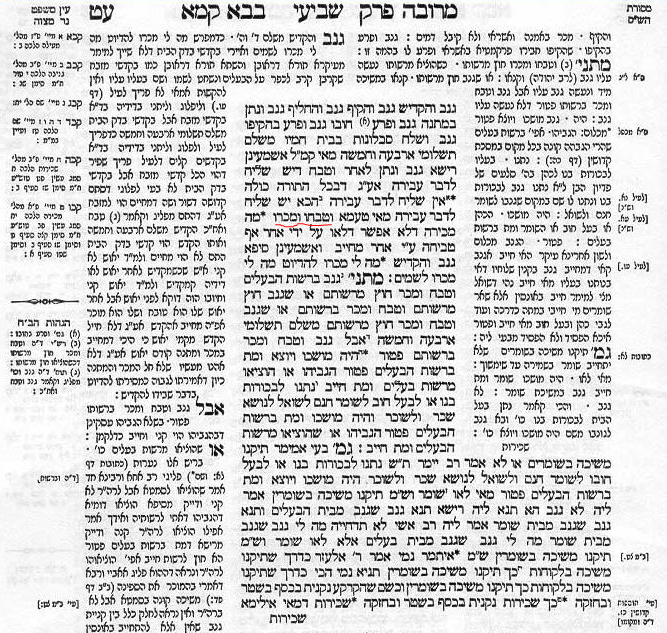
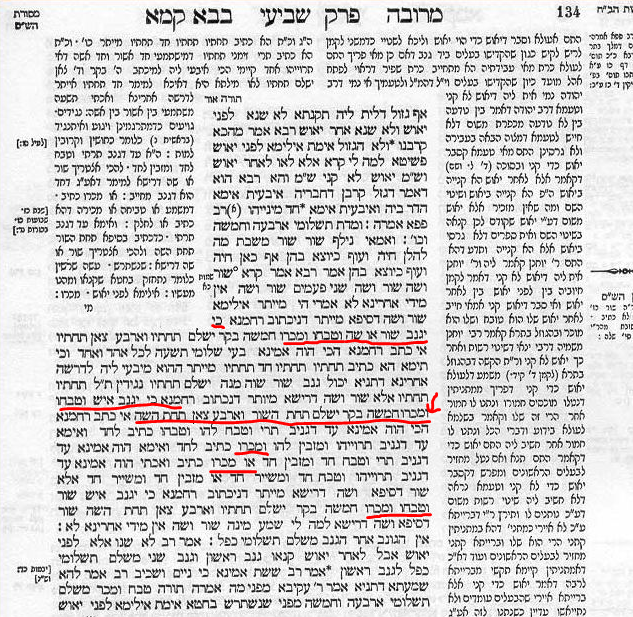
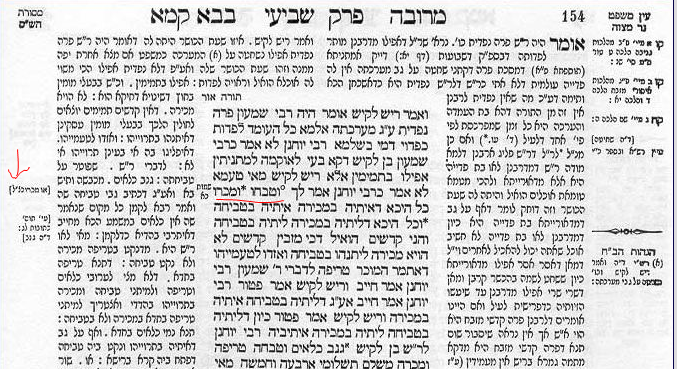
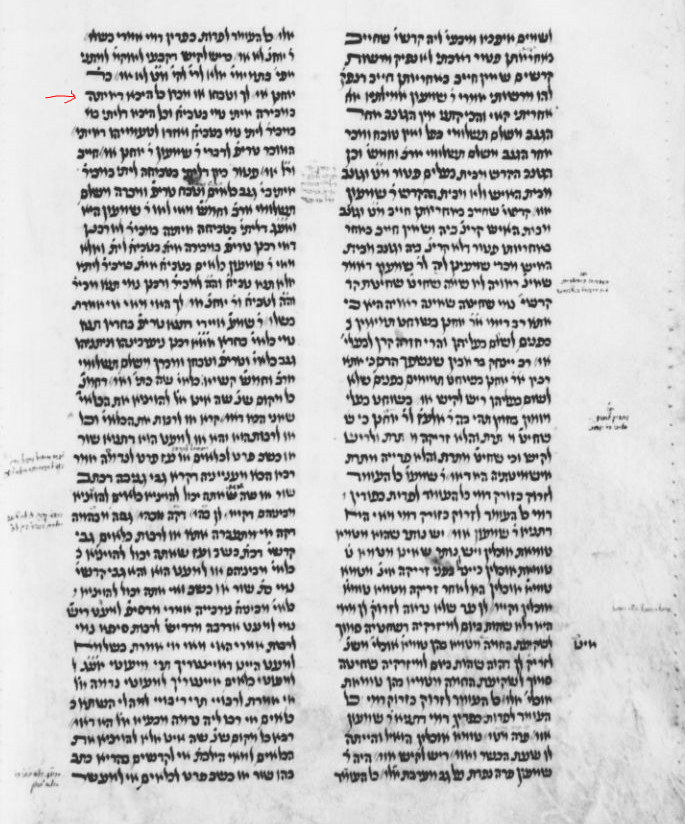
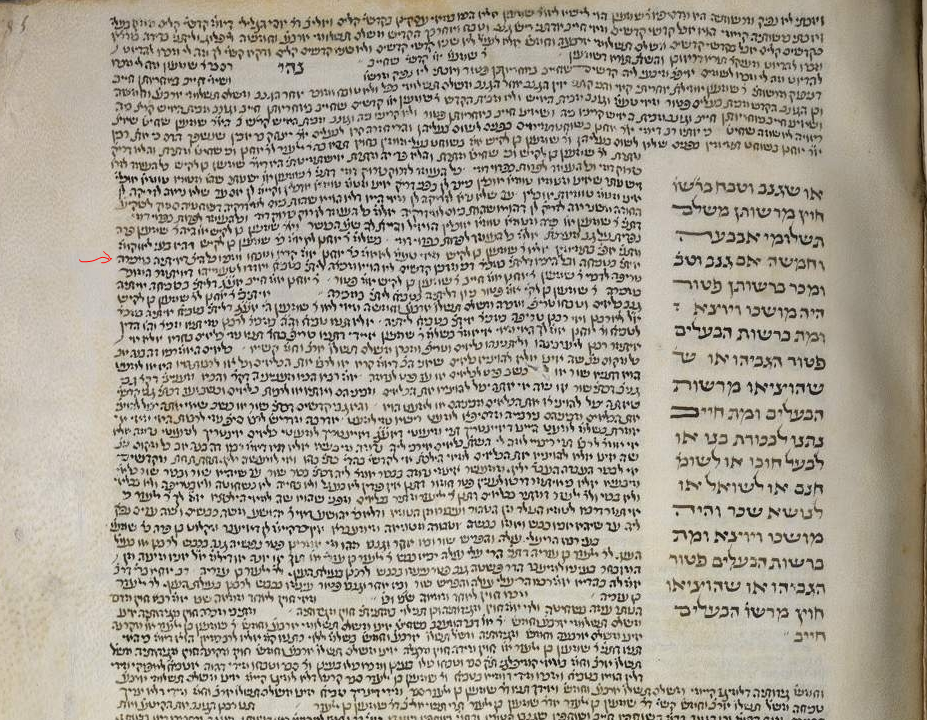
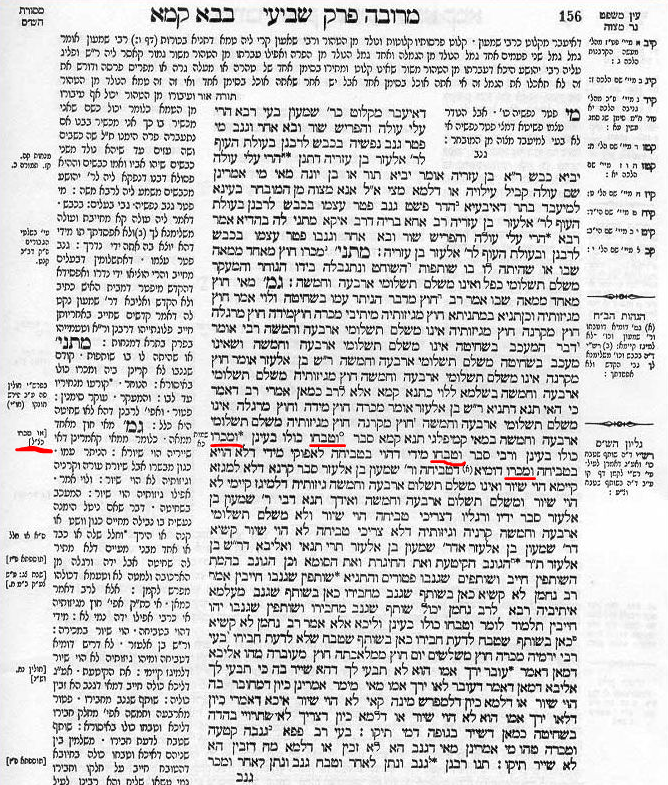
Continuing the other day’s post about the gemara’s apparent variant pasuk text of וטבחו ומכרו (in Bava Kamma 77b), this variant recurs later in the gemara, at least twice.

Once is in the following daf (Bava Kamma 78b), where Masoret haShas again dutifully corrects it:


In this instance, the derasha is not dependant upon either an או or an ו.

Then, on the next daf, 79a, where the Masoret Hashas misses it, and where the choice in conjunction might be relevant:


There is also an earlier daf where it is cited as וטבחו ומכרו as part of a full pasuk. However, all such instances are part of possible alternate phrasings of the pasuk, and there is an explicit derasha on the fact that it is או rather than ו. On 67b:


For each of these, of course we should check Talmudic manuscripts and so on. I briefly looked at the printed Rif at the end of the gemara and the ones on 78 and 79 were written as או מכרו...

Tuesday, August 16, 2016

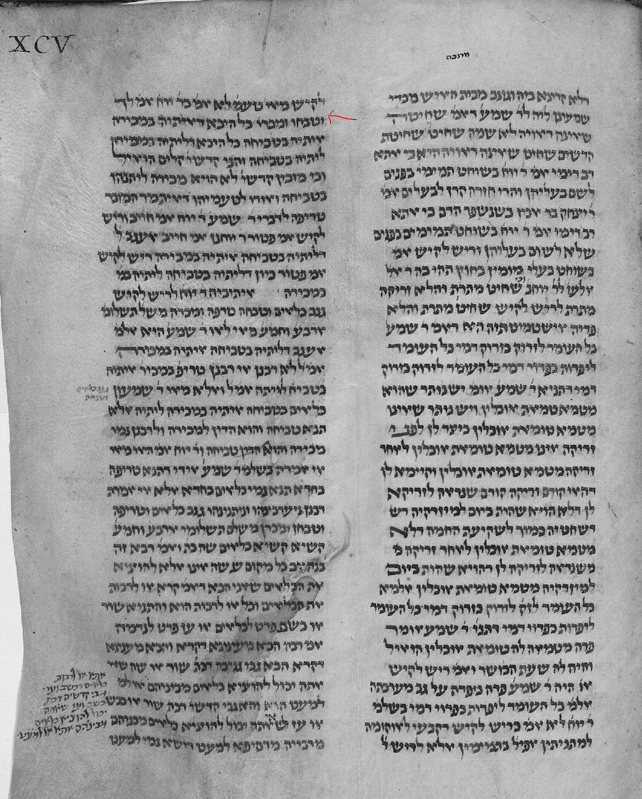
Bava Kamma 77b: וטבחו ומכרו

As I attended today’s daf Yomi shiur, I was distracted by a chance comment. There is a derasha on וטבחו ומכרו, that only those things subject the law in case of to being sold [or indeed, could be sold] would be subject to the law in case of slaughter.


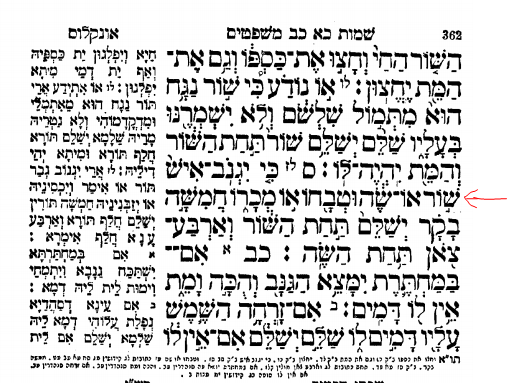
The slight problem is that the pasuk doesn’t actually say וטבחו ומכרו, which is why the Masoret haShas on the side helpfully emends it to וטבחו או מכרו. Here is the pasuk:


However, I would make four points.


  1. Some (but not all) of the Kitvei Yad have וטבחו ומכרו.
  2. The derasha maybe works better if is a conjunction via a vav, such that both are linked together in the same category, as opposed to a disjunction via the word או, which gives alternatives.
  3. The gemara later on in the amud debates the meaning of the word או in terms of shor o seh, or shor o seh o ez. Maybe verb alternatives differ from noun alternatives, but the gemara does not discuss the או in utevacho o mecharo in the same manner.
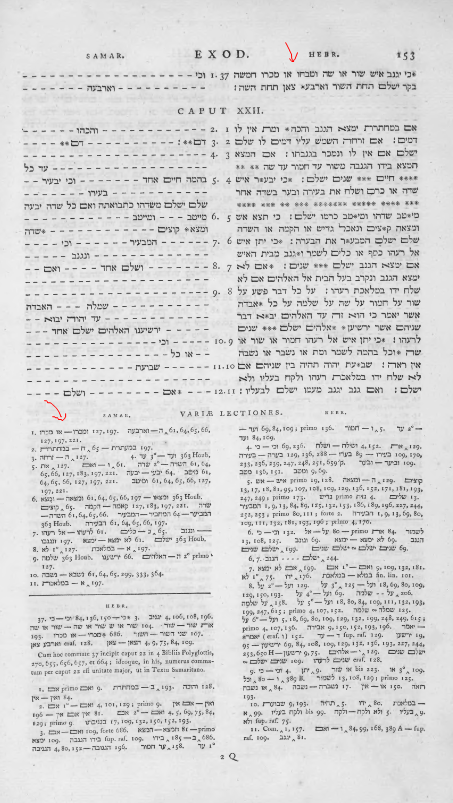
  4. I’ve often pointed out that a good many derashot of Chazal are based on readings found in the Samaritan text of the Torah, such that instead of saying there was a corruption in our Talmudic or Midrashic text, we should say that they based themselves on a different text. This is another example.


To focus on item 1, here is Ketav Yad Firenze, with וטבחו ומכרו:


Ktav Yad Vatican has או:


Ktav Yad Munich has ומכרו:


In terms of item 4, here is what Vetus Testamentum has:


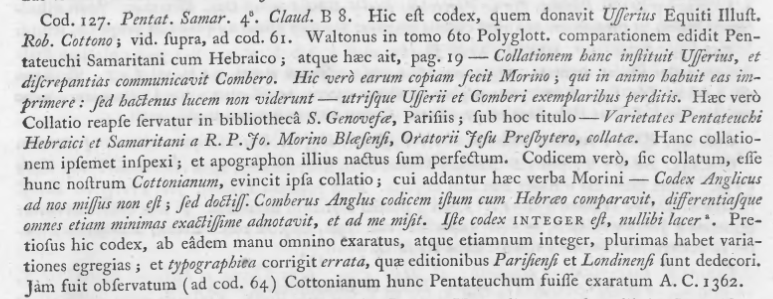
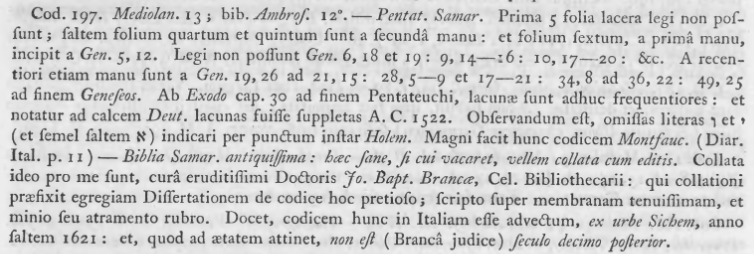
That is, two Samaritan texts, #127 and #197, have ומכרו. These are:


A)


B)


Sunday, July 31, 2016

Bilaam's true identity

Over Shabbos, I had a revelation about Bilaam:

a) He only had one eye. (Sanhedrin 105a, based on Bemidbar 24:3)
b) While not wanting to live a Jewish life, he wanted to die among the righteous Jews, and so could be considered quasi-Jewish. (Bemidbar 23:20) (Alternatively, ketoafot re'em lo, "he has the horn of the unicorn", in Bemidbar 23:22)
c) He could fly. (Midrash Rabba on Balak)
d) He was royalty - as Bela ben Beor, he was one of the kings of Edom. (Bereishit 36:32)
e) His name is a contraction of bala' 'am, swallower of a people.

Thus:

♫ He was a (a) one eyed, (b) one horned, (c) flying (d) purple (e) people eater. ♪

Friday, July 22, 2016

Balak: Bilaam's transition from sorcerer to prophet

Alternate Title: Hashem is consistent

A sorcerer manipulates spiritual forces, and thinks he can manipulate God as just another spiritual force. A prophet is the mouthpiece of God and the conduit of his will.

A surface reading of parshat Balak is confusing. Hashem seems inconsistent. Hashem tells Bilaam not to go. Then, He tells him that he may go. Then, Hashem sends an angel to stop (or kill) Bilaam for going. Then, the angel tells him that he may go? Is this not an inconsistency or repeated reversal? It all seems quite confusing.

The answer, to my mind, is that Hashem is entirely consistent, but what we are seeing is character development. The messengers ask Bilaam (22:6) to curse them, for they know that whoever he curses is cursed. That is, he has the role of sorcerer, able to manipulate spiritual forces.

Bilaam tells them he will sleep and ask Hashem. Hashem has at least some role in this. Hashem tells him not to go, and furthermore, that he shouldn't curse them, for they are blessed. And, as Bilaam relates to the messengers, Hashem refused to let him go with them (22:13).

This initial refusal establishes two things. First, it clearly reveals Hashem's desire to Bilaam. Hashem does not want Bilaam to go, and doesn't want Bilaam to curse. Any action / intention by Bilaam to curse them would violate what Hashem wants, and is therefore at least quasi-sinful. Furthermore, it is likely a theological rejection of (2:6), that the power to curse lies entirely in Bilaam's hand. Rather, this people is objectively blessed, and so a curse should not / will not happen.

Bilaam tells the messengers this. Other messengers from Balak come and repeat the request. He seems pious and says to them he cannot act except as Hashem instructs, and acts as a conduit to relate Hashem's request.

However, the subtext here is that he does indeed wish to go, given that Balak has promised honor and riches. Yet Bilaam already knows the will of Hashem. Hashem's prior response made it absolutel clear that Hashem did not wish Bilaam to curse them, and that they are blessed, such that he should not curse. Bilaam should have simply held to the prior rejection.

That he does not shows that (1) he is hoping for permission to act in a way which will bring him honor and riches, even though he knows that this is contrary to Hashem's desires, and (2) he still thinks that there is power in his words, and that he will be able to manipulate spiritual forces to curse those who are blessed.

Hashem tells him to go with the men, but that he will do that which Hashem tells him, he should do. While on a surface level, this seems like clear authorization to go. But it is really a passive-aggressive answer. It is also a test. Will Bilaam go, now that he has official permission? He already knows that going and cursing is against Hashem's desire. And Bilaam still thinks that he will somehow succeed in eventually cursing. He is acting as sorcerer.

When Bilaam goes, Hashem's wrath flares (22:22). This is not inconsistent. The angel is not, however, sent to kill, but to deliver a message. The donkey, three times, sees an angel standing in his path, and veers to the side. The dumb donkey understands Hashem's will (represented by the angel), and diverts from his intended action, and direction from his human master, in order to fulfill Hashem's will. So too, Bilaam should have understood (from his first interaction with Hashem; perhaps also from the repeated strange veering to the side by his donkey) that this mission is contrary to Hashem's true desire, and should have diverted from his intended action, and direction from his human master Balak, in order to fulfill Hashem's will.

His own words rebuking the donkey, first beating it, and saying it was deserving of death for going against his will, such that if he had a sword, he would kill it, is a condemnation of himself, who went against his own Master's desire. He then sees the angel, with a sword parallel to the sword he just mentioned.

When the donkey speaks, and Bilaam sees the angel with sword drawn, Bilaam understands that Hashem is upset with him, for his attitude and sin - for his wanting to accomplish something he knew was contrary to Hashem's desire, and for his belief that he would somehow be able to manipulate the spiritual forces contrary to how Hashem was running the world.

Bilaam states his willingness to return, since this has displeased Hashem (22:34). This is a (partial, at least) transformation, in that he will only act in accordance with Hashem's pleasure or displeasure. Hashem tells Bilaam to go, but that he will speak only what Hashem instructs him (22:35).

At this point, Bilaam is no longer sinning. It is Hashem's will that he go. Hashem's intention here is to make public, to the nation of Moav, that Hashem is in control of the course of human events, and of who is cursed or blessed. Bilaam is playing the role of the donkey. Just as the Hashem opened the donkey's mouth and it said the words Hashem placed in its mouth, so too Bilaam. And the three times diversion from human master's direction because of Hashem's direction will parallel the three times Bilaam will veer from Balak's direction.

When greeting Balak, he doesn't say that he can only act as Hashem wants him to act, which is the earlier pious statement. He declares that he has no power to say anything (22:38). This is contrary to what the messengers first said (22:6), that the power to curse was with Bilaam. He further tells Balak (22:38) that he is a mere mouthpiece, and only says that which Hashem puts into his mouth. This is new. This is the lesson he learned on the road, from the donkey and the angel. This is what Hashem said in 22:35, that he will (not just should) speak only that which Hashem gives him to speak.

Balak still operates on the assumption that Bilaam will be able to curse - will be able to channel and manipulate spiritual forces, via kesamim (which were in the hands of the messengers). The sacrifices are initiated, at first, by Balak (22:40), unless this is part of simply honoring Bilaam.

At any rate, sacrifices (and IIRC, drinking the blood of sacrifices) are a mantic method, a means of inducing a prophetic altered state. Thus, seven altars with seven bulls and seven rams, and the hope that Hashem will appear to Bilaam, this time in the daytime rather than in a dream. This is ritualistic, and means of manipulating spiritual forces. Yet Bilaam states that Hashem will show him something that he can tell Balak (23:3).

Now, he acts as prophet, rather than sorcerer. He rejects, to Bilaam, to Moav, to the reader of the sidra, the idea that he will have any power to curse or invoke wrath if this is not Hashem's desire in the world (23:8). And then proceeds to bless Israel.

Balak is upset with Bilaam, because he does not regard Bilaam as prophetic conduit, but someone who can control spiritual forces, so Bilaam tells him otherwise, that he must say that which Hashem puts in his mouth (23:12). Balak persists, the scene repeats, with similar result, with the same idea that it is Hashem who puts the words in his mouth (23:26), such that even positive words he will not / cannot suppress. Balak still thinks Hashem is manipulable, such that a different location and further sacrifices will induce Hashem to act in contrary manner to His expressed desire (23:27).

Then, there is a further positive development in Bilaam's attitude. He sees what Hashem's desire is, and doesn't go through any or his sorcerer actions. He sees Hashem's will to bless Israel, and doesn't go in search of omens as before, in a feeble / fake / ultimately ineffective way to attempt to manipulate the result (24:1). And then speaks poetically and prophetically, blessing the nation of Israel. This might even be of Bilaam's own accord and invention!

Contrary to all I have written is perhaps Bilaam's claim (24:12) that this is the original statement to the second messengers (22:18). But this might well be cast as spin, and we can see a slight difference in language (acting contrary to His will, which is the piety of a sorcerer vs. ability to effect anything with speech, since Hashem is giving him the words, which is the capability of a prophet). 

Wednesday, July 13, 2016

Chukat: Understanding Moshe's Reaction

Something struck me while learning this week's parsha (Chukas).

Moshe had just* experienced a deep personal tragedy, the death of his sister. And he didn't get a moment's pause. The people rose up with the same, tired*, complaint*. One could perhaps understand why Moshe overreacted* in the manner that he did in this one uncharacteristic instance. Yet he still was punished.

Footnotes and Caveats:
_________________________

* just: assuming the juxtaposition of events indicates that one followed the other in close proximity, as does the midrash. They were actually in that location for a long time.

* tired: they similarly complained about lack of water early in their wilderness tour, in parashat Beshalach.

* complaint: Sure, they were human and needed water, but they accompanied their request with a complaint and rebellion, and how it would be better had they had died previously.

* overreacted: Assuming that there was something wrong with either striking the rock or with 'hear now, ye rebels'. It is possible that this was not the problem, and it was just a failure of instilling emunah, such that they had the same attitude in the later year as they had in the earlier year.

LinkWithin

Blog Widget by LinkWithin