Friday, May 24, 2013

וְכִי יָגוּר אִתְּכֶם גֵּר -- Pesach Rishon, Sheni, or the general case?

In parshas Behaalosecha (Bemidbar 9:14), after detailing the laws of Pesach Sheni for those who were impure for Pesach Rishon, the Torah concludes with the following statement (I include Rashi's commentary):

14If a proselyte dwells with you, and he makes a Passover sacrifice to the Lord, according to the statutes of the Passover sacrifice and its ordinances he shall make it. One statute shall apply to you, to the proselyte and to the native-born citizen.יד. וְכִי יָגוּר אִתְּכֶם גֵּר וְעָשָׂה פֶסַח לַה' כְּחֻקַּת הַפֶּסַח וּכְמִשְׁפָּטוֹ כֵּן יַעֲשֶׂה חֻקָּה אַחַת יִהְיֶה לָכֶם וְלַגֵּר וּלְאֶזְרַח הָאָרֶץ:
If a proselyte dwells with you, and he makes a Passover sacrifice: I might think that anyone who converts should immediately make a Passover sacrifice. Therefore, Scripture teaches us, “One statute [shall apply to you, to the proselyte and to the native-born citizen].” And this is its meaning: If a proselyte dwells with you, and he comes (Reggio ed. - and the time comes) to make a Passover sacrifice with his friends,“according to the statutes of the Passover sacrifice and its ordinances he shall make it.” - [Sifrei Beha’alothecha 1:30]וכי יגור אתכם גר ועשה פסח: יכול כל המתגייר יעשה פסח מיד, תלמוד לומר חקה אחת וגו', אלא כך משמעו, וכי יגור אתכם גר ובא עת לעשות פסח עם חביריו כחקה וכמשפט יעשה:


We read the following in Nesivos HaShalom:

"If a ger dwells with you: This is a ger tzedek [convert] and not a ger shaar [of the gate; this is a ger toshav who follows the sheva mitzvos bnei Noach].

He makes a Passover sacrifice: And he wishes to make a Passover sacrifice with all of Israel, then according to the statutes and ordinances of the Passover sacrifice shall he make it. And behold, the commandments upon the gerim [converts] regarding Pesach were already written in parashat Bo: 'And when a ger dwells with you, he shall make a Pesach, etc.'

(The author says: And it is possible that the Scriptures is speaking about Pesach Sheni [Josh: given the preceding context], that the ger who converts prior to Pesach and due to uncontrollable circumstances does not make the Pesach in its set time, that he as well shall make a Pesach Sheni according to all its statutes. And so wrote Ibn Ezra.And so have I found in the Sifrei: Rabbi Shimon ben Eleazer says: Behold, if he converts between the two Pesachs, how do I deduce that he makes Pesach Sheni? Therefore it teaches 'like the native-born citizen'. Just as a native-born citizen who did not make the Pesach Rishon makes the Pesach Sheni, so too a ger who did not make the Rishon should make the Sheni. Thus it is explained as well as about Pesach Sheni.)

And the Ramban write that in Parashat Bo it was stated about the Pesach made in Egypt, and the implication was just regarding the converts who converted when they left Egypt, for they all well were part of the miracle, and were encompassed in 'and we He took out from there'. And here it commands regarding the converts who converted in the Midbar, or in Eretz Yisrael, to obligate them in Pesach Doros."

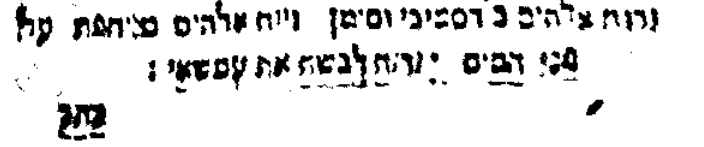
Note the word וירצה on the first line, "and he wishes". In his translation to German as well, he seems to say that this is optional and up to the ger. Thus:
The red underlined words mit machen will means "wants to do".

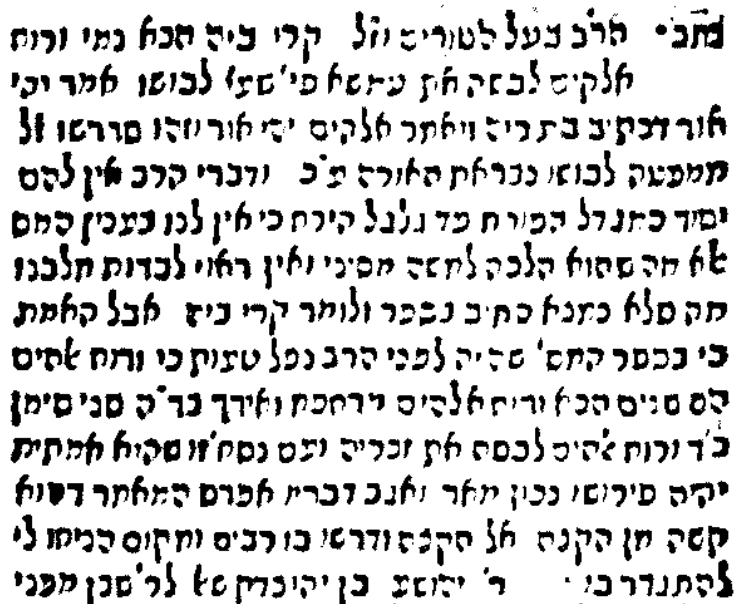
Shadal writes about this:

"And makes a Passover sacrifice: Not that he makes it if he wants, as it seems from the Targum of Rambman [=Mendelsohnn], but rather as Rashi explains.

He makes a Pesach for Hashem: There is no doubt that the explanation is only like as Rashi explains it, that when a convert converts, and afterwards, when the time comes to make the Pesach [Rishon] and he makes the Pesach, he needs to make it in accordance with all its statutes and commandments. (Even though neither he nor his ancestors left Egypt.) And this is whether for Pesach Rishon or Pesach Sheni.

And the word וירצה which the מבאר wrote, and the word וילל (Josh: underlined German above, mit machen will) that the Metargem [translator] wrote, are not correct."

I concur with Shadal in this. Yes, the immediately preceding context is the laws of Pesach Sheni, but the character of the pasuk does not suggest that this is limited to Pesach Rishon or Sheni; rather, that it is a general inclusion of the ger in all the laws of Pesach. I am not sure of the reasoning offered, that this is so even though he did not personally leave Egypt he is obligated. We should consider it in light of all the other explicit inclusions of geirim.

Thursday, May 23, 2013

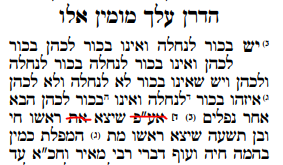
Ribbi or Rabbi

From yesterday's daf Yomi (Eruvin 75b):

אמר רב יוסף תני רבי היו ג' אסורין אמר להו רב ביבי לא תציתו ליה אנא אמריתה ניהלה ומשמיה דרב אדא בר אהבה אמריתה ניהלה הואיל ואני קורא בהן רבים בחיצונה אמר רב יוסף מריה דאברהם רבים ברבי איחלף לי 
Rav Yosef taught a brayta in the name of Rabbi. But, due to an illness he had, he was somewhat forgetful, and students would need to remind him of things he had said and in what context. Here, Rav Bibi said to the other students not to heed Rav Yosed in this, because it was not Rabbi, but rather something he had himself reported to Rav Yosef in the name of Rav Ada bar Ahava, and gave the full context, that he calls such a situation rabbim in the outer chatzer. And Rav Yosef exclaimed that he had switched "Rabbi" with "Rabbim".
Ribbi or Rabbi?

Perhaps this can help resolve the dispute whether רבי in general, as a title, should be pronounced as Ribbi or Rabbi. See here at On the Main Line:
There are two dominant traditional pronunciations for "רבי" the rabbinic Hebrew word and title, as found in vocalized manuscripts of the mishnah and perpetuated in siddurim: ribbi (ribee) and rabbi (rahbee). Roughly speaking, Jews of eastern descent have ribbi and those of western, rabbi
After all, rabbee sounds a lot more like rabbim than ribee. But there might well be a difference between the title in general and Rabbi Yehuda Hanasi's appelation. Or maybe the sounds ribbi / rabbim were close enough.

Wednesday, May 22, 2013

YUTorah on parshas Behaaloscha

parsha banner


Audio Shiurim on Behaalotecha
Articles on Behaalotecha
Parsha Sheets on Behaalotecha
Rabbi Jeremy WiederLaining for Parshat Behaalotecha
See all shiurim on YUTorah for Parshat Behaalotecha
New This Week


Sunday, May 19, 2013

posts so far for parashat Behaalotecha

[menorah-med.jpg]
2012

1. Behaaloscha sources -- even further expanded.

2. YUTorah on the parasha.

3. Why the pasek after the word tameiMidrashically, as well as from a system of trup.

4. Did Avraham call anyone 'My Master' besides HashemAccording to Meshech Chochma, he did not, and so was of the select few to be called an eved Hashem. But it is not so simple, according to Rav Yechezkel Abramsky's son. According to one opinion, Adonay at the start of Vayera is chol. Then, I weigh in with what I think is an even stronger counter-example, עַל-עַבְדְּכֶם.

2011

  1. Behaloshcha sources -- further expanded. For example, many more meforshei Rashi.
    .
  2. Impure to the bone, part ii --  Continuing a topic from last year on parshat Naso, about whether לטמי means bone or impure, and whether דאינשא should be present. This touches on pesukim in Belaalotecha as well.
    .
  3. YU Torah on parashat Behaalotecha.
    .
  4. The psik in נֹסְעִים | אֲנַחְנוּ, and whether gierim had to hoof it -   Birkas Avraham darshens another pesik.
    .
  5. Does the gershayim double the lamed, of gematria 30?  derasha on a gershayim in Behaaloscha, that the doubling of the stroke implies twice, and that it is on a lamed makes for double 30. I disagree with the need, or inclination, todarshen it, and try to explain why a gershayim instead of a geresh. But to each his own. I just discuss this for the sake of completeness.
    .
  6. Two places named Chatzeros --  Rav Chaim Kanievsky considers whether there were two places named Chatzeros, such that the one at the start of Devarim, in Ever Hayarden, is not the same as the one in themasaot, which is the one mentioned in Behaaloscha, where Miriam was punished with leprosy. I consider his words, and use it as a jumping off point. Plus, the Sifrei darshens a Samaritan text!

2010
  1. Behaaloscha sources -- revamped, with more than 100 meforshim on the parasha and haftara.
    a
  2. When you cause to ascend the lamps -- What is bothering Rashi? He explains בְּהַעֲלֹתְךָ in a particular way, but is inconsistent elsewhere in explaining לְהַעֲלֹת נֵר תָּמִיד. Meanwhile the derasha is not initially on Behaalotecha. I consider Gur Aryeh, and then differ, and explain my own take on the matter.a
    .
  3. Ibn Caspi and the magic trumpets -- Does Ibn Caspi have an expansive definition of the term dibra Torah kilshon benei Adam which includes falsehood in line with common  misperception? I consider one possible example.a
    .
  4. Take the Levites -- should 'take' have more than null value? According to Rashi and according to Ibn Ezra, why does "take the Levites" mean anything? Can't it be a sort of preparatory verb for the purification found later in the pasuk? An answer, I think.
    .
  5. Why the warlike language when the aron traveledIs the description of what Moshe said when the ark went out and returned really about simple travel in the wilderness? Isn't the warlike topic somewhat tangential? I suggest an answer regarding these moved pesukim.
    .
  6. How the Zohar spells matzos -- How shall we spell מצות here in Behaaloscha? The Zohar seems to indicate that it ischaser, which goes against all known sefarim as well as the masores. But I rescue the Zohar's statement.
2009
  1. Adi"r Bamarom -- an explanation of a masoretic note on parshat Behaalotecha.
    .
  2. Behaalotecha sources -- links by aliyah and perek to an online Mikraos Gedolos, and links to many meforshim on the parshah and haftarah.
    .
  3. Oo as Oh: a reanalysis of Ibn Ezra on ובדרך, discussed last year. I present a translation of Mechokekei Yehuda, and end up agreeing that Ibn Ezra is likely reading the Rambam into the pasuk, and thus it is that he missed Pesach Rishon beshogeg, and now incurs karet if he dismisses Pesach Sheni..
  4. Who was the Kushite woman, and how did she turn black? Relating Ibn Ezra to contemporary science.
    .
  5. Eldad and Medad's prophecy -- translated, and how it relates to the context.
    .
  6. The dot on the heh of rechokah, and how it might relate to the gender ambiguity of the word derech.
    .
  7. Should shatu have the stress on the first or the last syllable? And see the comment section for clarification.
    .
  8. Did the hand of the LORD or the spirit of God rest on Elisha? A discussion of competing nuschaot in a pasuk in Melachim, and whether we should even consider emending in favor of one.
2008
  1. Rabbenu Bachya's position on nikkud and the ambiguity inherent within pesukim -- I cite him in full, and explain why I think Shadal in his Vikuach is mischaracterizing his position. Based on a pasuk in Behaalotecha, וְאִם-כָּכָה אַתְּ-עֹשֶׂה לִּי, where the word את is a kinnui for the Attribute of Judgment
    a
  2. "And is not on a journey" as "Or is not on a journey" -- where when Ibn Ezra says או בדרך he is making either a phonological or a logical point. Shadal faces off against Avi Ezer, and then we have a Karaite supercommentary and finally my own suggestion. It is a difficult Ibn Ezra, all in all. Perhaps I should check out other supercommentaries of Ibn Ezra this year.
    .
  3. "Their prophecy did not cease" -- Was the prophetic gift to Eldad and Medad just temporary, or permanent? I would suggest a third possibility. It means that they were not gathered.
    .
  4. Pesach Sheni, if a convert converts -- should he bring the korban pesach offering immediately, even not in its proper time? I suggest it means that converting in between Pesach Rishon and Sheni, he still brings Pesach Sheni, and this depending on whether the second chag severed from the first. But see inside for details.
    .
  5. "Miracle Grow" -- Did the shemen hamishcha have the effect of making people miraculously grow taller, or is that ridiculous. What is the true intent of the midrash that says that this was a special mark of distinction.
2007
  1. Parsha Punning Puzzle: What feature of Behaalotecha Am I? an easy one, but I was just getting started, IIRC
    a
  2. An Important Grammatical Form -- cross-posted from Ki Tavo. וַתְּדַבֵּר מִרְיָם וְאַהֲרֹן בְּמֹשֶׁה in Bahaaloscha shows that a singular verb can apply to multiple individuals (Miryam and Aharon) and even to people of the opposite gender (Aharon). It all follows the identity of the first person mentioned.
2006
  1. Rashbam's Midrashic Literalism? that Moshe married the queen of Kush.
    a
  2. Why the Repetition of Isha Kushit Lakach? within the open-canon approach, it is saying, "Oh yeah, we didn't mention this earlier, but he married a Kushite woman." And what those following a closed-canon approach do.
    a
  3. Why Was Miriam, and Not Aharon, Punished? Perhaps only Miriam spoke. a grammatical analysis.
    a
  4. Roundup -- What other blogs are saying about the parsha
    a
  5. Why Couldn't the Manna Taste Like X
    1. And what does it mean to say that nursing mothers could not have it? I argue that it does not mean that everyone is restricted because of nursing mothers. And discuss ADDeRabbi's post on the subject.
    2. Then, in Manna Redux, I reexamine the issue after having seen Rashi in the gemara, which sheds light on Rashi in Chumash. And add a bit to the above discussion.
2005
  1. Parsing Moshe's Prayer
    • based on trup. I argue that na in kel na refa na la means different things. Thus, God, please heal now, her. Also, a keri and ketiv at play here, to parallel Aharon's earlier speech.
  2. Who Is The Naar?
    • considering Yehoshua and Gershom as candidates.
  3. "Na" Only Connotes Please
    • What does this phrase mean? Does it mean it can only mean this and not something else, or does it mean that in certain instances for midrashic purpose, we can read the meaning of "please" into it? I argue for the latter, and that others hold this as well. Indeed, no one ever says achila only means eating, because this is obvious. There must be some alternative, or else there is no purpose to the statement.
2004
  1. Chovav As A Witness, or Guide?
    • Moshe asked Chovav to stay to be their eyes. Is this as a witness or a guide? I suggest the latter. Also, was he successful?
  2. Who Was Chovav? Who Was Yisro? And Who Was Moshe's Father-In-Law?
    • Perhaps they are the same person, and perhaps not. I lot hinges on the definition of chotein moshe.
  3. Related to the Above: Another Interesting Cognate from "Hebrew Cognates In Amharic"
    • in that in Amharic, the same Semitic word means both father-in-law and brother-in-law.
  4. No More, No End, Not Gathered
    • Three possible meanings of וְלֹא יָסָפוּ as regards Eldad and Medad.
  5. BeKetuvim (Eldad and Medad)
    • The midrashic derivation of the contents of Eldad and Medad's prophecies. And how either Eldad and Medad, or their prophecies, were recorded in the "ketuvim."
  6. Would You Go Back To Slavery In Egypt For This?
    • Illustrations of the foodstuffs that the Israelites looked back fondly to.
  7. The Manna, On the Other Hand
    • useful to compare to the above.
  8. cross-listed from parshat Chukas: For What Sin Was Moshe Punished?
    • perhaps he was actually commanded to strike the rock, and his sin was in his initial reaction to the people's complaint.
to be continued...

Friday, May 17, 2013

May the Sotah take the bitter waters intravenously?

I was in a bit of a fun mood, so I posted the following question (and subsequent answer) at Mi Yodea:

May the Sotah take the bitter waters intravenously?
In Naso, we read (Bamidbar 5:32) that the kohen blots out the curses (which include Hashem's name) in the bitter waters and then gives for the woman to drink (5:24).
What if the woman is unable to swallow the waters due to their bitterness? Could she instead take it as an intravenous injection? Or do we insist that she swallow it?
After a few hours, I posted this response:

This is actually something explicitly prohibited by one of the Aseres Hadibros, namely commandment #3.
Devarim 5:10 states לֹא תִשָּׂא אֶת-שֵׁם-ה אֱלֹקֶיךָ לַשָּׁוְא, "Thou shalt not take the name of the Hashem your God in vein."
Alas, the answer was deleted as per their Purim Torah policy. It took a few hours, though, and first attracted a few answers. Poe's Law in action, I suppose. There are plenty of questions of this sort on the site, asked entirely earnestly. Right now the question still stands, as if I thought the question was really a good question.

Monday, May 13, 2013

Kehas and Gershon get a Vaydaber. Merari does not.

Summary: Or HaChaim explains it as a special elevation to Gershon. I explain it as due to the interjection at the end of the instruction for Kehas.

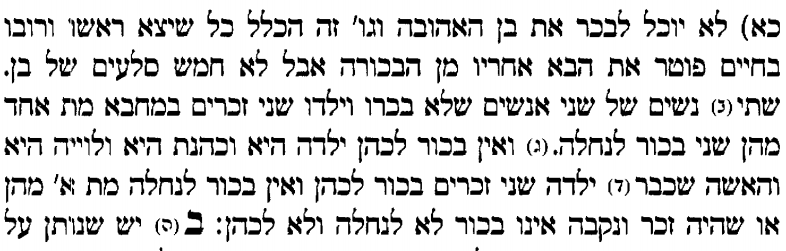
Post: Here is Or HaChaim on the first pasuk of parshas Naso:
The point he makes is that there is a separate dibbur for introducing the count of Gershon. That is, we have here a count of the families of the three sons of Levi.
Kehas is in parshas Bamidbar, in Bamidbar 4:1
:
And Gershon is in the beginning of parshas Naso, in Bamidbar 4:21:
And the count for Merari is a bit later, in Bamidbar 4:29.
The three are obviously a set, so why do Kehas and Gershon merit a separate dibbur while Merari does not?
Or HaChaim explains as follows:
“It is necessary to say Vaydaber a second time, and it is not sufficient with what was stated Vaydaber Hashem in the preceding counting of the children of Kehas in parshas Bamidbar because it [the count of Gershon] comes to say another matter besides the count, and this is that they should lift up and elevate them over the children of Merari. And this matter is a thing in and of itself, for this ‘Nesius’ is not in the same domain as the ‘Nesius’ of the children of Kehas, who were the carriers (‘Nosei’) of the Aron. For this reason, a separate dibbur was established for him. And therefore, when he commanded the counting of the children of Merari, he said ‘the children of Merari… you shall count’ [Josh:  but it does not say the word נשא like it does for the other brothers], it does not establish a dibbur by itself, for they have no ascendancy, but only a count, from that which it says Tifkod and not Tisa.”
In other words, there is a secondary meaning to the word נשא. It refers to an elevation rather than a count. And so we neatly explain why there is a special dibbur for Gershon at the same time that we explain the change in language by Merari.
I would explain the difference in a different way. The reason for the repetition of Vaydaber has nothing to do with Gershon, who was counted second, but with Kehas, who was counted first. Look at the full perek here to see the structure of the perek.
The structure is:
  1. Vaydaber
  2. Count Kehas
  3. Duties of Kehas
  4. Interjection (4: 17-20): Vaydaber: Kehas might die, Aharon and his sons should take these steps to prevent.
  5. Vaydaber
  6. Count Gershon also
  7. Duties of Gershon
  8. Count Merari
  9. Duties of Merari
The big change is in [IV] the interjection at the very end of parshas Bamidbar.
That this interjection requires a Vaydaber should indicate to us that this is indeed an interjection, and a change of topic. If so, then naturally we need a Vaydaber (and a gam hem) to return us to the initial topic.
However, there is no such interjection at the end of Gershon. And so we can go straight to Merari, without an introductory Vaydaber.
Or HaChaim further comments as follows:
"To Moshe: And there [before, by Kehas at the end of parshas Bamidbar] it states [the Moshe] and to Aharon. This because there the command comes to Aharon in order that he perform the seder which is stated in the matter of the burden of the children of Kehas, for it is written 
וְשָׂמוּ אוֹתָם אִישׁ אִישׁ עַל-עֲבֹדָתוֹ, וְאֶל-מַשָּׂאוֹ. that they not die. Therefore it stated 'and to Aharon', while there is no necessity for this for the burden of the children of Aharon."


See above for the Vaydabers for Kehas and Gershon, to see one say "El Moshe veEl Aharon" and the other say "El Moshe". This explanation is plausible.


However, note that the command of vesamu osam has its own Vaydaber, directed to Moshe and Aharon. So why for the counting part and designation of duties part alone should Aharon be included? Perhaps because otherwise the separate instruction to Aharon would not make as much sense.


I would suggest an alternate explanation, that really even the second Vaydaber was to both Moshe and Aharon. But since the function of this is to recover from the interjection, a minimal Vaydaber will suffice.

Sunday, May 12, 2013

Posts so far for parshat Naso


2012

1. Did Chazal know the meaning of Hebrew wordsGiven a Tannaitic dispute about the respective meaning of chartzan and zag, some Protestant scholar says no. Shadal says yes, and explains how something so basic can be a matter of dispute. Also, that Targum Onkelos is merely attributed to Onkelos.

2. YUTorah on Naso

3.  Naso sources, 2012 edition.

4. Haftarat Naso part i -- prophecy of Shimshon's conception and birth: Considering the haftara of parashat Naso, which is the story of Shimshon's miraculous birth. I present Malbim, and use his commentary as a jumping off point. In this first part, the malach's first communication.

5. Haftaras Naso part two, about the differences in the retelling of the story of the malach.

6. And part three, about the making of the goat for the malach.

2011

  1. Naso sources -- further expanded. For example, many more meforshei Rashi.
    .
  2. Impure to the bone? Part iiContinuing a topic from last year on parshat Naso, about whether לטמי means bone or impure, and whether דאינשא should be present.
    .
  3. YU Torah on parashat Naso.
    .
  4. How shall we pronounce the first וּבָאוּ in parashat Naso?  Is it mile'eil or mi'le-ra? I weigh in, considering the meaning of Minchas Shai.
    .
  5. An explanation for that cryptic Minchas Shai on ובאו --  If marking a telisha on the place of stress is so rare, why does Minchas Shai note its absence? This on Naso.

2010
  1. Naso sources -- revamped, with more than 100 meforshim on the parasha and haftara.
    a
  2. If a man does not have a redeemer -- Why is Rashi inconsistent in his explanation of this phrase, between Naso and Behar?
    a
  3. Sotah, and Identical Twin Sisters -- A statement about identical twin sisters, one of whom is a Sotah, seems oddly out of place. It is a taus sofer, as several meforshei Rashi explain? This is quite plausible. On the other hand, I give a reason why it might well not be, at least not in its entirety.
    a
  4. Impure to the bone, or just ImpureRashi explains Onkelos, who deviates from his usual manner and explains tamei lenefesh as tamei to the bones of a dead person. This sort of expansion is quite irregular. But maybe Rashi isn't really saying this. And even if Rashi says this, this may not be what Onkelos says, or what Onkelos means, as Shadal explains.
    .
  5. Ibn Kaspi and the (poisonous?) bitter waters -- Ibn Kaspi, perhaps, sheds light on the Ibn Ezra I discussed last year, that the kohen put poisonous bitter herbs into the water.

2009
  1. Naso sources -- links by aliyah and perek to an online Mikraos Gedolos, and links to many meforshim on the parshah and haftarah.
    .
  2. Thanks, DovBear, for the link and discussion! Check out this post and the comment section there, all about 2008's post on The Nature of the "Bitter" Waters. What precisely in Ibn Ezra's comment make Shadal and Avi Ezer draw their conclusions about Ibn Ezra's intent?
    .
  3. As a followup to the above, in "Poisonous Sota Water?!", I carefully translate and parse Ibn Ezra and Avi Ezer, in an attempt to demonstrate exactly what Shadal saw in Ibn Ezra. Then, I relate another supercommentary on Ibn Ezra, namely Mechokekei Yehudah, and show how he says more or less the same thing -- that the kohen puts a potentially harmful agent in the water -- while disagreeing with Shadal's take on Ibn Ezra that it was always fatal and up to the kohen to decide whether to put it in.
    .
  4. Then, as an additional followup, some more takes on Ibn Ezra's "sod" of the bitter waters (or waters of bitter substances), from another Ibn Ezra supercommentator, from a Karaite, and from Torah Temimah.
    .
  5. The bitter waters operating with gender equality -- Baal Haturim's supplemental support to a midrash of it affecting both adulteress and adulterer, and whether the gematria is really the mechanism of derivation here.
    .
  6. Amen | Amen; is the pasek meaningful as the Baal Haturim takes it, or is it something almost mechanical as a result of the duplication, which was anyway the source for the midrashic conclusion?
    .
  7. Yaer Hashem as a revival of Yitzchak? The Baal Haturim connects this part of the famous priestly blessing to a midrash in Pirkei DeRabbi Eliezer which has Yitzchak actually die at the akeida only to be resurrected.
    .
  8. In the haftarah, questions about chronology. At what point were Shimshon's parents told about his birth? Was it during the forty year subjugation under the Philistines, or before it? And how the "missing" first pasuk might help resolve this.
    a
  9. How can you have a nazir who runs after women? Ralbag resolves this by relating the two, that this is supposed to offset and restrict Shimshon's nature.
    a
  10. Who spoke to Manoach and his wife? An angel or prophet? Ralbag interprets this as prophet, in a way that can have repercussions across Tanach.
    a
  11. How is the birth of Shimshon connected to parashat Naso? Besides the obvious nazir connection. That Manoach did not suspect his wife of adultery.
2008
  1. The trup on umichsei hatachash
    • may be reversed. Trup charts and discussion to illustrate.
  2. Ufkudav -- As Hashem Commanded Moshe
    • Understanding Rashi on this pasuk, which may involve getting the correct girsa of Rashi. And an analysis of Sifsei Chachamim's analysis.
  3. Venistera, And She Is Defiled
    • Is this saying that she was secretly defiled? That there was a separate action of seclusion?
  4. The meaning of "And She Was Not Seized"
    • Does this refer to rape? Or to her being caught in the act? If the latter, by whom? By witnesses or by her husband?
  5. The Nature of the "Bitter" Waters
    • Were they merely bitter in (potential) effect? Or were they physically bitter? Or were they poisonous? And if poisonous, was this due to trickery of the kohen who made a private determination that she was guilty -- thus eliminating any Divine role in any of this? Is this similar to trickery in how the ketores saved the people in the mageifa? How will Avi Ezer try to save Ibn Ezra from this heresy? How will Shadal reject this Ibn Ezra as a matter of peshat?
  6. The bitter waters of Sotah as a selective abortive agent for bastards
    • a weird theory, I grant you, but read it to see if it makes any sense
  7. "Sitting" in Taanis, and Critiquing Homiletic Divrei Torah
    • In which I critique a homiletic interpretation of a gemara relating to nazir, then discuss whether it is legitimate to critique homily. Finally, I find a version of the devar Torah, attributed to the same source, which better (though not entirely) accords with the shakla veTarya of the gemara.
    • As a quick followup, the Seforno on the relevant pasuk in Naso.
  8. The segol of Pera
    • Understanding Rashi's grammatical point that the segol in the word pera is only there because it is the construct form. Even in absolute form it would remain the same. Shadal notes a variant girsa of Rashi which has him potentially referring to the patach, but even so, Rashi is not correct. I suggest that Rashi differs as to the pattern in play, and is working off the form as it appears in Aramaic, in Targum Onkelos.
  9. HaMearerim as Accursed, Causing Curse, or Something Else
    • A discussion of what Rashi means in his assessment of the word -- prickly rather than causing curse (the latter is Onkelos); then as it occurs in the Samaritan Targum and in Targum Pseudo-Yonatan, discerning.
2007
2006
2005
  • Healed at Sinai (Naso/Shavuot)
    • A midrash that all were healed in order to receive the Torah. We look at the derivations, then suggest a vector for the genesis and development of the midrash.
  • Na Only Connotes Please
    • cross-listed from Behaalotecha. We consider the meaning of X only connotes Y, and cite in part a midrash in Bamidbar Rabba about Shimshon.
2004
  • A Hair-Raising Experience
    • eh. I tried to make a link from a nazir's consecrated hair, burned on the altar, with the Indian hair wigs.
  • Count
    • C++ code to count the sons of Gershon.

to be continued...

LinkWithin

Blog Widget by LinkWithin